
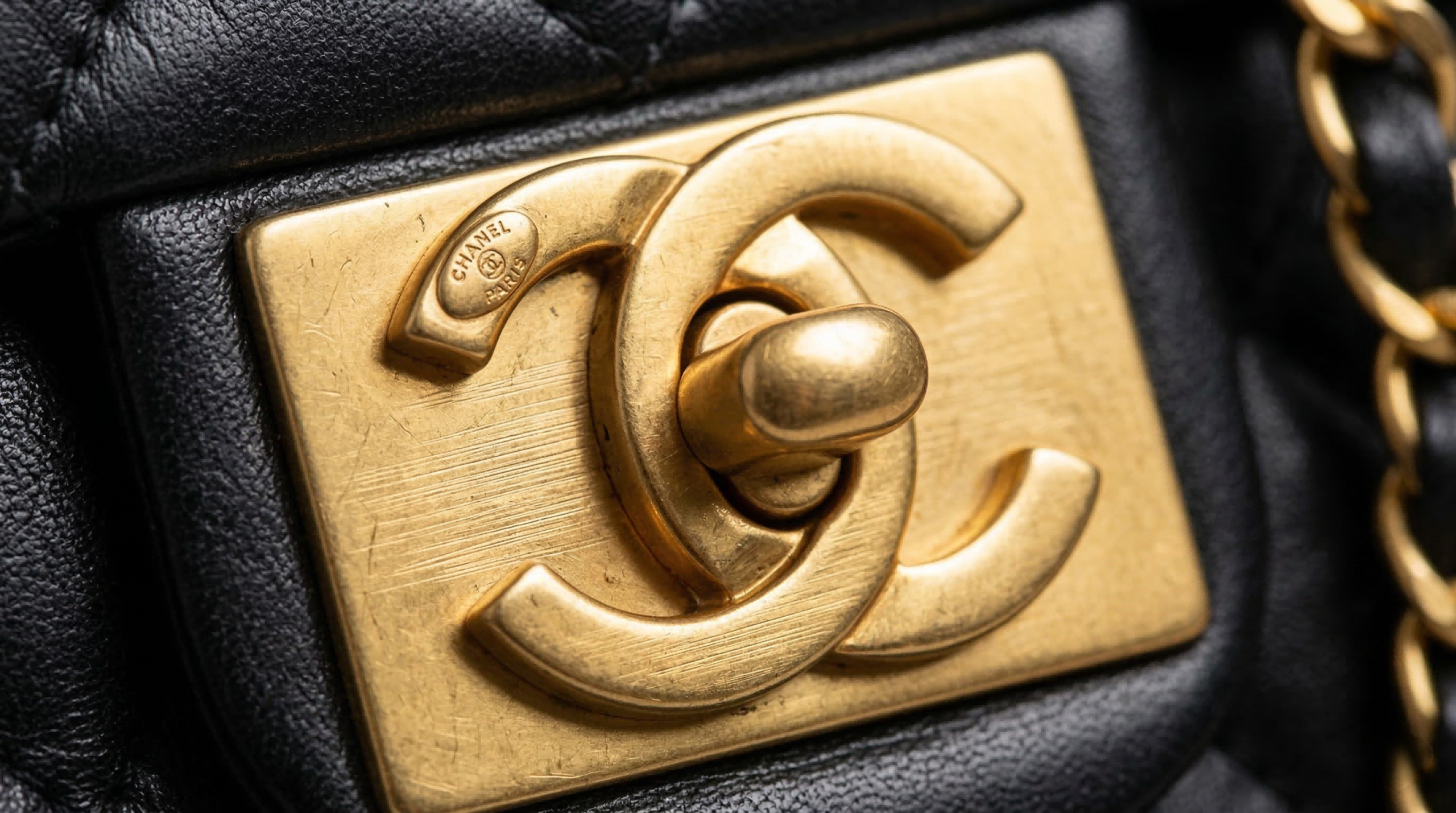
Chanel traces its beginnings to Gabrielle Chanel’s Paris hat boutique in 1910. Its later clothing and handbag designs each have their own chronology, so I begin an authentication comparison with the bag’s model and period. The best replicas can be beautifully made; the task here is to assess whether the details agree with the item’s claimed Chanel identity.
Because Chanel bags have fewer obvious authentication points compared to some other brands, a professional authentication must comprehensively analyze laser tags, authenticity cards, logo craftsmanship, hardware, and accessory details. Whether you are investing in a vintage treasure or a modern classic, the market demand makes these bags highly valuable, requiring careful attention to detail during the authentication process.
If you are checking a Chanel bag, start by identifying its approximate era before applying any serial, card or hardware rule. This guide keeps the original close-up examples because those images are useful; the update is that no single screw, UV reaction or letter shape is treated as conclusive on its own.
Table of Contents
Step 1: Chanel Authenticate the Logo and Stamping Craftsmanship
One of the first things to look at when you Chanel authenticate a bag is the internal logo and foil stamping. Massive market demand means counterfeiters try to replicate these details, but they often fail at the micro-level.
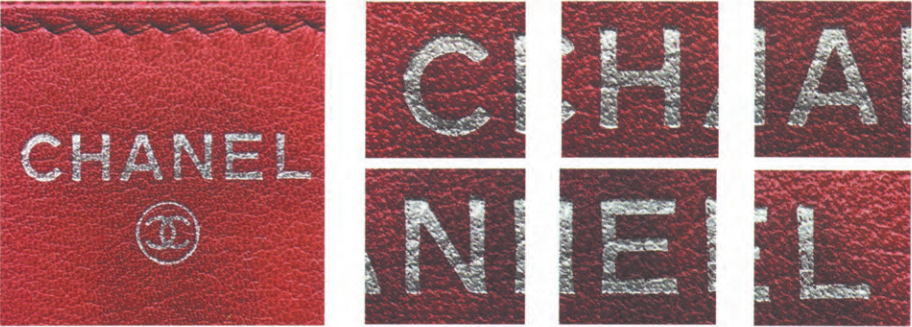
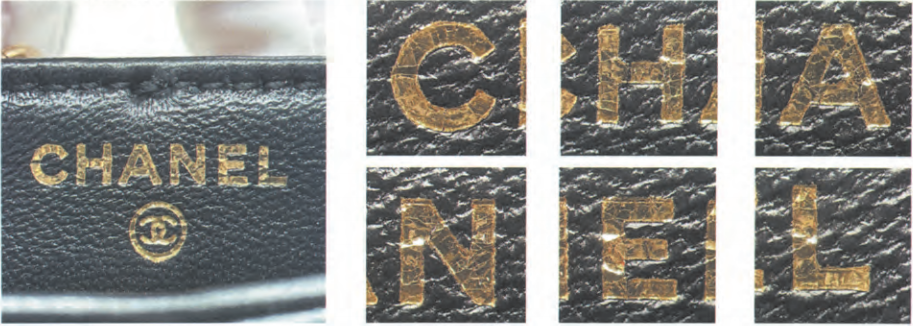
The Typography Secrets of the CHANEL Logo
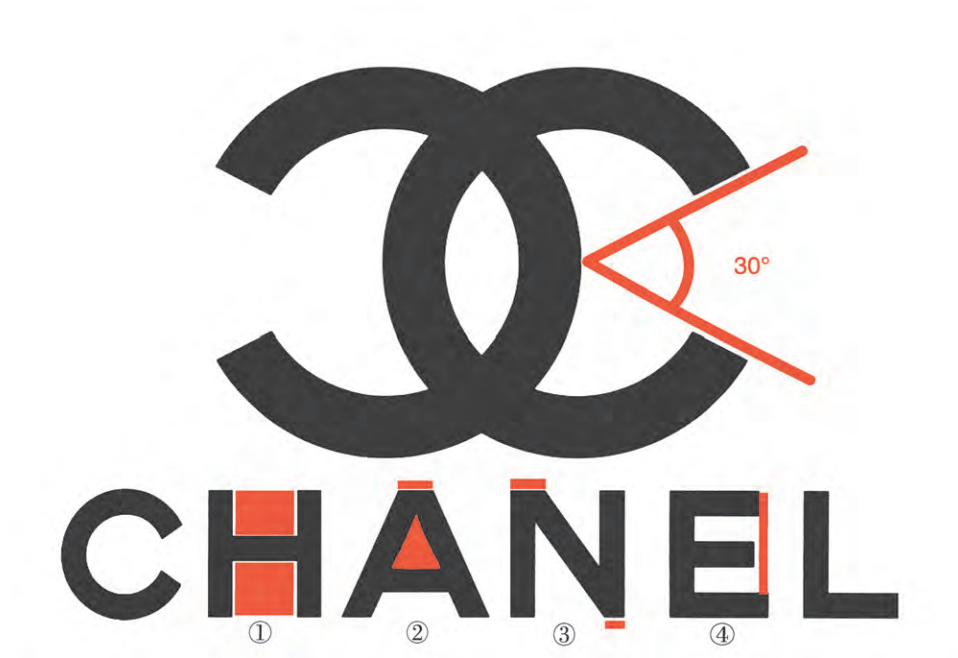
When examining the brand identifier, pay close attention to the specific geometry of each letter:
- The Letter C: Compare its shape and opening with a clear reference from the same period. The approximate 30-degree description here is not a universal measured tolerance.
- The Letter H: The horizontal crossbar is not perfectly centered; the top section is shorter, and the bottom section is longer.(Refer to Mark ①)
- The Letter A: The overall shape is square with a flat top, and you should pay attention to the inner triangle shape.(Refer to Mark ②)
- The Letter N: The top and bottom tips of the N must be flat. Furthermore, the top flat section is longer, and the bottom is shorter; a pointed tip does not conform to authentic craftsmanship.(Refer to Mark ③)
- The Letter E: Look at the three horizontal bars; the top is short, the bottom is long, and the middle bar is the shortest.(Refer to Mark ④)
Foil Stamping Quality
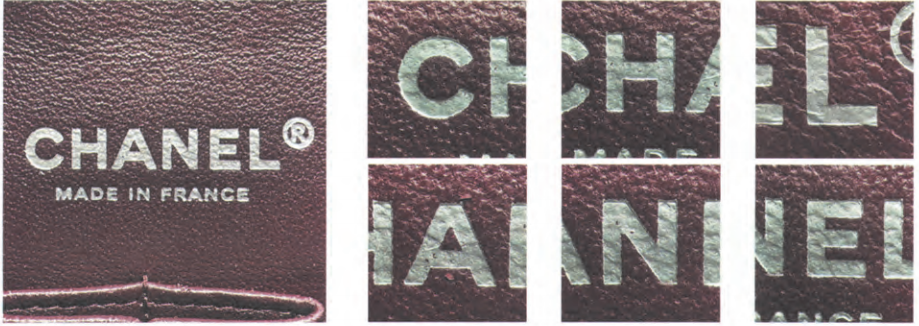
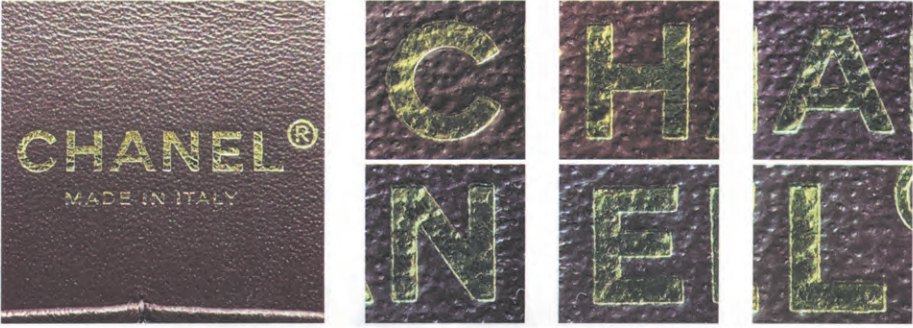
- The color of the foil stamping must match the hardware color of the bag; a silver clasp will have a silver foil stamp, and a gold clasp will have a gold foil stamp.
- The stamping is pressed directly into the leather, meaning the natural texture of the leather must be visible within the letters.
- The bottom of the gold-stamped letters will have distinct indentations. An unclear impression calls for a closer view; compare its depth and surface with the matching-period reference.
- Around the edges of the foil font, you will often see a slight overflow of gold powder.
- To learn more about how Chanel’s materials and hardware have evolved over the decades, explore Sotheby’s Complete Guide to Collecting Vintage Chanel Bags.
Step 2: Decode the Hologram Laser Tags
Where the bag’s era and version use a hologram serial sticker, compare its numbers, printing and UV response with a matching reference. This section does not apply a sticker rule to every modern Chanel bag; later identifiers need their own model and period context.
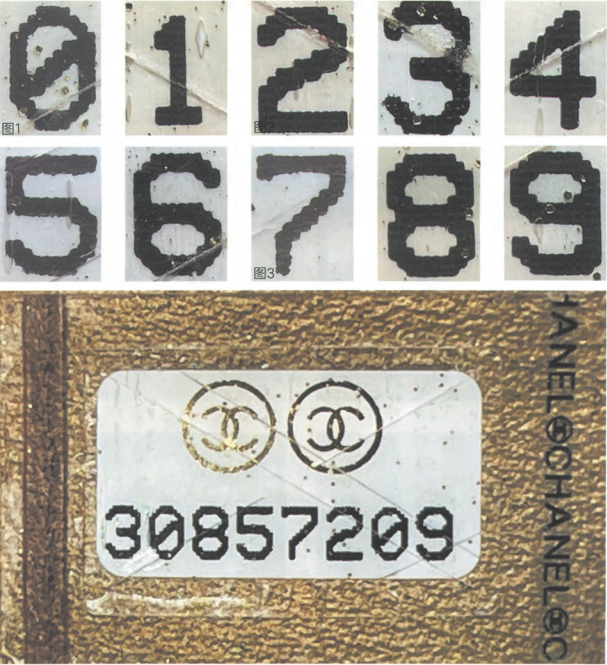
Laser Tag Number Characteristics
- The edges of the numbers on the laser tag have a jagged, mosaic-like effect.
- Authentic number ink is dark, thick, and even, whereas counterfeit tags often show distinct sandblasting marks.
- The number ‘0’ features a diagonal strikethrough.
- The number ‘2’ is designed with a “big belly”.
- The number ‘7’ features a distinct tail.
| Real | 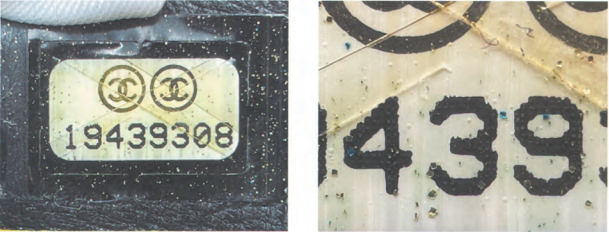 |
| Fake | 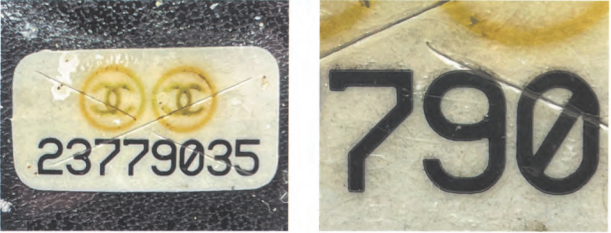 |
Gold Dust and UV Light Reactions
- The size and distribution of the gold powder particles on the laser tag are completely random. If the gold powder is clustered together or uniform in size, compare it more closely with a matching-series reference and the other identifier details.
- The powder consists of gold particles and a very small amount of blue particles. The amount of powder does not determine authenticity; in fact, 12 and 13 series laser tags may have no powder at all.
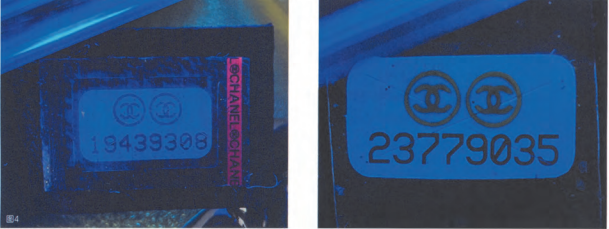
- When placed under a UV light, an authentic Chanel laser tag will reveal a red line. Note that vintage models and the Cambon series do not have this feature.
Chanel Serial Number Year Chart
To properly Chanel authenticate the era of your bag, reference this serial number chart:
To properly date your bag, you can reference the serial prefixes against the production years:
- 1xxxxxx: 1989—1991.
- 2xxxxxx: 1991—1994.
- 3xxxxxx: 1994—1996.
- 4xxxxxx: 1996—1997.
- 5xxxxxx: 1997—1999.
- 6xxxxxx: 2000—2002 (Laser tags began featuring gold powder).
- 7xxxxxx: 2002—2003.
- 8xxxxxx: 2003—2004 (Authenticity cards began featuring fluorescent dots).
- 9xxxxxx: 2005—2006 (Tags began featuring die-cut traces).
- 31xxxxxx: 2020—2021.
- Metal Microchip: Introduced in May 2021.
To discover why different eras of Chanel bags are so highly coveted by collectors globally, read Christie’s expert Collecting guide: Chanel bags.
Step 3: Verify the Authenticity Card
The authenticity card acts as the “ID card” for the bag, and its serial number must match the laser tag exactly. To thoroughly Chanel authenticate this accessory, check the manufacturing, printing, dimensions, and UV reactions.
Physical Dimensions and Visuals
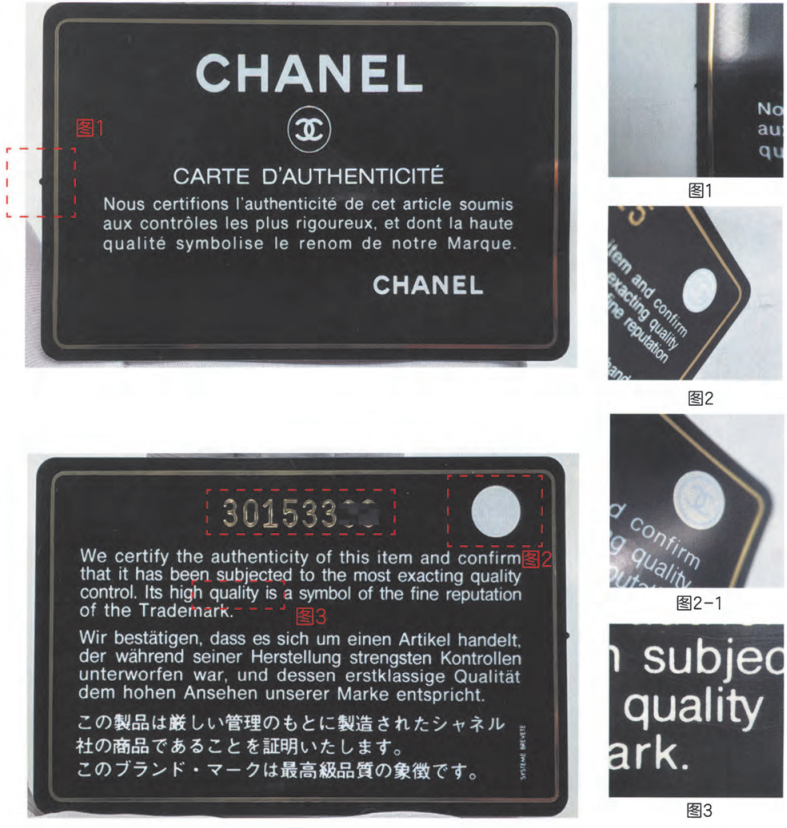
- The gold border framing the authenticity card should not show any holographic or iridescent colors.
- Modern authentic cards feature a small white dot on the left side of the front.
- Inside the white circle on the card, you can see a double C brand logo with varying clarity depending on the angle; it cannot be clearly captured if photographed straight on.
- On the back of the card, within the English text, the letters ‘t’ and ‘y’ in the word “quality” are physically connected.
- The standard physical measurements of the card are approximately 54mm in width, 86mm in length, and 0.8mm in thickness.
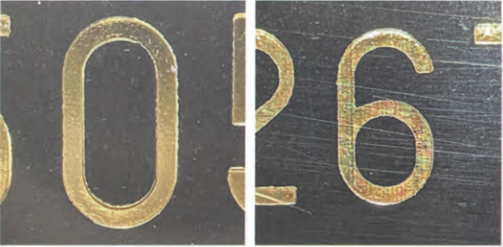
- The numbers ‘0’, ‘9’, and ‘6’ printed on the card have straight edges and a square font shape.
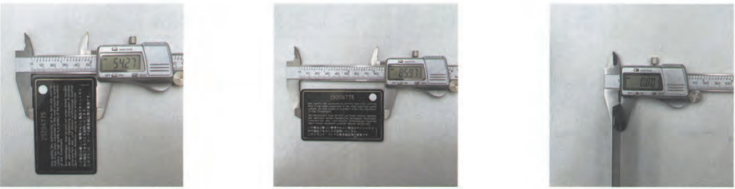 | ||
| Width :54mm | Length:86mm | Thickness:0.8mm |
UV Fluorescent Reactions
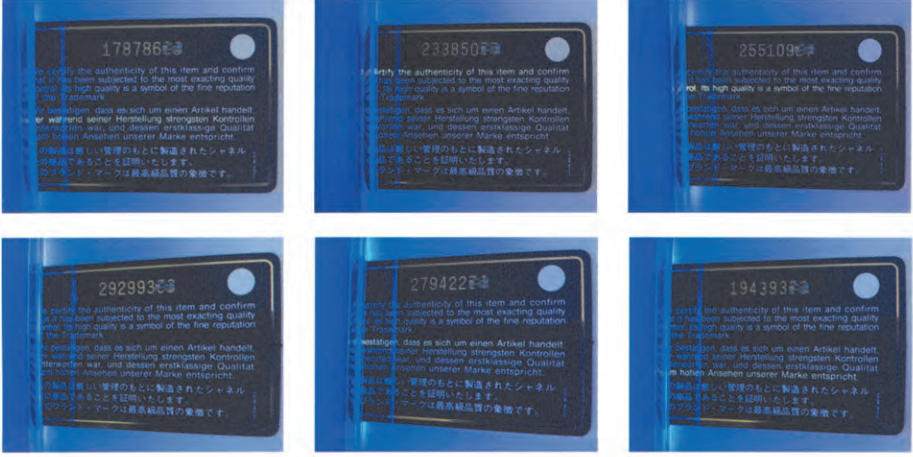
- For cards from series 19 and newer, the text that lights up under UV light will have fluorescent dots around it.
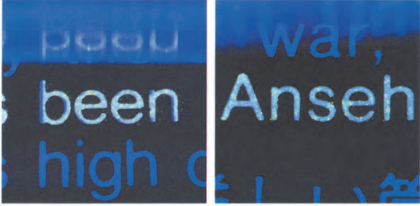
- The edges of the numbers 0, 9, and 6 on the ID card are straight, and the font is the official font for ID cards.
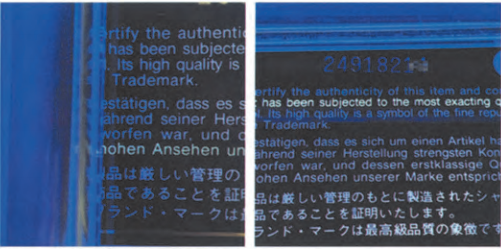
- Depending on the encoding on the back of the card, the specific lines of text that illuminate under the fluorescent light will differ.
Explore our full collection of authentication guides at ReinaLuxe.co
Step 4: Examine the Hardware and Zippers
Because authentic hardware requires strict material selection and rigorous manufacturing, counterfeiters often expose themselves here. When you Chanel authenticate the hardware, focus on screws, polishing, and brand engravings.
Screws and Polishing
- Compare exterior screws and interior logo-plate screws with the same model, period and repair history. A different screw type is a reason to investigate the component, not an automatic authenticity verdict.
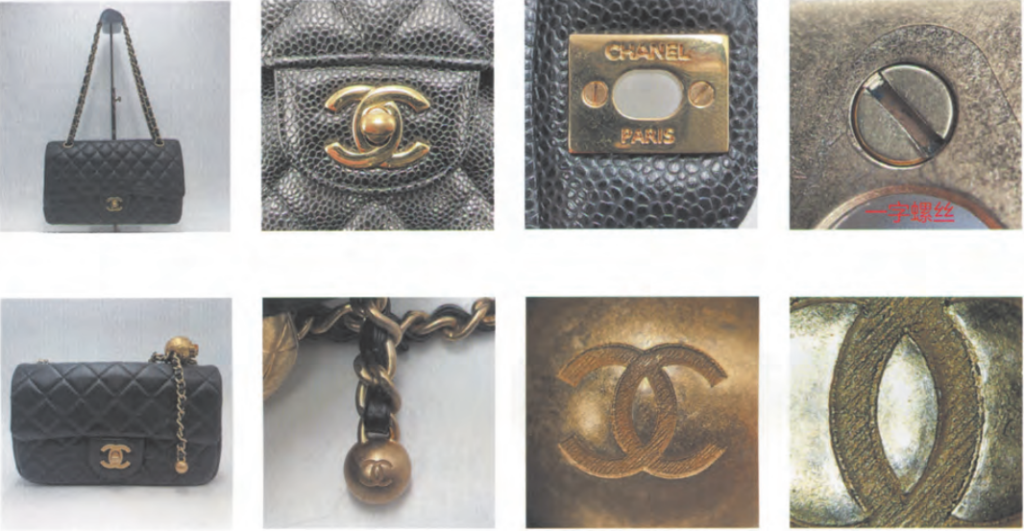
- The metal clasps are cleanly polished, and the metal surface exhibits a high density.
- The surface of the metal shows delicate wire-drawing (brush) marks, and there are no obvious casting or cutting marks around the edges.

Vintage Features and The LE BOY Bag
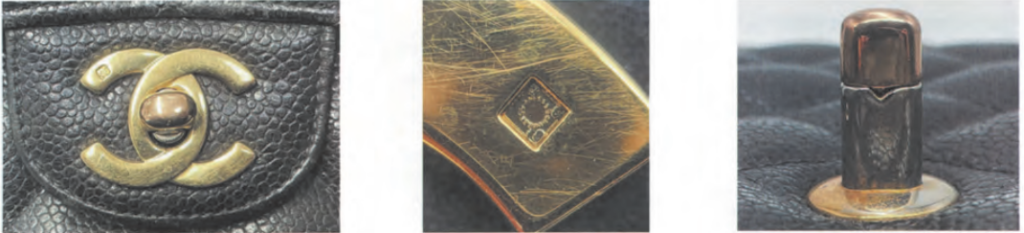
- Vintage Indicators: To identify vintage hardware, look for a square hallmark stamp on the double C metal clasp, and a ‘V’ shaped mark on the bottom head of the central turn-lock axis.
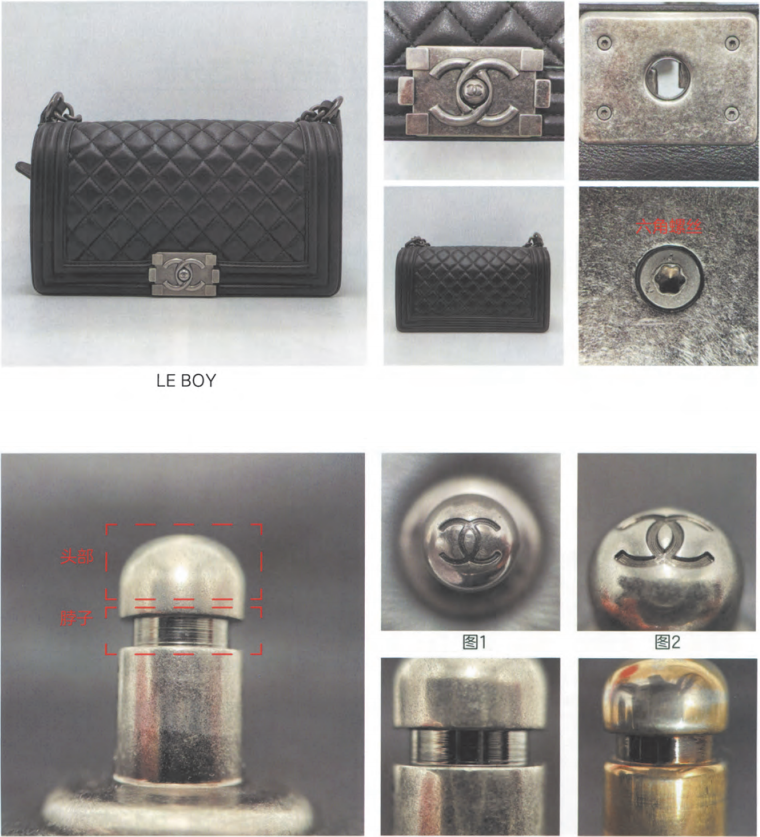
- LE BOY Hardware: The LE BOY is a highly replicated classic. The double C engraving on the top of the central axis must show distinct polishing marks, a feature also found on the shoulder strap adjustment buckles. Pay close attention to the size proportions between the “head” and the “neck” of the central axis, as well as the color and specific polishing marks located on the neck.
Lampo Zippers
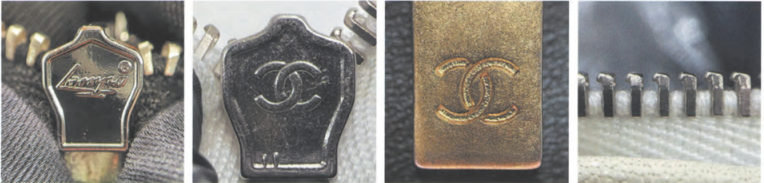
- Chanel frequently utilizes zippers from the Lampo brand.
- On older models, the back of the zipper pull is engraved with the Lampo brand logo.
- On newer models, the back of the zipper pull features the Chanel double C logo.
- When inspecting a zipper pull with the double C engraving, pay strict attention to the polishing marks inside the bottom groove of the engraving.
Step 5: Dust Bag Details
Even the accessories can help you Chanel authenticate a purchase. During WWII, many European brands halted production; when Coco Chanel returned to fashion, she was over seventy years old.
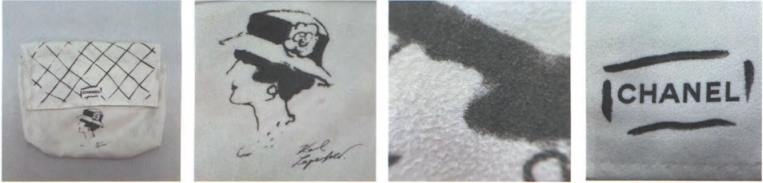
- The Coco Portrait: On dust bags featuring her portrait, designer Karl Lagerfeld added specific details: her hair is not solid black, but features layers of ink to represent grey hair due to her age. Counterfeit dust bags usually miss this detail, printing the hair in a flat, heavy black with no layered dimensions.
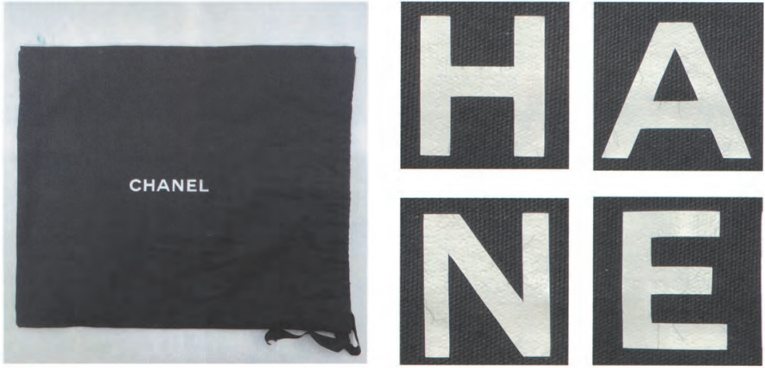
- Black Dust Bags: Chanel also uses black cloth dust bags with a white brand logo. For these, authenticate the font and typography of each individual letter using the standard brand identifier rules mentioned in Step 1.
Conclusion
The most reliable Chanel authentication comes from agreement across era, serial/identifier system, logo typography, leather and quilting, hardware geometry, screws, zipper type and construction. The detailed images in this article remain useful because they show exactly what I am comparing; the important change is to avoid turning any one of them into an absolute rule.
FAQ: Chanel Authentication
Can a real Chanel bag have a Phillips-head screw?
Do not use screw type alone as an authenticity verdict. Compare the exterior component with a reference for the same Chanel model and period, and check any repair history.
What should I look for on a Chanel laser tag under UV light?
On a Chanel bag from an era that uses a hologram serial sticker, compare its UV response with a matching-period reference. The red-line detail described above does not apply to every identifier; vintage models and the Cambon series need their own comparison.
Does the amount of gold dust on the laser tag prove it’s real?
No. Compare the size and distribution of the gold and blue particles with a matching-series reference. The article notes that some 12 and 13 series bags may have no powder. A difference in powder should be assessed alongside the identifier printing and the bag itself.
How can I verify the foil stamping on the leather?
Compare foil color, letter shape, indentation and visible leather texture with a matching model and period. A shallow or unclear impression needs a closer view and should be assessed with the other construction details.
What is a key detail to check on a Chanel authenticity card?
Check the back of the card; in the English text, the letters ‘t’ and ‘y’ in the word “quality” should be physically connected. Also, modern cards have a small white dot on the front left, and the gold border should not have a holographic effect.

13 comments
Omg, this is exactly what I needed! I’ve been eyeing a vintage Classic Flap but was so scared of buying a super fake. The tip about the flathead screws is an absolute lifesaver. I almost bought a bag from a local reseller yesterday but noticed it had Phillips screws after reading this. Bullet dodged!
The earlier screw rule was too absolute, Sarah. Compare that exterior component with the same Chanel model and period, including any repair history. A Phillips screw by itself is not enough to reject or authenticate the bag.
I never knew about the specific UV light reaction on the Chanel laser tags. That’s fascinating. I’m definitely buying a UV flashlight before my next pre-loved purchase. Great article!
A UV view can help compare a sticker with the same series under similar lighting, Mia. Match the identifier to the bag’s era first. I would keep the UV response with the other checks, rather than make a purchase decision from it alone.
I checked my own bag’s authenticity card right after reading this, and yes, the ‘t’ and ‘y’ in the word ‘quality’ are physically connected! Such a cool hidden detail that I never noticed before. Thank you!
I’m glad you noticed the lettering detail. Compare the card with the relevant series and check the bag’s other identifiers and construction too; that connection between letters alone cannot confirm your bag is authentic.
The part about Karl Lagerfeld adding layers for grey hair to Coco’s portrait on the dust bags completely blew my mind. What an amazing historical tribute. I’ll definitely pay closer attention to the dust bag printing now.
The portrait is an interesting packaging detail, Jen. I would compare it with the same packaging version, while keeping the bag’s identity separate from its dust bag. This comment does not establish how every counterfeit dust bag is printed.
This article is unbelievably thorough. I always thought the more gold dust on the laser tag, the better. Good to know that it’s actually about the random distribution and size of the particles.
The quantity or distribution of particles should be compared with a reference for the same sticker series. I would use that alongside the bag’s other identifiers and construction, rather than treat gold dust as proof of authenticity.
Thank you so much for including the serial number year chart! It helps immensely when trying to accurately date vintage pieces from the 90s. I’m bookmarking this page right now.
Hi Amanda, thank you for the bookmark! The serial number chart is definitely one of the most useful tools for verifying if a bag’s style matches its supposed production year. Happy thrifting!
Editor’s question: what is the Chanel authentication “rule” you see repeated most often but trust the least? I’m collecting examples where a single tell breaks down across model, year, or material so the guide can distinguish useful evidence from oversimplified rules.