
Updated: July 2026
For a sharper, more formal outline, I would begin with a Kelly Sellier-style shape. A Birkin puts hand carry and capacity first; a Constance makes the front closure the focal point; a Lindy brings softer movement. Once the model feels right, I compare the leather behavior, handle balance, edges and closure alignment on the particular bag.
I combine my own handling notes with model-specific photo reviews and sourcing information from my commercial partner, Cyan. The photographed cases stay identified as photo reviews, and workshop material descriptions stay attributed to the workshop.
My own starting point includes frustration with boutique access, friends who mix authentic and replica pieces, and the sharp chemical smell I encountered in bags marketed as “AAA” or “1:1.” Those experiences made me pay closer attention to the bag in front of me than the label attached to it.
Table of Contents
How to use this guide
- Choose a model family before comparing workshops or prices.
- Match the leather to the structure and maintenance you want.
- Use the workmanship checklist to review a specific bag or PSP set.
- Treat provenance, “factory,” plating, and leather-origin statements as unverified unless independently documented.
- Use the specialist links for model history, deep authentication, leather, and construction detail.
If the terms used by sellers are unfamiliar, first read the AAA replica bags guide. It owns the site’s general tier, seller, PSP, customs, and buying framework; this page stays focused on Hermès.
Choose the Hermès model family first
The right starting point is how the bag opens, carries, and behaves in daily use—not which silhouette is most discussed online.
Birkin
A Birkin is an open-top, hand-carried tote with a strong visual identity and useful capacity. Smaller sizes feel compact and structured; larger sizes make leather weight, handle comfort, and base stability more important. Decide whether you want a relaxed Retourne-like profile or a sharper, more formal outline before evaluating grain or stitching. For model history and size depth, use the dedicated Birkin guide.
Kelly
The Kelly’s top handle, flap, straps, and optional shoulder carry put more pressure on symmetry and closure alignment. A Sellier-style edge should look deliberate and controlled; a softer construction should still hold its intended proportions. The dedicated Kelly guide owns Kelly sizes, taxonomy, and model-specific detail.
Constance
The Constance is compact, shoulder-carried, and hardware-led. Because the front closure is the focal point, scale, alignment, strap construction, and the relationship between hardware and flap matter immediately. Go to the Constance authentication guide for the full inspection workflow.
Lindy, Mini Kelly and Picotin
The Lindy family suits someone who wants a softer body and more casual movement. Mini Kelly is a small, structured statement bag where proportion and edge work are exposed. Picotin is simpler visually, so leather hand, handle construction, base shape, and hardware finish carry more of the quality signal. The Mini Kelly II review examines one specimen in depth rather than defining the whole family.
Cyan reports that Birkin 25, Kelly 25 Sellier, and Mini Lindy are frequent requests in her current Hermès inquiries. That is direct service-chain experience, not independent market-share data. If you are deciding among three popular structured models, the dated Birkin 25 vs Kelly 28 vs Constance 18 comparison is the narrower page.
In June 2026, Cyan and the workshop contrasted the rigid, structured look popular in 2024 and 2025 with more requests for softer silhouettes, brushed-gold hardware, Veau Doblis suede, and neutrals such as Étoupe, Étain, Gold, Craie, and Noir. That reflects their inquiry flow, not market-wide sales data.
Model × leather × routine decision matrix
The combinations below come from model characteristics and recurring owner discussions about capacity, access and shape. I use those discussions to identify a trade-off to check on the particular bag:
- Birkin 25 × Togo or Epsom: compact hand carry, a light payload, and shorter or evening use. Check whether the opening and capacity suit what you actually carry.
- Birkin 30 × Togo: a more practical day or work candidate. Load a comparable bag before deciding; community reports disagree on which size feels “light,” and exact weights without a stated method are not useful evidence.
- Birkin 30 or 35 × Clémence: a relaxed profile for someone who accepts more slouch and possible weight. Review base support and shape change rather than expecting permanent crispness.
- Kelly 25 Sellier × Epsom: a sharper, formal option for someone who values structure more than quick access. Inspect corners, closure alignment, and how the stiff opening works in use.
- Kelly 25 or 28 Retourne × Togo: a softer, more casual option when easier access and gradual shape change are acceptable. Check the loaded silhouette, not just an empty front view.
I put routine first, silhouette second and maintenance tolerance third. Community reports are useful for spotting a trade-off I want to check on the particular bag.
Match leather behavior to the model and your routine
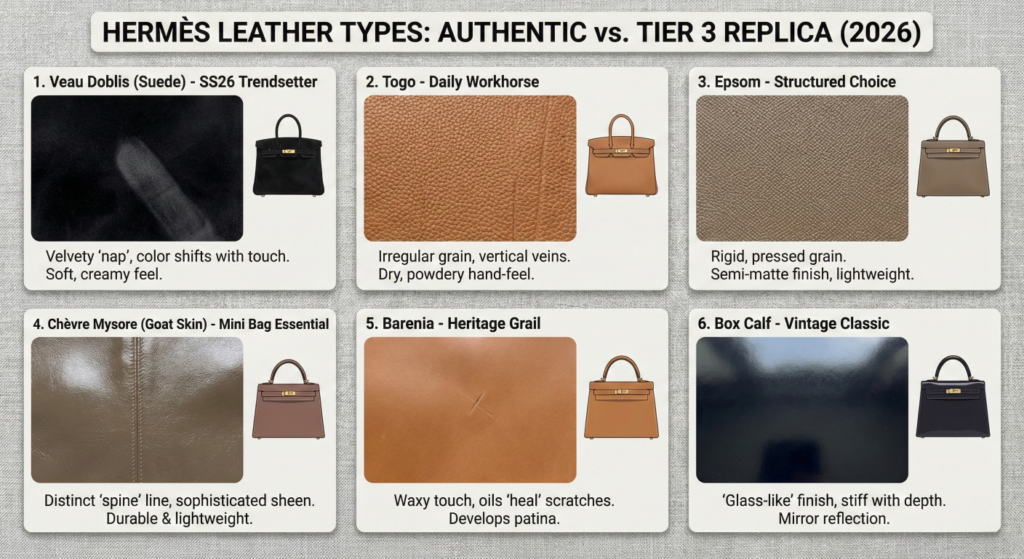
Leather names are not quality grades. A convincing texture in a photograph can still feel coated, dry, light, or overly uniform in hand. My in-store comparisons and long-term handling of multiple bags are why I prioritize movement, recovery, edge behavior, and smell over a single macro image.
A general leather comparison chart appears with the case studies later in this guide. It is an orientation aid for comparing leather families, not evidence about either photographed bag.
Togo and Clémence
Both are chosen for visible grain and a less rigid feel. Togo generally suits a bag that needs some structure without looking board-stiff; Clémence tends to read softer and can show more slouch. In replica listings, do not accept “Togo” or “Clémence” as proof of tannery, origin, or exact species. Review grain variation across several panels, the way the bag settles, and whether the surface looks plasticky under changing light.
Cyan recommends Togo for a Birkin 30 daily driver because she considers it a useful balance of suppleness and resilience. The workshop described its fully handmade Togo as having the same “meatiness” and natural leather scent as authentic pieces. That comparison is the workshop’s description, not proof of tannery or material identity.
Epsom
Epsom’s embossed appearance makes it useful for sharp silhouettes and lower-maintenance routines. It can also conceal mediocre base material in photographs. Check whether the grain scale looks consistent without becoming mechanically repetitive, and whether corners and folds behave naturally rather than cracking or whitening.
Barenia, Box, Chèvre, Swift and Doblis
Barenia is a patina-led choice: marks and color change are part of the appeal, so it is a poor match for someone who wants a permanently pristine surface. Box is smoother and makes scratches, waviness, and panel preparation easier to see. Chèvre is valued for a light, resilient feel and a distinctive grain; Swift is smoother and color-forward; Doblis has a directional nap that should be judged in moving light. These descriptions guide use, not provenance.
For Doblis, the workshop specifically described its European suede as untreated to keep a rich nap and “buttery” texture, while warning about color transfer and water spots. That is a supplier’s material and care description; treatment status and origin still need confirmation for the exact hide.
Exotic-looking materials
Scale pattern, pores, gloss, and symmetry can be photographed, but a photograph cannot establish species, legal origin, tannery, or finish process. Ask for documentation where those facts matter and treat an unsupported label such as “Porosus” as a supplier description. The expanded Hermès leather guide covers care and texture comparisons in more depth.
In June 2026, the workshop claimed that a “Barenia” or “Box Calf” bag under $800 was virtually certain to use synthetic or incorrect leather. Treat that threshold as the workshop’s judgment, not a rule: price alone cannot establish material.
Understand construction without relying on tier labels
“AAA,” “top tier,” and “fully handmade” are not standardized specifications. Translate them into things a seller can show: the stitch method used in particular areas, leather and lining description, edge process, hardware material or finish claim, included PSP views, and remedy if the delivered bag materially differs from the specification you accepted.
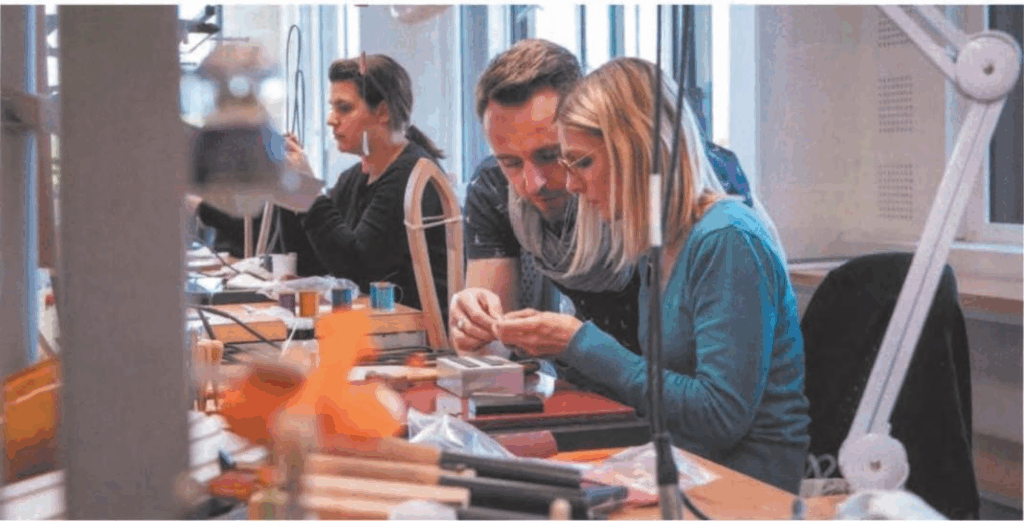
The general hand-stitching image later in this guide illustrates a construction and inspection concept. It is not a photograph of either case-study bag.
I have encountered low-cost bags with a sharp adhesive or chemical odor and higher-tier bags with better-balanced materials and cleaner finishing. A strong or persistent smell is a practical warning sign, although smell alone cannot identify the material or establish safety.
My daily-rotation preference has been the sensible handmade tier rather than paying for every claimed upgrade. Over time, I care more about correct structure, usable leather, stable edges, clean stitching, and hardware that wears predictably than about a workshop’s most expensive label. That judgment is personal; it is not a claim that one price band works for everyone.
When Cyan offers a custom or upgraded option, I treat workshop, artisan background, “original leather,” and plating descriptions as supplier-chain claims unless there is separate documentation. The Hermès craftsmanship comparison covers the detailed replica-versus-authentic construction analysis.
What different price tiers included in my sourcing notes
The prices and descriptions below come from ReinaLuxe, Cyan, and workshop quotes published December 3, 2025 and updated June 11, 2026. They show what sellers offered at that time, not what a material, method, or upgrade has been independently proven to be. Ask Cyan to date and reconfirm any current quote.
The workshop said Hermès had no “overflow factories” and described the top tier as private custom studios using former luxury leather artisans, hides from the same European tanneries as luxury houses, and a “1:1 slow-crafting method.” Community discussions also mentioned names such as UB, Symode, and Steven. Names and process stories do not verify employment histories, provenance, factory identity, or endorsement. Suppliers also contrasted heavily finished domestic “top-layer” leather with Tier 3 skins they said came from original-brand tanneries; documentation would be needed to establish that origin.
- Low tier: $100–$250. The June 2026 notes described this tier as assembly-line and machine-stitched, with stiff domestic cowhide, an embossed Togo-like texture, adhesive odor, and lightweight alloy hardware. They warned that some Instagram sellers relabel a $150 stiff bag as “AAA” or “10A,” and included a bait-and-switch example involving a $100 machine-made bag. The odor description is consistent with bags I have handled, but the material and construction details still need to be checked on the specific bag.
- Mid tier: $400–$700. The workshop said the large body panels were machine-stitched while the handles, flap, and sangles were hand-stitched, with imported leather and hardware. A $500 semi-handmade comparison was promoted as convincing at normal social distance. That was sales language, not a measured recognition rate.
- Standard fully handmade: $800–$1,500. The workshop described double-needle saddle stitching with French Fil au Chinois beeswax thread, imported European leather that was *not* from an original partner tannery, and solid stainless-steel hardware with standard polishing rather than multilayer palladium or thick-gold plating. Stitch method, thread origin, leather origin, and metal composition remain workshop claims unless documented for the exact bag.
- Hardware-plating upgrade: +$500–$800 or more. The workshop offered palladium or 18K/24K gold-tone plating and described it as a thicker micron process with warmer color and improved resistance to tarnish and micro-scratches. The price and performance statement are supplier claims.
- “Original factory” leather upgrade: +$400–$600 or more. The workshop claimed Weinheimer Togo and Epsom from HAAS or D’Annonay, describing greater “meatiness,” color saturation, and a distinctive leather scent. Ask for documentation before treating the stated tannery as provenance.
- Special-order and exotic upgrades. The quote listed bi-color HSS-style customization at +$300–$600, including a Craie exterior/Ébène interior example, and ostrich, lizard, or crocodile options at +$1,000–$4,000 or more. A broader heading quoted exotic and special-order upgrades from +$500–$4,000 or more. The workshop described CITES-compliant sourcing, symmetrical belly scales, and Matte Niloticus or Porosus options; documentation would be required to substantiate species and lawful provenance.
The $800–$1,500 standard fully handmade tier was the level in my own daily rotation and the one I recommended to most friends, while saving original-leather and thick-plating upgrades for a later bag. I found it practical for daily commutes, business meetings, weekend brunches, and evening dates. Those were personal recommendations, not universal success rates or current-price guarantees.
Supplier claim versus observable outcome
Community reports and Cyan’s experience point to the same discipline: translate a label into an inspection plan. A good-looking bag does not turn the label into proof.
- “24K,” “18K,” or upgraded plating: keep the workshop’s exact specification. Compare color, coverage, engraving and screws under neutral light, then follow wear at the turn-lock, feet and strap clips over time.
- “Original leather”: ask for the hide description and sourcing documentation. On the bag, compare grain variation, panel consistency, movement, edges and finish; use dated follow-ups to judge patina and shape changes.
- “Fully handmade”: ask which seams and operations the workshop means. Request front and reverse views of stitch runs, corners and handle attachments.
- “Top tier”: replace the grade with a written specification, complete PSP set, and remedy. Receipt and follow-up can show whether the shape, finish, and hardware behavior you accepted hold up. The label itself has no standardized technical meaning.
- Factory or studio identity: note the supplier’s stated source and date. Specimen-level photographs and documents may support a specification, while long-term experience may show consistency. A name, seller ranking, or repeated community mention does not verify workshop identity, artisan employment, or shared luxury-house supply.
The practical rule is to account for the uncertainty in any undocumented claim and judge the actual specimen in front of you. A higher quote should buy a clearer specification, a more thorough review, or a remedy that matters to you.
A five-part PSP and workmanship inspection
Use this sequence on the exact bag being offered. A stock photograph cannot validate the delivered specimen.
PSP completeness gate: a missing view is an unanswered question
- Identity set: require one overview, front, back, both sides, base, top, and a continuous turn video where practical. Match distinctive grain, stitches, and hardware positions across files; without continuity, you cannot conclude that every image shows the same specimen.
- Handles, flap, and top line: request straight-on and angled views of handle roots, profile, sangles, gussets, and closure. Missing views leave symmetry, attachment, opening behavior, and alignment unresolved.
- Base, corners, and high-friction points: inspect feet, piping, edge turns, strap clips, and closure contact areas. Their absence hides early glazing, coating, and assembly problems.
- Macro workmanship: request the stamp, representative stitch runs and turns, glazing, engraving, screws, pins, zipper stops and hardware from several angles.
- Interior and attachments: require lining, pockets, zipper back, underside of hardware, and interior handle or strap attachments. Without them, hidden finishing and residue remain unknown.
Ask for neutral light and repeat key positions when color or shine changes between images. Different lighting may explain a difference, but it does not resolve it; the seller must provide a comparable view of the same specimen.
1. Shape and symmetry
- Compare the front, back, sides, base, and top line.
- Check handle placement, flap centering, gusset balance, and whether the bag leans.
- Compare proportions within the named model and size; do not compare unlike constructions.
2. Stitching and edges
- Look for consistent spacing, controlled tension, secure turns, and clean back-stitching.
- The workshop’s technical checklist named an 18-degree stitching angle as an “ultimate tell.” In practice, visible slant varies with construction, material, hole preparation, tension, and viewing angle; no universal 18-degree measurement authenticates a bag.
- Check glazing for ridges, pooling, cracking, exposed fibers, and careless corner buildup.
3. Leather and panel behavior
- Request neutral daylight views and a short movement video where possible.
- Compare grain across panels rather than judging one attractive close-up.
- Note unnatural shine, repeated embossing, coating buildup, dryness, or a shape that cannot relax as intended.
4. Hardware, stamp and alignment
- Check closure centering, screw and pin finishing, engraving placement, zipper stops, feet, and hardware color across views.
- Crisp lettering can be copied; it is one workmanship clue, not proof of authenticity.
- A photo cannot verify metal composition or plating thickness.
5. Interior and hidden work
- Ask for the lining, pockets, zipper backs, handle attachments, base, and underside of hardware.
- Look for loose thread, glue residue, torn stitch holes, rough cutouts, and inconsistent edge treatment.
- Confirm that the PSP set belongs to the same specimen by matching grain, stitch, and hardware details across images.
Handles, interiors and edges are the checkpoints I return to. A neat handle arch can change the whole silhouette; an awkward zipper or thick edge finish can be just as distracting once I look closer.
Two case studies—and what the photos can actually show
These two cases combine my observations with details supplied by Cyan, the workshop, or the client. The photos can show visible shape, grain, stitching, edges, stamps, and hardware, but they cannot by themselves establish material origin, workshop identity, construction throughout the bag, plating composition, or authentication.
Mini Lindy 19 photo case
The four-image sequence was supplied as a Rouge Sellier Mini Lindy 19 in Clémence at the standard handmade level. In the full view, I saw a relaxed, weighty-looking slouch; the grain appeared irregular and matte rather than shiny or mechanically uniform; and the Rouge Sellier color looked saturated. The foil stamp appeared crisp, aligned, and controlled within the grain, with subtle serif detail. The “HERMÈS-PARIS” engraving looked sharp, centered, and deliberately deep; the gold tone looked warm rather than coppery; and the last image showed an H-shaped zipper stop with consistent stitching tension around the track.
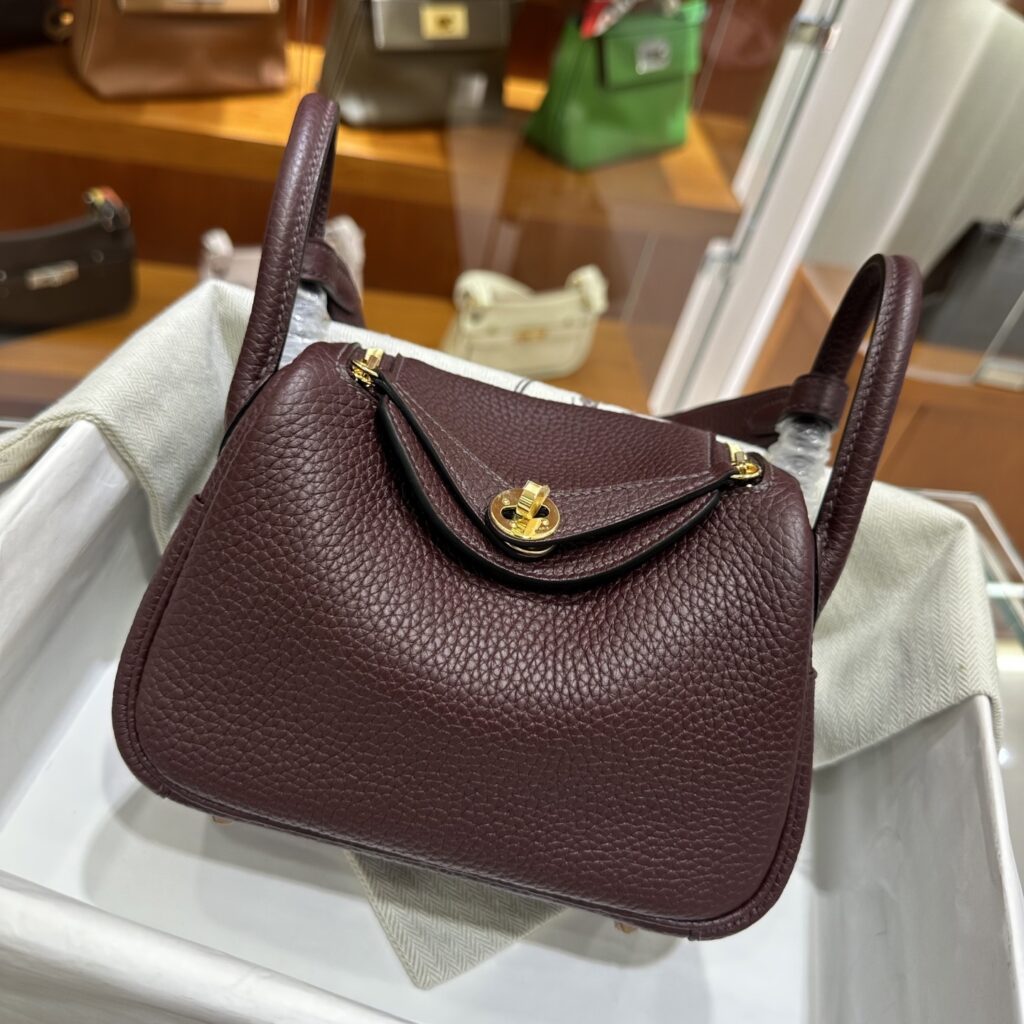
High-quality Hermes Mini Lindy 19 replica in Rouge Sellier Clemence leather displaying authentic slouch and gold hardware.
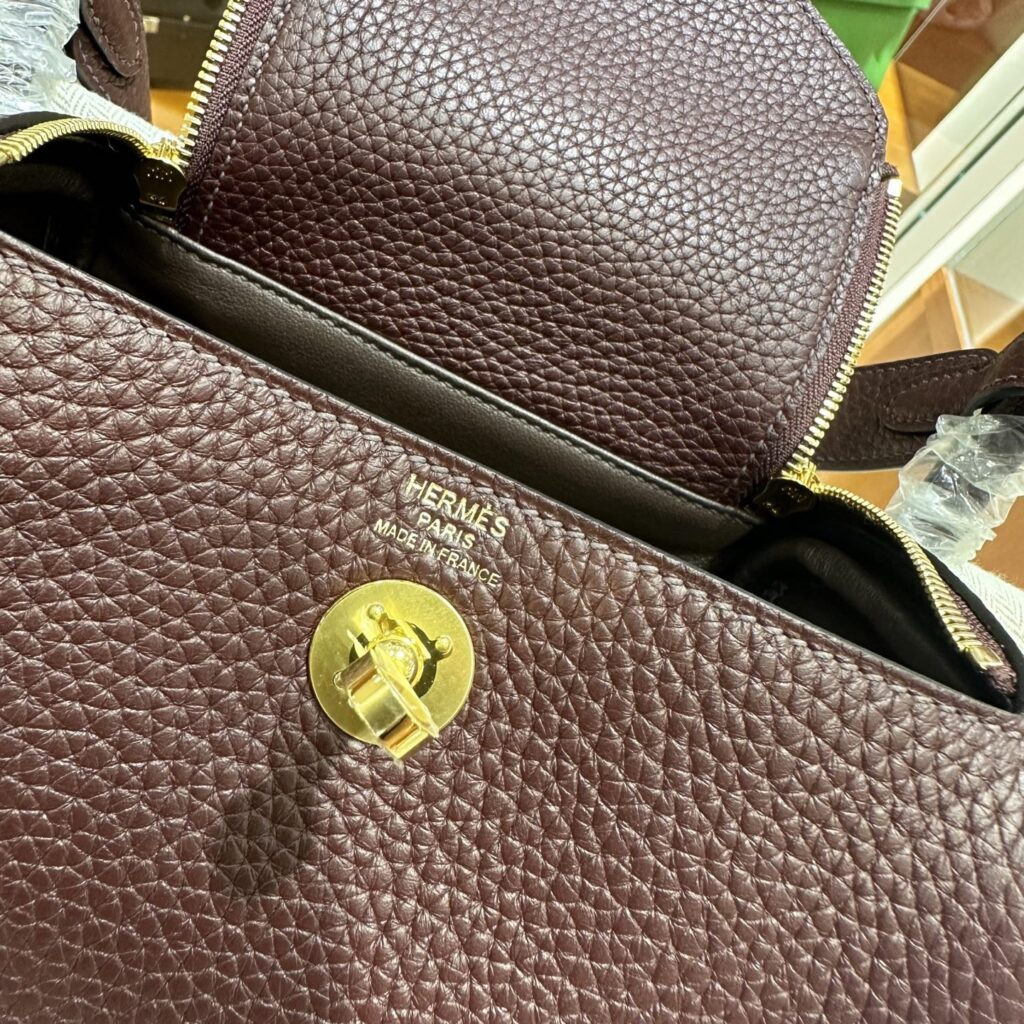
Close-up of the crisp foil heat stamp and accurate turnlock placement on a premium Hermes Mini Lindy replica.
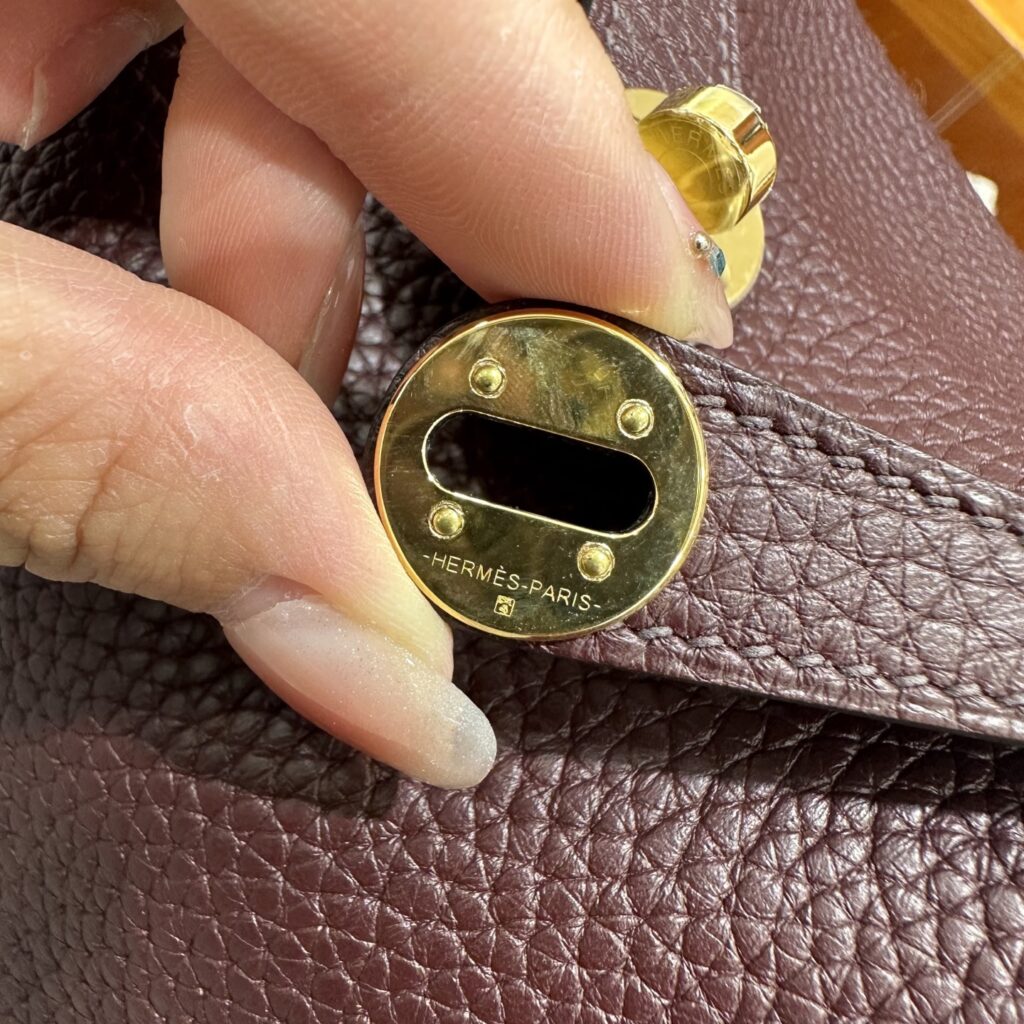
Macro shot of the clean Hermes-Paris hardware engraving and solid stainless steel on a standard handmade Mini Lindy 19 replica.
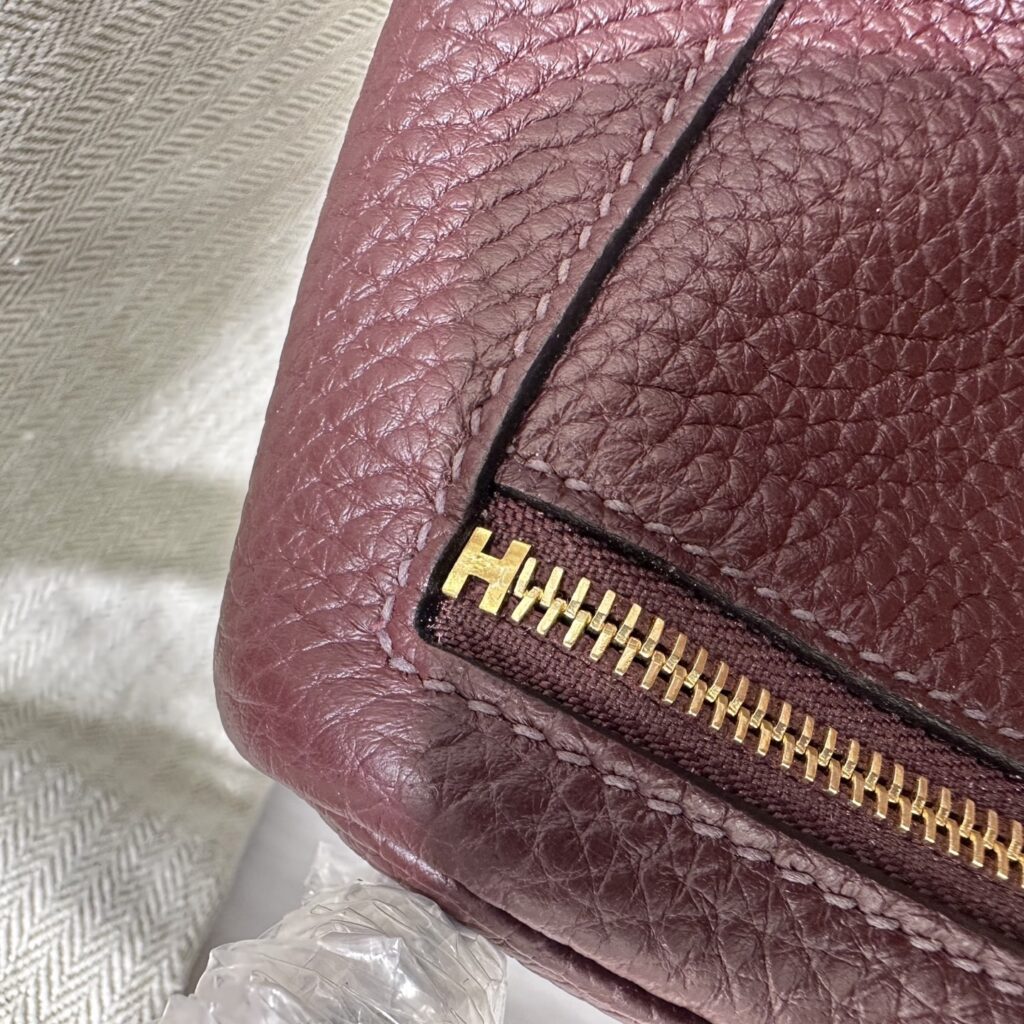
Detailed view of the authentic-style H zipper stop and neat saddle stitching on a Rouge Sellier Hermes Mini Lindy replica.
At the time, I described this specimen in highly promotional terms and thought it looked convincing at social distance. I would put it more carefully now: the set appears to show one coherent bag and several details worth approving, but it is not an authentication result. I would still request base, interior, handle-attachment, and moving-light views before a final decision.
Birkin 35 exotic-look photo case
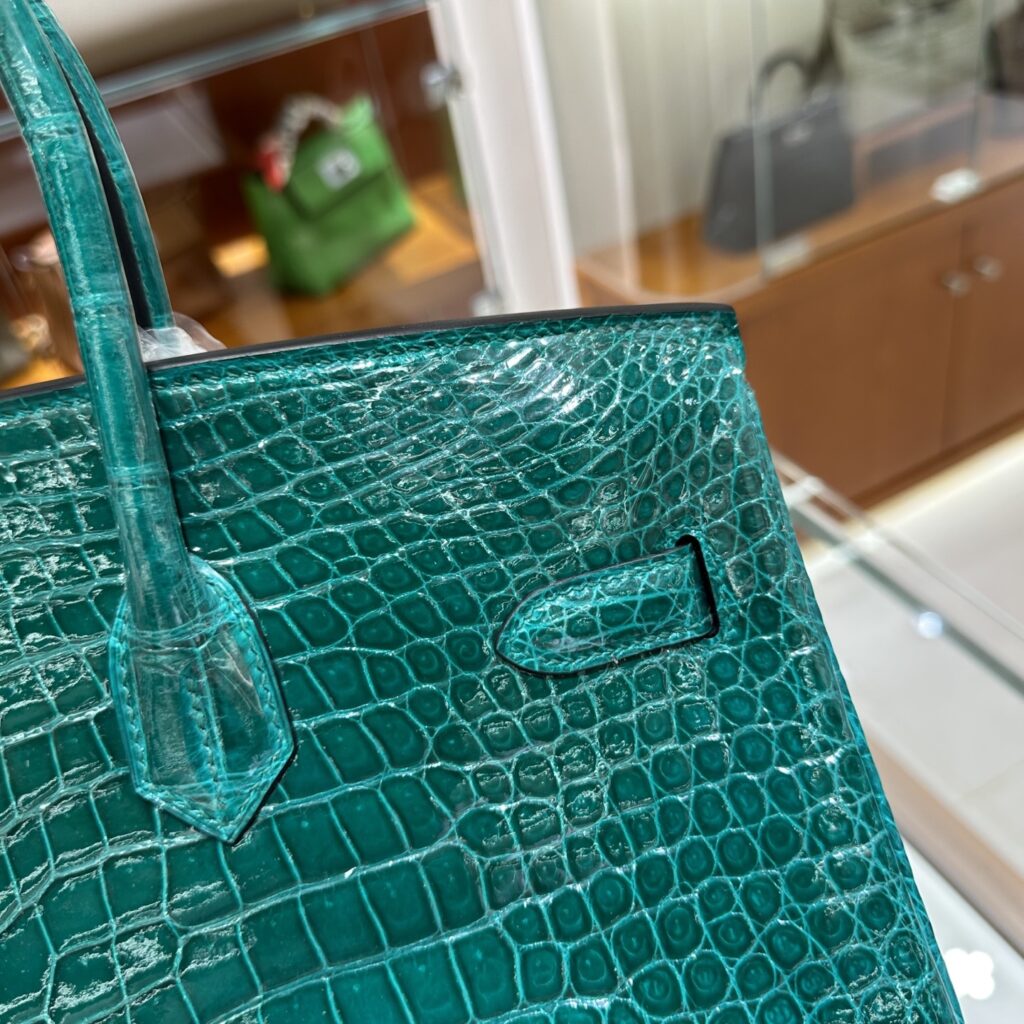
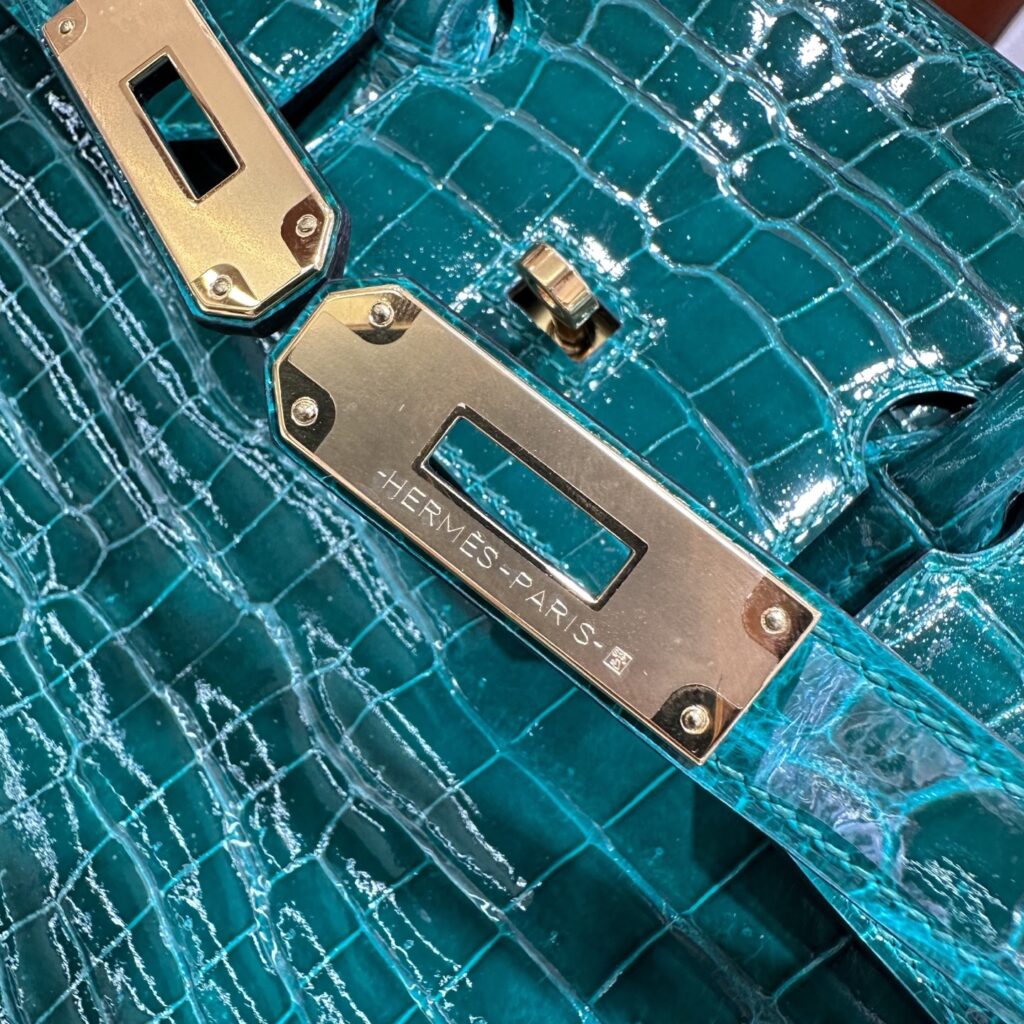
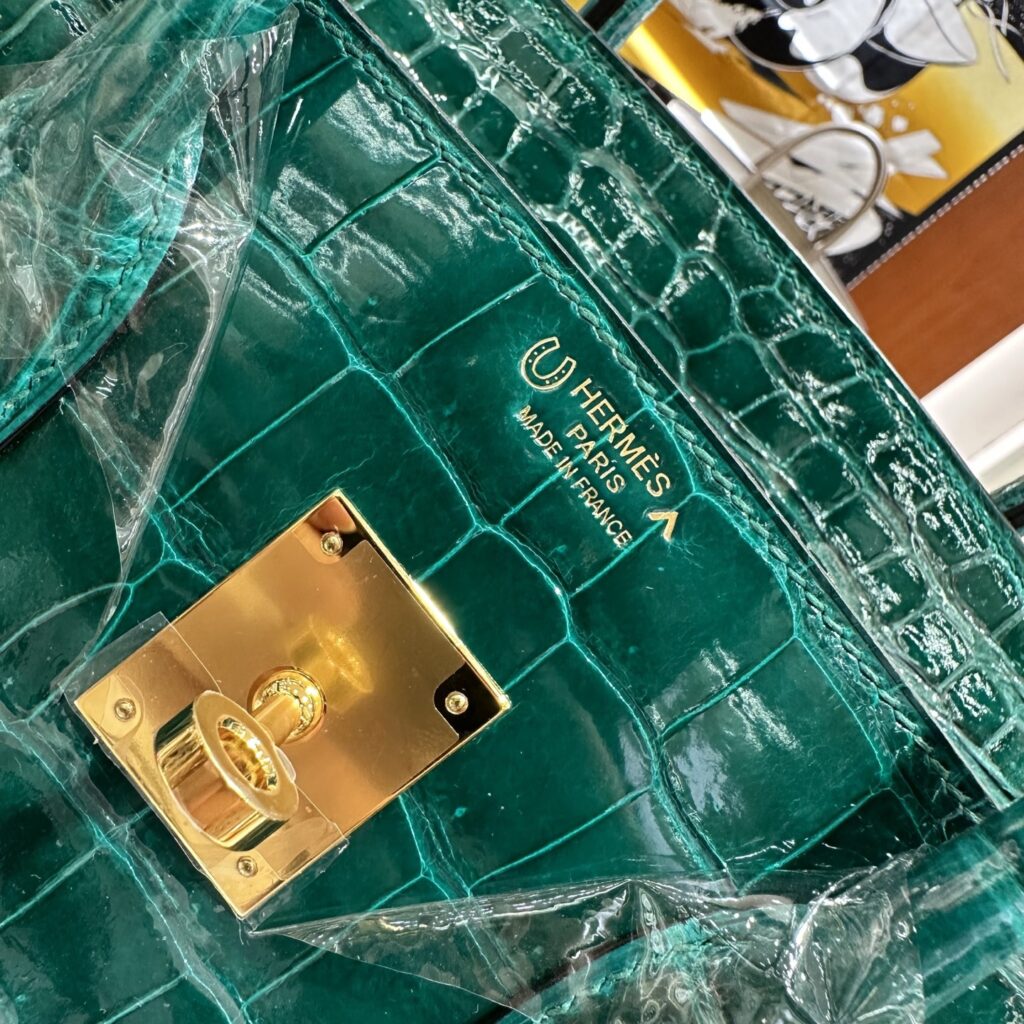
The five-image sequence was supplied as a Birkin 35 in shiny Porosus crocodile with upgraded 24K gold plating and an HSS-style stamp. Cyan and the workshop described a Lisse finish, tight central scales transitioning to larger side scales, small central pores, white contrast saddle stitching, a thin wax edge, multilayer plating, and an exotic-skin caret beside the HSS-style mark. In the photos, I see high gloss, an orderly scale transition, small pore-like marks, slightly angled white stitches with consistent spacing, a thin-looking smooth edge, deep-looking engravings, and a crisp HSS-style/caret stamp.
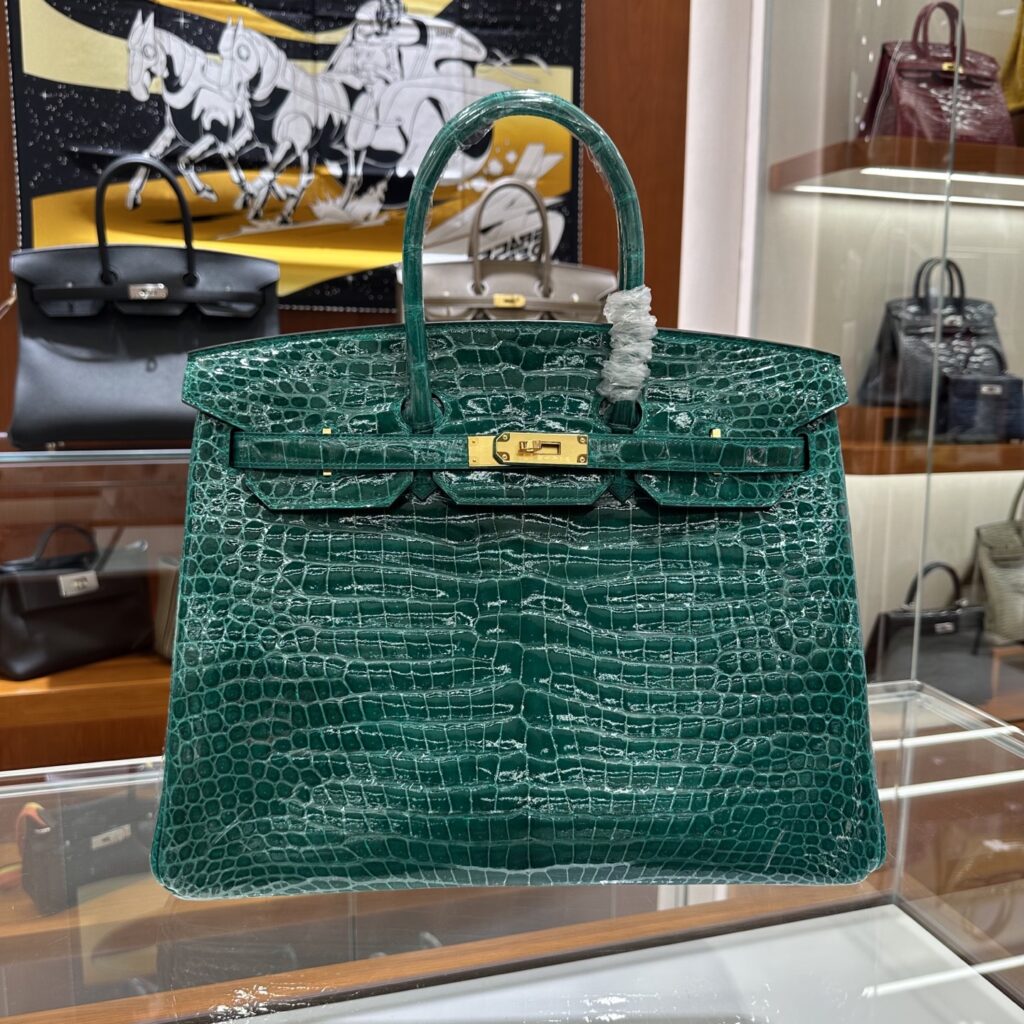
The Exotic Leather Upgrade: This is a masterpiece of sourcing. Authentic shiny Porosus crocodile is prized for its extreme gloss (Lisse finish) and tight, small central scales that transition gradually to larger rectangular scales on the side. This example displays perfect scale symmetry (image_0) and is a high-grade Lisse finish with immense depth. More importantly, Porosus is known for the small pore visible in the center of almost every scale—a detail present here that low-tier “crocodile pattern leather” completely lacks.
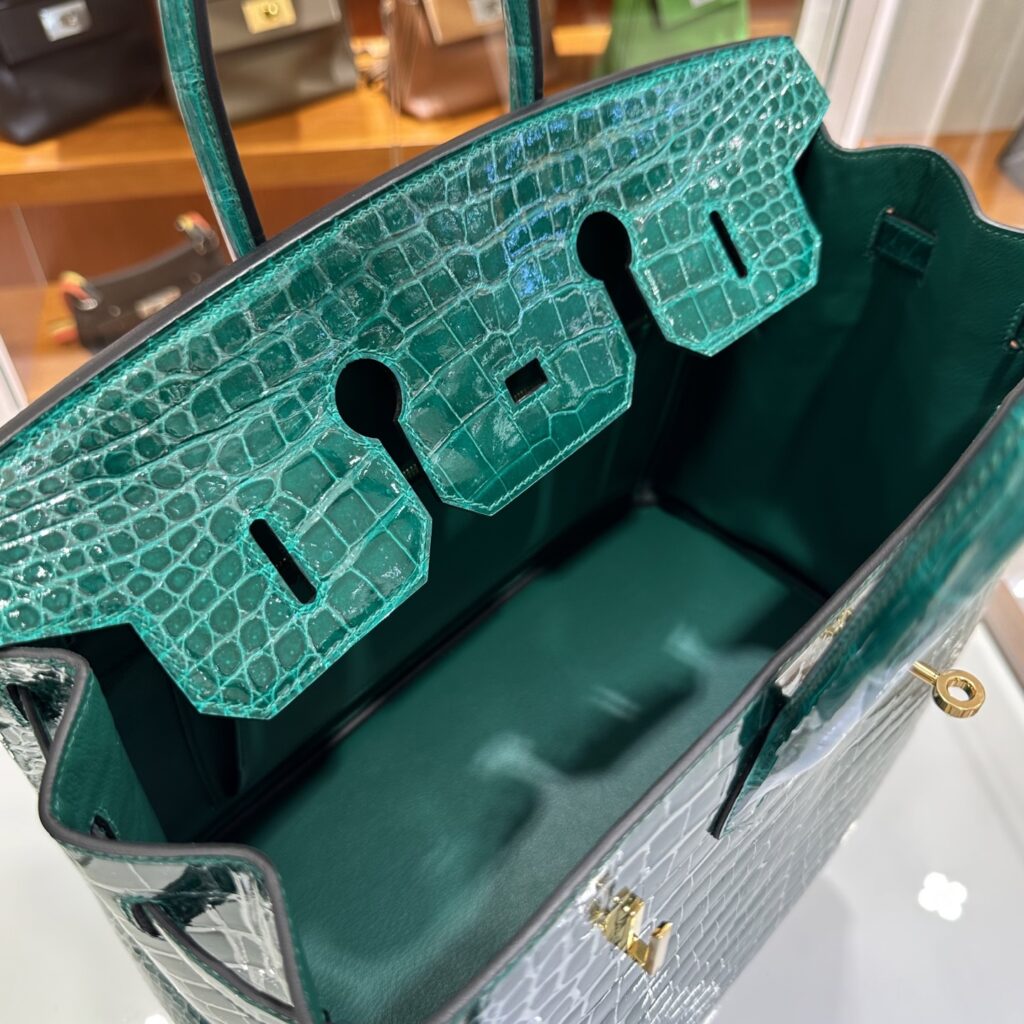
The “Cousu Sellier” Hand-Stitch : This white contrast stitching is the ultimate proof of quality. In image_1, you can clearly see the distinct, slightly angled slant of every individual thread. Machines stitch in a perfectly straight line; only a human hand doing the true double-needle saddle stitch can achieve this natural slant. The stitch length is consistent and the corners are handled cleanly. The edge paint (wax edge) is dangerously thin and smooth.
Upgraded Hardware Plating: The upgraded 24K gold plating has a deep, buttery luster. It is highly polished but avoids the cold look of standard stainless steel. Most importantly, the hallmarks and engravings are deep and clean, consistent with multi-layer electroplating rather than cheap top-coating.
Special Order HSS Customization: This example was ordered with the Horseshoe Stamp (HSS). In the heat stamp, you see the foil “HSS” icon alongside the “HERMÈS PARIS MADE IN FRANCE” and the carat symbol denoting exotic skin. Low-tier replicas often misalign this or use incorrect HSS icons. This stamp is crisp and professionally applied.
At the time, the Birkin 35 was described with authentication-style promotional language that went beyond what the pictures could prove. The photo set is useful for a high-detail workmanship review, but the premium material and plating claims need documentation. The HSS-style mark is a feature to inspect, not proof of special-order status or authenticity.
Route authentication questions to the right specialist
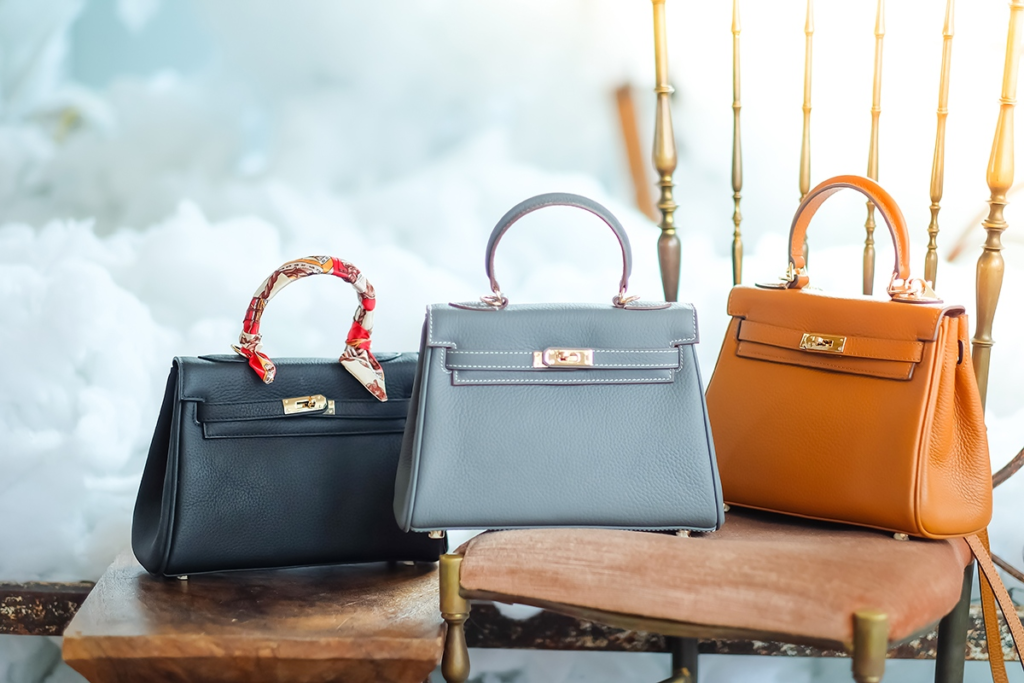
For a Birkin, begin with shape, handle and flap relationships, sangle alignment, base, feet, interior, stitching, and stamp context. For a Kelly, add top-handle geometry, flap and gusset symmetry, shoulder-strap attachments, and Sellier-versus-Retourne construction. For a Constance, prioritize the H closure’s scale and alignment, flap profile, strap construction, edge work, and interior layout.
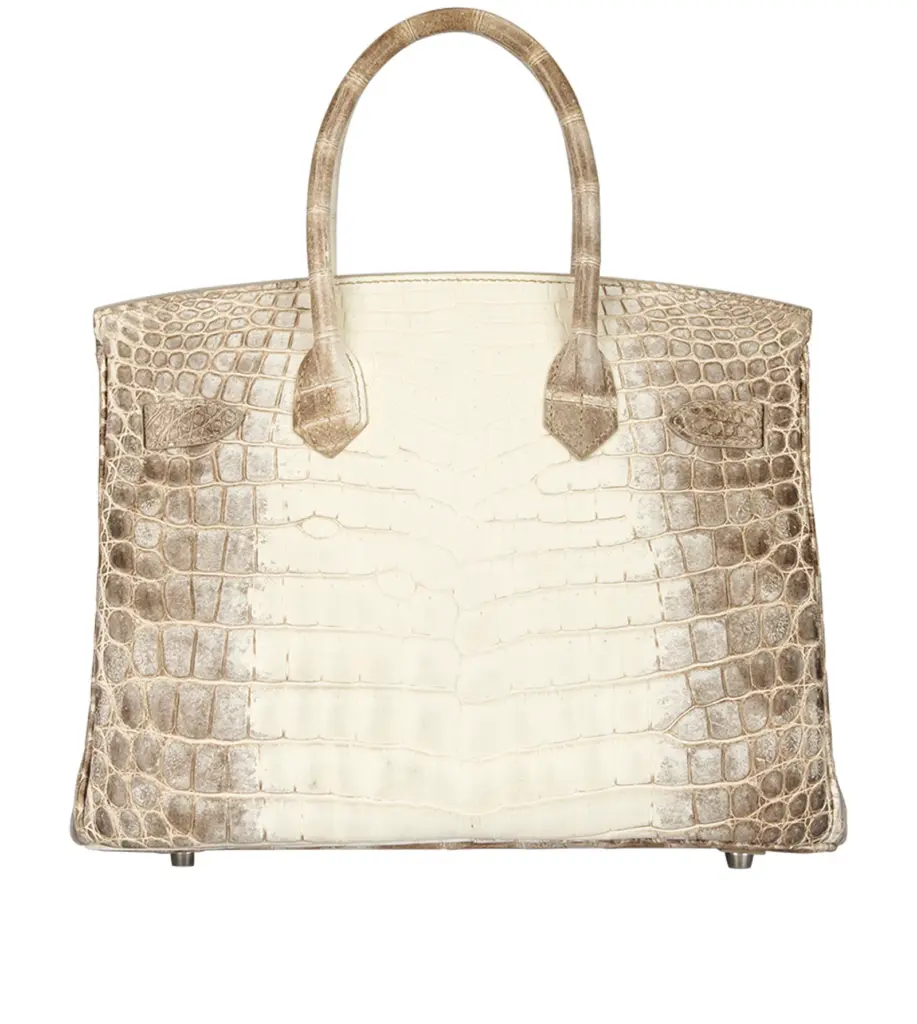
Understanding key authentication points is essential for anyone comparing high-quality replicas with authentic Hermès pieces. While each model has its own signature features, several structural and hardware-based elements can help you quickly determine the craftsmanship level of a replica. This chapter summarizes the most important checkpoints from our full authentication guides.
Specify and review a custom order with Cyan
Cyan is my college friend, and her family runs a long-standing booth in Guangzhou’s Baiyun Leather Market. I know her sourcing and WhatsApp workflow directly, although that relationship does not by itself verify a workshop’s material or production claims.
Cyan distinguishes semi-handmade from fully handmade options, personally inspects each bag, sends ultra-macro PSPs of details such as the blind stamp and stitching tension, and waits for the buyer’s “green light” before dispatch. Her practical sequence is:
- Send the exact model, size, color, leather preference, hardware tone, stitch preference, and intended use.
- Ask which details are direct observations, which come from the workshop, and which have documents.
- Agree on the PSP views required before you sign off: full exterior, all sides, base, handles, closure, stamp, hardware, stitching, edges, and interior.
- Review one coherent specimen and list corrections precisely. Do not sign off from catalog photos alone.
- Confirm packaging, transit plan, remedy terms, and what happens if the received bag materially differs from the approved PSPs.
Cyan has direct experience changing routes, using third-country transit, and reducing or adjusting branded packaging during stricter inspection periods. Her June 2026 notes called this “triangle routing,” described the success rate as “exceptional,” and offered comprehensive customs-seizure insurance for bespoke handmade pieces, while still acknowledging random checks. Older sales copy used absolute safety language that I no longer use. No route is customs-cleared, lawful, or risk-free simply because a seller has used it before. Reconfirm coverage, exclusions, replacement terms, destination limits, and the claim procedure in writing before payment. My own customs-seizure experience is one reason I reject absolute shipping promises; the AAA guide for US buyers covers the broader risk and logistics framework.
Receipt-day to 12-month follow-up
Long-term community reports are mixed, so this is a tracking method—not a controlled durability result or a prediction for one bag.
- Receipt day: save the PSP set you accepted and photograph the same exterior, interior, hardware, glazing, handles, stitching, and shape positions. Isolate whether an odor appears to come from leather, lining, edge paint, adhesive, fragrance, or packaging; smell alone is not a tannery, species, tier, safety, or authenticity test. Record every mismatch and remedy request before use.
- 30 days: repeat the baseline views and note whether odor has cleared, changed, or persisted. Inspect closure contact points, feet, strap clips, corner glazing, handle coating, loose thread, and early shape change. Distinguish a surface scratch from color loss, peeling, or exposed base metal.
- 6 months: record frequency and carrying conditions, then compare hardware finish, glazing, handles, stitch tension, leather feel, patina or coating change, and loaded shape. Document any repair, seller response, replacement, or unresolved defect.
- 12 months: recreate the receipt-day photographs, compare the specification with what you received, and separate ordinary wear from premature failure. One bag’s result is useful history, not a universal prediction.
A useful Hermès brief includes the complete model, size, leather, color, hardware and the details you want to compare. Decide those before requesting a quote or another set of PSPs.
Current price context—not a replica price promise
Prices vary by market, tax treatment, date, leather, and availability. The following references were refreshed on July 19, 2026 and are included only to calibrate the authentic and secondary-market context:
- For broad context, I previously used $13,000+ as an authentic-retail threshold and noted that a standard Birkin could surpass $13,000 before pre-spend. The model-specific references below are more useful because they identify date, market, material, and price type.
- Hermès UK listed a Mini Lindy in Clémence at £6,120, marked unavailable when retrieved. This is UK retail context from the official product page, not a resale value or replica comparison.
- Sotheby’s January 2026 US retail-tracking table listed a Kelly 25 in Togo/Epsom at $13,700 and Kelly 28 at $14,400. Sotheby’s is a secondary-market business reporting boutique-price data; these are US, model/material-specific references, not universal current offers. See its 2026 Kelly price report.
- Sotheby’s reported an average $22,300 auction price for Birkin 30 Togo examples sold on its platform in 2025. That is a platform-specific historical auction average, not current retail, an appraisal, or a guaranteed resale outcome. See the Birkin buying and selling guide.
The official US Picotin 18 page returned an access block during the July 2026 price check, so its earlier exact price is not listed here.
Final decision checklist
- Model and size match your carry needs.
- Leather behavior matches the intended structure and maintenance tolerance.
- Seller terminology has been converted into a written specification.
- PSPs show the exact specimen from all critical angles.
- Separate what you can see from what the supplier says about provenance.
- Ask for appropriate documentation for premium leather, exotic, hardware, and plating claims; otherwise, treat them as unverified.
- Check that every price includes a date, currency, market, and price type.
- Packaging, transit, customs risk, remedies, and payment exposure are understood without guarantees.
Cyan is my commercial sourcing partner and a college friend whose family runs a long-standing booth in Guangzhou’s Baiyun Leather Market. Some of the catalogs and QC references discussed here come through that relationship. The Trusted Sourcing & Catalog Page explains it and the available inquiry route.
Shop with clarity, vet with precision, and wear your bag with the confidence it deserves.
FAQs
Can PSP photos prove that a bag is fully handmade?
Ask which seams are hand-stitched, then request close views of the front, reverse and corner turns. Keep the workshop’s answer beside those views so the production claim stays clearly attributed.
Start with the relaxed shape, handle and strap alignment, zipper path and stops, closure placement, leather behavior, edge work, interior, and consistency across the whole PSP set. The Mini Lindy case above shows which details to compare together.
Start with the relaxed shape, handle and strap alignment, zipper path and stops, closure placement, leather behavior, edge work, interior, and consistency across the whole PSP set. The protected Mini Lindy case above shows how to keep the conclusion proportional to the images.
Does an HSS-style stamp prove a special-order bag is authentic?
No. A stamp can be copied. Review its placement and execution as one detail, but do not infer authenticity, provenance, or entitlement from the mark alone.
Is Epsom or Togo better for Hermes replica bags?
I would choose Epsom for a sharper, more structured outline, especially a Kelly Sellier-style shape, and Togo for a softer Birkin profile with visible grain. On an Epsom sample I compare grain scale, corners and folds; on Togo I compare grain variation and how the panels settle. That model-and-leather fit matters more to me than claiming one is universally easier to replicate.
Will gold-tone hardware tarnish?
Gold-tone finish can wear at rings, chains, clasps and other contact points. I would ask for the actual base material and finish specification, then look for dated wear photographs of the same hardware. The workshop’s stainless-steel and 18K/24K plating descriptions are supplier specifications; the claims about lasting for months or years were not wear-test results.
Is third-country transit customs-safe?
No route is risk-free. Cyan’s packaging and transit experience can support planning, but inspections, delays, seizures, damage, and local legal consequences remain possible. Use the general logistics guide and make an informed decision for your jurisdiction.
How often should current price figures be checked?
Check every exact figure immediately before publication and again when the market, year, or product page changes. Record the source URL, retrieval date, currency, market, and whether the number is retail, resale, auction, or a seller quote.
A more defensible Hermès decision
The strongest choice is not the bag with the loudest tier label. It is the one whose model and leather suit your life, whose visible workmanship holds up through a complete specimen review, and whose unverified claims you have treated with appropriate caution. That is the standard I use after long-term handling and comparison: practical fit first, evidence second, marketing last.
For an optional specification review, send Cyan on WhatsApp the model, size, leather, color, hardware, stitching, budget and the PSP views you want to compare. Confirm current order terms directly with Cyan.

25 comments
As someone considering my first Hermès replica, I found the pricing and quality expectations explained here very refreshing. Most blogs either overhype replicas or shame people for buying them. This article felt balanced and honest.
Thank you, Sarah. Our goal is always to give transparent, educational information—no pressure, no judgment. Whether you’re buying authentic or AAA quality, knowledge helps you make the right choice for you.
The section about Birkin vs. Kelly replica craftsmanship was incredibly helpful. I recently saw an AAA Birkin that looked almost too perfect, so this guide gave me the confidence to evaluate the stitching and hardware more carefully.
We appreciate your comment, Amelia! Yes—some modern AAA replicas look extremely close, so checking stitching density and hardware engraving is key. Glad the guide could help you look with a sharper eye.
I’ve read so many guides on Hermès authentication, but this one really helped me understand the leather differences. I always mixed up Togo and Clemence before, but now it finally makes sense. The comparison with replicas was surprisingly detailed!
Thank you, Olivia! Hermès leather types can be tricky even for seasoned collectors. We’re glad the breakdown helped. If you ever need guidance on comparing leather texture or grain patterns, feel free to reach out anytime.
Absolutely blown away by the leather guide!
I’ve been reading about premium reps for months, but this is the first time someone explained the 18-degree saddle stitch angle so clearly. I just checked an old ‘AAA’ bag I bought on IG last year and it’s completely straight machine-stitched. Feeling enlightened (and a bit called out)! Thanks, Chloe.
I’m glad the close-up made you look again. Compare tension, spacing and corner turns along with the stitch slant, and ask which seams a hand-stitching claim covers. Those combined details make the comparison more useful.
Do you recommend Togo or Clemence for a slouchy B30?
Fantastic 2026 update, Chloe. I’m looking to order a Birkin 30 to replicate that relaxed, Jane Birkin ‘lived-in’ aesthetic you mentioned. In your experience, does Togo or Clemence develop a better natural slouch over time without losing too much structure at the base?
Thank you! For a gorgeous slouchy silhouette, Clemence is naturally heavier and softer, so it will relax into that ‘slouch’ much faster. However, if you want to maintain a bit of grain definition and avoid a completely flat base, Togo is the daily workhorse for a reason. Cyan always recommends Togo for a B30 daily driver because it strikes the perfect balance between suppleness and resilience.
I’ve been burned by Instagram sellers before. They promised “1:1 Mirror Quality” and sent me a bag that smelled like toxic glue and had plastic handles. I love your honesty in this guide, but how do I know your “Standard Fully Handmade” isn’t just another bait and switch? Also, I’m in the UK, I’m terrified of customs seizing it.
Sarah, ask for photographs of the actual bag, including the stamp, handles, seams and hardware, plus written terms explaining what happens if you reject the PSPs. Cyan handles partner inquiries and orders; the blog’s review is separate from those order terms. For the UK question, ask the seller to state the remedy for loss or seizure explicitly before payment.
This is hands down the most accurate breakdown of the replica market I’ve ever read. I usually buy the mid-tier semi-handmade bags for daily use, but I have a high-society wedding coming up in Milan. I want to commission a Kelly 25 Sellier in Epsom. If I upgrade to the original HAAS leather and 24K thick plating, what is the current lead time?
For a Kelly 25 Sellier, I would concentrate on the handle arch, sharp side profile and clean edges. Ask Cyan for a current completion estimate and the exact material specification, with your wedding date stated clearly. I would leave room for a different bag if the timing is uncertain.
Totally agree with the “Lived-in Luxury” trend for 2026. I’ve been dreaming of a Birkin 30 in Veau Doblis (Suede), but I’ve always heard that replica suede is impossible to get right and usually looks like cheap microfiber. Can your studio actually pass the “nap” test you mentioned?
For the suede question, I would request a close video with the nap brushed in both directions under the same light. Look for an even surface and a consistent color shift across the panels, and keep the supplier’s material description beside the clip.
Even authentic collectors are nodding their heads
As someone who owns three authentic quota bags from the Rue du Faubourg Saint-Honoré boutique, I must commend your transparency. The pricing hikes this year are insulting, and the pre-spend games are exhausting. Your breakdown of the hardware micron plating and the Fil au Chinois thread is pure craftsmanship appreciation. Brilliant article.
Wow, receiving praise from a true authentic collector means the world to me! Thank you. True luxury should always be about the passion of handcraftsmanship and the sensory experience of fine leather, not the artificial scarcity or manipulative retail games. I’m glad the technical breakdowns resonated with you!
Is the Veau Doblis (Suede) difficult to maintain?
The SS26 trend report on Veau Doblis has me highly tempted to custom order a mini Kelly in suede. But I’m terrified of color transfer and water spots. Is the top-tier replica suede treated, or should I stick to safe neutrals in Epsom for my first custom buy?
If water marks and color transfer are already worrying you, I would start with a neutral Epsom configuration and compare its care needs with the suede option. For the Doblis description, ask the supplier about the exact material and finish before deciding; the color and nap alone leave that question open.
I want Hermes HAC 55 or 60 in crocodile or alligator
This guide was cool
Hi John, thanks for your appreciation.
The H-stop detail is spot on!
It’s all in the details! I never paid attention to the interior zipper end-stop until reading this guide. It’s crazy how low-tier factories just use standard generic square zipper stops. Your case studies really help visualize where the corners are cut. Can’t wait to see more side-by-side analyses.
The zipper track and edge finishing are useful places to inspect, Sophia. Look at the corners, joins and reverse seam in the actual unit’s close-ups. Those details can show workmanship; they do not establish that every mass-production workshop fails or prove how long an artisan spent on the bag.
Editor’s question: when judging a Hermès-style bag, which difference matters most to you in real use—leather behavior, hand-stitching, hardware feel, or the bag’s overall structure? I’m trying to keep this guide centered on observable construction rather than seller labels.