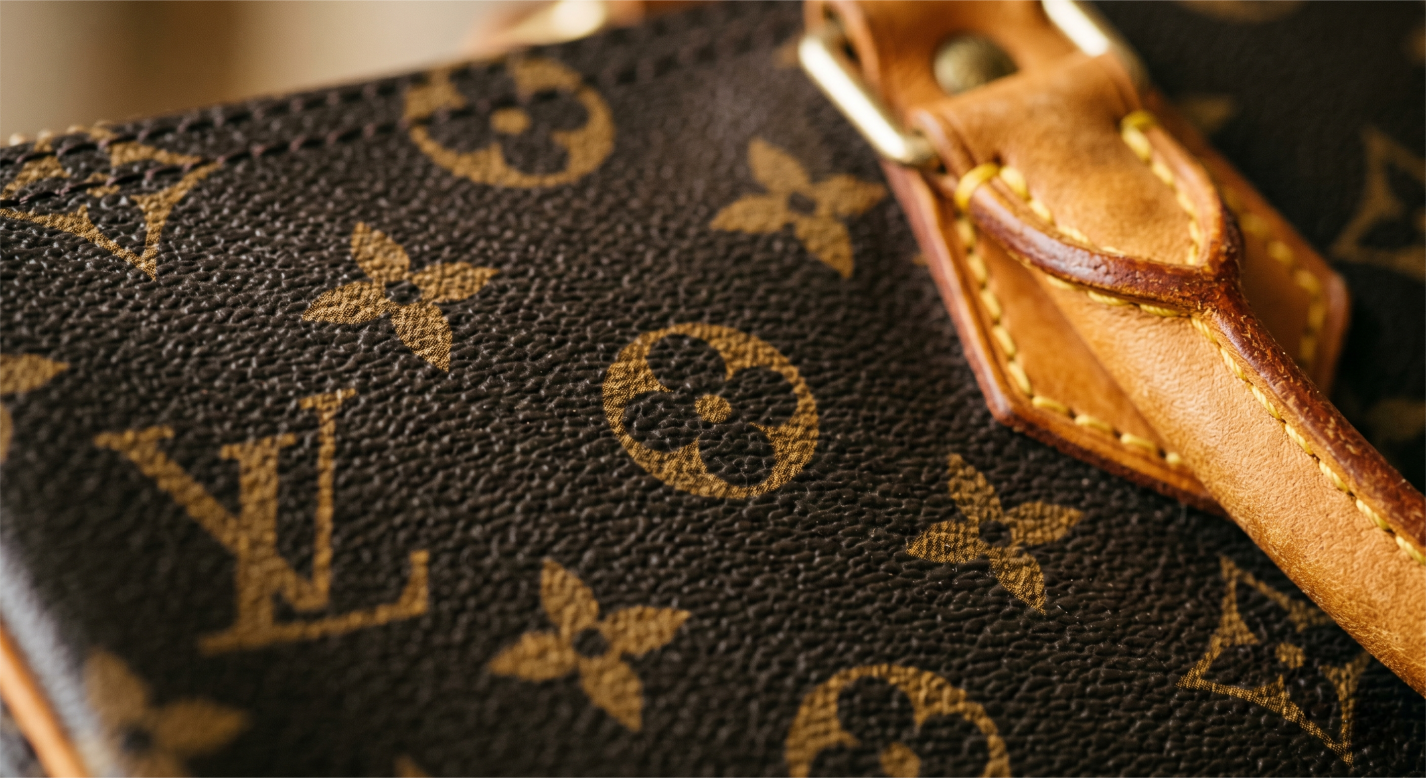
Louis Vuitton uses a much wider material library than “canvas versus leather” suggests. For everyday bags, the practical differences between Monogram, Damier, Epi, Empreinte, Vernis, Taurillon, Mahina and Taiga show up in weight, structure, water sensitivity, scratching and how the bag ages. This guide keeps the original visual examples but focuses more directly on those differences.
For those looking to understand the broader market, including how high-quality alternatives compare to the originals, check out our AAA Replica Bags Guide.
For authentication, I would not jump from material name straight to a microscopic “secret.” Start with the correct product reference and then compare surface, pattern scale, panel cutting, trim and wear. Micro-details can add information, but they are most useful when the whole bag already makes sense.
The Legacy of Louis Vuitton: From Trunk-Maker to Global Icon
The story of Louis Vuitton begins with a 14-year-old boy who walked over 400 kilometers to Paris to find work. Starting as an apprentice in a woodworking shop, Louis soon became the personal trunk-maker for Empress Eugénie. In 1854, he founded his own workshop at Asnières, revolutionizing travel by creating flat-topped trunks that were stackable and durable, unlike the heavy, rounded trunks of the era (you can read more about this journey in Louis Vuitton’s official legendary history).
Louis Vuitton has repeatedly adapted its classic materials across travel, leather goods and seasonal collections. That matters because “Monogram,” for example, can refer to several constructions and treatments; authentication or care advice should match the exact material rather than assume one universal surface.
Decoding the Classics: LV Monogram vs Damier Canvas
When people think of Louis Vuitton, the first thing that comes to mind is their signature canvas. It is a common misconception that these are made of leather; in fact, they are crafted from a high-quality, durable treated canvas. For a deep dive into how these coated materials transformed luggage during the industrial revolution, refer to this detailed look at The birth of Monogram and Damier canvas.
The Iconic Monogram Canvas
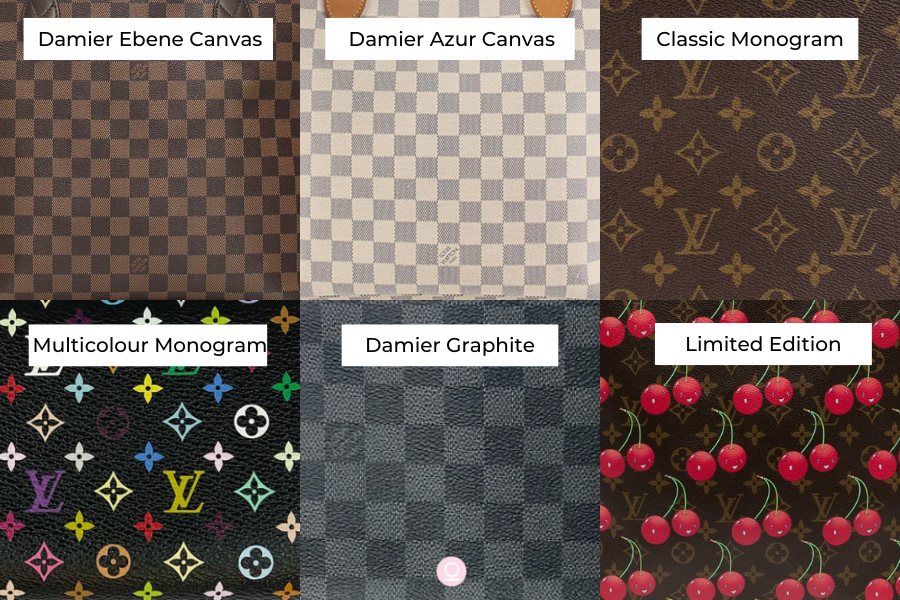
Introduced in 1896 by Georges Vuitton to protect his family’s luggage from imitators, the classic Monogram is often mistaken by newcomers for genuine leather. In official Louis Vuitton specifications, it is classified as coated canvas: a durable, tightly woven cotton canvas base sealed with a protective, water-resistant exterior coating. Unlike natural hides, coated canvas requires no conditioning, resists surface moisture, and weighs significantly less than solid leather—qualities that made it exceptional for historic travel trunks and modern daily bags alike. Visually, the pattern combines the interlocking LV initials with stylized four-petal floral and geometric star motifs, reflecting late-Victorian aesthetic tastes influenced by Japanese family crests (mon).
Classic Monogram canvas is traditionally finished with Vachetta leather trim—a natural, vegetable-tanned cowhide left untreated by pigments or synthetic topcoats. Because its pores remain entirely open, fresh pale-ivory Vachetta is inherently vulnerable to liquids: raindrops, drink splashes, and hand lotions absorb rapidly into the grain, causing distinct dark spots or water rings if not promptly blotted dry. Over months of regular use, exposure to ambient sunlight, air oxidation, and natural oils from your hands gradually darkens the leather, transforming it into a rich golden-honey or deep amber patina that naturally helps mask earlier surface marks. For realistic maintenance, keep the trim away from heavy rain and alcohol-based sanitizers, and blot water drops immediately with a soft, lint-free cloth without rubbing. If you prefer a bag that handles unpredictable weather with minimal care, consider designs with treated leather trims—such as the chocolate-brown coated cowhide on Damier Ebene—which offer substantial moisture resistance right out of the boutique.
The Understated Damier Canvas
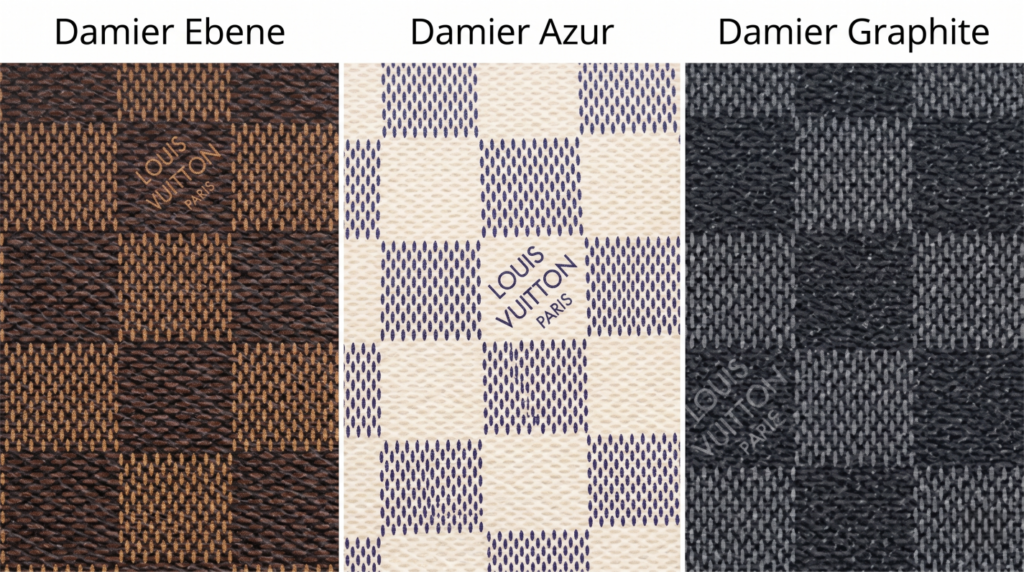
Interestingly, the Damier (French for “checkerboard”) pattern actually predates the Monogram. First launched in 1888, the brown Damier Ebene pattern won a gold medal at the Paris World’s Fair.
Damier is often considered the more “understated” choice. It is highly practical because its dark brown hues and geometric grid are excellent at hiding wear and tear. Unlike the Monogram, the Damier Ebene is typically paired with dark, treated leather trim, making it more resistant to water stains and darkening than the pale Vachetta leather found on Monogram bags.
LV Monogram vs Damier: Which Should You Choose?
The choice between LV Monogram vs Damier often comes down to personal style:
- Style: Monogram is bold, iconic, and immediately recognizable. Damier is subtle, professional, and geometric.
- Durability: While both canvases are incredibly tough, Damier Ebene is generally lower-maintenance because it lacks the delicate Vachetta leather trim that can stain or water-spot.
- Resale Value: Both hold their value exceptionally well, but the classic Monogram often sees slightly higher demand in the vintage market.
For more detailed reviews on how these materials hold up over time, visit our AAA Replica Reviews section.
Epi Leather Durability: Grain Structure and Longevity
If you prefer an all-leather bag that can withstand the rigors of daily use, look no further than EPI leather. Introduced in 1985, EPI was Louis Vuitton’s first permanent leather line.
What is EPI Leather?
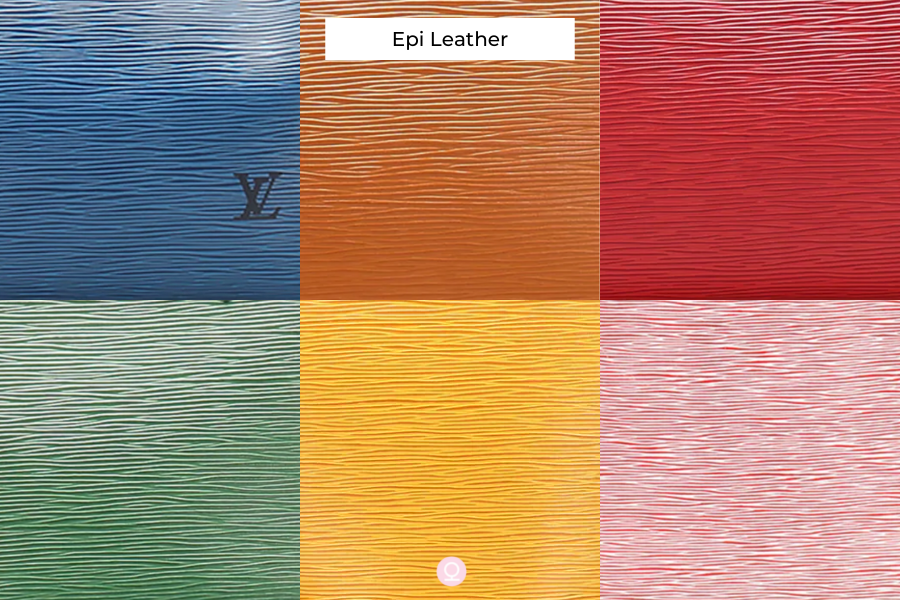
EPI leather is a dyed-through leather with a distinctive textured surface. The word “EPI” refers to an ear of wheat, and the horizontal grain of the leather is designed to mimic the look of a wheat field waving in the wind.
Epi Leather: Surface Resilience and Everyday Practicality
Epi is one of the more practical LV leather families because its pronounced directional texture tends to disguise light surface wear and helps structured bags hold their shape. I would describe it as durable rather than “unmatched,” because condition still depends on color, use, storage and the specific item.
- Scratch visibility: The pronounced textured grain can make light surface marks less obvious than on smooth calfskin, although deeper abrasion can still show.
- Moisture: Epi generally tolerates incidental moisture better than untreated Vachetta, but it is not waterproof; prolonged wetting and poor storage can still damage leather and edge finishes.
- Structure: Epi is comparatively firm, which helps bags such as the Alma retain a defined silhouette. Older or heavily used pieces can still soften, crease or deform.
- Longevity: Well-kept Epi can age very well, but corners, glazing, handles and high-friction areas should still be checked individually.
Whether you are navigating a rainy commute or a busy airport, EPI leather is perhaps the most practical of all Louis Vuitton materials.
Other Exceptional Louis Vuitton Materials You Should Know
Beyond the “Big Three,” Louis Vuitton has developed several other specialized materials that cater to different tastes.
Monogram Empreinte
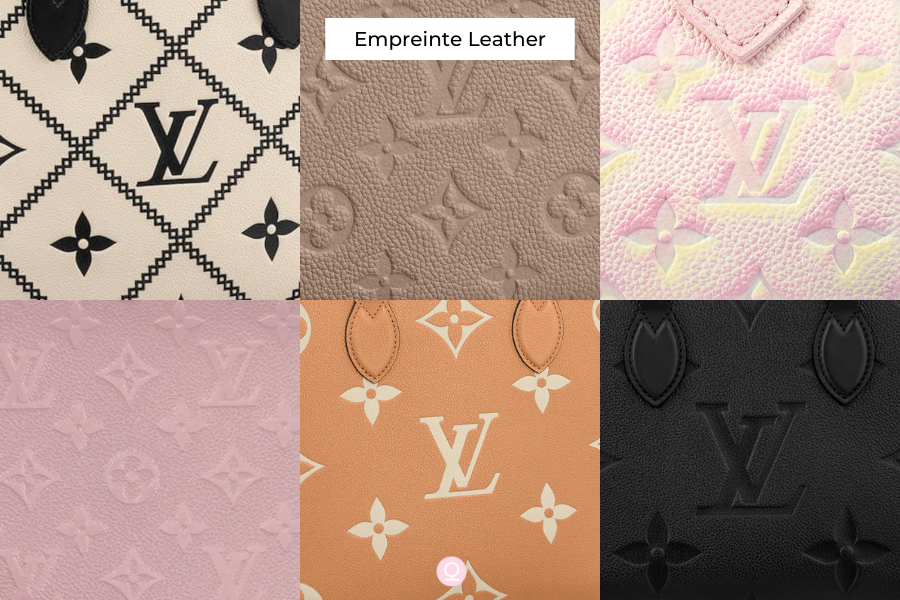
Launched in 2010, Empreinte is a soft, supple calf leather that features the Monogram pattern embossed directly into the skin. It is known for its luxurious feel and sophisticated look. While it is softer than EPI, it is still quite durable, though the embossing can slightly soften or “flatten” over many years of heavy use.
Monogram Vernis
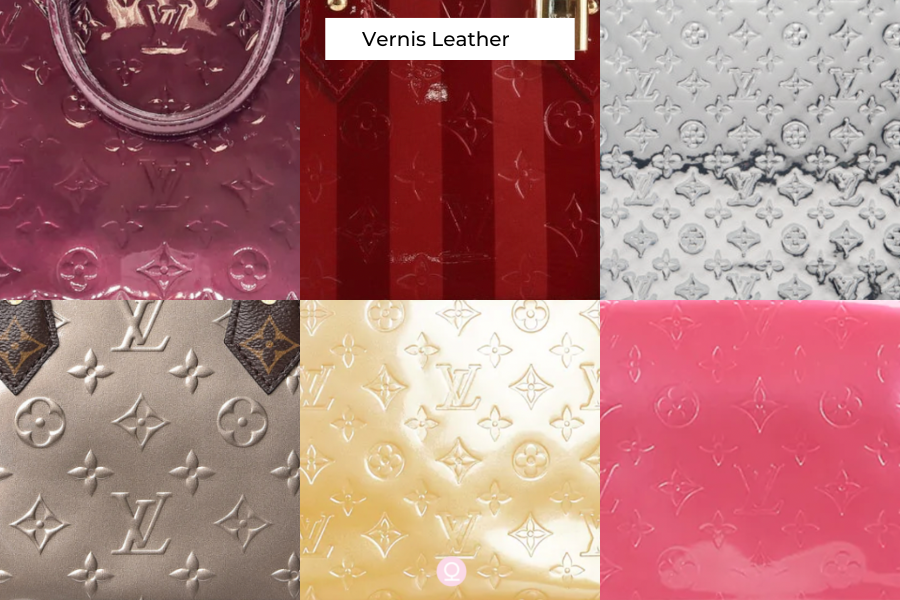
In 1998, under the direction of Marc Jacobs, LV introduced Vernis (French for “varnish”). This is a patent leather embossed with the Monogram pattern. It is incredibly shiny and modern, but it requires “tender loving care” as it is susceptible to color transfer (absorbing dyes from denim, for example) and surface scratches.
Taurillon Leather
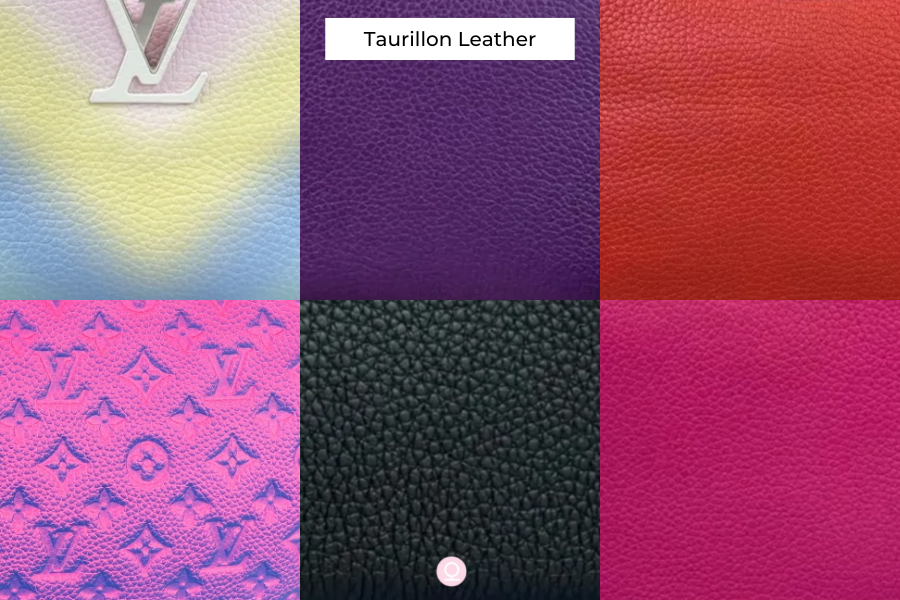
Cuir Taurillon is a premium full-grain bovine leather celebrated for its visible, natural pebble grain and plush hand-feel. Rather than relying on heavy surface embossing or coatings, Taurillon showcases the organic texture of the hide, giving bags like the Capucines an understated, tactile presence. Despite its softness and supple drape, the hide is substantial enough to retain its silhouette over years of wear. The pronounced grain is also forgiving in everyday rotation, camouflaging minor surface scuffs far better than ultra-smooth box calfskin.
Mahina Leather
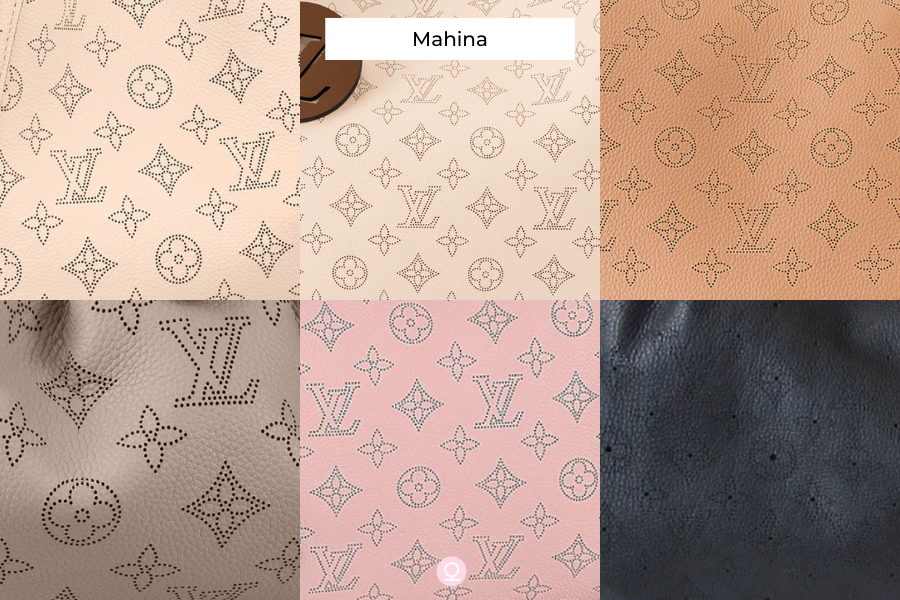
Crafted from drummed calfskin, Mahina leather is distinguished by its delicate laser-perforated Monogram motif. Instead of traditional printing or heat embossing, tiny pointillist perforations outline the classic flowers and LV initials directly across the hide, creating a remarkably subtle aesthetic. The drumming process imparts a fluid, pillowy softness that drapes gracefully against the body. While the calfskin base provides dependable tensile strength for carrying daily essentials, its open-grain suppleness means owners should avoid abrasive contact or sharp jewelry that could snag the perforated edges.
Taiga Leather
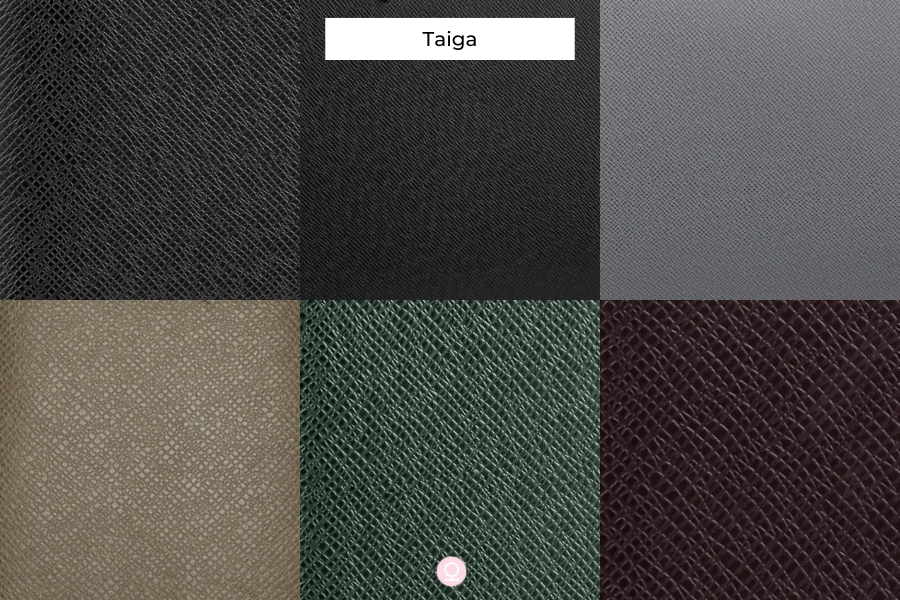
Introduced in 1993 as Louis Vuitton’s first collection tailored for men’s leather goods, Taiga is crafted from calfskin finished with a fine, uniform cross-grain texture. The leather undergoes precise embossing and surface treatment to create a low-sheen, architectural finish that resists scuffs, corner abrasions, and fingernail marks. Its rigid structural temper prevents slouching or deformation over time, making Taiga a natural fit for briefcases, structured messengers, and compact travel organizers that endure heavy daily business use.
Monogram Denim
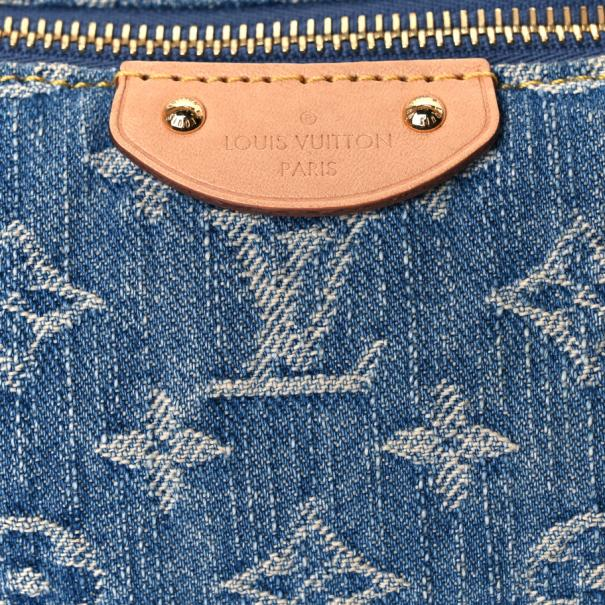
For a more casual, youthful look, LV offers Monogram Denim. This material uses a traditional Jacquard weaving technique to create the pattern. It has a vintage, “stonewashed” feel that has become a cult favorite among fashionistas.
Calfskin Leather
Calfskin serves as the foundation for several of Louis Vuitton’s most popular contemporary collections, ranging from smooth, satiny finishes to deeply textured treatments. Its best-known application is Monogram Empreinte, where drummed calfskin is heat-embossed with the iconic monogram motif to produce a tactile, dimensional relief. The leather strikes an appealing balance between suppleness and body: it softens gently with wear without losing its overall silhouette. While smooth calfskins require moderate care against fingernail scuffs, embossed Empreinte hides surface wear effectively, making it an excellent bridge between casual canvas and formal structured leathers.
Exotic Skins: Python and Crocodile
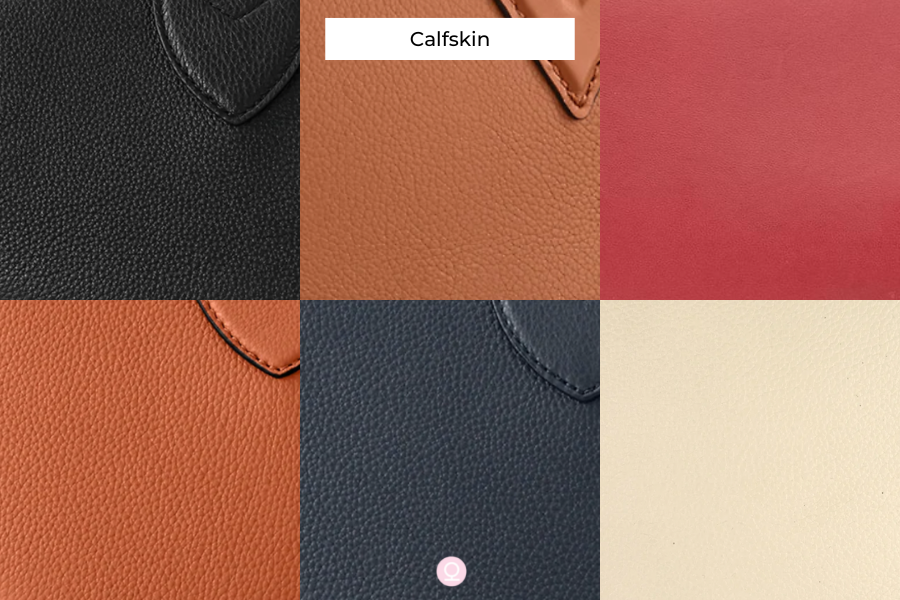
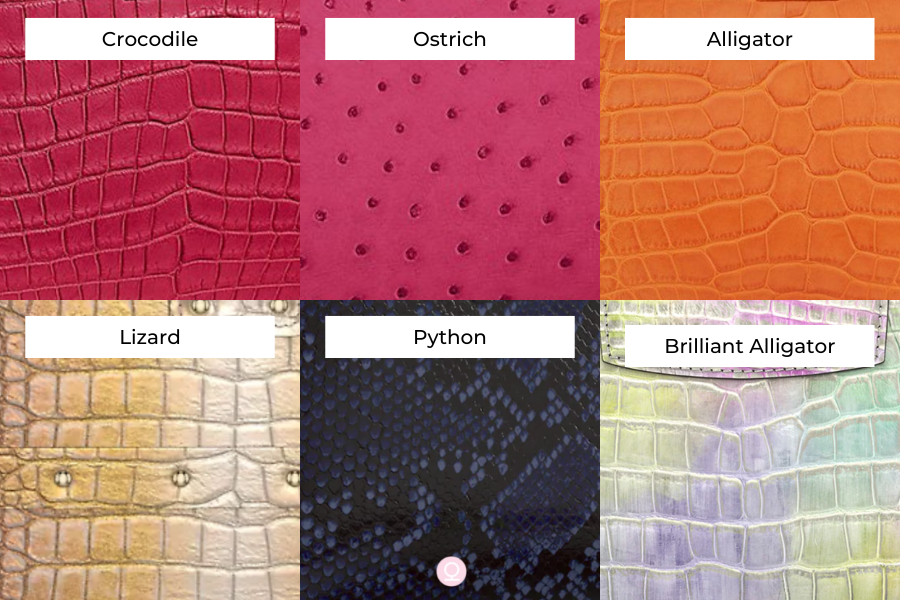
For the ultimate luxury, LV utilizes exotic skins like Python and Crocodile. These materials are incredibly rare and require specialized care. Crocodile belly is the most prized portion, and the natural luster of the scales actually improves with use, becoming more beautiful over time. Python scales are delicate and can lift if exposed to too much humidity, so they must be stored in a dry environment.
Expert Tips: How to Authenticate Louis Vuitton Materials
Because of their popularity, Louis Vuitton bags are among the most counterfeited items in the world. Knowing how to spot a fake is a vital skill for any enthusiast. For a deep dive into this topic, read our guide on how to spot fake bags.
Here are some material-specific authentication tips based on expert standards:
1. The Monogram Pattern Alignment
- Pattern layout: Many LV bags show deliberate Monogram placement, but exact symmetry depends on the model, panel shape and construction. Compare against the same reference rather than applying a universal center-line rule.
- Flower geometry: The flower centers and petal proportions in the authentic references are useful comparison points. I prefer side-by-side reference matching over reducing them to one “perfect circle vs hexagon” test.
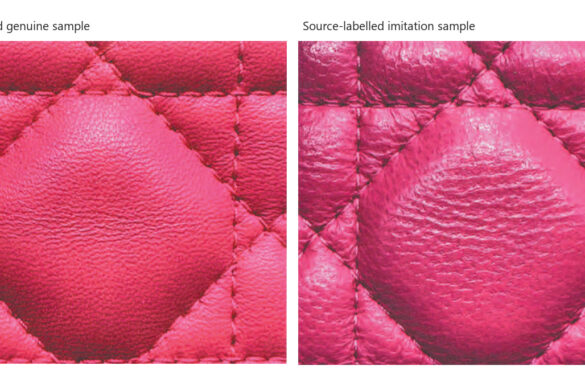
- Micro print structure: Under magnification, the Monogram reference set shows directional dot/line structure and slightly stepped print edges. Those details are worth examining, but they support—not replace—the model-level comparison.
2. The Damier Grid
- The “Paris” printing: Typography on Damier should be read with production-era context. Older and newer examples can differ, so features such as the “S” tail should be compared against an appropriate reference rather than used as a universal cutoff.
- Texture: The lines within the grid should not be perfectly smooth or flat; they should have a slight, consistent texture.
3. The Heat Stamp and Fonts
Louis Vuitton uses a very specific font for their internal heat stamps. Look for these “red flags”:
- The “O”: Many reference stamps use a relatively round “O.” Compare overall typography, spacing and impression quality rather than judging one letter in isolation.
- The “L”: A short horizontal foot is common in many LV stamp references, but era and product family still matter.
- The “N”: Look at the sharpness and proportions of the diagonal together with the surrounding letters; avoid memorized millimeter-style rules without an exact reference.
- The “A”: A relatively low crossbar appears on many references, but typography should be checked as a complete wordmark and against the correct period.
4. Hardware and Zippers
- Zipper supplier: Louis Vuitton has used different zipper and hardware suppliers over time. A supplier name can support an era/model comparison, but it is not a universal authenticity requirement.
- Hardware feel and wear: Compare weight, plating, edge finishing, movement and wear pattern with the correct reference. “Heavy” alone is not proof, and authentic plated hardware can scratch or tarnish.
- Engravings: Look for clean geometry, consistent depth and finishing appropriate to the hardware type. A copied crisp engraving is still only one part of the assessment.
Conclusion: Investing in Timeless Quality
Choosing the right Louis Vuitton material comes down to the compromises you are comfortable living with every day:
- Lowest Maintenance & Weather Resilience: Damier Ebene coated canvas (with treated dark cowhide trim) and Epi leather require the least daily attention. They handle rain, humidity, and accidental spills with ease.
- Softest Tactile Hand-Feel: Drummed Mahina calfskin and Cuir Taurillon provide the most luxurious, supple drape, though they demand mindfulness around sharp edges and abrasive surfaces.
- Water Vulnerability & Character Evolution: Classic Monogram with untreated Vachetta trim will record every rain drop and touch from your daily routine, gradually maturing into a deep golden patina.
- Structured Form vs. Relaxed Drape: Taiga and Epi maintain crisp, rigid architectural lines that resist sagging; Monogram Empreinte and Taurillon soften gracefully over time to follow the body.
For details on ethical standards in modern production, Louis Vuitton publishes their commitments to responsible material sourcing and sustainable tanning policies. Matching the material to your actual climate and carry routine will always yield greater satisfaction than choosing purely based on prestige.
When shopping secondhand, use the pre-owned guide to comparing condition to ask about wear and repairs before relying on the overall grade.
FAQs about Louis Vuitton Materials
Is Louis Vuitton canvas made of leather?
No, the classic Monogram and Damier canvases are made of a specially treated cotton canvas that is then coated for durability and waterproofing. However, the bags are almost always trimmed with genuine leather (like Vachetta or treated calfskin).
How do I stop my Vachetta leather from getting water spots?
Vachetta is highly sensitive to water. To prevent spots, you can use a specialized leather protector spray, but the best method is to avoid using the bag in heavy rain. If it does get wet, blot it gently with a dry, soft cloth immediately.
Which Louis Vuitton material is the most durable for daily use?
EPI leather durability makes it the top choice for an everyday “workhorse” bag. It is highly resistant to scratches and water. If you prefer canvas, Damier Ebene is more durable than Monogram because its dark leather trim does not show stains or wear as easily.
Why is my Monogram Vernis bag changing color?
Vernis is prone to “color transfer”. Because the patent coating is somewhat porous, it can absorb dyes from other items, like dark denim or colored tissue paper. Always store your Vernis bags in their dust bags and away from colored materials.
How can I tell if my LV bag was made in France?
For bags produced prior to the 2021 microchip rollout, Louis Vuitton used an internal Date Code (a two-letter workshop code followed by four digits) indicating the manufacturing facility and week/month/year. For example, prefixes like AA, AR, and SP correspond to French workshops, while CA and LM correspond to Spanish facilities. For newer bags produced during and after 2021, Louis Vuitton progressively phased out physical date codes in favor of embedded RFID microchips scanned through boutique internal systems.

13 comments
I’ve always been torn between Monogram and Damier Ebene. This article really helped! I think I’ll go with Damier for my first Neverfull since I’m terrified of ruining the light leather on the Monogram.
For a first Damier Ebene, check the condition and finish of the dark trim, especially corners and handles. Follow the care instructions for that bag. I’d still keep it away from prolonged wetting rather than assume the dark trim makes it waterproof.
EPI leather is seriously bulletproof. I have an Alma in black EPI from 2015, and it literally still looks brand new. Great guide!
Thank you! It’s amazing how well EPI holds its shape and resists scratches over the years. The black Alma is such a timeless and practical classic.
Does anyone have tips on removing a water spot from Vachetta leather? I got caught in the rain with my Speedy 30 yesterday and I’m freaking out. 🙁
Oh no! Try gently massaging the spot with a clean, dry microfiber cloth. Don’t use any harsh chemicals. As the leather naturally patinas and darkens over time, water spots often blend in and become much less noticeable.
The authentication section is super helpful. I had no idea about the ‘O’ in the Paris stamp needing to be a perfect circle. I just checked my wallet and it matches!
Glad you found it useful! It’s the little details like the font shape, stitching, and hardware engravings that usually give away a fake. Always refer to our authentication guides before buying pre-loved!
Mahina leather is my absolute favorite from LV. It’s so soft and luxurious, but surprisingly holds up really well to my heavy daily packing.
Mahina is definitely the epitome of “quiet luxury”! The laser-perforated details are just stunning, and it’s great to hear that it’s holding up well as your daily driver.
As a guy looking for a good work briefcase, the Taiga leather section sold me. I want something professional that doesn’t scream “designer” right away but will last forever.
Taiga leather is perfect for exactly that. It’s incredibly sophisticated, and the scratch-resistant cross-grain makes it ideal for daily commutes and business meetings.
Editor’s question: for LV materials, what would you most like to see measured or photographed side by side—canvas surface, print scale, edge wear, Epi texture, or how the material bends under light pressure? I’ll prioritize evidence that can be repeated across multiple samples.