
Why Mastering LV Bag Authentication is Crucial in 2026
Louis Vuitton authentication gets difficult for one simple reason: the strongest replicas are no longer defeated by one obvious logo mistake. I still find the small details useful, but I read them in context—material, model, production era, construction and provenance first, then the microscopic features shown in the reference photos below.
Higher-tier replicas can reproduce many of the details that older authentication guides treated as decisive. That makes a careful LV bag authentication workflow more important, not less: the goal is to collect several consistent observations rather than turn one micro-feature into a verdict.
This guide keeps the detailed material and hardware observations from my original reference set—including magnified Monogram print structure, Damier texture, Epi patterning, zipper forms, engravings and heat stamps—but I have updated the way I use them. Think of each point as a piece of evidence that becomes stronger when it agrees with the correct model and era.
Before diving deep into the technicalities, you can always visit our dedicated Louis Vuitton Collection to learn more about the brand’s classic models and latest releases.
I would not start at 60× magnification. First identify the exact model, size, material and approximate production era. Then compare overall proportions, panel cutting and trim. Once those are coherent, magnified print and hardware details become useful supporting evidence. This order matters because a copied micro-feature cannot rescue the wrong bag geometry.
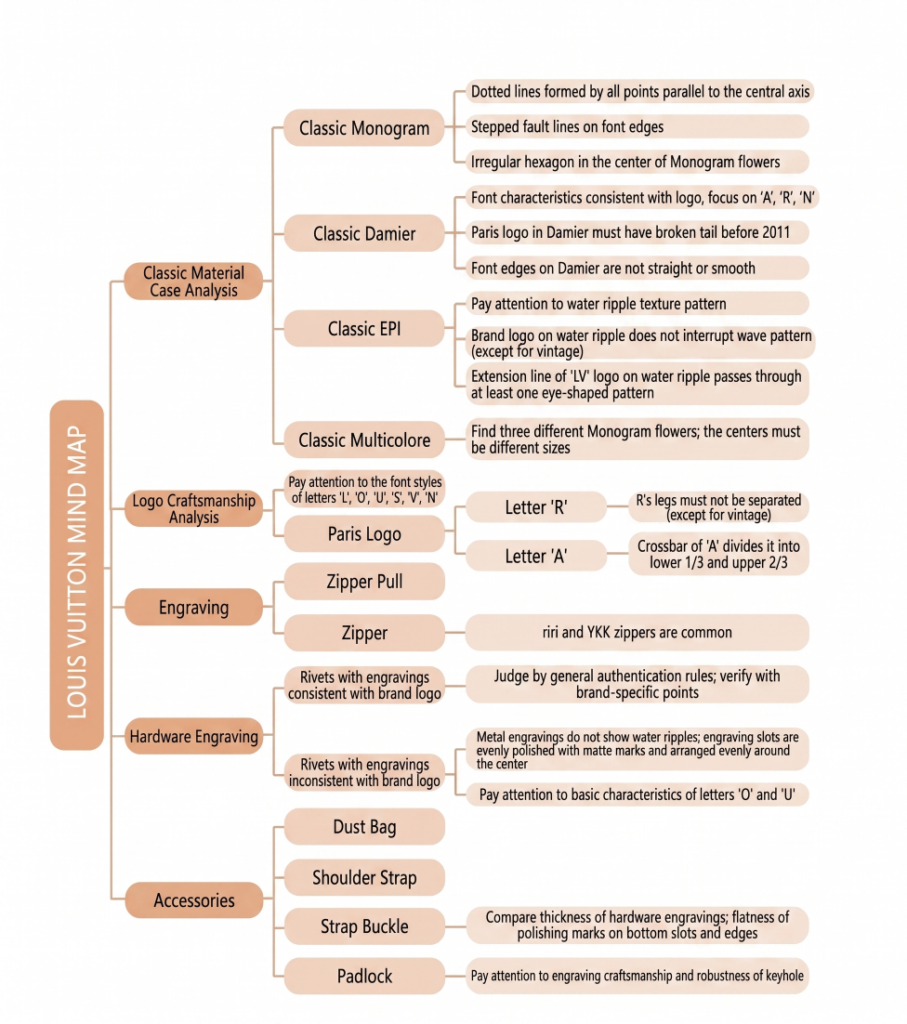
Table of Contents
Section I: The Core of LV Bag Authentication – A Microscopic View of Classic Materials
Louis Vuitton uses several coated canvases and leather families, and each creates a different surface under magnification. In this section I am using authentic reference images from my original article to document repeatable visual features I can actually see. I treat them as reference characteristics—not as universal rules that override model, year or condition.
1. Monogram Canvas: The “Stair-Step” Edge and Geometric Mysteries
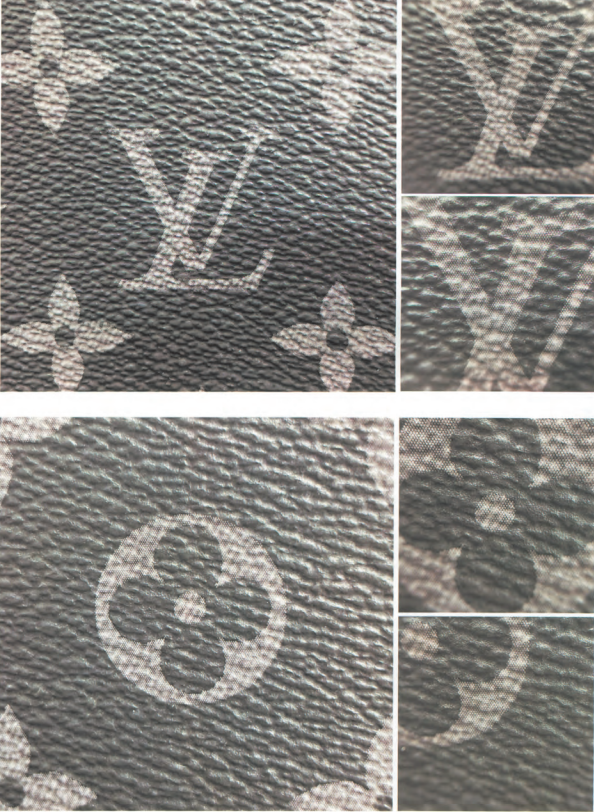
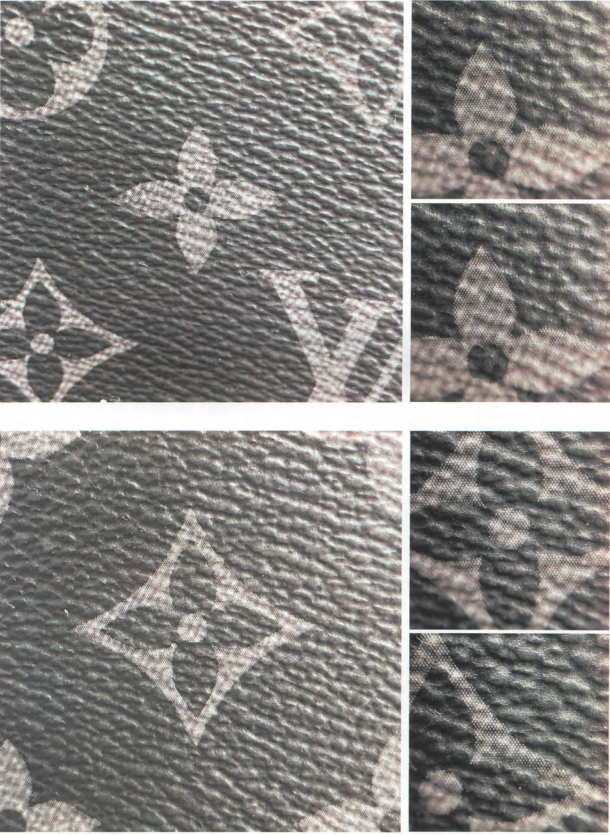
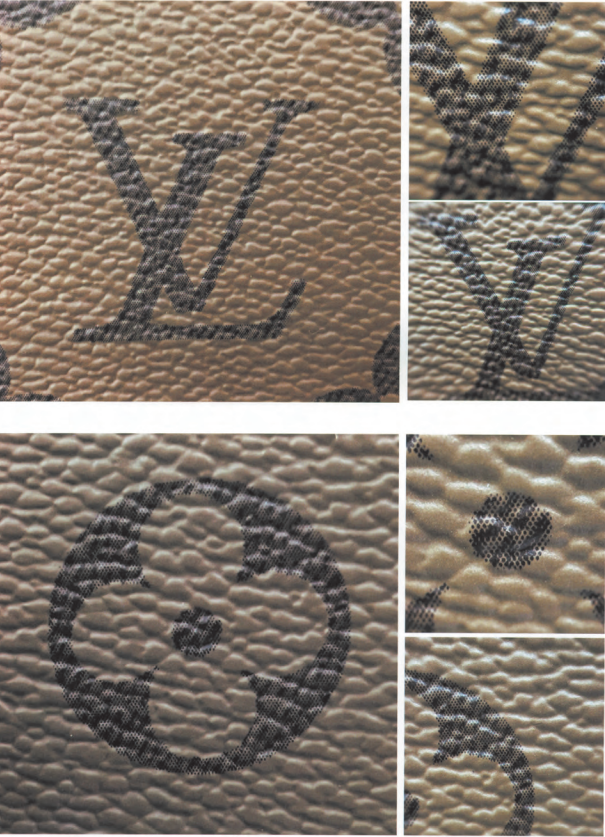
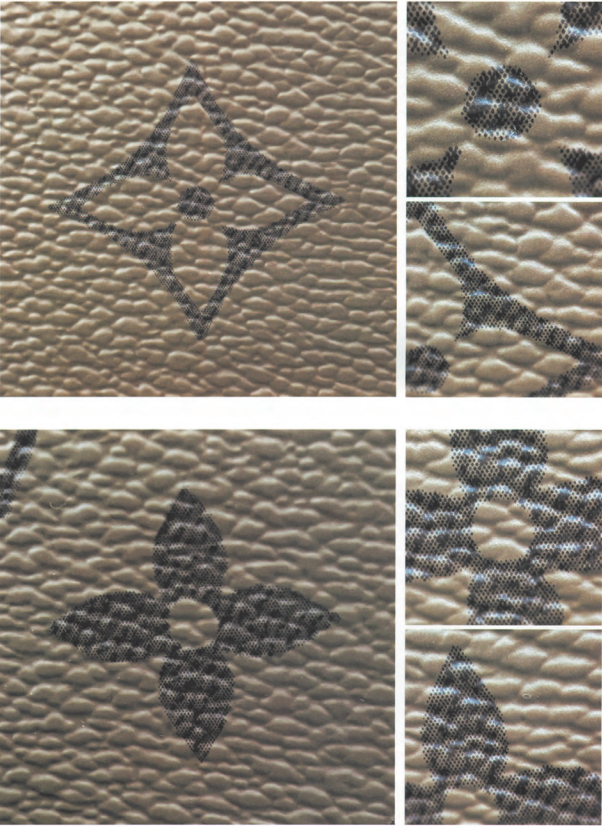
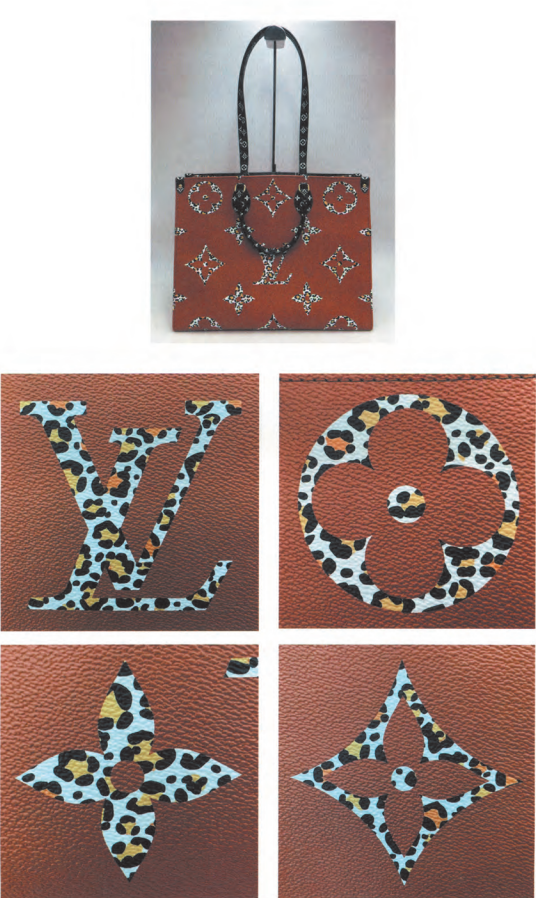
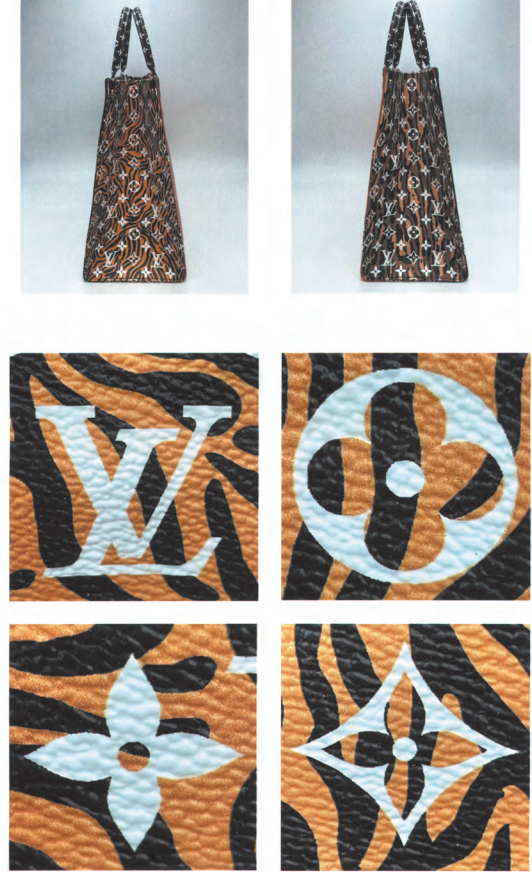
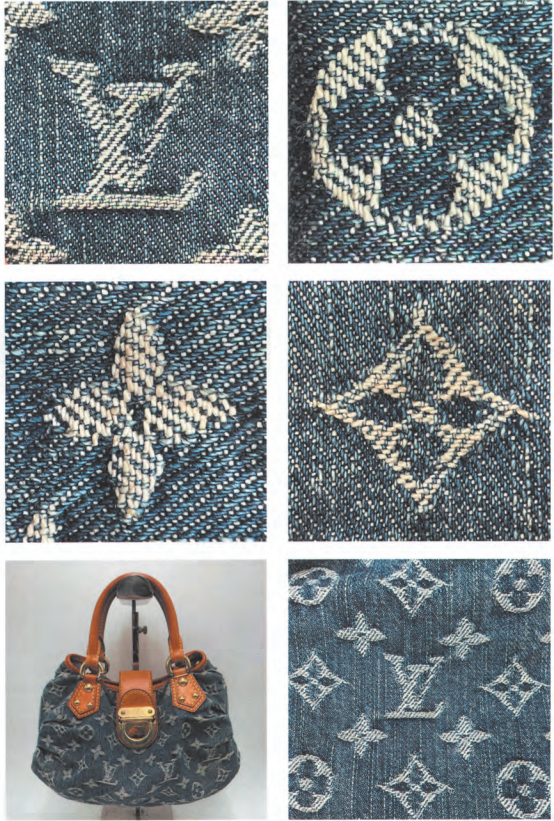
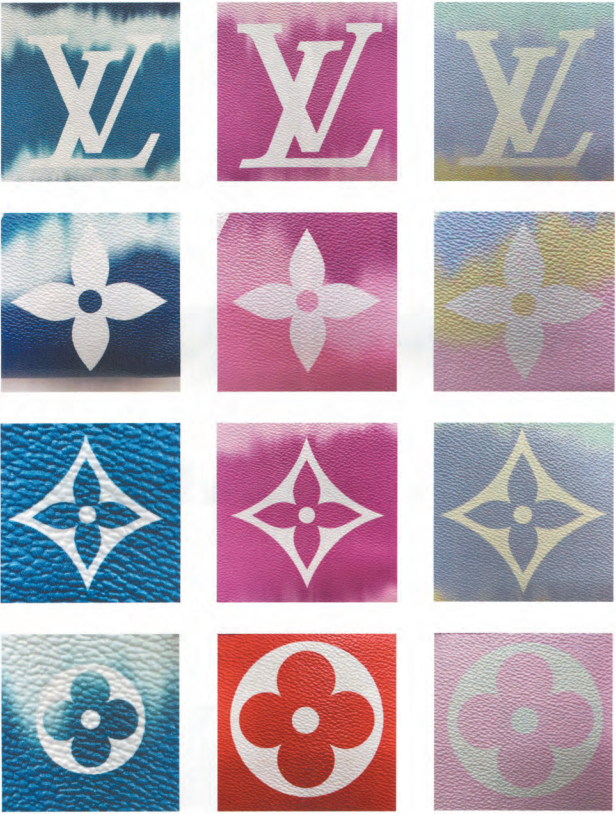
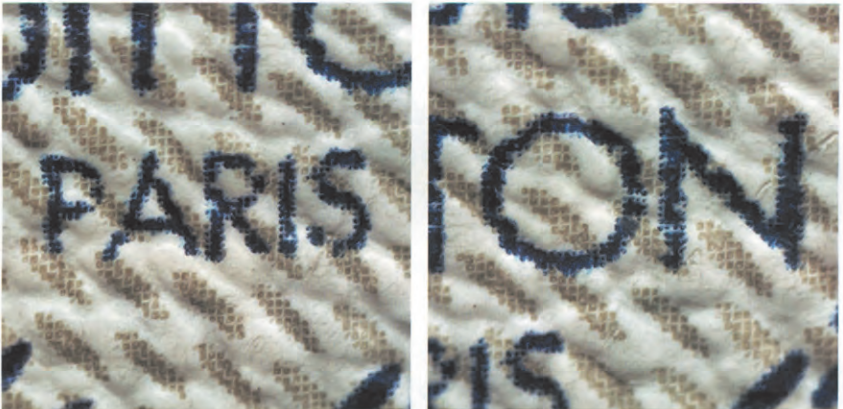
The Monogram canvas dates to 1896 and remains one of the easiest LV materials to recognize at normal viewing distance. Under magnification, however, the print is much less “solid” than it first appears. The reference images below show a dotted/stepped interaction between print and the textured coated-canvas surface. These are exactly the kinds of details worth preserving because they are tied to visible evidence rather than generic advice.
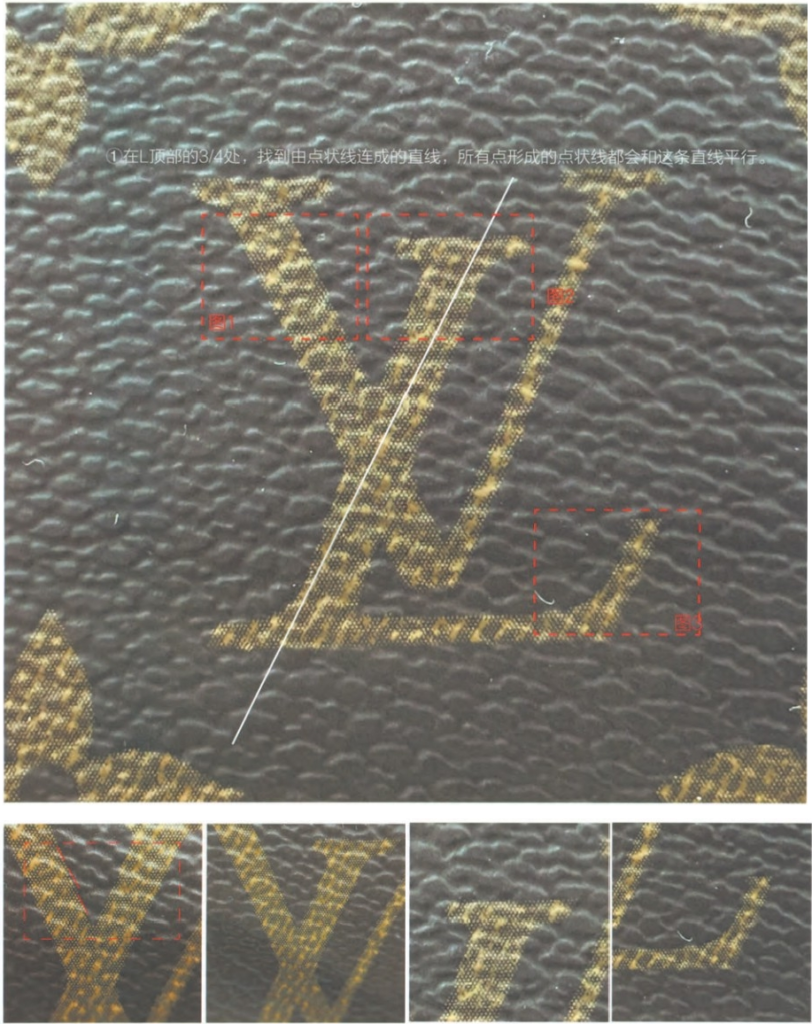
- The Parallel Rule of Dotted Lines: In the authentic Monogram reference shown here, high magnification (around 60× in my original inspection) resolves the apparently solid print into rows of tiny colored marks. Inside the “LV” lettering, those rows run in a consistent direction relative to the vertical axis. I use that directional consistency as a comparison point when the photo quality is good enough.
- The Hidden Diagonal in the Letter “L”: In this reference image, the dot matrix inside the capital “L” forms a small diagonal feature around the upper three-quarter area, connecting toward the lower-left junction of the vertical stem. It is a useful micro-reference when comparing the same Monogram treatment, but I would not assume every era, coating or print variation reproduces it identically.
- The “Stair-Step” Edge: The enlarged lettering in my authentic reference does not end in a perfectly vector-smooth outline. The edge breaks into a slightly irregular, layered “stair-step” pattern as the print interacts with the woven/coated surface below. This remains one of the more interesting micro-details in the set. Better replicas can imitate edge texture, so I use it as supporting evidence alongside print proportion, panel cutting and construction rather than as a stand-alone authenticity test.
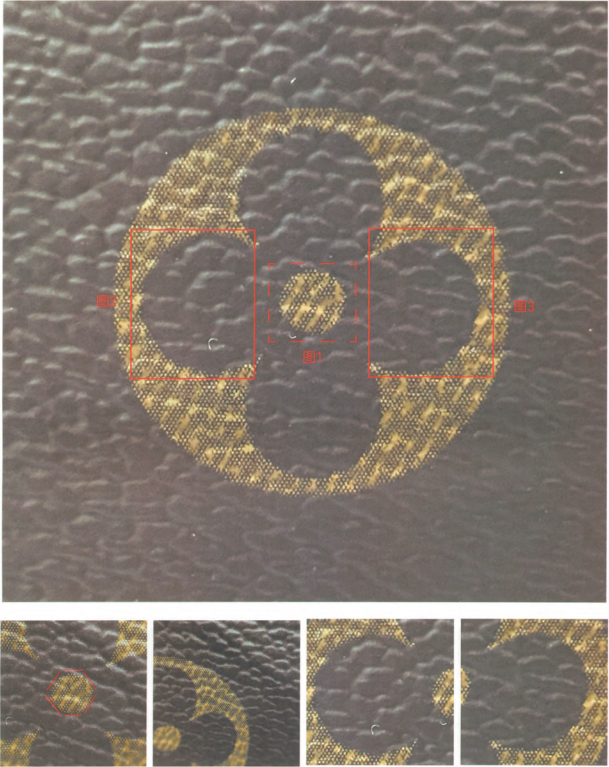
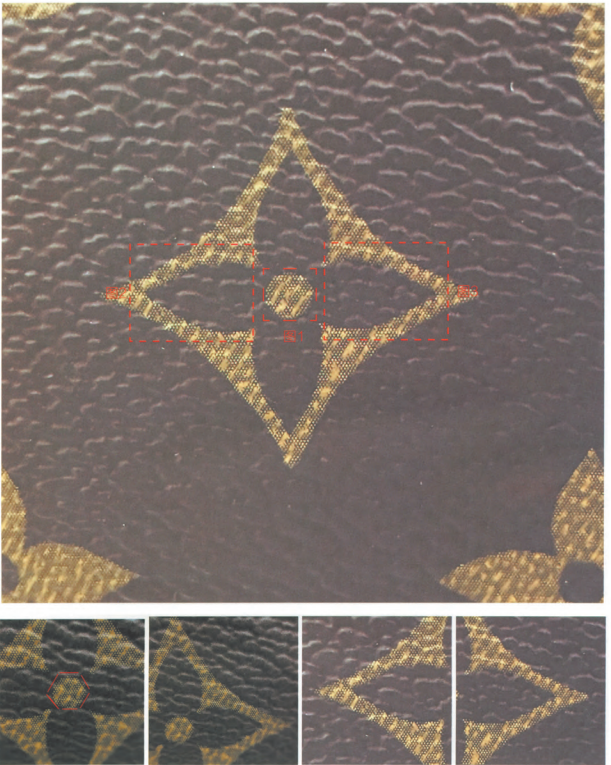
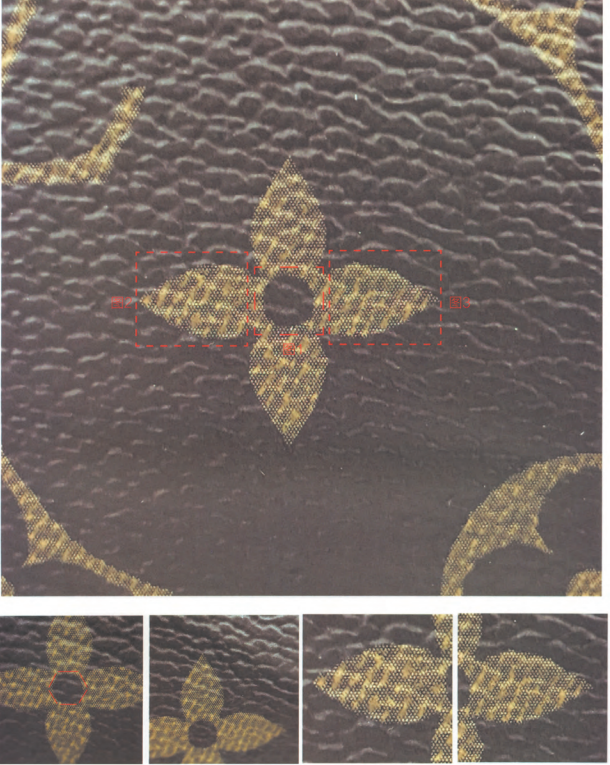
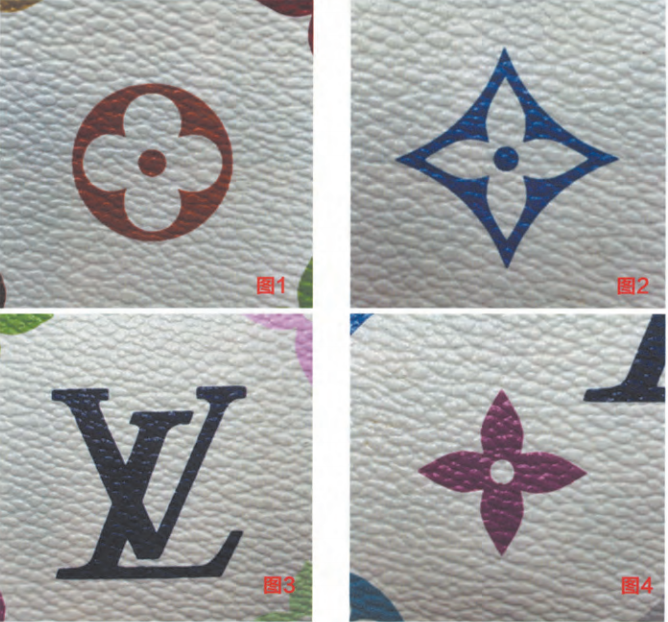
- Flower Centers and Relative Geometry: The flower motifs in the reference set are also worth comparing at close range. Their centers are not read as mathematically perfect circles, and the different flower shapes have specific relative proportions. I prefer comparing those proportions directly against a known reference image rather than relying on a memorized “perfect shape” rule.
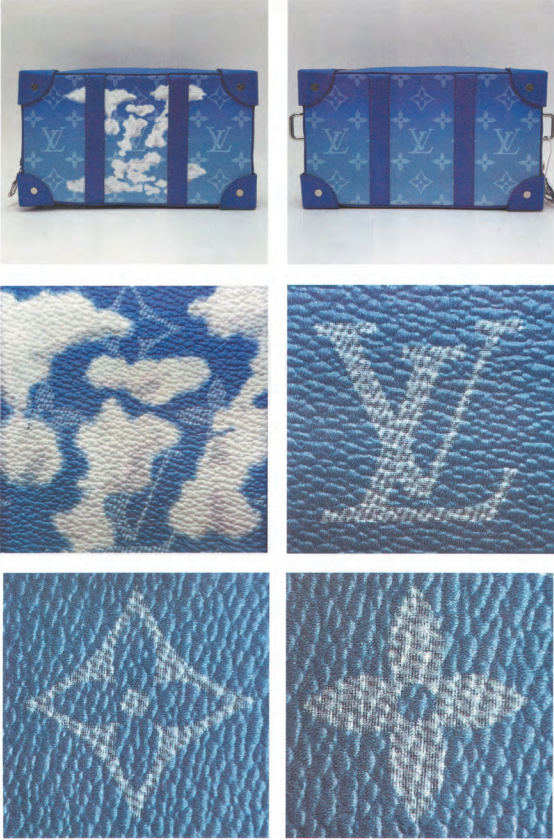
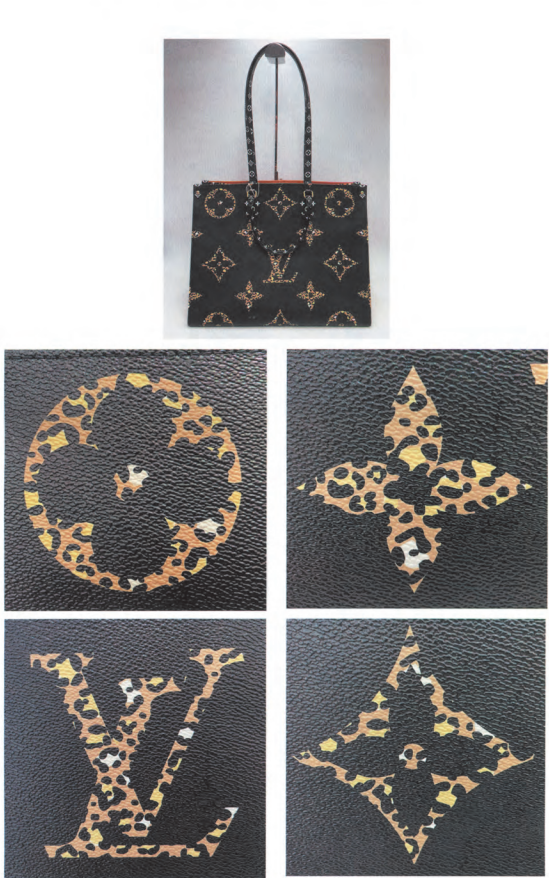
Appreciation of Different Monogram Patterns
2. Damier Canvas: Hidden Year Codes and Textural Grain
Damier predates Monogram and deserves the same image-led treatment. Rather than reducing it to one “broken S” rule, I compare the square texture, printed typography, edge behavior and the production-era context together.
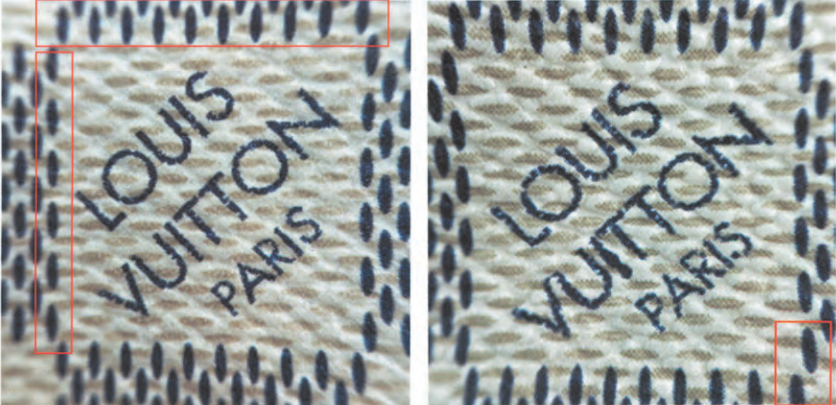
- The “Rice-Grain” Matrix: In the authentic Damier references used for this article, the squares resolve into a repeated woven/grain structure rather than flat blocks of color. My original notes describe an approximately 10-by-6 arrangement in the inspected example. I would keep that observation because it is visible in the source image, while treating the exact count as a reference-set feature rather than a universal factory specification.
- The “S” Tail and Era: The small “Louis Vuitton Paris” printing on Damier can vary by period. Older references in my source set show a more visibly interrupted/broken tail on the “S,” while later examples can look more continuous. This is useful only when the approximate production era is already known; it should not be applied as a timeless yes/no rule.
- Non-Linear Edges: As with the Monogram close-ups, the printed typography sits on a textured coated surface, so enlarged edges can look slightly broken or uneven rather than digitally smooth. Compare the whole printed block and surface texture, not one isolated pixel edge.

To learn more about how to identify material flaws and avoid low-quality replicas on the market, we highly recommend reading our in-depth guide: How to Spot Fake Bags.
3. Epi Leather: The 13.5cm “Eye” Rule
Epi leather entered Louis Vuitton’s permanent leather offering in the 1980s and has a directional, wave-like surface that creates useful geometric reference points. I am keeping the original “eye” observations below because they correspond to the article’s images; I have only softened the claim that one measurement applies rigidly to every Epi item.
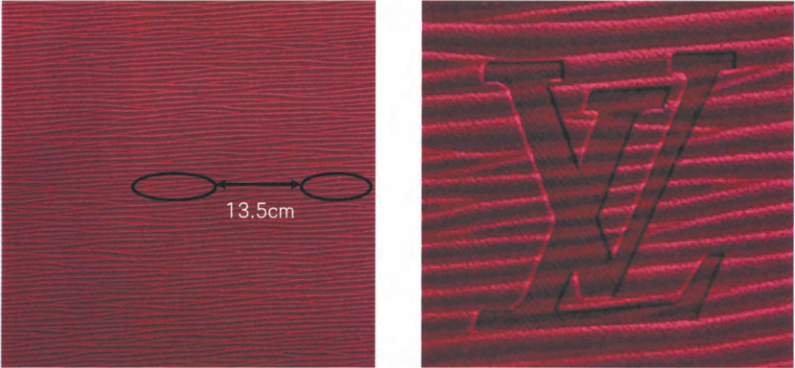
- The “Eye” Spacing: In the Epi reference examined for this article, intersecting waves create repeating oval or “eye-like” formations, with adjacent examples measuring roughly 13.5 cm apart in the photographed section. That measurement is useful when comparing the same material treatment and scale, but I would verify it against the exact bag rather than treat 13.5 cm as a universal authentication constant.
- Logo Debossing vs. Grain: The LV debossing in the reference retains much of the surrounding Epi rhythm instead of flattening a large featureless patch. The transition between stamp and grain is more useful to me than the simple presence of an LV logo.
- Intersection Geometry: In the photographed reference, extending the directions created by parts of the LV debossing leads into nearby “eye” formations in a consistent way. I would preserve this as a visual comparison cue, while treating it as one sample-specific geometry check rather than proof on its own.
Section II: The Hardware Passwords of LV Bag Authentication – Zippers and Engraving Craftsmanship
Hardware remains valuable because it combines geometry, finishing, engraving, movement and wear in one place. A replica may copy the visible face of a zipper pull convincingly while still missing edge finishing, articulation or the way multiple hardware pieces match each other. That consistency is what I look for.
1. Craftsmanship Analysis of Louis Vuitton Zipper Pulls
Zipper Type 1 (Common for leather series & exterior zippers of women’s bags)
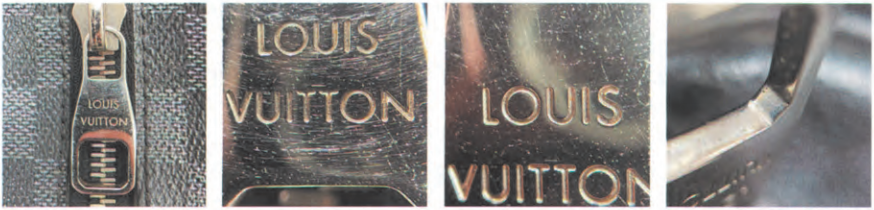
- The surface metal presents a firm texture with fine natural micro-wrinkles formed during daily use.
- Engraving: The reference pulls show a pressed/molded-looking engraving with clean depth and edge definition. I would compare the engraving method and finish against the correct reference rather than use “laser = fake” as a universal rule.
- No obvious water ripple reflection on engraved lettering.
- Smoothly polished edges with no splicing marks inside the zipper handle.
Zipper Type 2 (Common for vintage wallets)
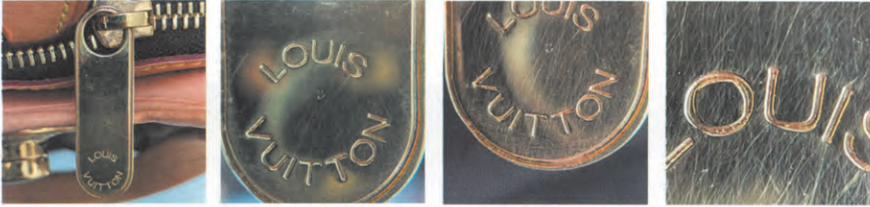
- Clear and neat engraved fonts without water ripple defects.
- Letterings are arranged in a concentric circle pattern.
- Uniform and delicate bottom grooves with secondary polishing inside the grooves.
- Laser engraving is strictly excluded for all metal markings.
Zipper Type 3 (Common for Speedy bags, briefcases and business bags)
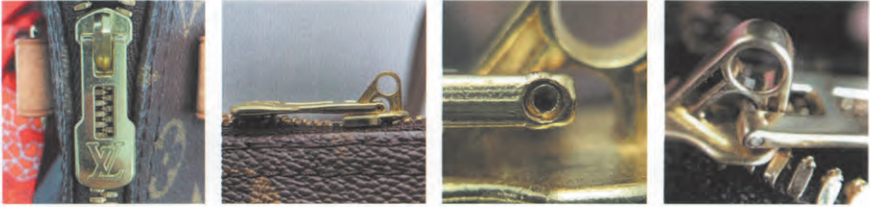
- Suture lines are visible on the side of the zipper; modern styles feature hollow round holes on pull sides instead of solid design.
- The letter “V” is engraved with a thicker left stroke and thinner right stroke, delivering strong three-dimensionality, with no font adhesion or water ripple marks.
- Slight rusting and surface coating peeling on metal are normal aging phenomena.
Zipper Type 4 (Common for small wallets, Neverfull, clutches)
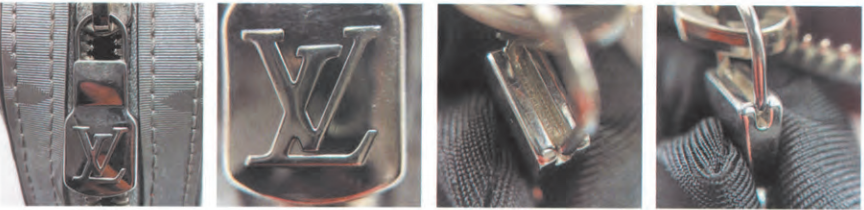
- The letter “V” features distinct left-thick and right-thin engraving with prominent stereoscopic effects.
- The insertion structure of the U-shaped buckle is a key observation detail.
- Metal coating peeling shall not be regarded as a basis for authenticity judgment.
Zipper Type 5 (Universal pull tab style)
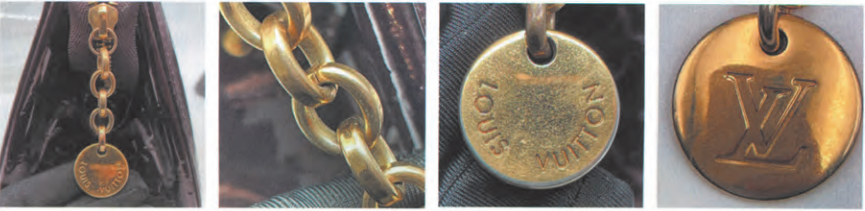
- Fully polished engraving grooves with no metal accumulation, font adhesion or missing strokes.
- Obvious thickness contrast of the letter “V” in the overlapping LV logo.
- Natural metal fading is normal daily wear and tear.
- Tight joint fit of pull rings; counterfeit products usually have large gaps and poor fitting.
2. Craftsmanship Analysis of Louis Vuitton Zipper Teeth
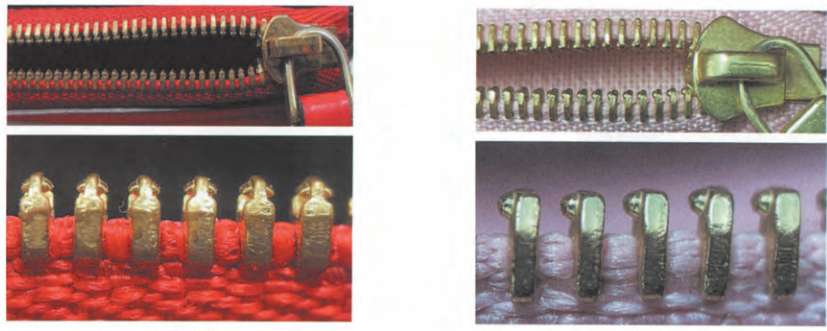
- Authentic LV mainly adopts riri and YKK zippers. The teeth are full-shaped, high in hardness, evenly arranged with chamfered and polished sides. Counterfeit zipper teeth often have rough pits and uneven surfaces.
- Original riri zipper teeth mostly feature a matte finish.
- For genuine YKK zippers, double-tooth structures provide higher authentication reference value than single-tooth ones.
- Distinct structural features: riri & Lampo teeth tilt backward, while YKK teeth tilt downward.
3. Universal Core Standards for LV Hardware Engraving
Genuine LV hardware markings are deeply die-stamped with custom molds and finely polished inner grooves.Counterfeits generally adopt low-cost laser engraving with shallow markings, pale groove bottoms, blurred edge boundaries and obvious water ripple reflections under light.
4. Authentication of Metal Rivets
Authentic Features
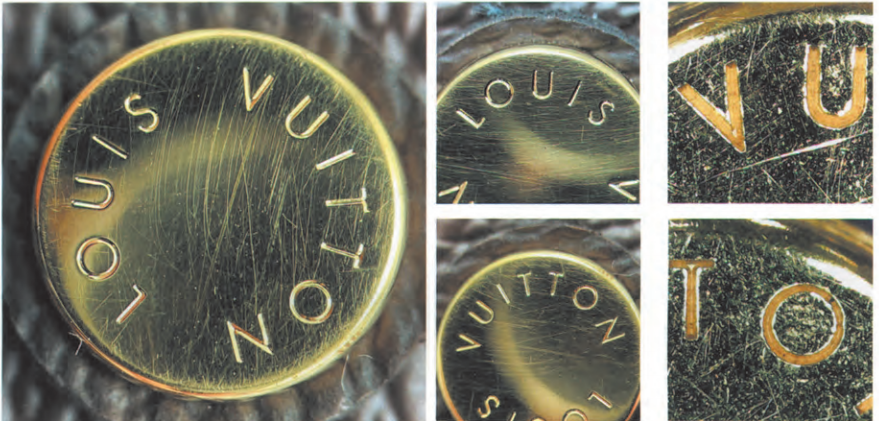
- Fonts fully comply with exclusive LV typography standards.
- Engravings are evenly distributed in a circular layout with complete strokes and no adhesion.
- Groove colors are consistent with the original metal tone without laser processing traces.
- Sharp and uniform start & end edges of engravings with sufficient groove depth.
Supplementary Note
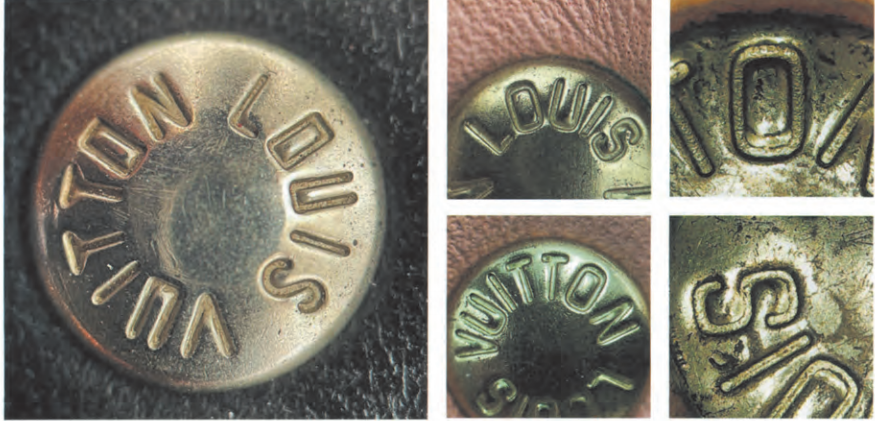
Differences in font shape and leather embossing are determined by production years and have no connection with authenticity.
Counterfeit Features
- The font of the rivet engraving does not conform to the official LV typography.
- The hardware engravings on the rivets are evenly arranged in a concentric circular pattern.
- Pay attention to the distinctive characteristics of the letters “O” and “U”.
- The lettering shows no water ripple marks, and the inner grooves of the engravings are evenly polished.
- Differences in font shape and leather embossing are not indicators of authenticity; they vary by production year.
5. Authentication of Strap Buckles
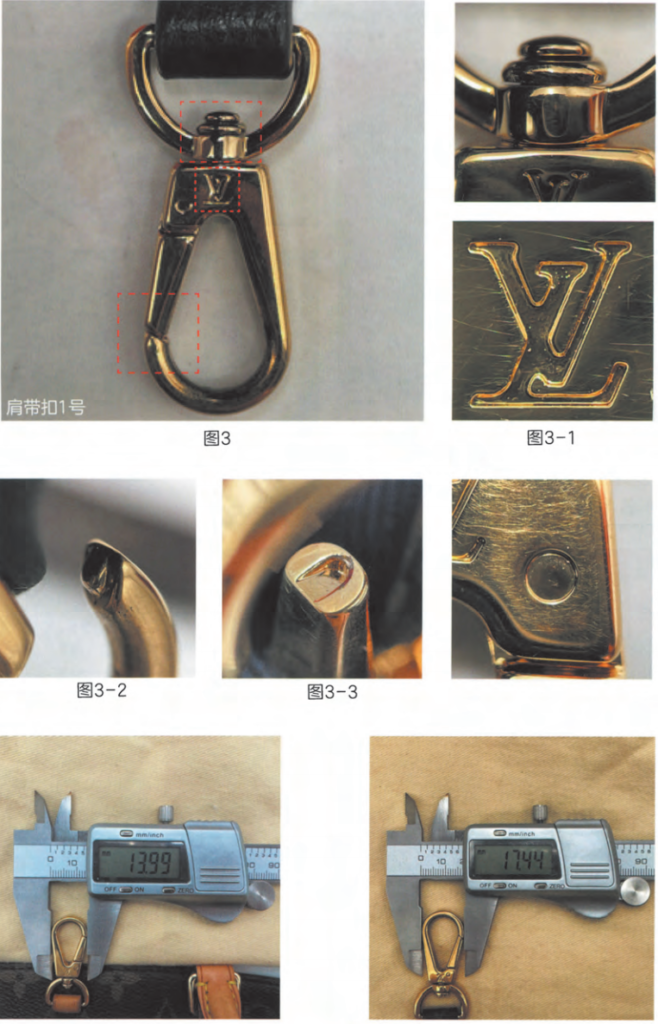
- Core indicators: thickness contrast of LV engravings and premium matte metal texture.
- Auxiliary indicators: edge polishing craftsmanship and buckle fitting tightness.
6. Craftsmanship Analysis of Louis Vuitton Locks
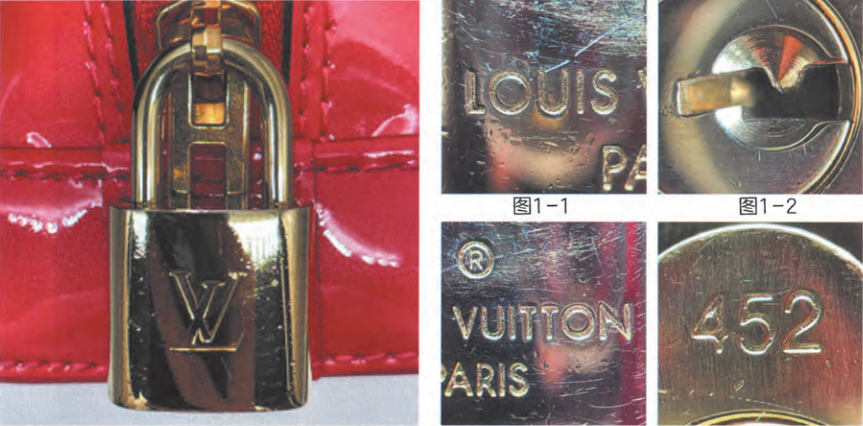
- Engraving details: layered thickness design on overlapping logo letters with smooth polished grooves; focus on identifying the exclusive font features of letter “0” and “N”.
- Lock body craftsmanship: sharp lock holes, high-grade metal texture and refined edge chamfering details.
7. Identification Guide for Other LV Hardware Accessories
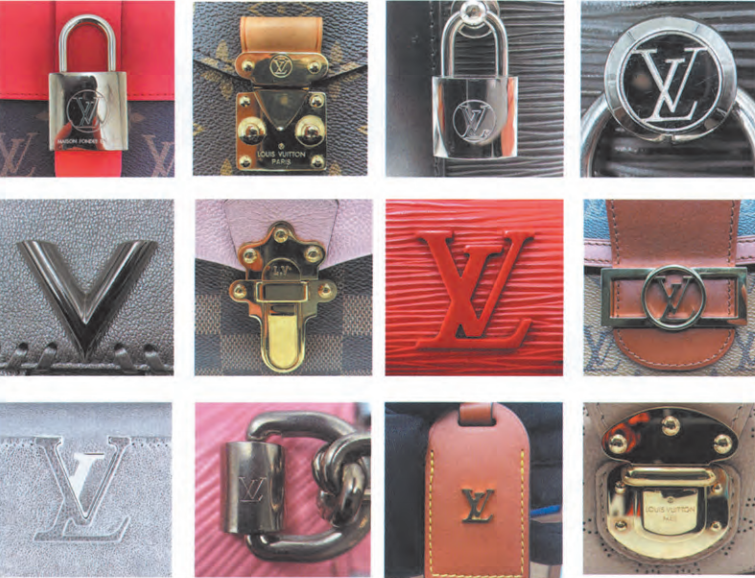
Complete hardware accessories include strap buckles, locks, keys and more. The authenticity of accessories greatly affects the resale value of second-hand bags, making it an indispensable part of comprehensive luxury authentication.
Section III: The Anti-Counterfeiting Trump Card – The Interior Heat Stamp (Logo)
While exterior materials and hardware might be replicated to a high degree by top-tier counterfeiters, the hidden interior areas, such as the leather heat stamp and date codes, remain the ultimate lie-detector in LV bag authentication.
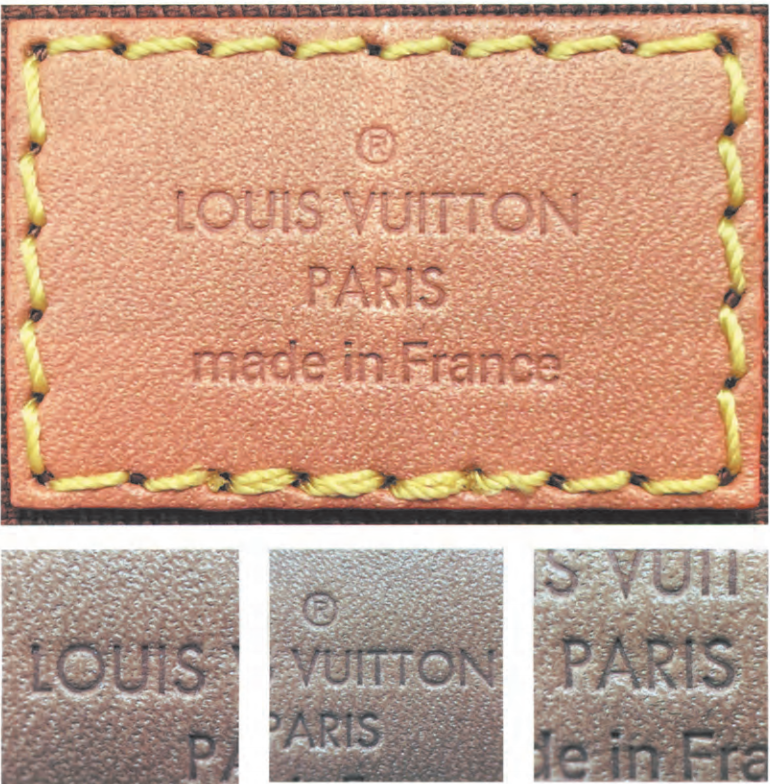
1. The Typography Aesthetics of the Paris Logo (Louis Vuitton Paris)
Open the bag and locate the leather tab heat-stamped with “LOUIS VUITTON PARIS”. Every single letter here has undergone rigorous typographic design.
- The Perfectly Circular “O”: In the words LOUIS VUITTON, the letter “O” must be a flawless, perfect circle, making it appear wider than the surrounding letters.
- The Lowered “A”: In the word PARIS, the letter “A” is generally larger in proportion. Most importantly, the horizontal crossbar in the middle of the “A” is positioned unusually low, visually dividing the letter into a bottom 1/3 and a top 2/3.
- The Ultra-Short “L”: The bottom horizontal stroke of the letter “L” is significantly shorter than in standard fonts.
- The Rounded “U” and Sharp “V”: The bottom of the letter “U” must be a smooth, perfect curve without any squared-off corners. The bottom point of the “V” is extremely sharp, and typographically, the entire “V” often sits a fraction of a millimeter lower than its adjacent letters.
- The Long Diagonal of “N”: The letter “N” features sharp points at both ends, and its central diagonal line is very long—its length is nearly identical to the diameter of the perfect “O”.
- The Registered Trademark “®”: The two legs of the letter “R” inside the circle must be pinched close together. They absolutely cannot be splayed apart in a wide stance (except for some very old vintage models).
2. Deciphering Date Code Logic
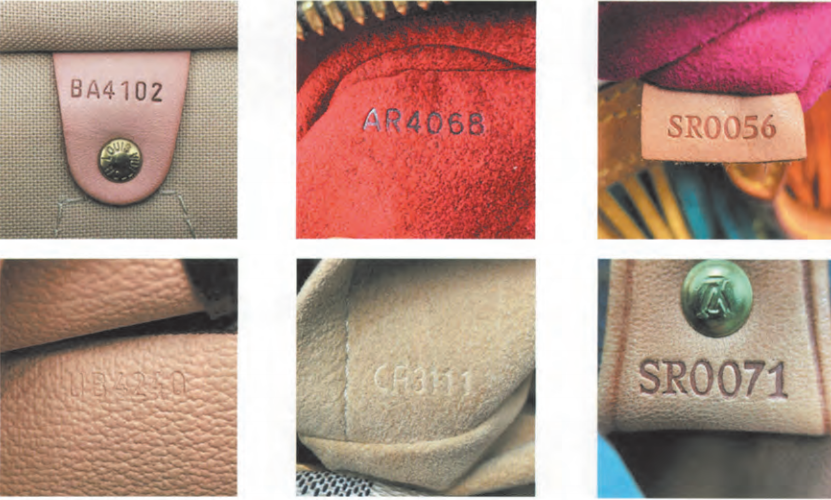
Although Louis Vuitton began phasing out physical Date Codes in March 2021 in favor of embedded NFC Microchips for new bags, the vast majority of the pre-loved market and vintage circulation in 2026 still relies heavily on Date Codes. Mastering them is an indispensable skill for LV bag authentication. If you are looking for collector-level authentication knowledge, you can refer to the ultimate guide to Louis Vuitton date codes published by Xupes. The date code is not just the bag’s birth certificate; its underlying logical rules are the core of authenticating its origin, which can be cross-referenced directly with the production cycle of the hardware zippers.
- The Timeline Evolution:
- 1980s: Codes were typically just three or four digits. For example, “863” indicates the 3rd month of 1986.
- 1990 to 2006: The format evolved into “two letters + four digits.” The letters represent the factory location. The 1st and 3rd digits combine to represent the month, while the 2nd and 4th digits represent the year. For instance, “SP0065” means the SP factory in France, manufactured in June 2005.
- 2007 to Early 2021: The “two letters + four digits” format remained, but the logic changed. The 1st and 3rd digits now represent the week of the year, while the 2nd and 4th digits represent the year. For example, “SD1132” indicates the SD factory in France or the USA, manufactured in the 13th week of 2012.
- The Origin Matching Rule: The two letters at the beginning of the code must correspond logically with the “Made in [Country]” stamp. If the bag is stamped “Made in France,” its date code must start with French factory letters (e.g., AA, AR, FL, MB, SP). If it says Made in France but the code begins with “CA” (Spain) or “FO” (Italy), you are looking at a glaringly obvious fake.
Section IV: 2026 Expert Advice – Navigating a Complex Market and Avoiding Pitfalls
In 2026, alongside low-end fakes, the market harbors incredibly well-crafted “replicas.” For some consumers on a budget, or those wishing to test-drive a style before investing tens of thousands of dollars in a boutique piece, the high-end alternative market offers a viable option. However, the prerequisite is that you must possess the authentication skills to know exactly what you are buying.
If you are curious about the high-end replica market and want to understand the limits of current top-tier craftsmanship, we strongly recommend starting with our AAA Replica Bags Guide.
In this mixed market, transparency and trust are paramount. Many sellers pass off inferior goods as “top-tier originals.” To avoid being scammed by dishonest merchants, check out our in-depth evaluations in the AAA Replica Reviews, which break down the real differences in hardware and leather pattern alignment across different factory grades.
Section V: Conclusion – Systematize Your LV Bag Authentication to Protect Your Investment
To summarize, the strength of this guide is not any one “secret.” It is the amount of specific reference material: Monogram dot direction and stair-step edges, Damier texture and typography, Epi geometry, zipper shapes, rivets, engravings, locks, heat stamps and date-code logic. I keep those details because they give readers something concrete to compare. The update is in how I weight them: each observation supports a conclusion only when it fits the exact model, material and era.
A strong replica can reproduce individual details surprisingly well, including print texture, leather feel or hardware dimensions. What is harder to reproduce consistently is the full relationship between material, proportions, construction, hardware and historical identifiers. That is why I no longer describe any one microscopic feature as impossible to copy.
My practical recommendation is to use the macro and micro details together. If several independent features agree with the correct reference, confidence increases. If one feature looks perfect while the surrounding geometry or era is wrong, I treat the “perfect” detail with suspicion rather than letting it dominate the assessment.
Frequently Asked Questions (FAQ)
In 2026, why can’t I find a Date Code in my brand new Louis Vuitton bag from the boutique?
This is entirely normal. Since March 2021, Louis Vuitton has completely phased out physical, stamped Date Codes inside their bags, replacing them with embedded RFID Microchips. These chips contain data regarding the bag’s origin, production date, and model. While consumers can pick up a signal using NFC scanning apps, the detailed data is encrypted for LV boutique systems only. However, for any bag produced before 2021, the Date Code remains the cornerstone of LV bag authentication.
The zipper hardware on my LV bag is chipping and tarnishing. Does this mean I bought a fake?
Absolutely not. Whether authentic or replica, any metal hardware exposed to air, sweat, perfumes, and daily friction will experience oxidation, chipping, fading, or scratching. This is a normal physical property of metals (usually brass or brass-plated). True authentication looks at whether the zipper teeth are chamfered, whether the engraving is deep-pressed rather than laser-etched (no water ripples), and whether the “V” on the puller is thick on the left and thin on the right. Fading alone does not equal fake.
I read online that the clearer the dotted lines on the Monogram, the more likely the bag is real. Is this true?
This is a common misconception. The clarity of the print is not a direct indicator of authenticity, as genuine LV prints can vary slightly in crispness depending on the year and batch. The true LV bag authentication focal points are whether the dotted lines are strictly parallel to the central axis of the motif, and whether the edges of the letters feature the distinct “stair-step” jaggedness under magnification.
Is the crossbar on the letter “A” always positioned low on every LV interior heat stamp?
Yes. In the vast majority of standard “LOUIS VUITTON PARIS” heat stamps, the horizontal line inside the letter “A” sits noticeably low, visually dividing the letter into a bottom 1/3 and top 2/3. If you see an “A” where the crossbar is perfectly centered, there is a very high probability you are looking at a replica using a generic factory font.
If I notice that the letter “S” in “Paris” on my Damier bag is NOT broken, is it automatically a fake?
Not necessarily; you must check the bag’s production year. For the Damier pattern, bags produced in 2011 and earlier MUST have a broken tail on the “S”. However, if you check the date code and the bag was produced in 2012 or later, a continuous, unbroken “S” (paired with a slightly bolder “A”) is actually the correct authentic feature.

27 comments
This guide is a lifesaver! I had no idea about the “stair-step” edge on the Monogram canvas. Just checked my vintage Speedy under a loupe and saw it clearly. Thanks for the detailed macro tips!
Hi Sarah! So glad the guide helped you verify your Speedy. The stair-step edge is definitely one of the most reliable authentication points. Enjoy your beautiful vintage piece!
This guide is a lifesaver! I had no idea about the “stair-step” edge on the Monogram canvas. Just checked my vintage Speedy under a loupe and saw it clearly. Thanks for the detailed macro tips!
I appreciate the note, Sarah T. My goal is to keep the site useful even without a purchase decision attached—clear evidence, model-specific observations and explicit limits on what a sample can prove.
Great article! I was freaking out because the zipper on my Neverfull was fading and tarnishing. I thought I got scammed, but your FAQ section reassured me it’s just normal oxidation.
A fading finish is worth checking in close-up, especially where the pull rubs against other parts. Keep the model, age and use history with those photos. Tarnish or a particular engraving detail on its own would not settle the bag’s authenticity.
Great article! I was freaking out because the zipper on my Neverfull was fading and tarnishing. I thought I got scammed, but your FAQ section reassured me it’s just normal oxidation.
Glad this was useful, BagLover88. My goal is to keep the site useful even without a purchase decision attached—clear evidence, model-specific observations and explicit limits on what a sample can prove.
I’ve been looking into high-tier alternatives lately. Your AAA replica bags guide and the trusted seller list linked in the article are super helpful. The market is so confusing right now.
Thank you! For a current offer, compare the exact item’s photographs, specifications and written terms. A trusted-seller label is a starting point, not a guarantee of the quality delivered.
I’ve been looking into high-tier alternatives lately. Your AAA replica bags guide and the trusted seller list linked in the article are super helpful. The market is so confusing right now.
Thanks for reading, Chloe_Style. I’m trying to keep the guides evidence-led: observations from a sample are separated from background/reference information, and no single detail is treated as universal. That makes the conclusions narrower, but more useful when someone is comparing a specific bag.
I always get confused with the date codes. Your breakdown of the weeks vs. months depending on the year (especially the 2007-2021 shift) is the clearest explanation I’ve read. Bookmarked!
Happy to hear that! Date codes can be a maze, especially with the logic change in 2007. Having a quick reference guide is essential for navigating the pre-loved market.
I always get confused with the date codes. Your breakdown of the weeks vs. months depending on the year (especially the 2007-2021 shift) is the clearest explanation I’ve read. Bookmarked!
Thanks, VintageHunter. My goal is to keep the site useful even without a purchase decision attached—clear evidence, model-specific observations and explicit limits on what a sample can prove.
Quick question: If I buy a brand new LV from the boutique today in 2026, will it have any date code stamped inside? I can’t find one on my new Alma.
A missing stamped date code can be consistent with a newer LV configuration, but it does not establish authenticity. Keep the boutique purchase record and ask Louis Vuitton about the identification used for your exact Alma version.
Quick question: If I buy a brand new LV from the boutique today in 2026, will it have any date code stamped inside? I can’t find one on my new Alma.
Thanks for asking, Jessica M. I’d keep the answer model- and sample-specific rather than turn one observation into a universal rule. Where possible, I compare measured or visible details with a matched reference and separate those findings from seller or market claims.
The 13.5cm “eye” rule for the Epi leather blew my mind. I just measured my Alma BB and it’s spot on. Incredible how much math goes into these designs!
Isn’t it fascinating? The geometry behind Epi leather is one of LV’s best-kept secrets. Counterfeiters rarely get that 13.5cm spacing exactly right.
The 13.5cm “eye” rule for the Epi leather blew my mind. I just measured my Alma BB and it’s spot on. Incredible how much math goes into these designs!
Glad this was useful, LuxAddict. I’m trying to keep the guides evidence-led: observations from a sample are separated from background/reference information, and no single detail is treated as universal. That makes the conclusions narrower, but more useful when someone is comparing a specific bag.
Editor’s question: if you were checking one LV bag remotely, which evidence would you ask for first—macro canvas photos, hardware engravings, edge paint, date/microchip information, or measured dimensions? I’m interested in which checks are actually practical before handling the bag in person.
Very helpful
I just bought an authenticated LV mini pochete and went through your article to make sure it’s showing all the markers. Most seem correct but the impression on the tag on the larger purse is a just a bit fainter and not quite as deep as the smaller purse so am concerned that it may not be an original after all. It’s most notable on the R in Paris and V in. Should I be concerned?
Thanks for the detailed question — I wouldn’t be too concerned based on the depth of the stamp alone.
On authentic Louis Vuitton pieces, the heat stamp can vary slightly in depth and sharpness depending on the leather, production period, factory, and even the pressure used during stamping. Two authentic pieces do not necessarily have perfectly identical impressions, so a slightly fainter “R” in PARIS or “V” by itself would not be a strong red flag.
What matters more is the overall consistency: the font shape, spacing, alignment, proportions, leather quality, stitching, hardware, construction, and whether the other authentication markers all make sense together.
Since your Mini Pochette has already been authenticated and most of the other details match, I would not question the authentication solely because one stamp appears a little shallower.
If you’d like, you can send me clear close-up photos of both stamps side by side and I can take a look. You can reach me at **[email protected]**.