
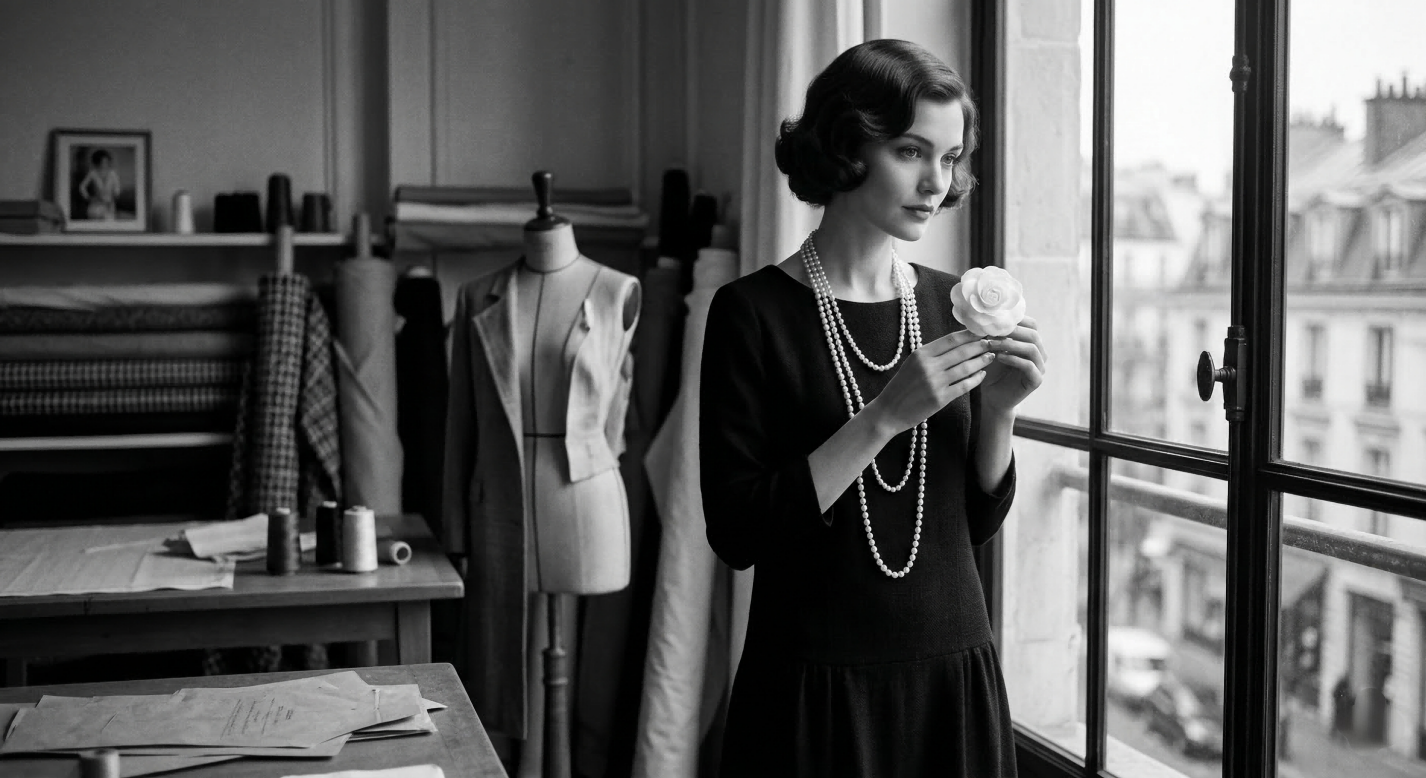
Chanel is easy to recognize and surprisingly easy to misread. A quilted surface, a chain strap and a double-C clasp can make almost any bag look “Chanel-inspired,” but those details do not all come from the same model or the same moment in the house’s history.
I became more interested in this distinction after comparing Classic Flaps, 2.55-style bags and newer Chanel designs side by side. The useful question was no longer simply, “Does it have the Chanel look?” It was: Which Chanel code belongs to this model, how should the elements work together, and what can I actually judge from the available evidence?
This guide follows the key Chanel classic elements through the bags that made them visible, with documented history separated from less certain stories. The construction comparisons concern shape, alignment and finish; authentication remains an item-specific question.
Table of Contents
Chanel codes are a design system, not a decoration checklist
Fashion houses often use the word codes for recurring shapes, materials, colors and symbols. At Chanel, those codes include quilting, chains, the double C, the camellia, tweed, pearls, black-and-white contrast and the number five. Their strength comes from repetition, but also from controlled reinterpretation.
That is why a checklist can be misleading. A bag does not become convincing merely because it contains several familiar Chanel motifs. The elements have to belong to the same model language. The flat metal chain and rectangular Mademoiselle lock of a 2.55 communicate something different from the leather-laced chain and double-C turnlock of the Classic 11.12.
| Code | What it contributes | What I compare on a bag |
|---|---|---|
| Quilting | Surface rhythm, volume and structural identity | Diamond scale, line continuity, padding and how the pattern meets seams and pockets |
| Chain | Hands-free function and jewelry-like movement | Link form, leather weaving where applicable, spacing, attachment points and drape |
| Closure | Immediate model identification | Mademoiselle lock versus double C, centering, scale and integration with the flap |
| Material | Changes the way every other code appears | Grain, sheen, softness or structure, edge behavior and consistency across panels |
| Color contrast | Graphic clarity and recognizability | Whether leather, lining, metal and trim form a coherent model-specific combination |
A useful Chanel comparison begins with the relationship between the codes, not with one logo or one stitch.
This systems approach also reduces a common mistake in replica discussions: treating one isolated feature as proof of quality. A neatly shaped CC clasp cannot rescue an incorrect flap curve. Perfectly aligned quilting cannot confirm the leather source. A serial, microchip response or branded accessory cannot authenticate a bag without connection to Chanel’s private records.
The short Chanel history that actually helps explain the bags
The full Chanel brand history spans couture, fragrance, jewelry and more than a century of cultural change. For handbag readers, a shorter timeline is more useful:
- 1910: Gabrielle Chanel opened Chanel Modes at 21 rue Cambon and built her early reputation through millinery.
- 1921: Chanel N°5 established the house’s number-five code and its modern, pared-back visual language.
- 1926: American Vogue compared a simple Chanel black dress to the Ford automobile, helping fix the little black dress in fashion history. The Metropolitan Museum of Art describes Chanel’s use of jersey and relaxed construction as central to her modernity.
- 1955: Gabrielle Chanel created the 2.55, named for February 1955. Chanel’s own history emphasizes the quilted body, sliding chain and freedom of shoulder carry.
- 1983 onward: Karl Lagerfeld amplified the house codes, enlarged logos and turned historical references into a flexible visual vocabulary. The Classic 11.12 became one of the clearest expressions of that approach.
- 2025 onward: Matthieu Blazy assumed responsibility for Chanel’s fashion activities. His first collections have returned repeatedly to movement, material and the house’s established codes rather than treating them as fixed museum pieces.
For a documented chronology, Chanel maintains an official House of Chanel history. I use it as the baseline for dates, then treat many romantic anecdotes found elsewhere as interpretation rather than settled fact.
The 2.55: quilting, a shoulder chain and the Mademoiselle lock
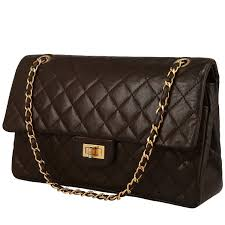
The 2.55 is the best place to understand how Chanel’s handbag codes began working together. Chanel’s official description identifies it as a quilted handbag created in 1955 with a flat-link chain strap and a distinctive Mademoiselle turnlock. Its practical achievement was straightforward: the shoulder strap freed the wearer’s hands.
That last point matters. The 2.55 is often reduced to a collection of romantic stories about convent uniforms, secret love letters and Gabrielle Chanel’s unmarried status. Those stories are part of the bag’s mythology, but its design significance is more concrete: the bag moved luxury carry from the hand to the shoulder while preserving a formal, jewelry-like appearance.
The house also states that the 2.55 is constructed like a garment, from the inside out. That description helps explain why I look beyond the exterior. The flap, interior compartments, lining tension and way the bag opens should feel like one planned construction rather than a decorated shell.
You can compare the current house description on Chanel’s official 2.55 handbag page.
What I examine on a 2.55-style bag
- The flap and lock relationship: the rectangular closure should look integrated with the width and curve of the flap.
- The quilt scale: diamonds should remain coherent across the front, back and pocket rather than changing size wherever construction becomes difficult.
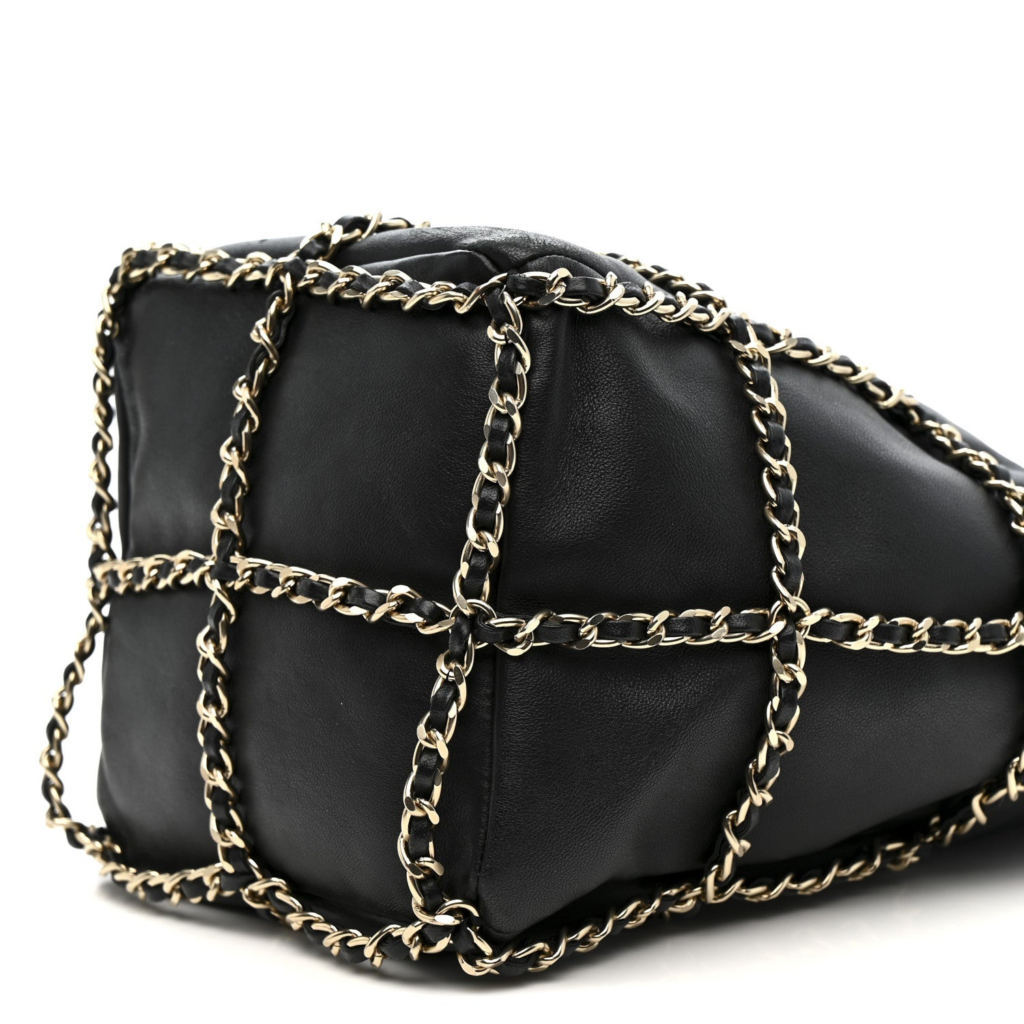
- The chain: link form, finish and drape should match the intended reference; “heavy” is not a sufficient description.
- The interior: the bag should open cleanly without excessive puckering, detached-looking compartments or visibly strained lining.
- The material behavior: aged calfskin, lambskin and other seasonal materials create different quilting and edge profiles. One universal puffiness rule does not work.
The Classic 11.12: the double C and leather-woven chain
The Classic 11.12 is frequently called the Classic Flap, and it is often confused with the 2.55. The distinction is important because the 11.12 introduced two of the details now most strongly associated with a Chanel bag: the double-C turnlock and a chain strap laced with leather.
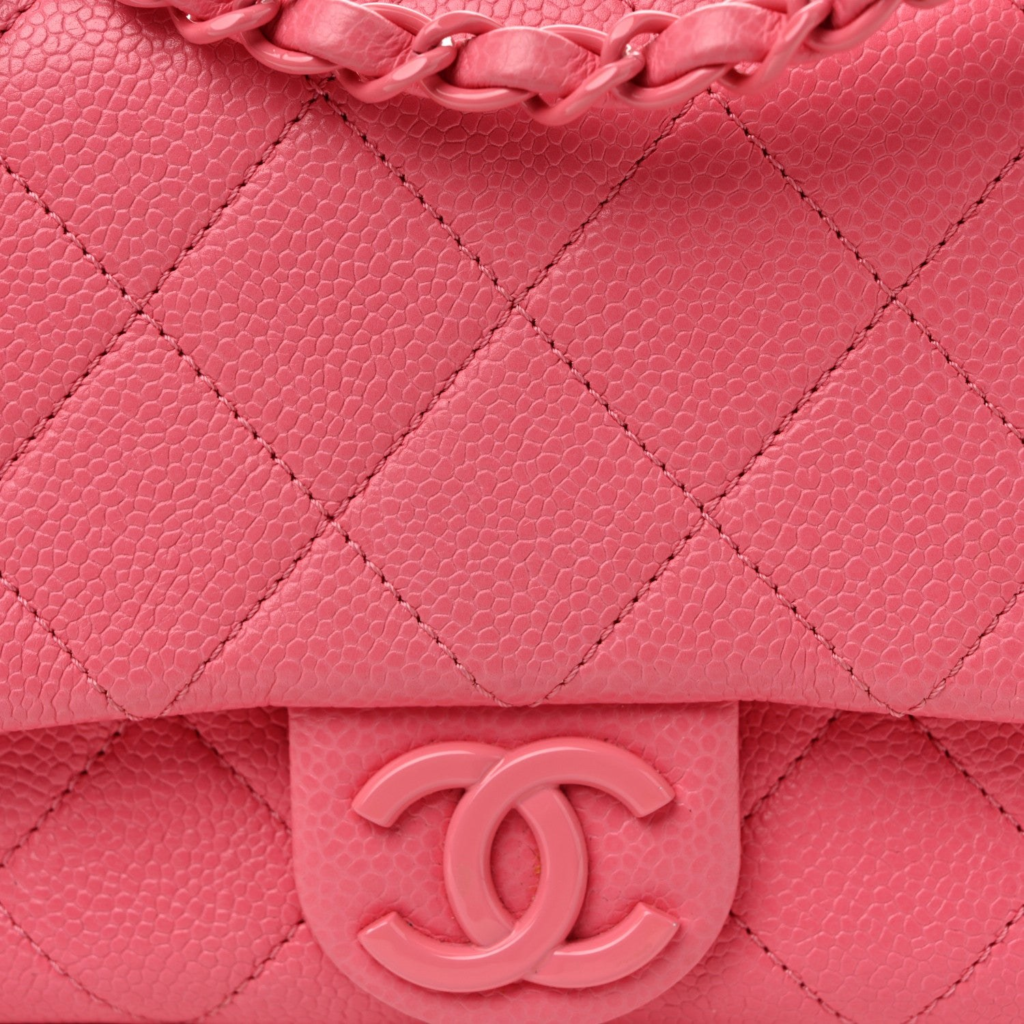
Chanel describes the 11.12 as the first of its handbags to combine those two signatures. The official model page also identifies the smile pocket, double flap and quilting as part of its visual language. This gives a much stronger reference than generic advice such as “count the stitches” or “check that the chain feels expensive.”
See Chanel’s official Classic 11.12 overview for the house’s current model description.
Why the double C should not be judged alone
A close-up of the clasp can show whether it sits level, whether the finish is even and whether the two Cs have plausible spacing. It cannot show whether the flap is too tall, the body too narrow or the quilting distorted. For that reason, I review the full front view before requesting hardware macros.
On a strong example, the clasp appears to anchor the composition. On a weak one, it looks pasted onto a bag with the wrong geometry. This is one reason my Classic Flap, Chanel 22 and Chanel 19 comparison asks for straight-on front and back views before relying on detail photographs.
Camellias, tweed, pearls and two-tone contrast
The camellia: an official symbol, without the extra mythology
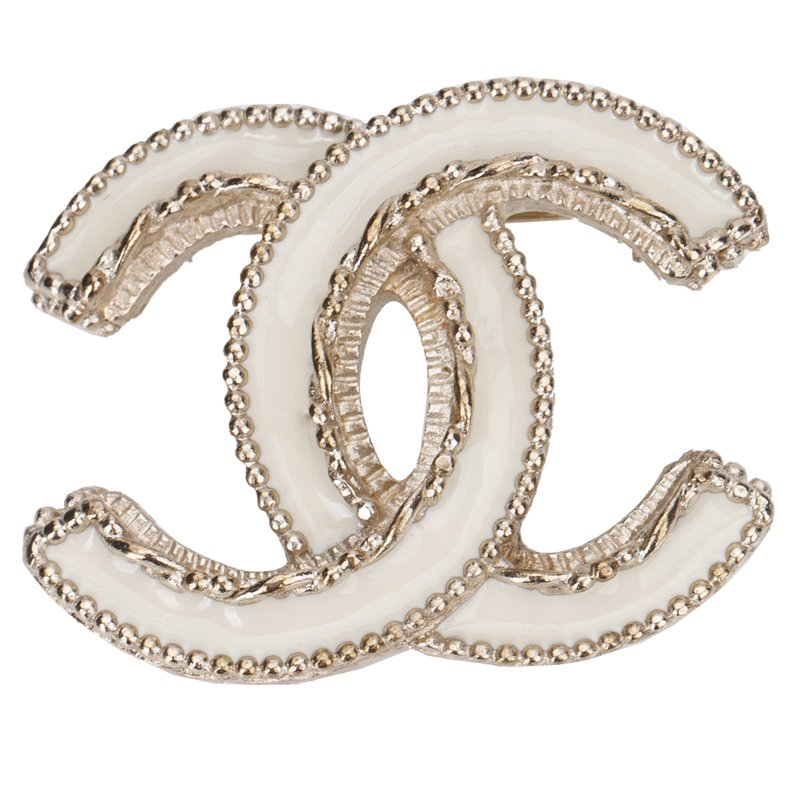
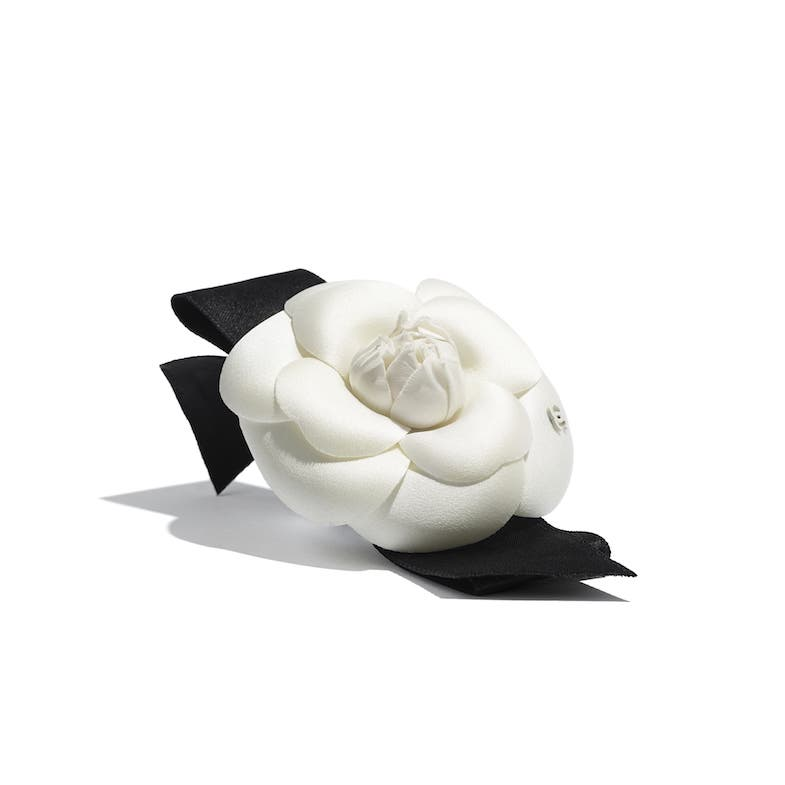
Chanel’s own account says Gabrielle Chanel pinned a white camellia to a belt in 1913 and was drawn to the flower’s simplicity, graphic form, purity and resilience. The house continues to use it across fashion, jewelry and beauty.
The flower is often surrounded by additional explanations: that its lack of scent prevented conflict with Chanel N°5, that it came directly from La Dame aux Camélias, or that it was chosen primarily because nineteenth-century men wore it. Some of those associations may be plausible, but they should not be presented with the same confidence as Chanel’s documented 1913 reference.
The official Chanel camellia history is the cleaner source.
Tweed: texture rather than a fixed pattern
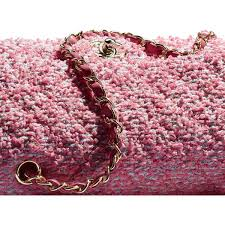
Tweed is sometimes discussed as though there were one authentic Chanel weave. In practice, the house continually changes fiber, thickness, color, metallic thread, ribbon and surface decoration. What remains consistent is the use of textile texture as structure and identity.
When I assess a tweed bag, I do not ask whether it has the “correct Chanel tweed.” I ask whether the weave density, panel cutting and edge finishing suit the specific seasonal reference. Loose decorative yarn may be intentional; uncontrolled fraying around the flap or chain openings is a workmanship problem.
Pearls, costume jewelry and deliberate contrast
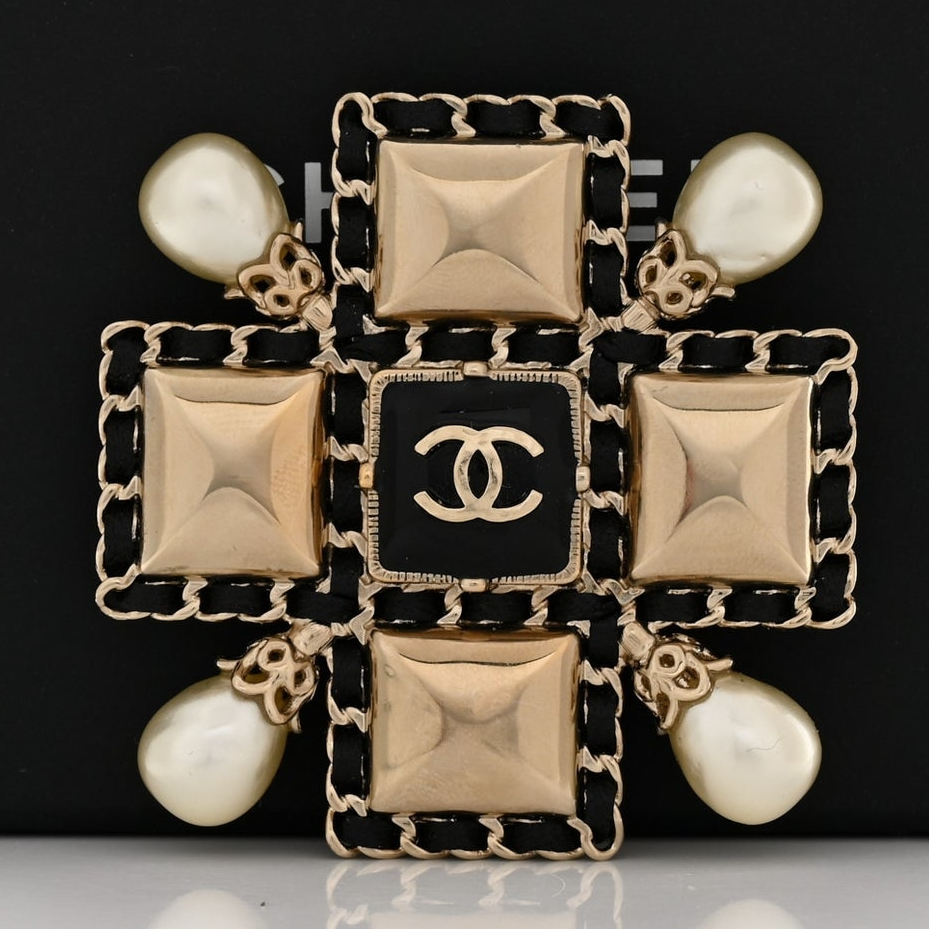
Gabrielle Chanel’s mixing of fine and costume jewelry made artificial pearls and layered ornament part of the house language. Lagerfeld later scaled those codes up, exaggerated them and moved them freely between clothing, jewelry, bags and runway settings.
The two-tone principle
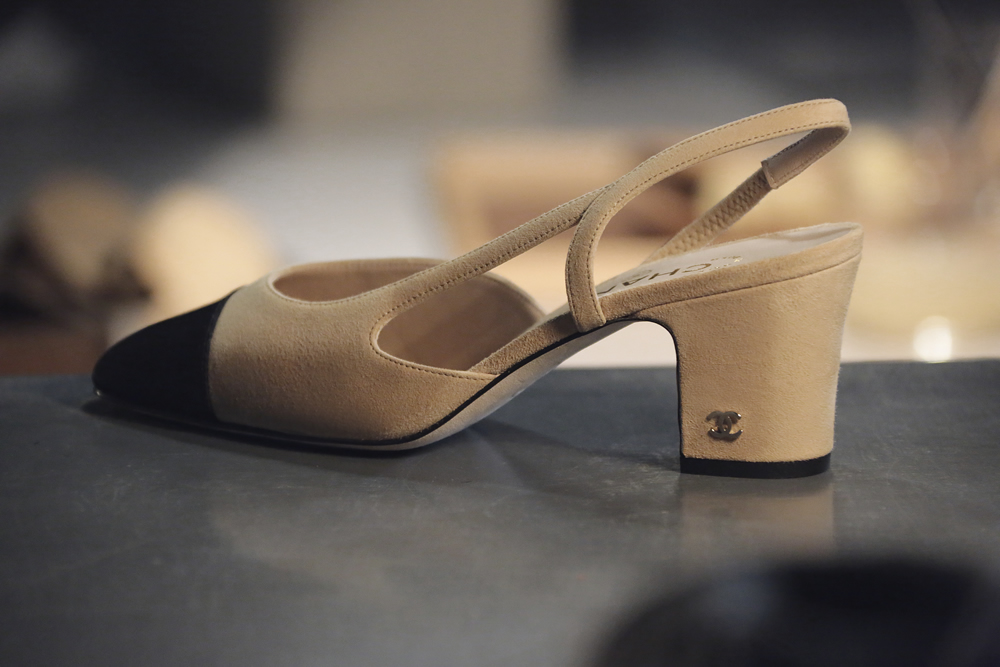
The beige-and-black slingback introduced in 1957 is usually explained through optical function: beige lengthens the leg visually, while the dark toe shortens the appearance of the foot and hides wear. More broadly, the shoe demonstrates a Chanel habit that also matters in bags—using contrast to make construction legible.
A practical model map: 2.55, 11.12 and later interpretations
| Model family | Core identity | Details that should not be transferred blindly |
|---|---|---|
| 2.55 / Reissue | Quilted body, flat-link chain, Mademoiselle turnlock, garment-like interior construction | Do not expect the double-C lock or leather-woven chain of the 11.12 |
| Classic 11.12 / Classic Flap | Double-C turnlock, leather-laced chain, quilting, smile pocket and double flap | Do not assess every seasonal leather by one fixed level of puffiness or grain |
| Boy Chanel | Framed construction, stronger geometric border and distinctive push-lock identity | Classic Flap edge, flap and chain rules do not transfer directly |
| Chanel 19 | Oversized quilting, mixed-metal chain language and a deliberately softer body | A softer silhouette is not automatically poor structure |
| Chanel 22 | Drawstring movement, chain emphasis and deliberate slouch | Rigid rectangular expectations from a Classic Flap are inappropriate |
Model identification must come before quality scoring. The same visible feature can be correct on one Chanel design and wrong on another.
For a broader model and material framework, see my Best Chanel Replica Bags: Models, Materials and Quality Guide. The purpose of that guide is not to treat “AAA” as a regulated grade; it is to connect seller language to observable evidence.
How I read Chanel elements when reviewing a bag
History becomes useful only when it changes the order of inspection. This is the sequence I now follow.
1. Identify the exact model and reference family
I begin with the model, approximate size, material description, hardware color and intended season or era. Without that reference, a quality judgment becomes a comparison against a vague mental image of “a Chanel bag.”
2. Read the silhouette before the surface
I check width-to-height proportion, flap depth, side profile, base shape and how the bag holds itself. A macro photograph cannot compensate for an incorrect silhouette. For QC, I prefer a square-on front image at bag height rather than a flattering top-down angle.
3. Follow the quilting across construction breaks
The most informative areas are not the easiest diamonds in the center of the flap. I follow the lines across the flap edge, back pocket, side transition and base. Continuity does not require mathematical perfection in every material, but abrupt drift or pattern compression often reveals weak panel cutting or assembly.
4. Separate leather grain, finish and padding
“Caviar” is market shorthand for grained calfskin, not one permanent surface. Lambskin, aged calfskin, shiny calfskin and seasonal finishes also behave differently. I therefore separate:
- visible grain scale and uniformity;
- surface sheen and coating behavior;
- quilting volume;
- panel structure;
- what cannot be proven from photographs, including composition, tannery and future wear.
My Chanel leather guide goes deeper into that decision, although material claims should still be treated as claims unless independently documented.
5. Use hardware macros after the geometry passes
A macro helps compare engraving placement, surface uniformity, edge finish and clasp alignment. For chain weight and hinge resistance, I would turn to handling notes and a function clip.
6. Record uncertainty instead of filling it with seller language
| QC evidence can support | QC evidence cannot establish by itself |
|---|---|
| Visible shape and proportion | Authenticity |
| Quilt alignment and stitching consistency | Exact leather species, tannery or supplier |
| Visible grain, sheen and surface defects | Long-term durability |
| Hardware placement and visible finish | Metal composition or plating thickness |
| Whether the supplied item resembles the promised model | Whether a factory name or quality tier is genuine |
My AAA replica bags framework uses the same starting point: settle the model and specification, then compare the actual construction behind the market label.
Popular Chanel stories: what is supported and what remains uncertain
| Common claim | More careful conclusion |
|---|---|
| Every classic Chanel flap is a 2.55 | No. The 2.55 and Classic 11.12 share family resemblance but use different signature chains and locks. |
| The original 2.55 used the double-C turnlock | No. Chanel identifies the Mademoiselle turnlock and flat-link chain as defining 2.55 codes. |
| The double-C logo definitely came from Aubazine windows or “Coco and Capel” | These are popular origin stories, but the precise inspiration should not be stated as settled fact without stronger primary documentation. |
| Diamond quilting definitely came from stable-boy jackets and saddle blankets | Equestrian inspiration is widely repeated, but Chanel’s official 2.55 description is stronger evidence for the design itself than for one exclusive origin story. |
| A specific stitch count authenticates a Classic Flap | No. Stitch density varies with size, material, era and repair history. Pattern rhythm and construction context are more useful than one universal number. |
| A microchip, serial or online response proves authenticity | No. A copied identifier or webpage response is not access to Chanel’s private production records. |
| Chanel bags always increase in value | No. Retail prices and demand for selected classics have risen, but resale depends on model, condition, rarity, color, size, fees and purchase price. |
The investment claim deserves particular care. Sotheby’s reported major retail-price increases and strong secondary-market demand for selected Classic Flap and 2.55 styles through 2025–2026. That does not turn every Chanel purchase into a predictable financial asset. A bag bought at retail and later sold after commissions, condition loss and changing demand can still produce a poor return. Treat collectability as model-specific, not as a property of the logo.
The current chapter of Chanel design
The original article ended with Virginie Viard as the house’s present creative leader. That is now outdated. Chanel appointed Matthieu Blazy as Artistic Director of Fashion Activities, responsible for Haute Couture, Ready-to-Wear and accessories, with his role beginning in 2025.
By 2026, Chanel’s own presentation of Blazy’s work describes his first collections as a conversation with Gabrielle Chanel and a return to the fundamentals of a wardrobe in motion. That framing is useful because it shows how house codes survive: not by freezing the 2.55, tweed jacket or camellia in one form, but by repeatedly changing material, scale and context while preserving recognizable relationships.
See Chanel’s official Matthieu Blazy announcement.
What these classic elements mean for a modern reader
For me, the value of Chanel history is not that it makes every old story sacred. It gives me a more disciplined way to look at a bag.
I can distinguish a 2.55 from an 11.12 before judging the hardware. I can understand why a Chanel 22 should move differently from a Classic Flap. I can avoid rejecting a seasonal tweed or calfskin because it does not match one internet image. And I can be honest about the limits of a photograph instead of turning uncertainty into a confident authentication claim.
The house’s most durable achievement may be this: Chanel created codes strong enough to be recognized, but flexible enough to be reinterpreted. Good comparison work should respect both sides of that equation.
Frequently Asked Questions (FAQs)
What are the main Chanel classic elements?
The best-known Chanel codes include quilting, chain straps, the double C, the camellia, tweed, pearls, black-and-white contrast, two-tone design and the number five. On handbags, the model-specific relationship between quilting, chain, closure and material is more useful than a general checklist.
What is the difference between the Chanel 2.55 and Classic Flap?
The original 2.55 is defined by its quilted body, flat-link chain and rectangular Mademoiselle turnlock. The Classic 11.12, commonly called the Classic Flap, is associated with the double-C turnlock and a chain strap laced with leather.
Did the original 2.55 have a double-C clasp?
No. Chanel identifies the Mademoiselle turnlock as a defining feature of the 2.55. The double-C turnlock belongs to the Classic 11.12 model language.
Where did the Chanel double-C logo come from?
Several origin stories circulate, including possible links to Aubazine architecture and Arthur “Boy” Capel. These stories should be presented as theories unless stronger primary documentation is available. What is certain is that the double C became one of the house’s most adaptable emblems.
Can quilting alignment authenticate a Chanel bag?
No single quilting feature authenticates a bag. Alignment, diamond scale, padding and continuity can help assess visible workmanship, but authentication requires a model-specific examination of construction, materials, identifiers, provenance and other evidence.
Are Chanel Classic Flap bags always good investments?
No. Selected Classic Flap, 2.55 and rare vintage pieces can show strong demand, but resale performance depends on the purchase price, model, size, color, condition, rarity, selling fees and market timing. Retail price increases do not guarantee an individual owner a profit.
Who is Chanel’s current fashion artistic director?
As of August 2026, Matthieu Blazy is Chanel’s Artistic Director of Fashion Activities, overseeing Haute Couture, Ready-to-Wear and accessories. He joined the house in 2025.

24 comments
This guide is exactly what I needed! I’m planning to buy my first Chanel bag this year. Do you think the classic flap with the leather-woven chain is the best investment?
The leather-woven chain is a lovely starting point if that is the Chanel detail you enjoy most. I would choose a first bag around size, comfort and how often you expect to use it, rather than count on a future resale return.
This guide is exactly what I needed! I’m planning to buy my first Chanel bag this year. Do you think the classic flap with the leather-woven chain is the best investment?
Thanks for asking, Sarah M. For leather, I separate what I physically observed from what a seller or source claims. I focus on grain irregularity, coating, flexibility, rebound, edge finishing and how the surface reacts to light and pressure; those observations are more defensible than a grade label or claimed tannery source.
I had no idea the interlocking CC logo might have been inspired by the stained glass at the Aubazine orphanage. That adds such a hauntingly beautiful layer to the brand history.
Isn’t that fascinating, Elena? Gabrielle Chanel had a unique way of turning her austere childhood memories into the ultimate symbols of luxury. It really changes how you look at the logo!
I had no idea the interlocking CC logo might have been inspired by the stained glass at the Aubazine orphanage. That adds such a hauntingly beautiful layer to the brand history.
Glad this was useful, Elena_Vintage. My goal is to keep the site useful even without a purchase decision attached—clear evidence, model-specific observations and explicit limits on what a sample can prove.
The camellia story is my favorite. I always wondered why Chanel uses camellias instead of roses. The fact that it has no scent to compete with N°5 is brilliant.
Pure genius, right? Coco Chanel was incredibly meticulous about every detail. The camellia perfectly blends elegant aesthetics with practical foresight.
The camellia story is my favorite. I always wondered why Chanel uses camellias instead of roses. The fact that it has no scent to compete with N°5 is brilliant.
Thanks for reading, Chloe G. On the sample documented in the review, I can note whether there was a strong chemical odor, but scent alone is not a reliable authentication test. I put more weight on grain structure, coating, flexibility, edge treatment and construction.
The hidden zipper pocket in the 2.55 for love letters is such a romantic detail. Makes me appreciate my vintage 2.55 even more!
It’s those hidden, highly personal touches that make iconic Chanel designs so special. You own a true piece of fashion history, Amanda. Take good care of that gorgeous 2.55!
The hidden zipper pocket in the 2.55 for love letters is such a romantic detail. Makes me appreciate my vintage 2.55 even more!
Thanks, Amanda R. My goal is to keep the site useful even without a purchase decision attached—clear evidence, model-specific observations and explicit limits on what a sample can prove.
Great article! I just got a pair of the two-tone slingbacks. The optical illusion of making the leg look longer really works.
Congratulations on your new shoes, Jess! The two-tone design is an absolute masterclass in both style and flattering proportions. They are a timeless addition to any modern wardrobe.
Great article! I just got a pair of the two-tone slingbacks. The optical illusion of making the leg look longer really works.
I appreciate the note, StyleByJess. My goal is to keep the site useful even without a purchase decision attached—clear evidence, model-specific observations and explicit limits on what a sample can prove.
I loved the mention of the V&A museum. Chanel’s tweed is truly wearable art. Does Reina Luxe ever stock vintage tweed jackets?
I love that connection between tweed and the bags, too. ReinaLuxe is my editorial site, so I don’t maintain a vintage-jacket stock list here. I would judge a vintage jacket through its condition, construction and documented history.
I loved the mention of the V&A museum. Chanel’s tweed is truly wearable art. Does Reina Luxe ever stock vintage tweed jackets?
That distinction matters, Fiona H. For transparency, I use the comments to discuss the article and the evidence in it rather than to handle sourcing or order support. I keep editorial conclusions separate from any commercial relationship, so product claims should be judged from the documented sample and supporting evidence.