
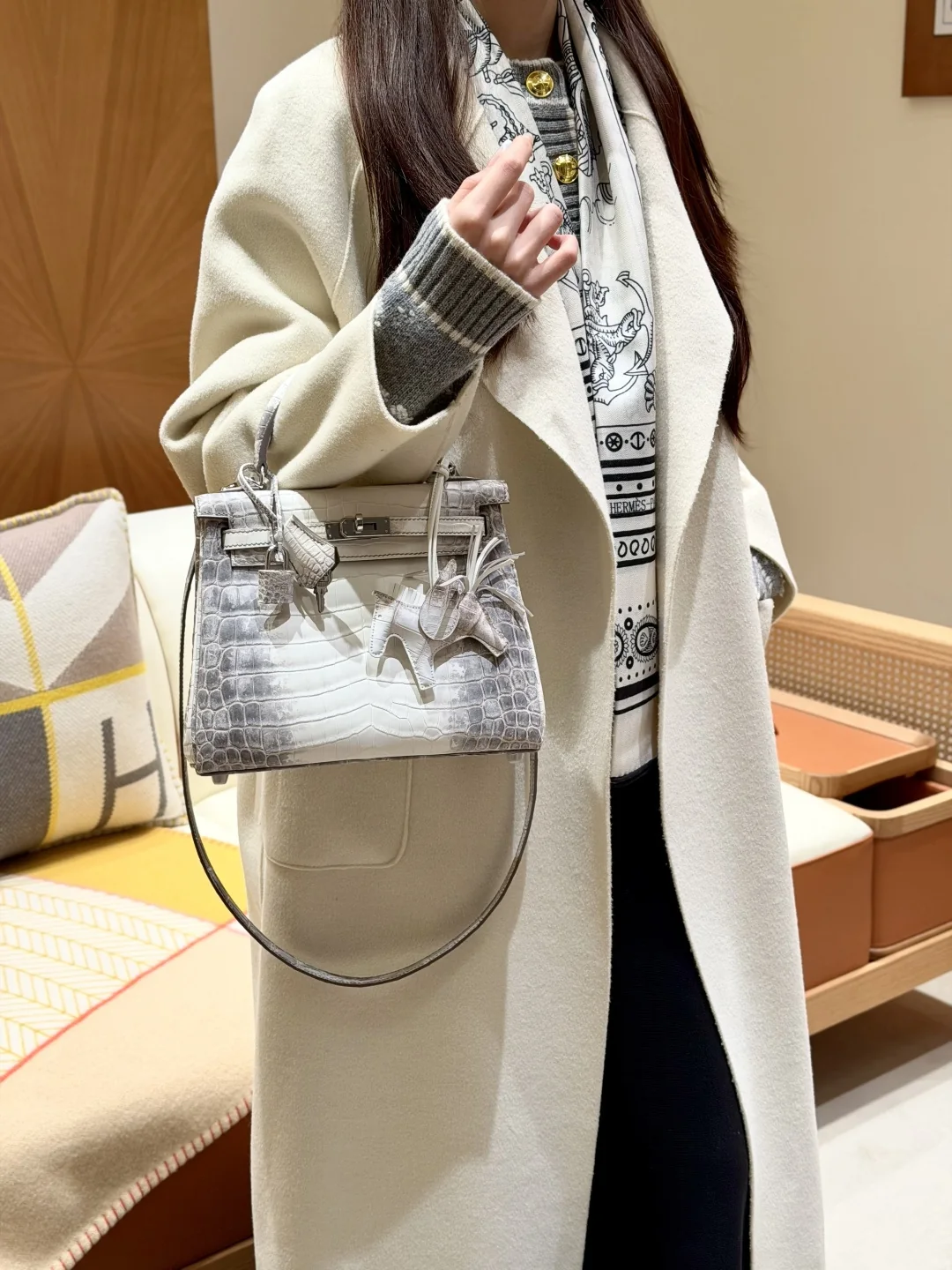
A Himalaya-style Kelly attracts attention before anyone notices a stamp. The eye reads the pale centre, smoky-grey flanks and scale transition as one composition, then moves to the trapezoidal body, rounded handle and cool hardware. That makes the colour map and left-right balance more important than a single attractive macro.
Cyan and the workshop identify this customer order as a Kelly 25 in Himalaya colour, measuring 25 × 17 × 7 cm, with French-imported matte Niloticus crocodile skin and silver hardware. Their specification also lists full hand construction, hand-set nails, hand-engraved fittings and copper-core hardware with thick palladium plating.
If terms such as “top grade” or “fully handmade” are unfamiliar, the AAA replica bags guide explains why seller labels need to be translated into an exact written specification and a complete set of same-bag photographs.
Table of Contents
Quick Verdict
As a Hermès Kelly 25 Himalaya replica, this one belongs on my shortlist. What wins me over is the front gradient: the centre stays pale without looking bleached, the grey flanks frame it gently, and the silver hardware lets the colour remain the main event.
My hesitation has nothing to do with the look. It is a deliberately small, pale and precious-feeling bag. The 7 cm quoted depth, structured opening and matte white centre make it much better suited to lunches, dinners and light days than to rushed everyday use. This is a bag you choose because you want to notice it—not because you want to throw everything inside and forget about it.
What Makes a Kelly 25 Himalaya-Style Bag Different
The Kelly already has a very composed silhouette: Hermès describes the family through its trapezoidal body, gussets, cut-out flap, single handle, side straps and turn-lock. The Himalaya treatment softens that form. Instead of reading as one solid block of colour, the bag seems to fade from snowy white into smoke.
A documented Christie’s Kelly 25 Himalaya pairs matte Gris Cendré Himalaya Niloticus crocodile with palladium hardware, while Sotheby’s describes the white-to-smoky-grey effect as a reference to snow-capped mountains. That is useful context, but what matters to me in these customer photos is whether the same visual idea survives ordinary room lighting and real clothes. It does.
One size detail is worth noticing: Christie’s catalogued its example at 25 × 19 × 9 cm, while this order is listed at 25 × 17 × 7 cm. That shallower profile is part of its neat charm, but it also explains why I keep returning to capacity as the one practical reservation. For the broader family and construction details, see the Kelly bag guide and the wider Hermès replica bags guide.
Real-Life Scale and Styling
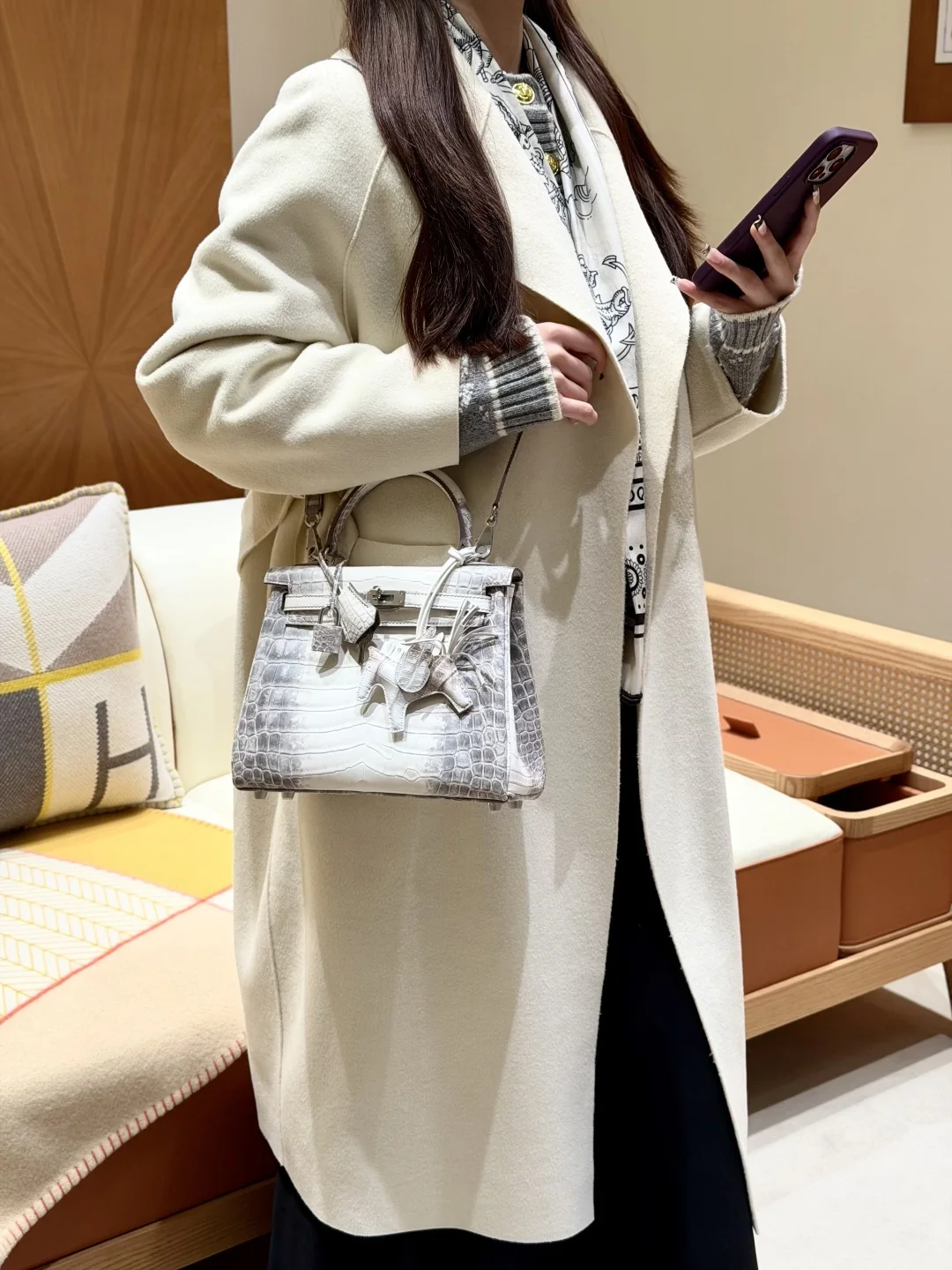 | 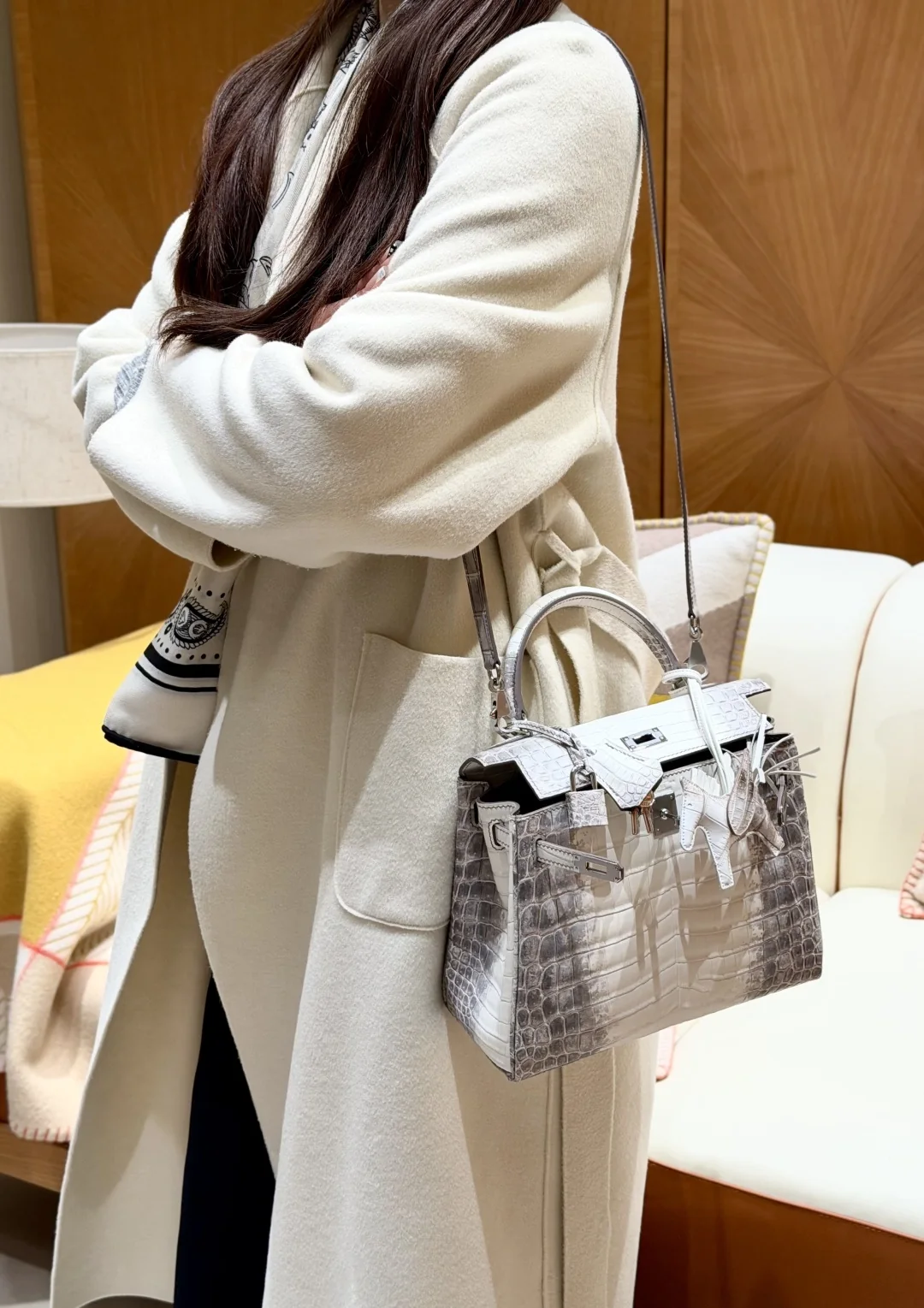 |
| This is the better proportion check: top-handle carry exposes the compact height, handle arch and disciplined upper line in one view. | The strap view answers a styling question, not a craftsmanship one: the hip-level drop adds versatility while the shallow body stays visibly small. |
On the body, 25 cm feels compact rather than tiny. There is still enough handle height and side depth for the familiar Kelly silhouette to register immediately. Against the cream coat, the white centre almost melts into the fabric while the grey edges redraw the outline. It is a lovely effect: quiet from a distance, then unexpectedly detailed when you move closer.
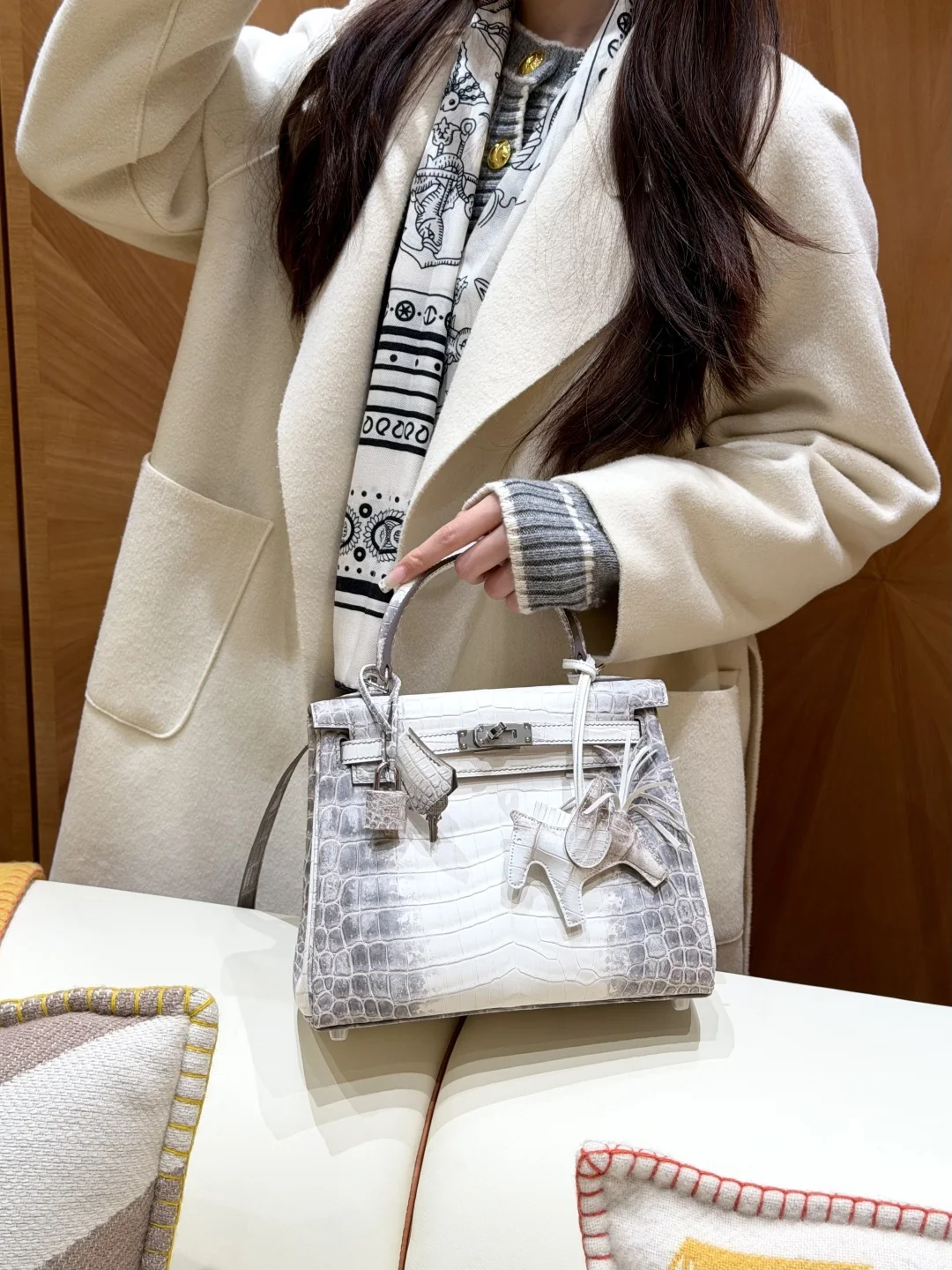 | 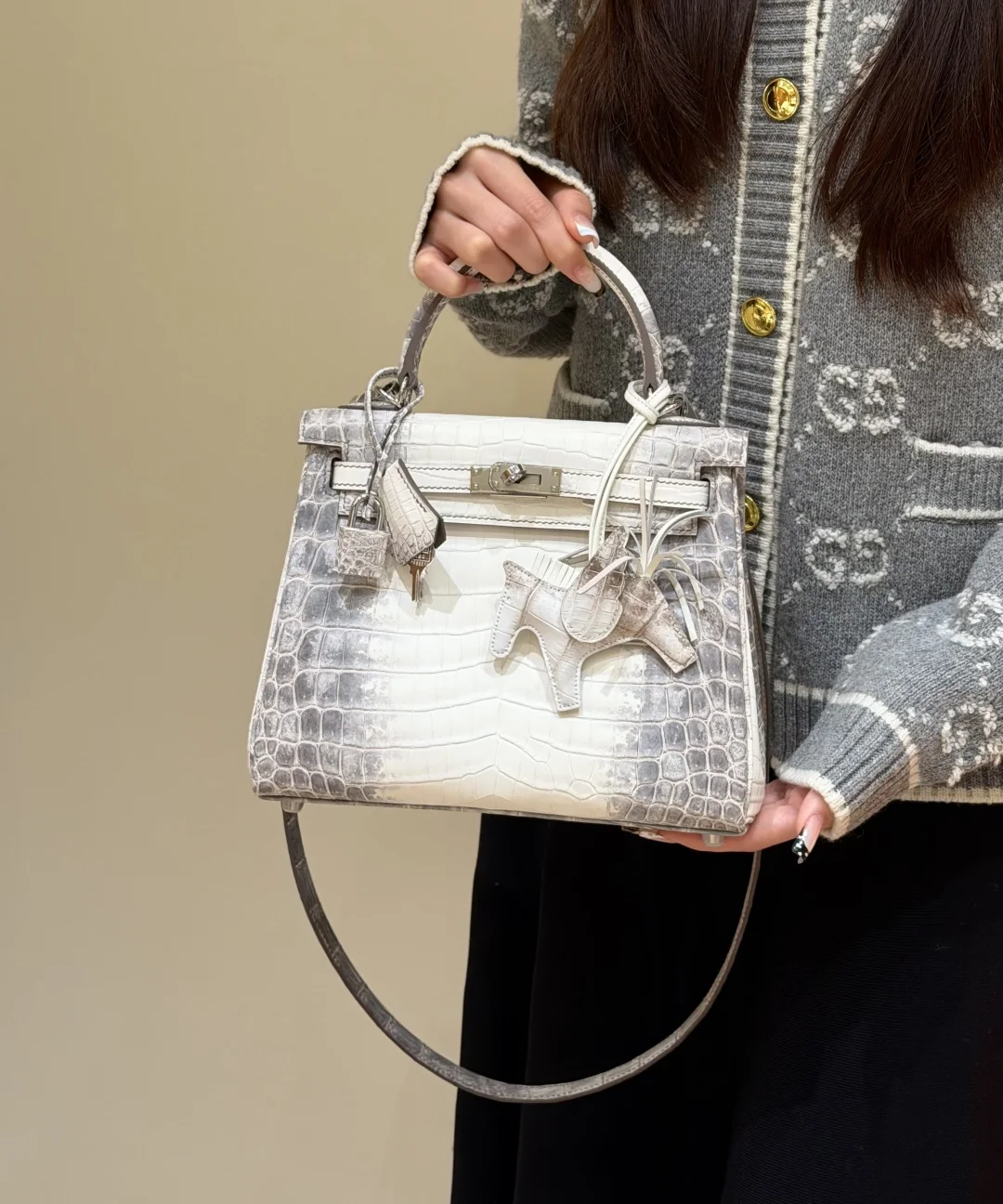 |
| At normal viewing distance, the pale centre stays legible instead of dissolving into an all-white bag—the gradient’s first real test. | Against grey knit, the darker flanks become more pronounced; this checks whether the gradient stays balanced outside cream-on-cream styling. |
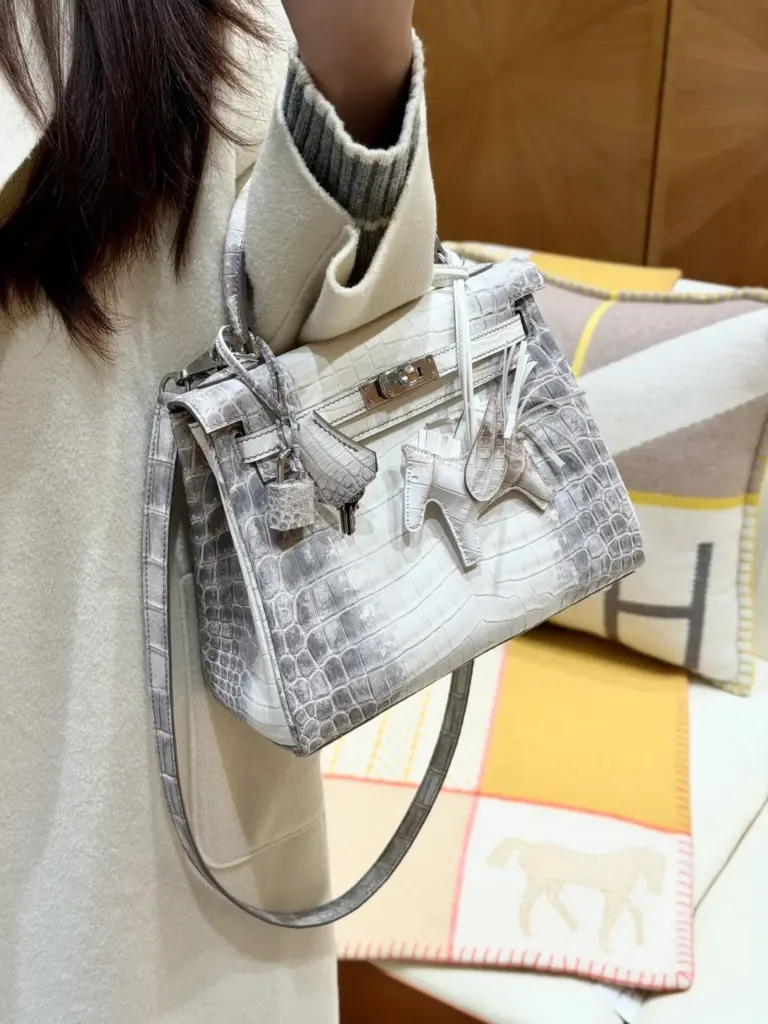
If this were mine, I would wear it exactly this way: cream, soft grey, black trousers, very little competing colour. The bag already brings pattern, contrast and shine, so it does not need help. Top-handle carry is the prettier option to my eye; the shoulder strap is the practical one for travel between places. The broader bag-and-outfit matching guide covers the colour logic, but the simple rule here is to let the Himalaya finish have the last word.
The Gradient Is the Whole Story
For this Hermès Kelly 25 Himalaya replica, the photograph I opened most often was not the stamp macro. It was the unobstructed front view below. One glance tells me whether the white centre has room to breathe and whether the handle, straps and turn-lock feel settled around it. Only after that first impression works do I want to inspect the back and profiles.
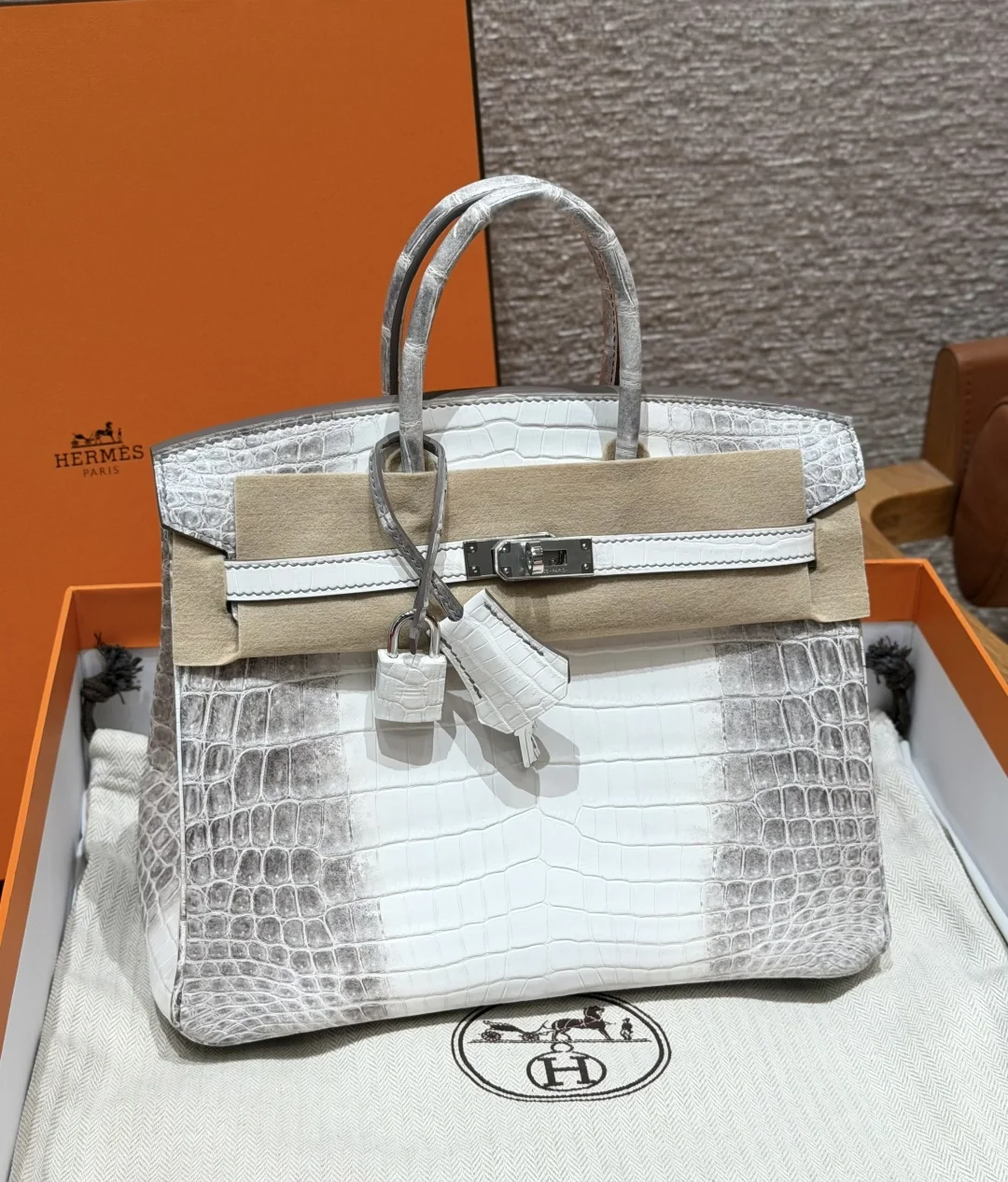 | 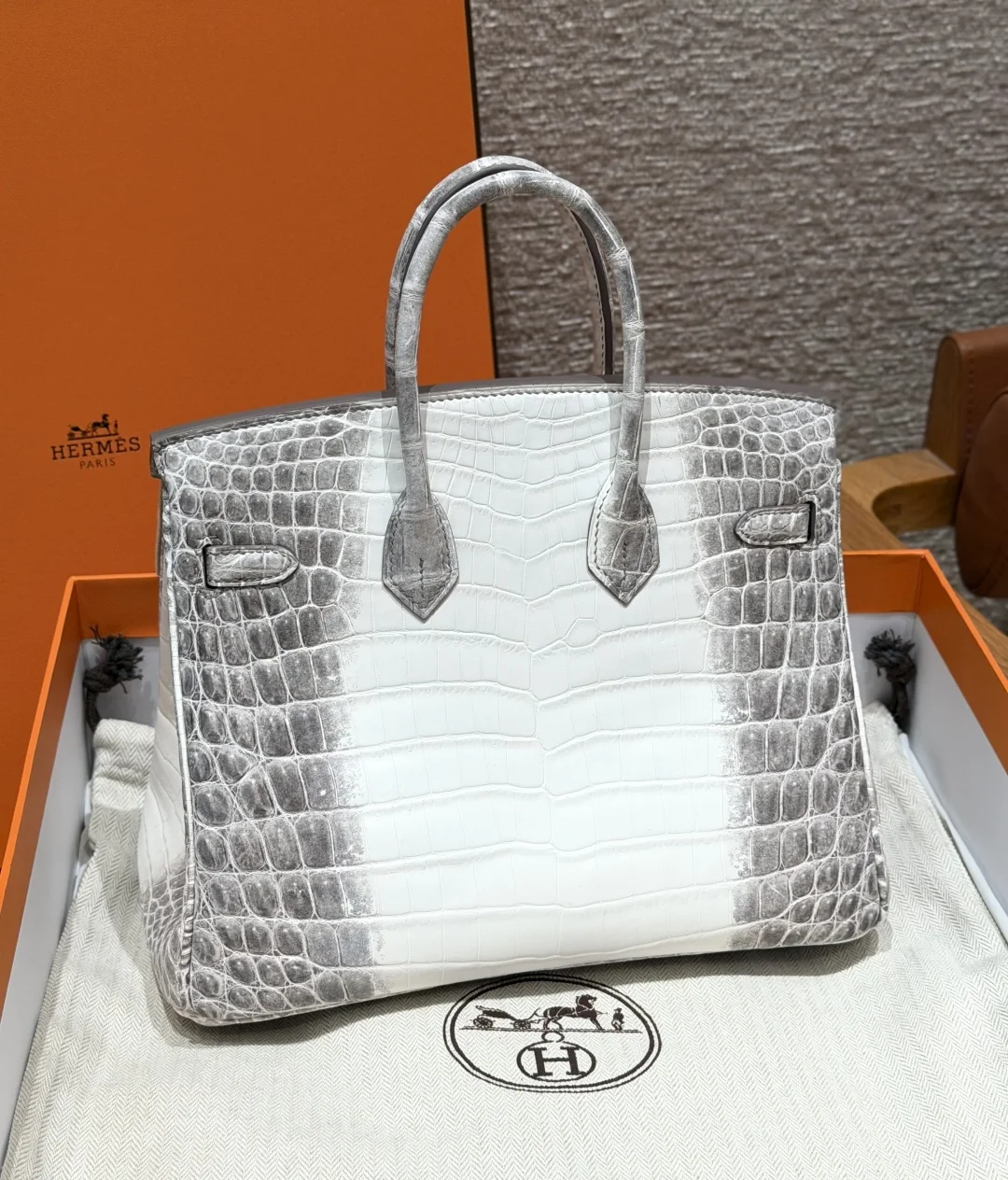 |
| Use this frame for overall geometry: the pale centre is centred, the darker flanks carry similar visual weight and the upper line stays level. | The back is the asymmetry check. Its scales are not cloned from the front, yet the white centre and smoky sides keep comparable visual weight. |
What I like is the pace of the transition. Broad rectangular scales hold the centre, then gradually give way to smaller rounded scales at the sides. The grey stays mostly at the perimeter, so the middle never looks muddy. Left and right are not identical, nor would I want them to be; they simply feel related, like two sides of the same natural pattern.
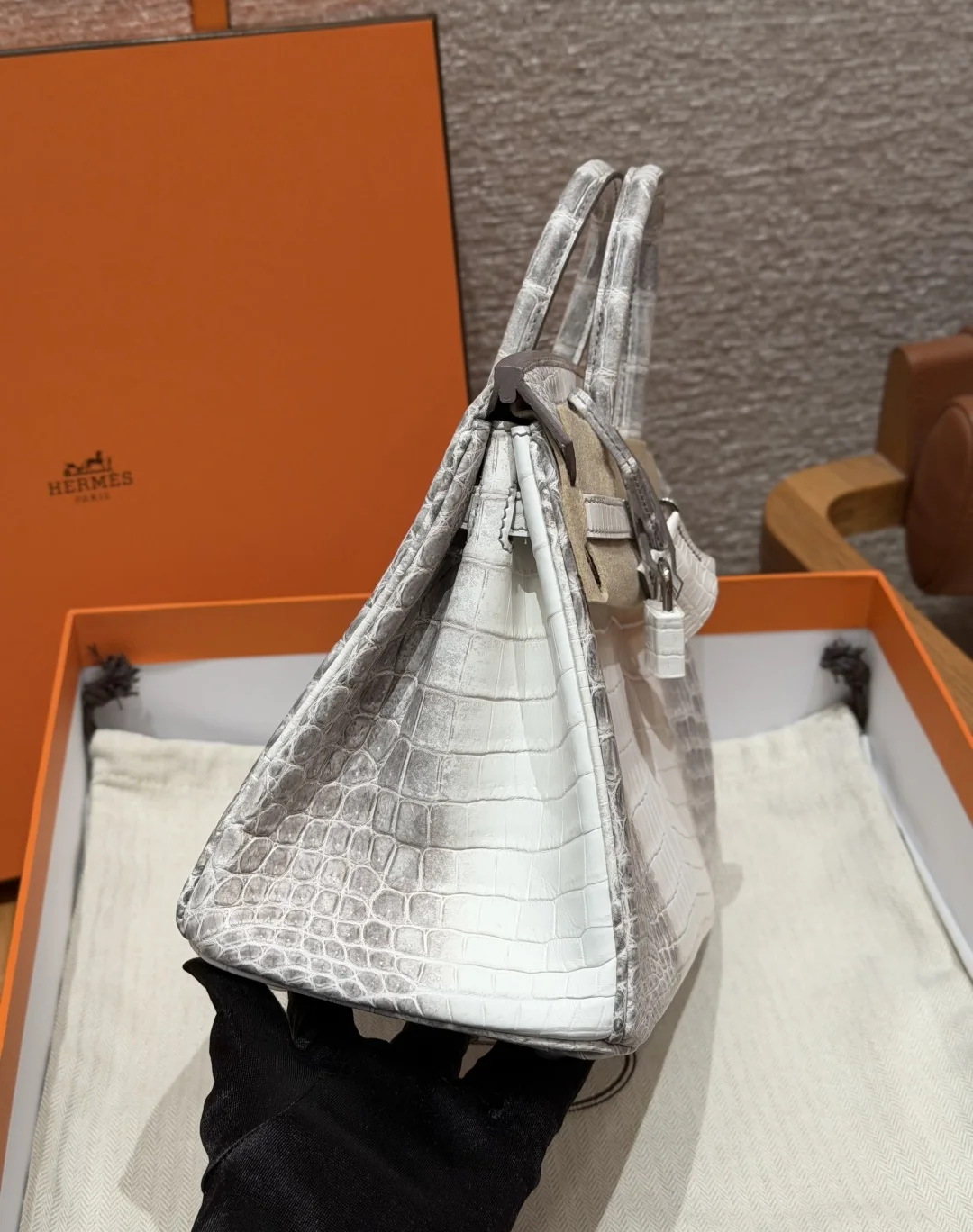 | 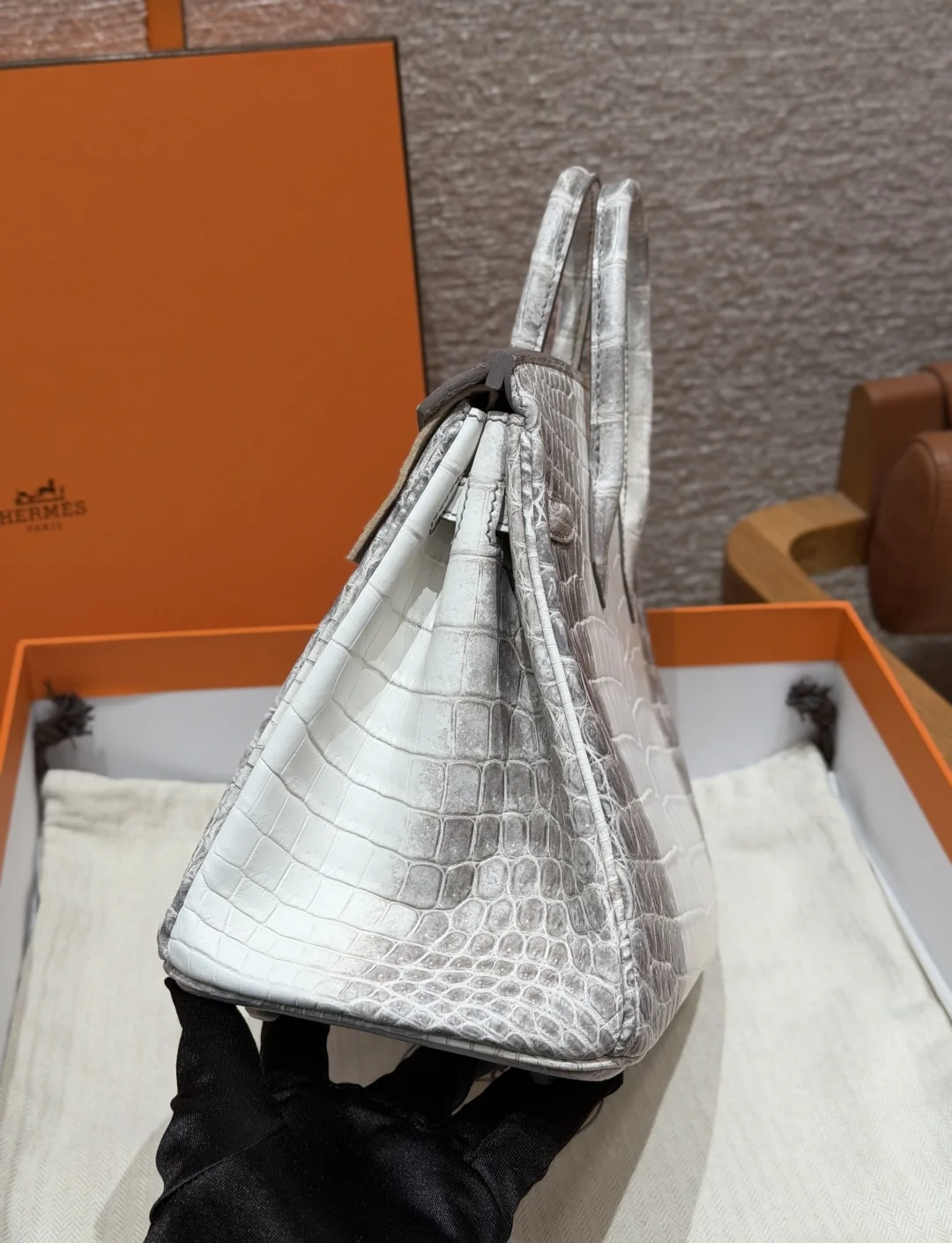 |
| Read this beside the opposite profile: the left gusset keeps a compact triangle and carries the gradient around the side without a hard break. | The right profile is close enough in taper and piping to avoid a one-sided silhouette, even though the scale map remains naturally different. |
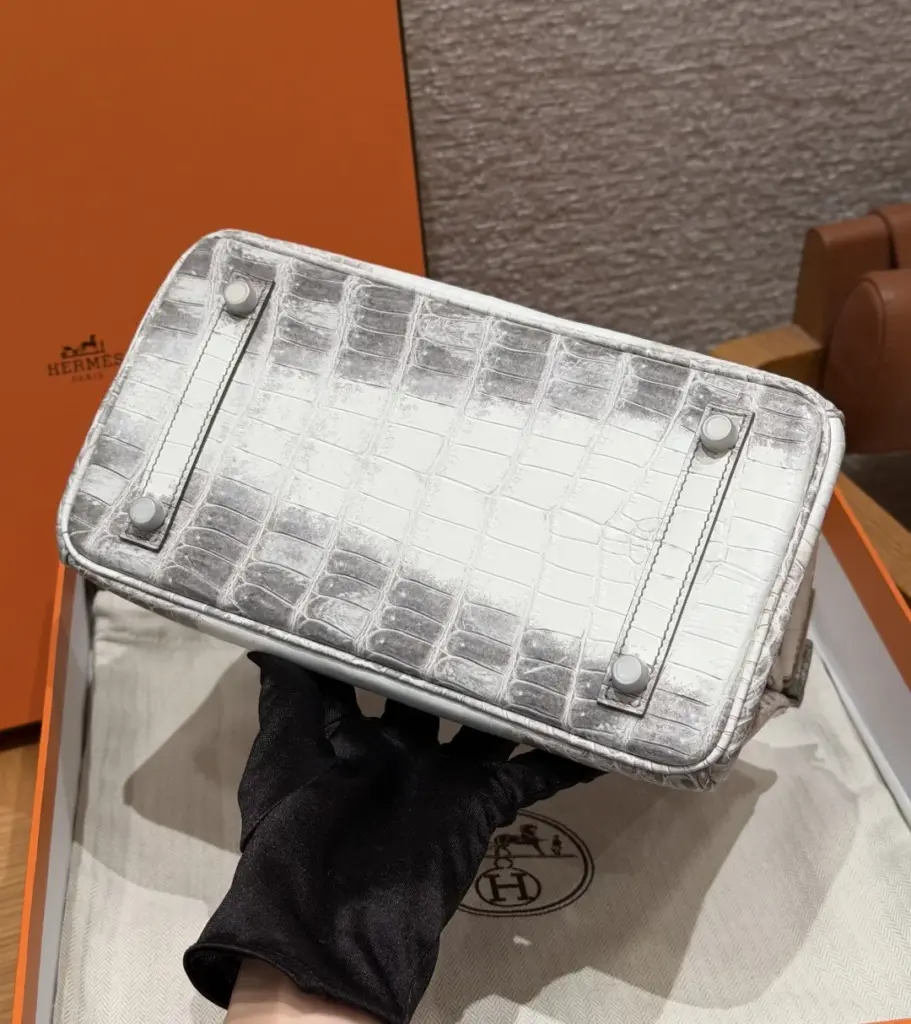
From the side, the bag keeps a crisp little wedge rather than collapsing inward. The rounded piping softens the geometry just enough, and the four feet do not visually crowd the base. I also prefer that the scale direction responds to each panel; it gives the bag a made-object feeling instead of the flat sameness of a repeated print.
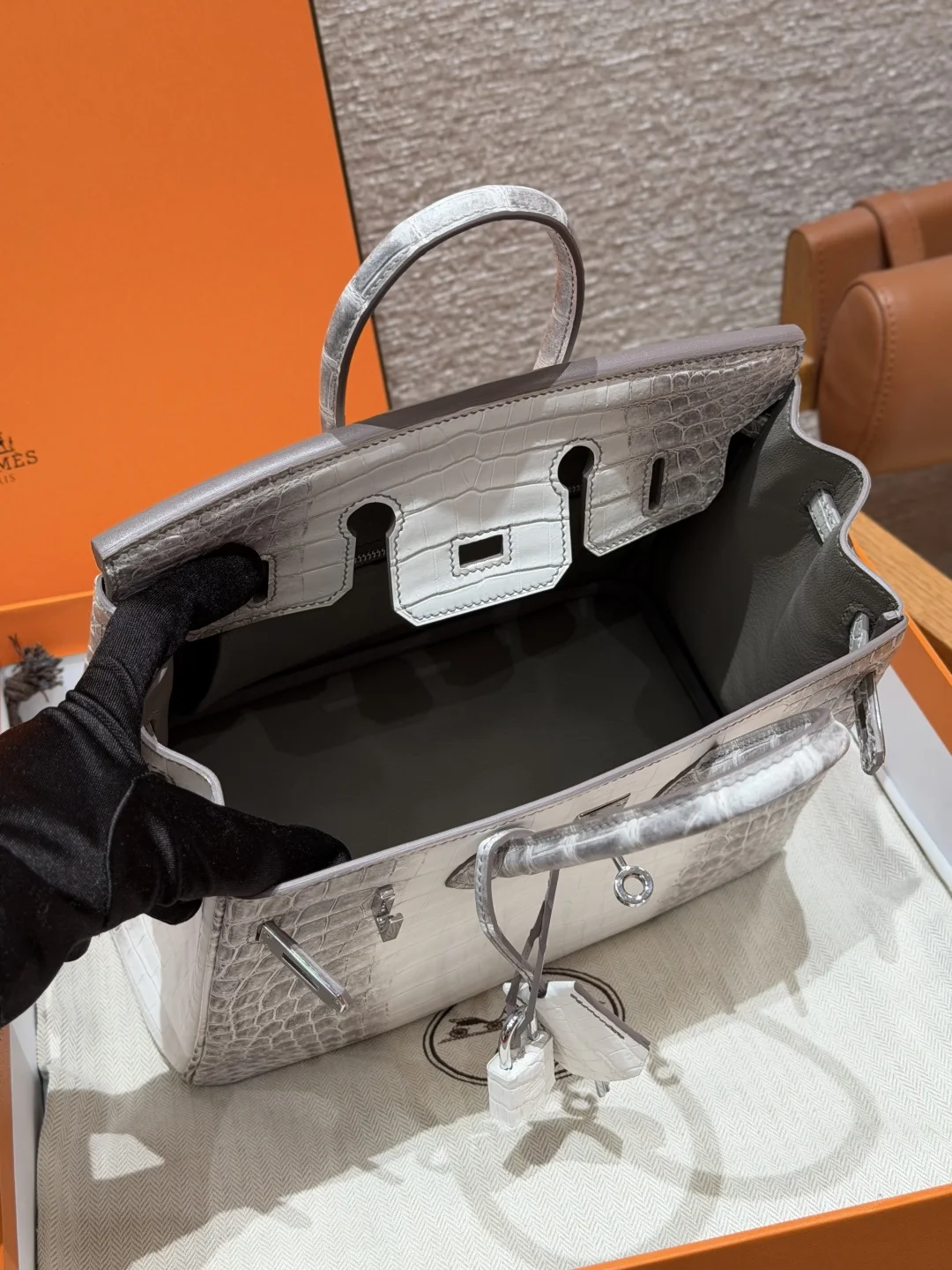 |  |
| This frame matters for capacity: the raised flap and open gussets show how much of the shallow 7 cm quoted depth is actually available. | This is the first frame I would open in QC: no charm or felt interrupts the gradient, handle spacing, sangles or turn-lock axis. |
The Details I Kept Coming Back To
Up close, I am drawn less to one supposedly perfect scale than to the way the whole surface changes under the eye. Wide centre scales narrow toward the flanks, the grey edge paint quietly echoes the gradient, and the matte finish keeps the white from looking plastic or overly bright. The Niloticus species and French/Nile origin are Cyan and workshop specifications, so I would ask for documentation if those details were central to my purchase.
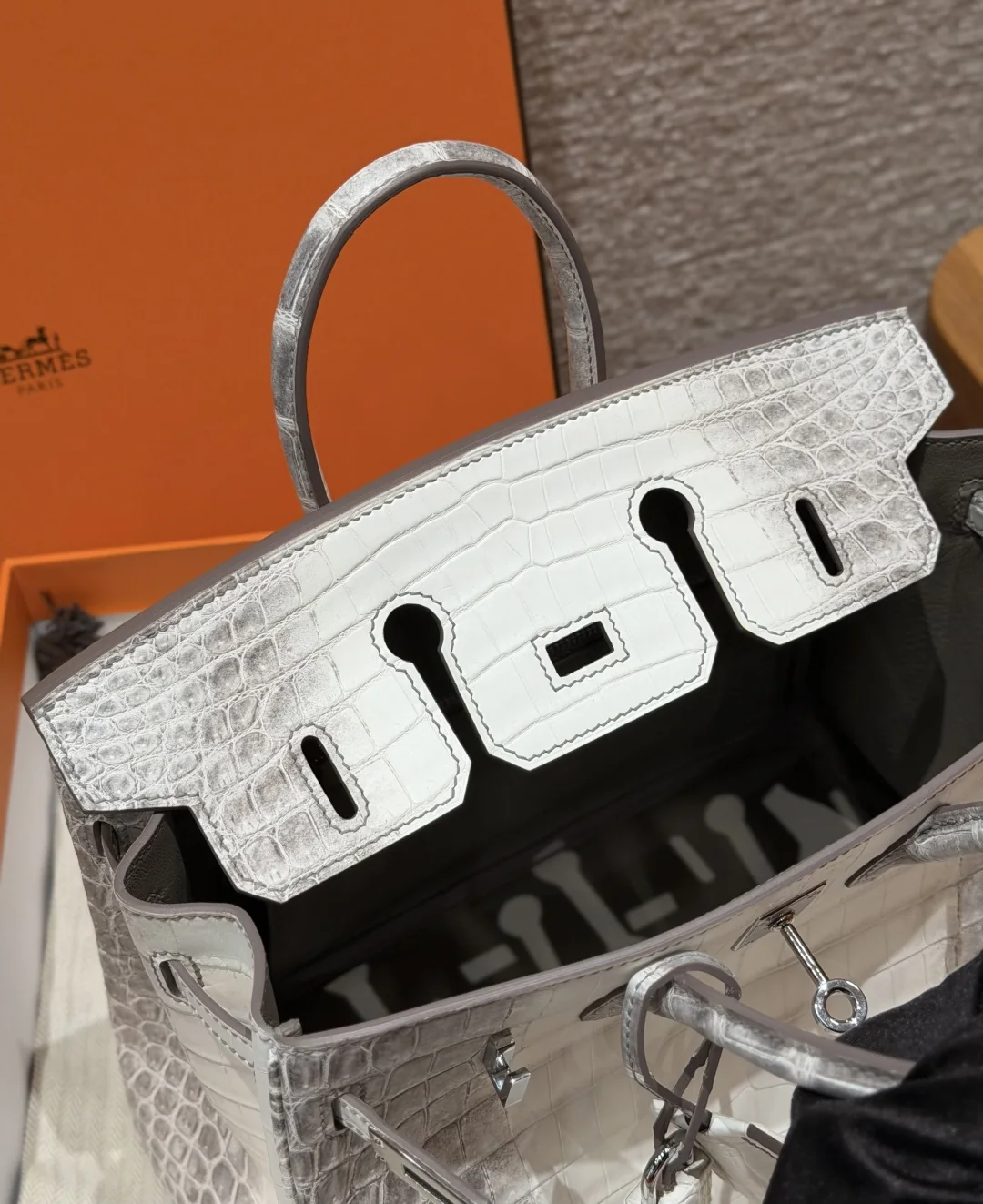 | 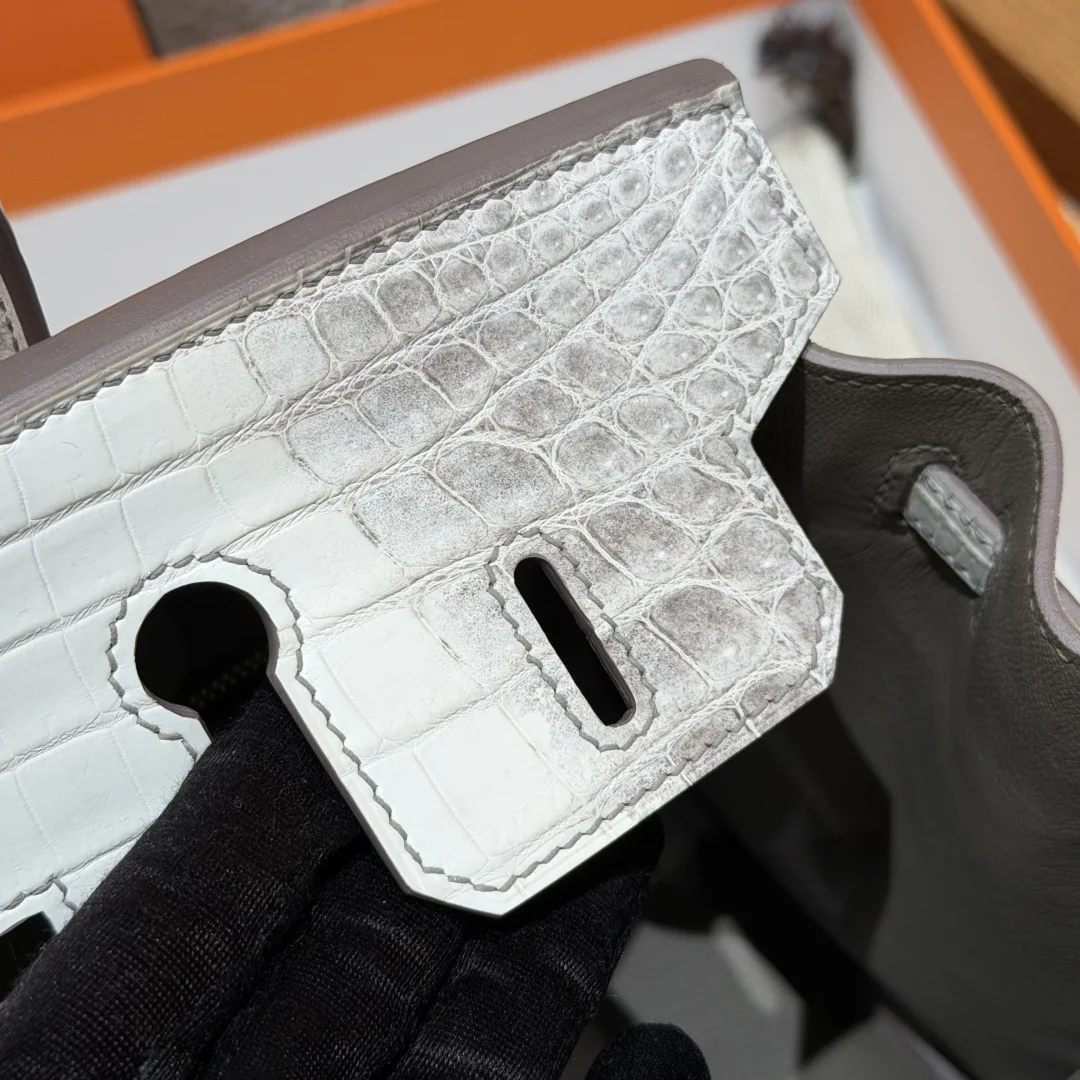 |
| Beneath the raised flap, the broad centre scales and smaller outer scales reveal a transition that the closed bag partly hides. | This is the cleanest edge-quality macro: the stitches follow the corner without crowding it, and the grey edge coat stays slim. |
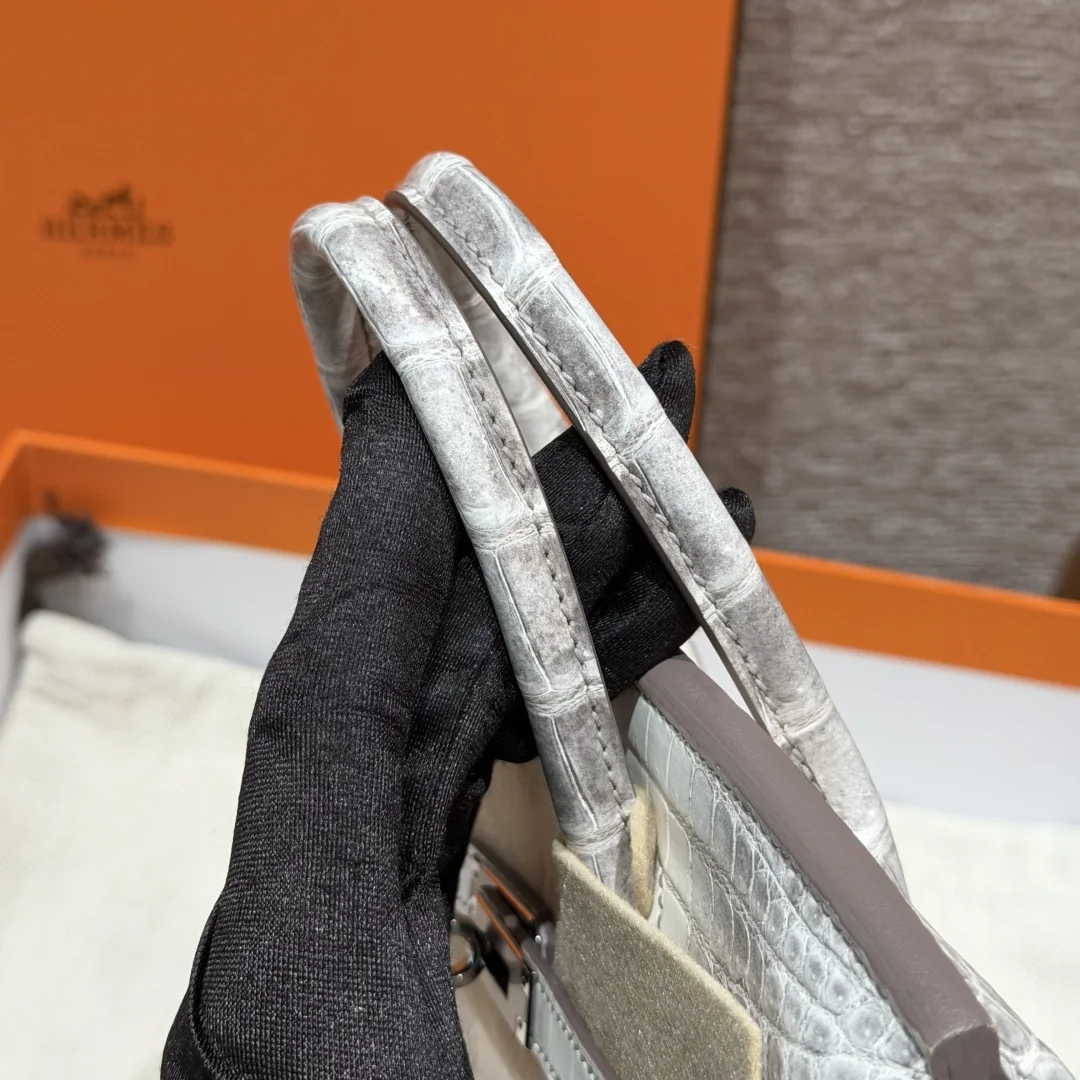 | 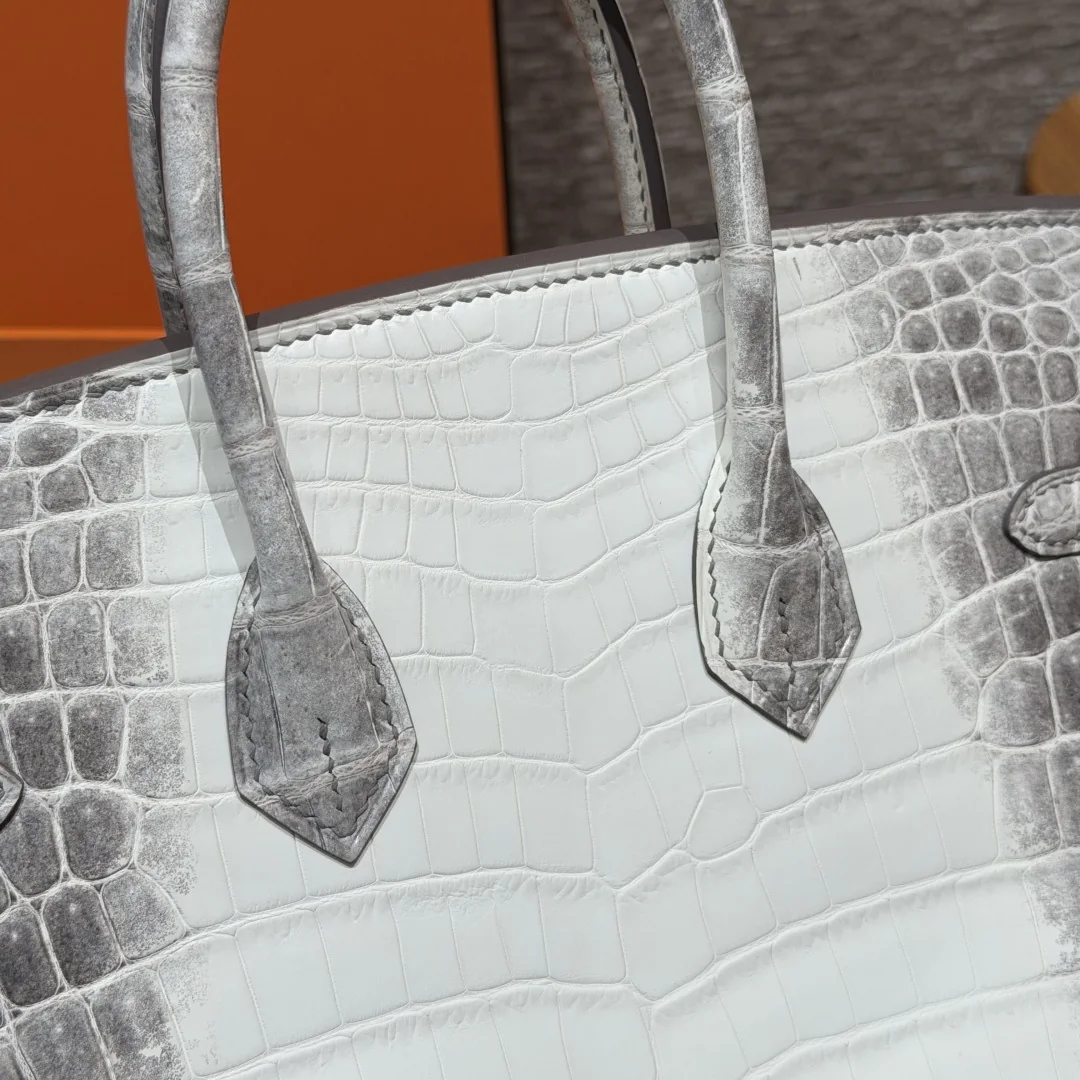 |
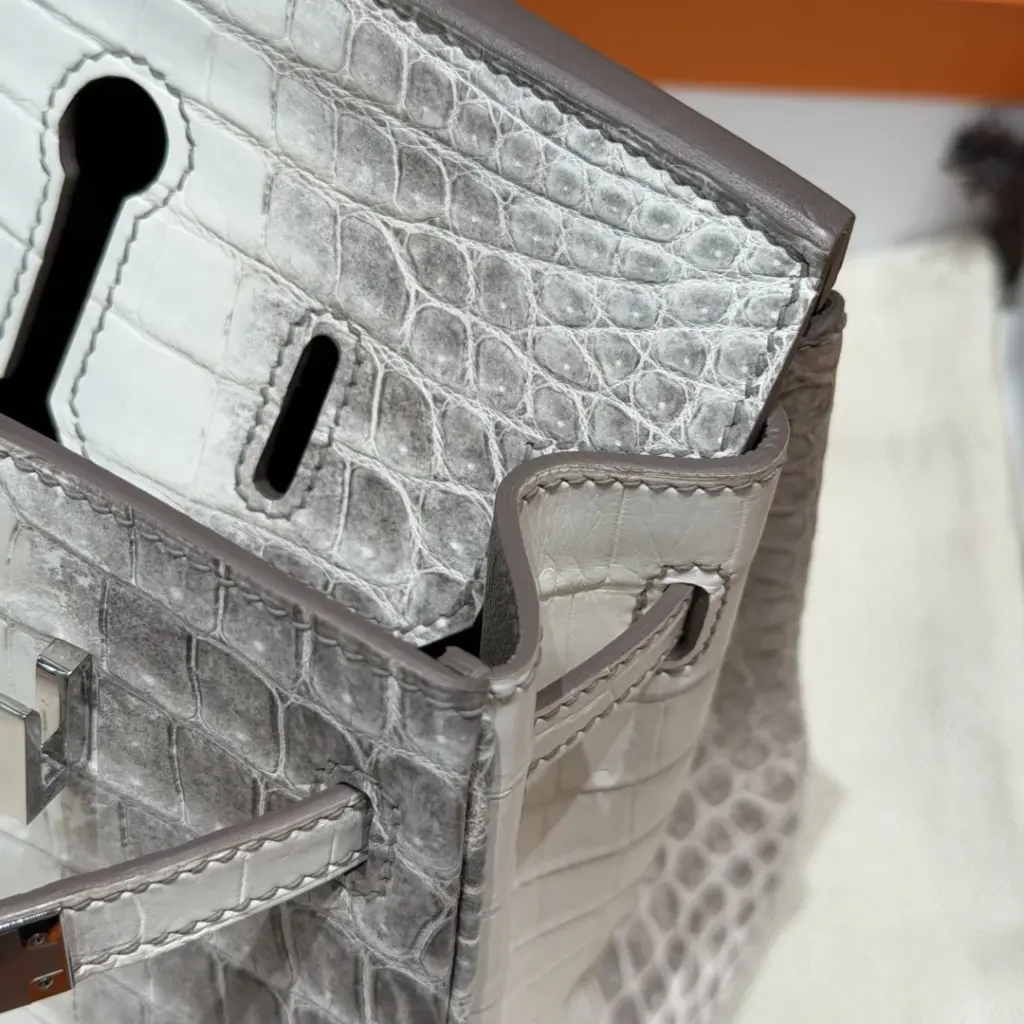
| The handle macro tests whether the paired arches share one profile and whether their visible stitch paths remain parallel. | This is more useful than another rear-loop close-up: both handle bases appear together, making height and spacing differences easy to spot. |
The stitching becomes most interesting where the leather has to turn: flap corners, handle bases, strap loops and gusset seams. Those are the places I zoomed into, and the work stays quiet—close to the edge, pale enough not to interrupt the colour, without one awkward junction demanding attention. The Hermès craftsmanship guide goes deeper into construction language; for this bag, consistency from one difficult corner to the next tells me more than a beautiful stamp shot.
Why Silver Hardware Works Here
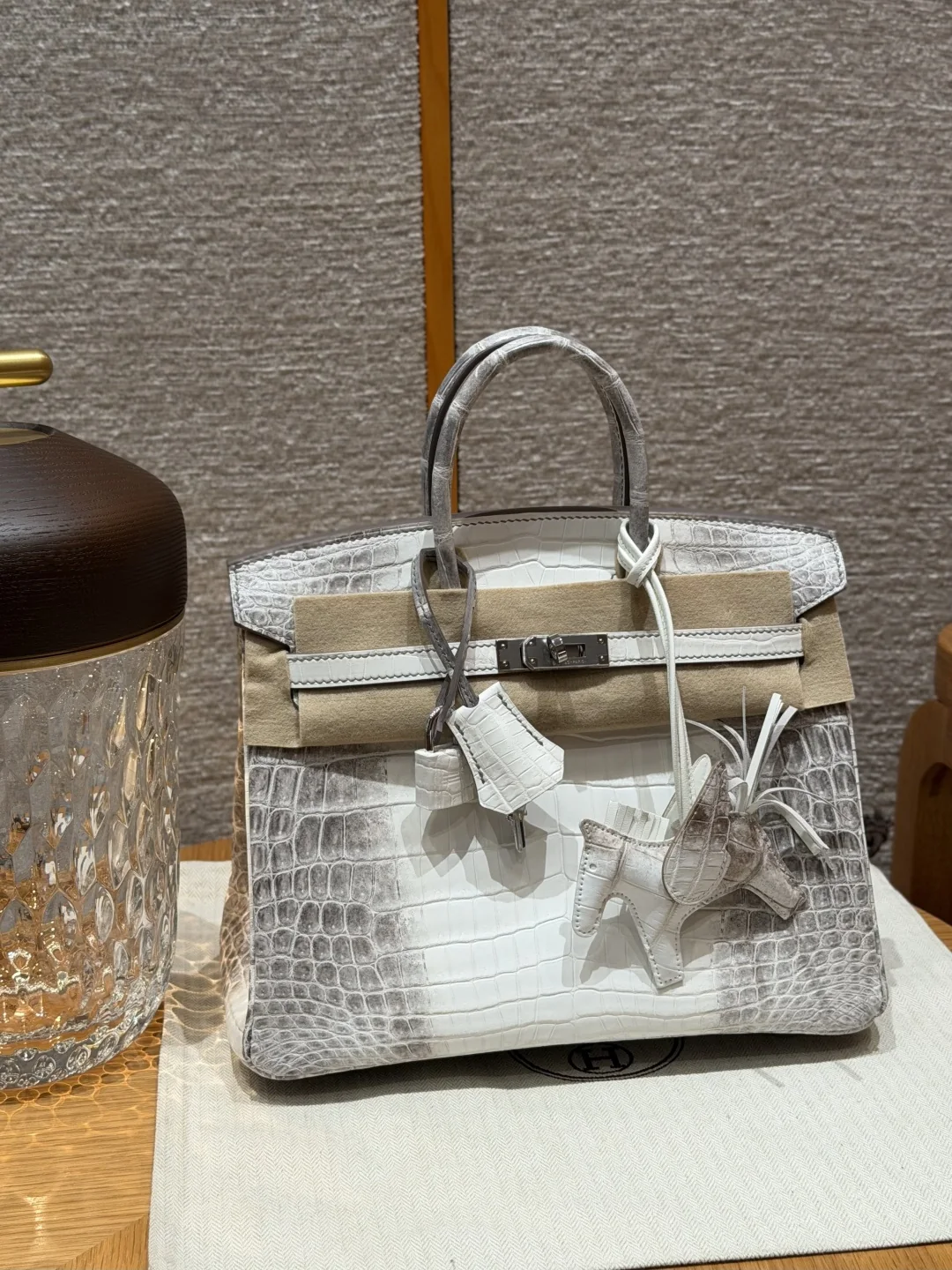
Silver is exactly what I would choose with this gradient. Gold would introduce another warm colour; the cool hardware disappears into the grey and lets the leather remain the event. At a normal carry distance, I notice the clean line running through the turn-lock and straps long before I notice microscopic lettering.
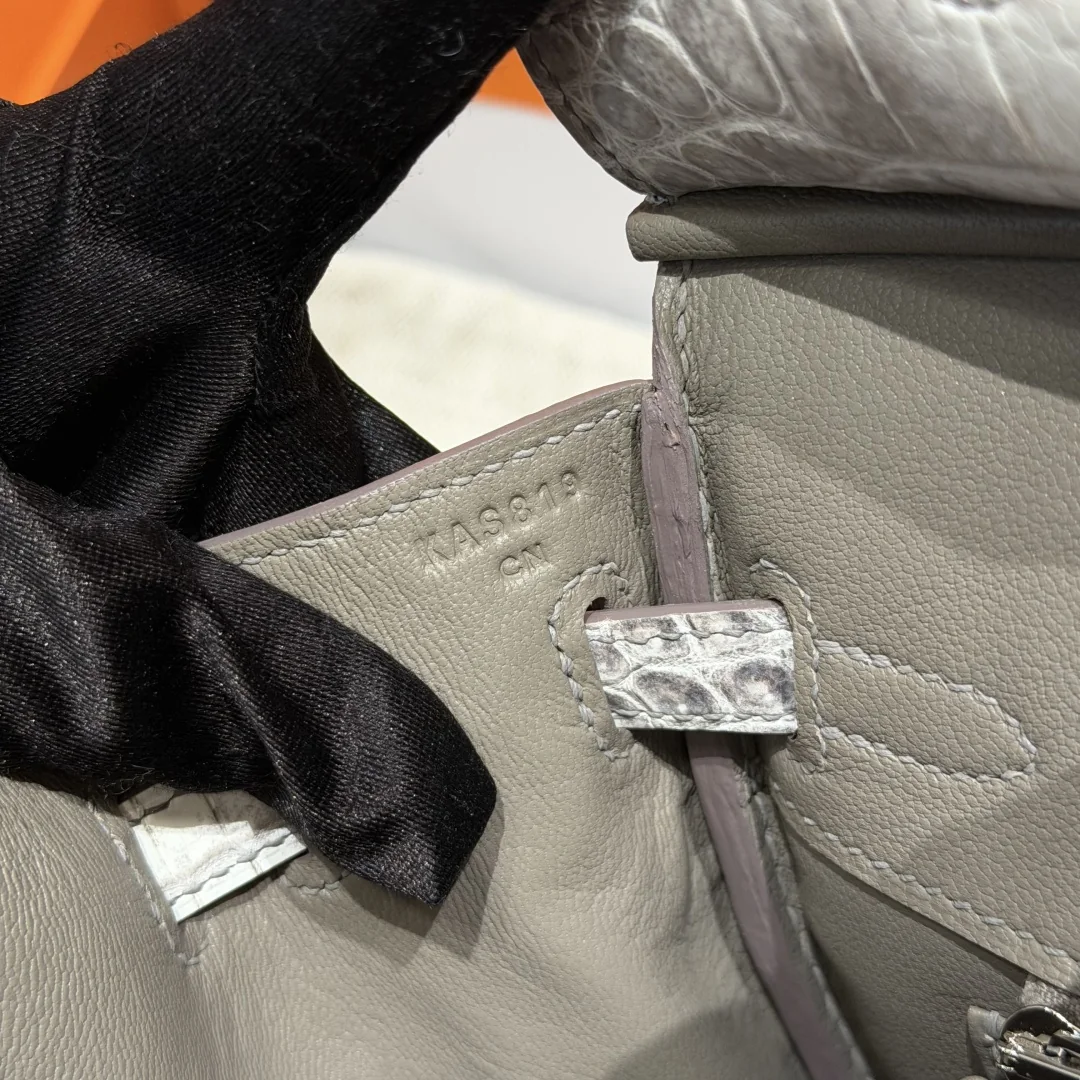 | 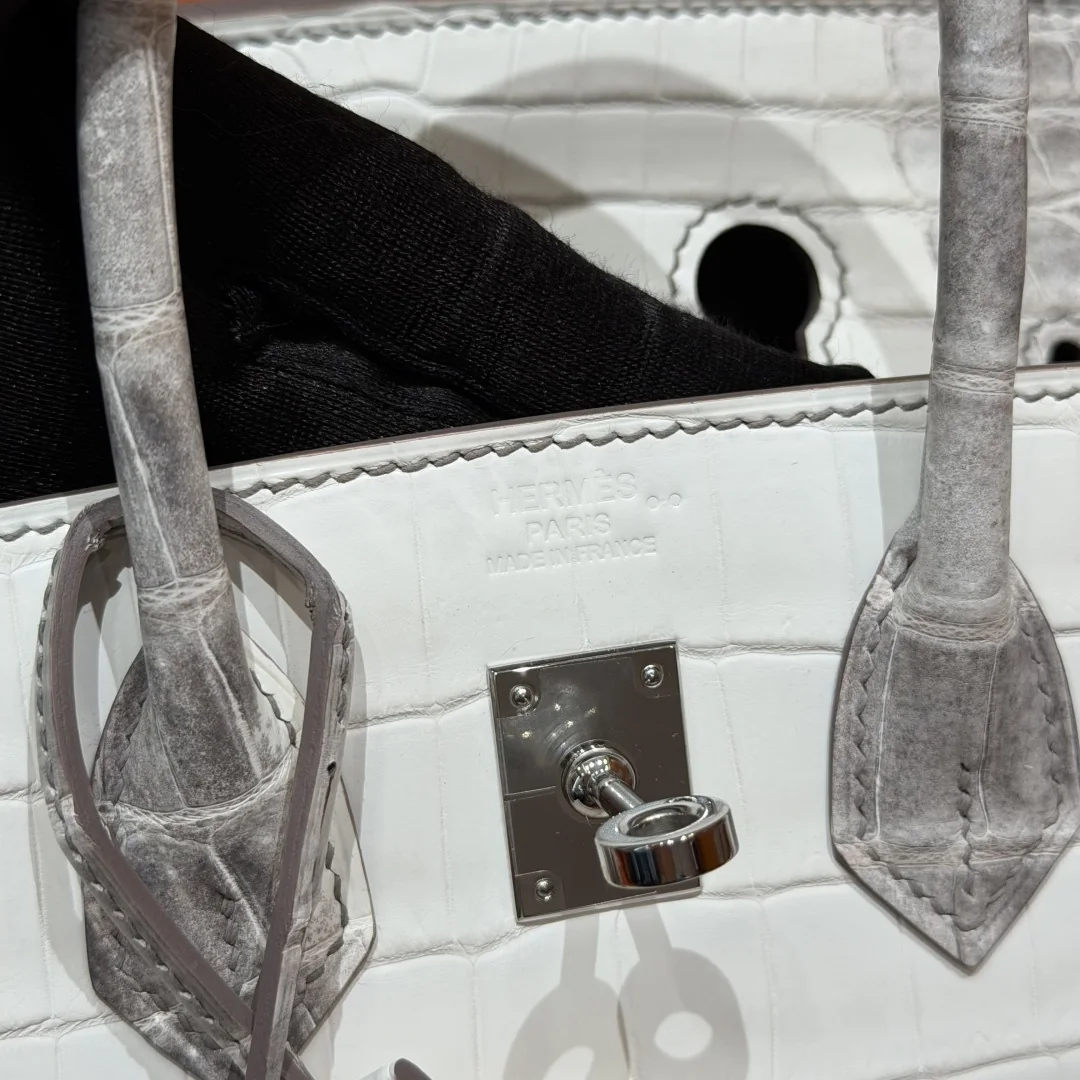 |
| The accessory set matters mainly as a consistency check: lock, keys and clochette should share the bag’s cool finish and compact scale. | This is the hardware image I care about most: the turn-lock sits between the handle bases, so any drift in the front axis becomes obvious. |
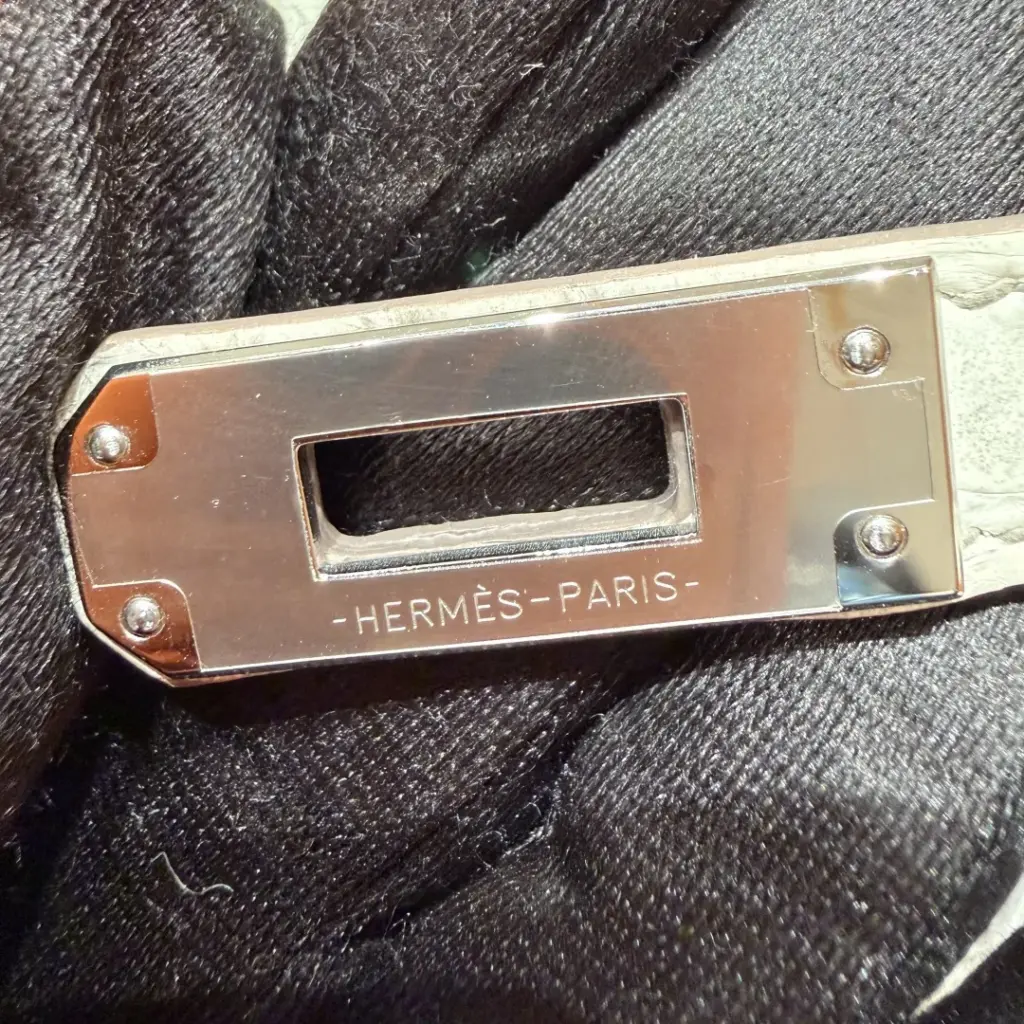
Across the wider photographs, the fittings stay cool and bright without shouting. The plates look level, the turn-lock sits neatly and the feet fall inside their reinforcement strips. Copper-core construction, hand engraving, hand-set nails and thick palladium plating are Cyan and workshop specifications; what I can appreciate here is the visible silver-tone finish and the way it works with the gradient.
Who I Think This Bag Is For
| BEST FOR | MAIN TRADE-OFF | CHECK BEFORE ORDERING |
|---|---|---|
| Events, lunches and light day carry | Compact 25 × 17 × 7 cm supplied size | Phone, case, cardholder and key dimensions |
| Neutral wardrobes that let the gradient lead | Pale matte surfaces show contact and colour transfer more readily | Care routine, clothing dyes and storage |
| Buyers who value a dramatic gradient and visible scale pattern | The pale matte finish demands deliberate care | Unobstructed front, back, profile and interior photos from the same bag |
A Hermès Kelly 25 Himalaya replica makes sense for someone who edits what she carries before leaving home: phone, slim cardholder, keys, lipstick, perhaps a compact. The opening is naturally smaller than the widest point of the bag because the flap and gussets borrow space. I would measure my own phone and case before ordering. The shoulder strap is useful, but the top handle is still how I would carry it when I wanted the bag to be seen.
The other reality is care. Those grey edges may be more forgiving than an entirely white bag, but the pale matte centre will remember dark denim, damp hands and careless storage. That would not stop me from choosing it; it would stop me from pretending it is an effortless daily bag. Part of loving this finish is accepting that you will think about where you set it down.
Final Recommendation
Yes—if I wanted a Kelly for special days rather than every day, I would choose this one. The unobstructed front photograph is what decides it for me: the centre stays pale without looking bleached, the smoky scales frame it without closing in, and the silver hardware never steals the moment. No stamp macro gave me that feeling; the full bag did.
I would shortlist this bag for a buyer who wants a compact, high-presence Kelly whose gradient carries the design; I would pass only if daily capacity or low-maintenance wear matters more. If this were my order, I would ask for the clean front view first and let it make me fall in love—then I would use the back, profiles and interior to make sure the feeling survives a closer look.
Frequently Asked Questions
Can the Kelly 25 be worn on the shoulder?
The submitted photographs show a detachable long strap placing this bag near hip level over a cream coat. That confirms the visual carry option, not comfort under load. Compare the supplied strap drop with your height and outerwear, then keep the compact bag lightly packed so the narrow strap does not become the practical weak point.
What should I check first in Himalaya Kelly 25 QC photos?
Begin with an unobstructed straight-on view. Check whether the pale centre is centred, the darker flanks carry similar visual weight, the handle and turn-lock align, and the scale transition looks gradual. Only then move to flap corners, gusset seams, handle bases, feet, engraving and interior details. The full composition reveals more than one macro.
How large does this Himalaya-style Kelly look in real life?
At the supplied 25 × 17 × 7 cm, it reads as a compact statement bag rather than a micro bag. The styling photographs show enough width to display the gradient clearly beside the body, while the shallow profile keeps it neat. It has more visual presence than storage volume, especially with the charm attached.
Is the gradient more important than the stamp on a Himalaya-style Kelly?
Yes—for visual QC, start with the gradient. A stamp macro can document lettering and placement, but it cannot rescue a front panel whose pale centre is off-axis or whose dark flanks carry unequal weight. Open the unobstructed front image first, compare it with the back and both profiles, then use stamp and hardware macros as secondary finishing checks.
Sources
- Hermès — All About the Kelly Bag Collection
- Christie’s — Matte Gris Cendré Himalaya Niloticus Crocodile Retourne Kelly 25
- Sotheby’s — The Anatomy of the Most Valuable Hermès Bags