GUCCI · MODELS, MATERIALS & REAL QC PHOTOGRAPHS
My picks start with the silhouette. Then a navy GG set shows what earns my visual QC approval, and which compromises I would actually care about.
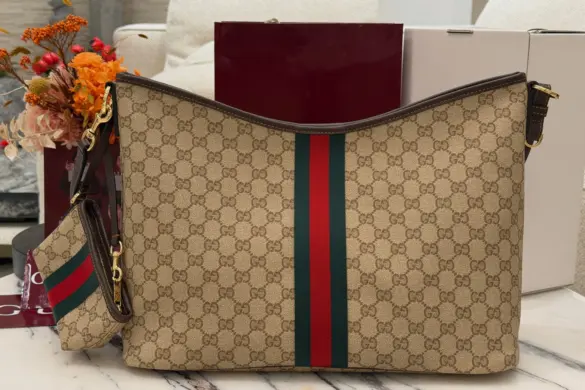
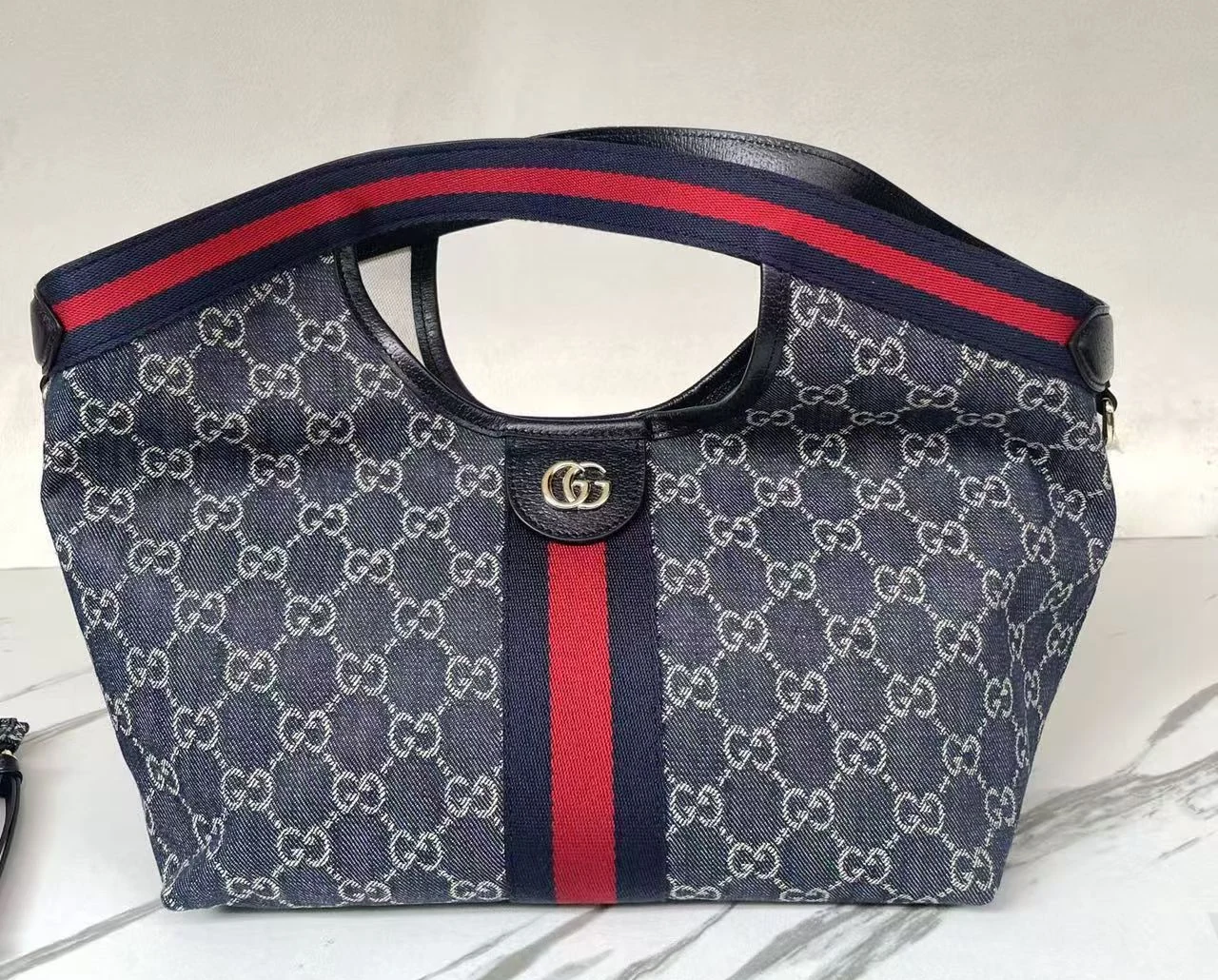
QC-01 · Supplied real QC photograph. The broad navy front, curved hand opening and central stripe are the starting point for my judgment. Existing crop retained.
Optional editorial illustration (AI-generated)
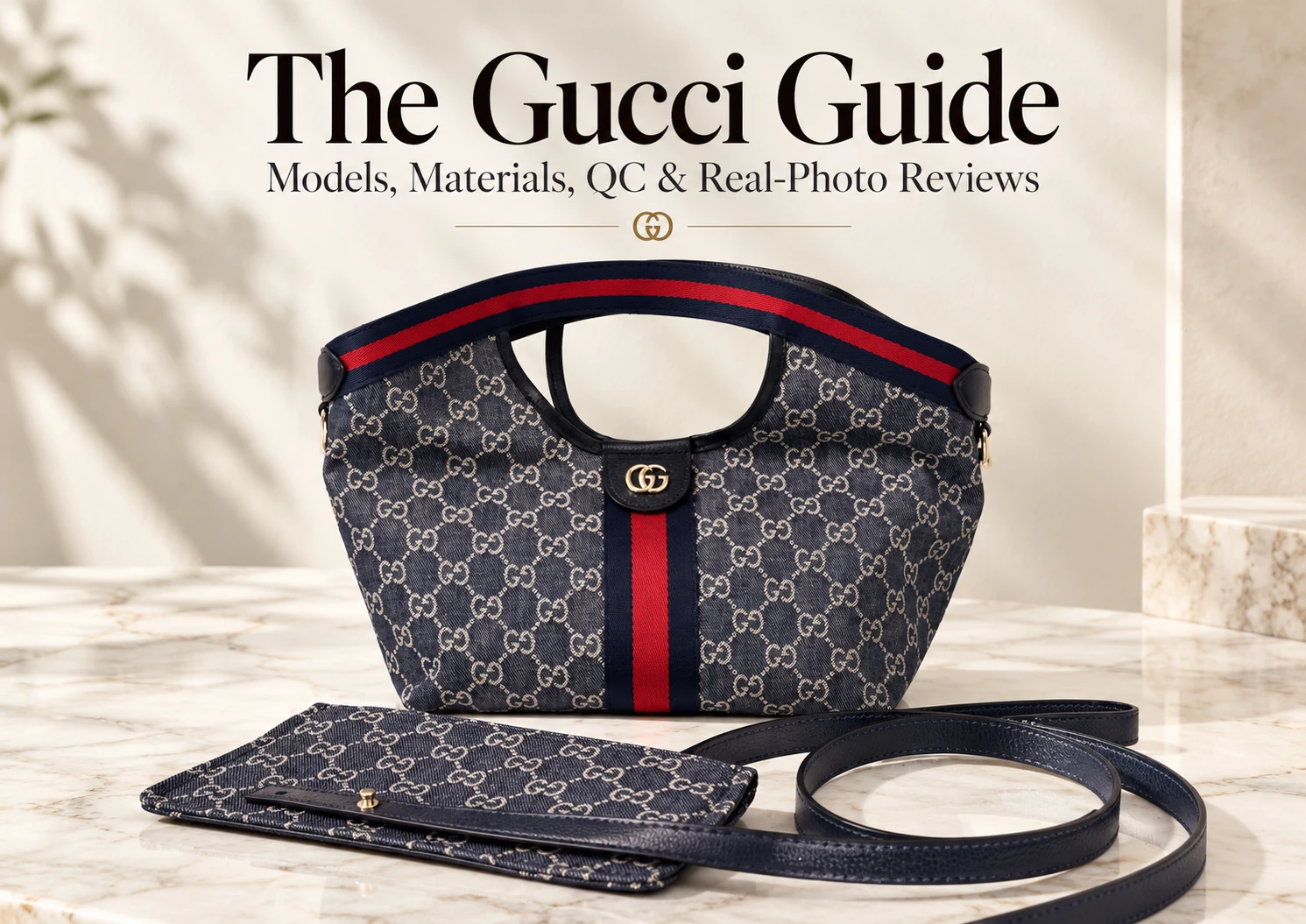
Gucci can make me want a curved shoulder bag one minute and a bamboo handle the next. The appeal is in the shape as much as the monogram: a Jackie sits close to an outfit, while a broad GG hobo becomes a substantial part of it. My choice among the best Gucci replica bags starts with that difference. A lovely bag can still be the wrong size for Tuesday.
For a compact, dressed-up look, I favor the black-and-gold Marmont. For more relaxed daily carry with a zip, the Large Web is the more useful direction. The navy set below wins me over for a different reason: the generous lower body and curved hand opening make a lively outline, even before I look at the little Double G.
I would approve that navy example for shipment on visual QC grounds. The 14 supplied photographs show enough coherent finishing to reach a decision; its open main compartment and interrupted side-seam motifs are the compromises to understand. Here is how I arrived there.
My Gucci Picks at a Glance
On a phone, swipe sideways to compare the four picks and open a full review.
| Model | Best for | Main trade-off | Full review |
|---|---|---|---|
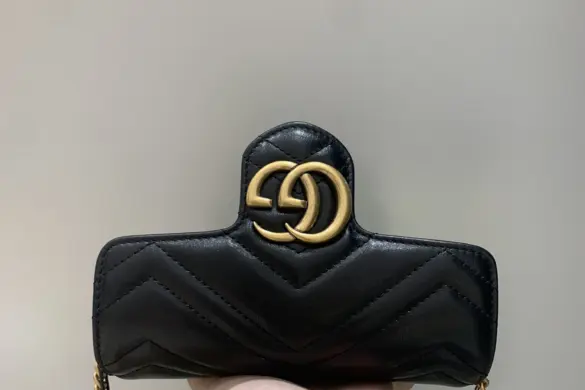
| GG Marmont | Compact outfits and textured styling | Restricted access for bulky items | Marmont opening and quilting |
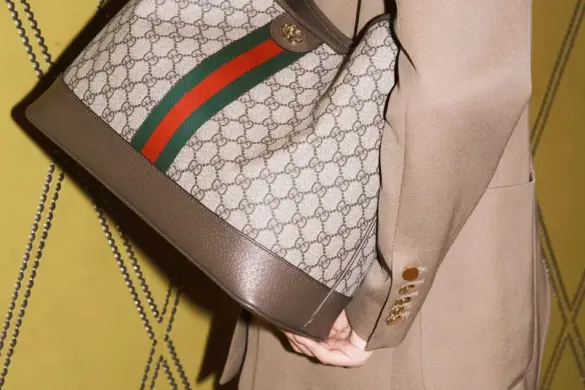
| Ophidia Hobo | Roomier everyday shoulder styling | Open sides around the fastening | Ophidia fit and styling |
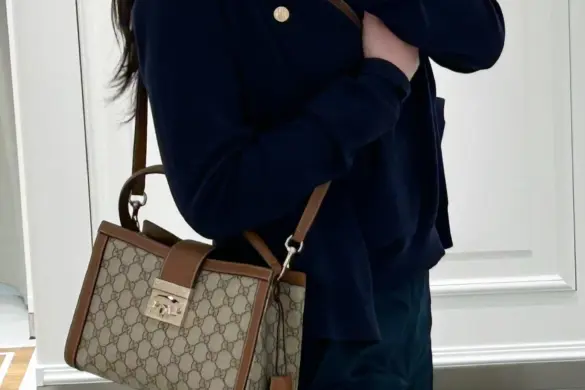
| Padlock 838992 | Structured looks and statement hardware | Closure operation and side gaps | Padlock fastening details |
| Large Web Shoulder Bag | Larger casual carry with zipped access | Broad base; slender strap for heavier loads | Large Web carry and pouch |
The Gucci history I keep in mind when choosing a bag
Guccio Gucci opened his Florence business in 1921. Before that, he worked at London’s Savoy hotel, where luggage helped inspire the business he wanted to build. Gucci’s own history traces its early canvas and diamond-patterned Diamante fabric to the late 1930s. That travel background makes the patterned, useful-sized bag feel quite at home in the house’s story. Gucci’s archive timeline and Kering’s house history put those beginnings in context.
Then came shapes with very different personalities. Bamboo arrived in 1947; Gucci still demonstrates the heat-shaped handle in its Making of Icons films. The Horsebit bag followed in 1955, and the crescent-shaped Jackie in 1961, according to Christie’s collecting history. I like how much identity these designs carry in one construction detail. A curved handle or a well-proportioned clasp can do more for an outfit than another expanse of logos.
Those archive names have continued through later interpretations. Gucci’s timeline places Tom Ford’s arrival in 1994, Frida Giannini’s in 2006 and Alessandro Michele’s in 2015. The practical lesson for shopping is to choose a particular version, rather than expecting every bag with the same family name to look alike. My preference is the Jackie when I want a cleaner shoulder line, Bamboo when I want a deliberate top-handle statement, and GG canvas when I want the pattern to join in.
The navy example in this guide uses familiar GG and Web details, but I am keeping its descriptive name: an exact retail reference has not been supplied. Gucci’s design history explains why I find it appealing; it does not date or identify this particular sample.
Choose a Gucci family around what you carry
The opening is the first practical distinction. A bag that leaves its sides accessible makes a different daily companion from a zipped pouch or a structured flap. Then consider how much of the outfit you want the bag to occupy. The table compares design directions; check the exact size and configuration of any listing.
On a phone, swipe the table sideways to compare the inspection points.
| Family and design | Best suited to | Practical compromise | Inspect first | Coverage here |
|---|---|---|---|---|
| Jackie 1961 Curved shoulder shape; piston closure on the references discussed here | A restrained shoulder silhouette with a lighter daily load. | The tapered opening can restrict bulky contents; strap and closure versions vary. | Continuity of the curve, upper corners and closure travel. | Design comparison in the existing three-model article. |
| GG Marmont Quilting and Double G; multiple formats | A compact bag with texture and visible hardware. | A broad-looking body may still have a narrow mouth. | Quilting around the flap, rounded base and chain attachments. | Individual black-and-gold review. |
| Ophidia GG, Web and Double G across different shapes | A monogram shoulder bag, including roomier hobo options. | Some openings remain exposed beside the center fastening. | Exact shape, base depth, strap clearance and the closed opening. | Individual 781392 hobo purchase review. |
| Horsebit 1955 Double-ring-and-bar fitting | A hardware focal point with a defined flap silhouette. | Gussets and flap access can limit usable space. | Hardware mounting, flap balance and strap adjustment. | Design reference; no independent 1955 sample review here. The older Horsebit Chain is a separate design. |
| Padlock Lock, key holder and framed formats | A more structured bag for a shirt, jacket or simple dress. | A central lock may leave side gaps; narrow straps need a load check. | Lock operation, tab alignment and stitch endings. | Individual 838992 photo review. |
| Bamboo 1947 Bamboo handle and distinctive fastening | A top-handle statement with fewer other accessories competing. | Handle mounts, hinges and closure add inspection points. | Handle curve, mounts and the correct generation’s fastening. | Design comparison in the existing three-model article. |
Family names are a starting point. Gucci’s Jackie 1961 reference identifies a piston closure, while its 2026 Bamboo 1947 reference describes changed construction and a two-position closure. Save the exact product reference before deciding whether a replica’s difference is an error or a different version.
Gucci materials and design codes: what changes the assessment
Read the GG surface before naming the material
GG describes the pattern; the material choice still matters. I enjoy the visible diagonal texture of the navy set here: it gives the pale motifs a little depth. For a smoother, more defined surface, compare Gucci’s coated-canvas references, including the Horsebit 1955 GG Supreme. These are different visual effects, and I would choose between them before debating a tiny stamp.
On a patterned bag, I follow the motif from a broad panel toward a seam. The angle may compress the pattern, and separate panels may interrupt it. I want to see whether the relationship is coherent for the intended construction. A universal demand that every G join across every seam can create a false problem when the reference itself has a break.
Web stripe: color, location and the adjoining seams
The stripe gives you several useful lines to compare: its own edges, the center tab and the body underneath. Inspect them together in a straight view before judging a small apparent lean. A hand pulling the opening can change all three. In this case the visible combination is red with dark navy borders; using a green-and-red photograph as its color standard would confuse the comparison.
I also check where the stripe ends or turns beneath the body. That transition can reveal an uneven seam more clearly than the middle of a flat panel. The Gucci brand codes guide explains how Web, Double G, Horsebit and bamboo differ; here I am interested in how those details meet the surrounding construction.
Trim, quilting and metal need different evidence
For trim, follow the stitch line around a corner and compare its distance from the edge. A dark finish can conceal detail in one frame, so another angle helps. On quilted Marmont designs, check the depth and direction of the channels as they approach the flap and perimeter. Attractive padding does not establish leather species or sourcing.
A Double G emblem concentrates attention on its mount; Horsebit hardware spreads attention across two rings and a bar. I look for a fitting that sits neatly and suits the body’s scale. On the navy bag, the modest emblem and rounded tab let the hand opening remain the main event. That restraint is one of its best details.
My practical preference is a bag whose opening, attachment points and base suit the load. A large body on a slender strap deserves a carrying demonstration. A compact flap deserves a phone-fit test. Neither decision can be settled by a close-up of a logo.
What I would pay more for in a Gucci replica
For a tighter budget, I would start with a simpler canvas silhouette and insist on a well-shaped body and tidy trim. A flat panel has fewer decorative lines to coordinate than repeated quilting; the sewing still has to sit smoothly. Thread maker Coats explains that fabric structure, tension and uneven feeding can all contribute to seam puckering. I use that background to look for rippled borders and gathered seams, without trying to diagnose a factory from a photograph.
The navy bag makes the distinction useful. Its broad front is easy to read, but the curved hand opening gives me a more revealing finishing check. The narrow trim needs to keep a clean curve and a fairly even stitch line as it turns. That is why QC-03 matters to me. I would accept the interrupted motifs on its side seams before I accepted a conspicuously wavy opening.
With a Marmont, the quilting adds another set of lines to judge. Gucci’s making-of film shows how quilting and stitching shape its softly structured body. My priorities are consistent-looking channels around the flap and a convincing rounded base. For a Padlock or Bamboo, I would spend the extra on neatly aligned fittings and a cleanly working closure.
If one offer cost more, I would want it to show a specific improvement: smoother trim, cleaner corner joins or better-aligned mounts, with an operation clip where the fastening matters. A shinier logo alone would not persuade me. A small GG emblem can look excellent when the tab beneath it is neatly cut and the whole front is balanced. The navy set earns my positive verdict that way.
For wider context, the OECD/EUIPO’s 2025 report discusses leather goods and online distribution using 2021 customs data. For choosing between bags, I put the close views and practical differences above a seller’s “AAA,” “top tier” or “1:1” label.
Navy GG-Pattern Web-Stripe Bag: a QC Photo Case Study
These 14 real QC photographs were supplied for the article; I am reviewing the images rather than claiming to have carried this bag. What first catches my eye is the space inside the curved hand opening. With so much GG pattern below it, that clear, dark-edged curve gives the design room to breathe.
Start with the full kit and the outline
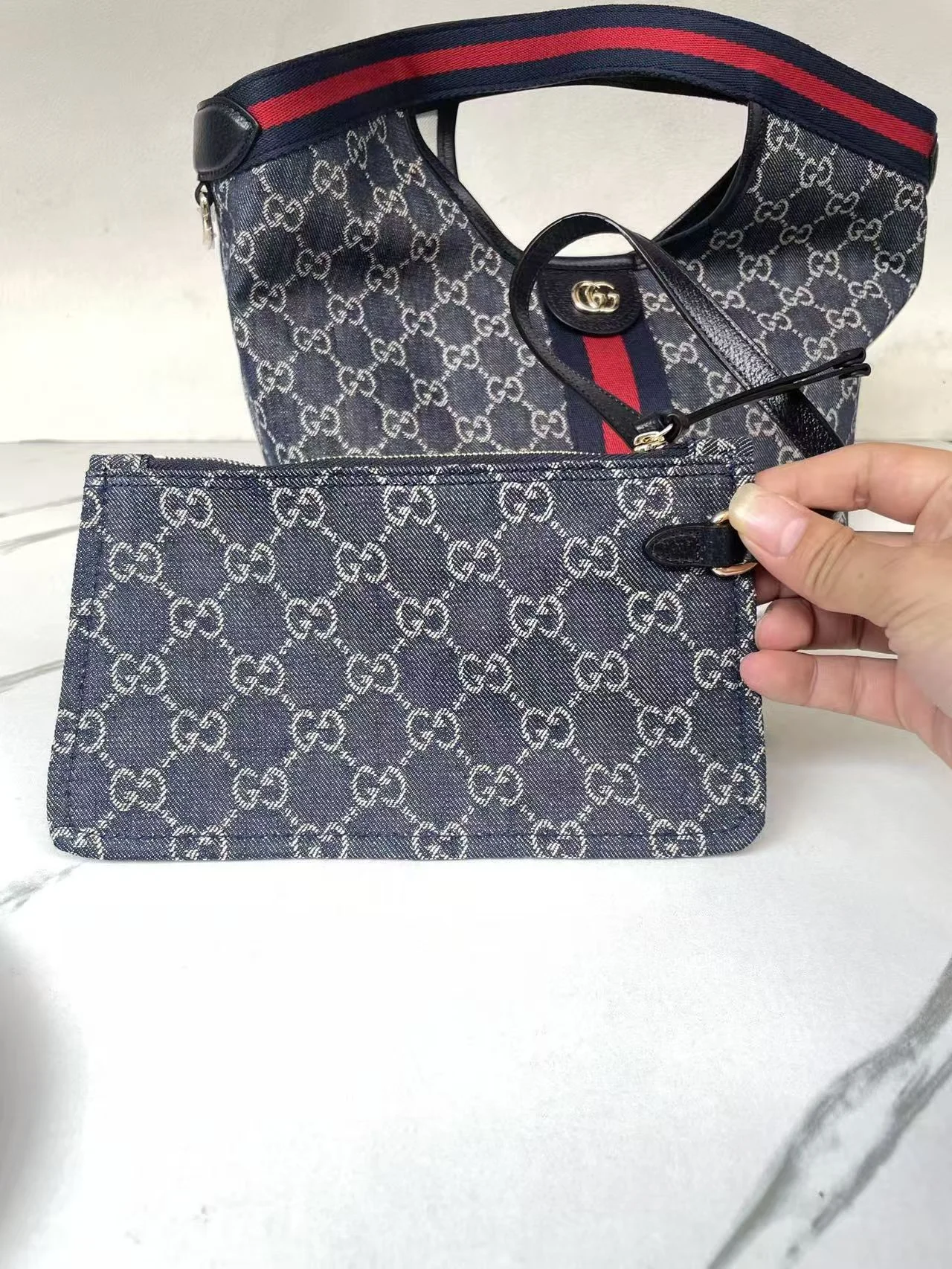
The set shows a broad navy-patterned body, an integrated curved hand opening, a matching zipped pouch and a separate dark strap. I like the contrast between the wide lower panel and the open space beneath the top band. In the supported front, both lower corners are visible and the bottom edge is broadly level. It looks composed without looking stiff.
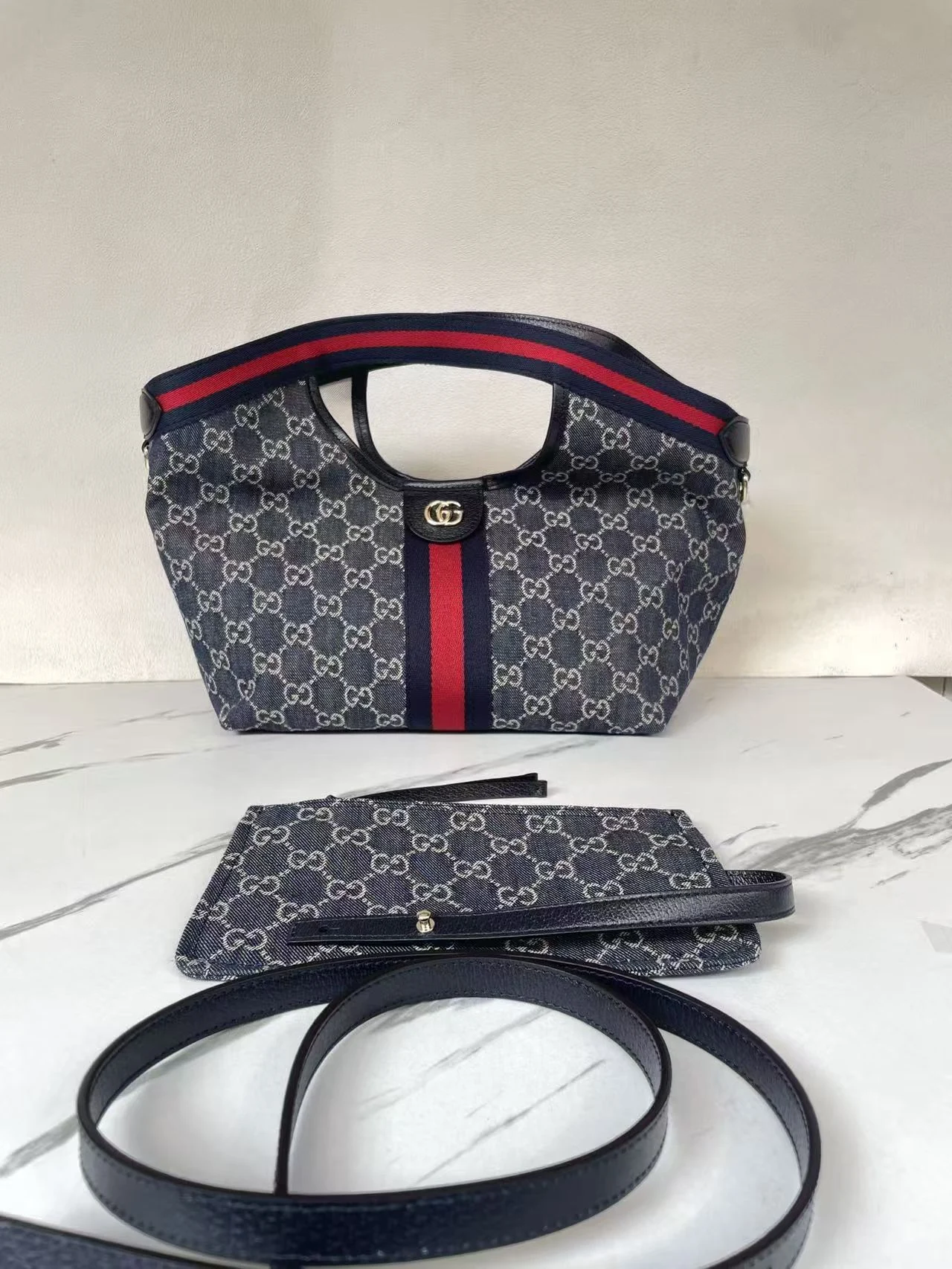
The top band curves across the bag while the red front stripe runs down from the central tab. To my eye, the stripe and tab form a convincing center. I especially like the small tab: enlarging it would compete with the hand opening. A straight rear photograph would round out the record, but the front already gives me a clear reason to like this example.
The pattern, center stripe and metal tab
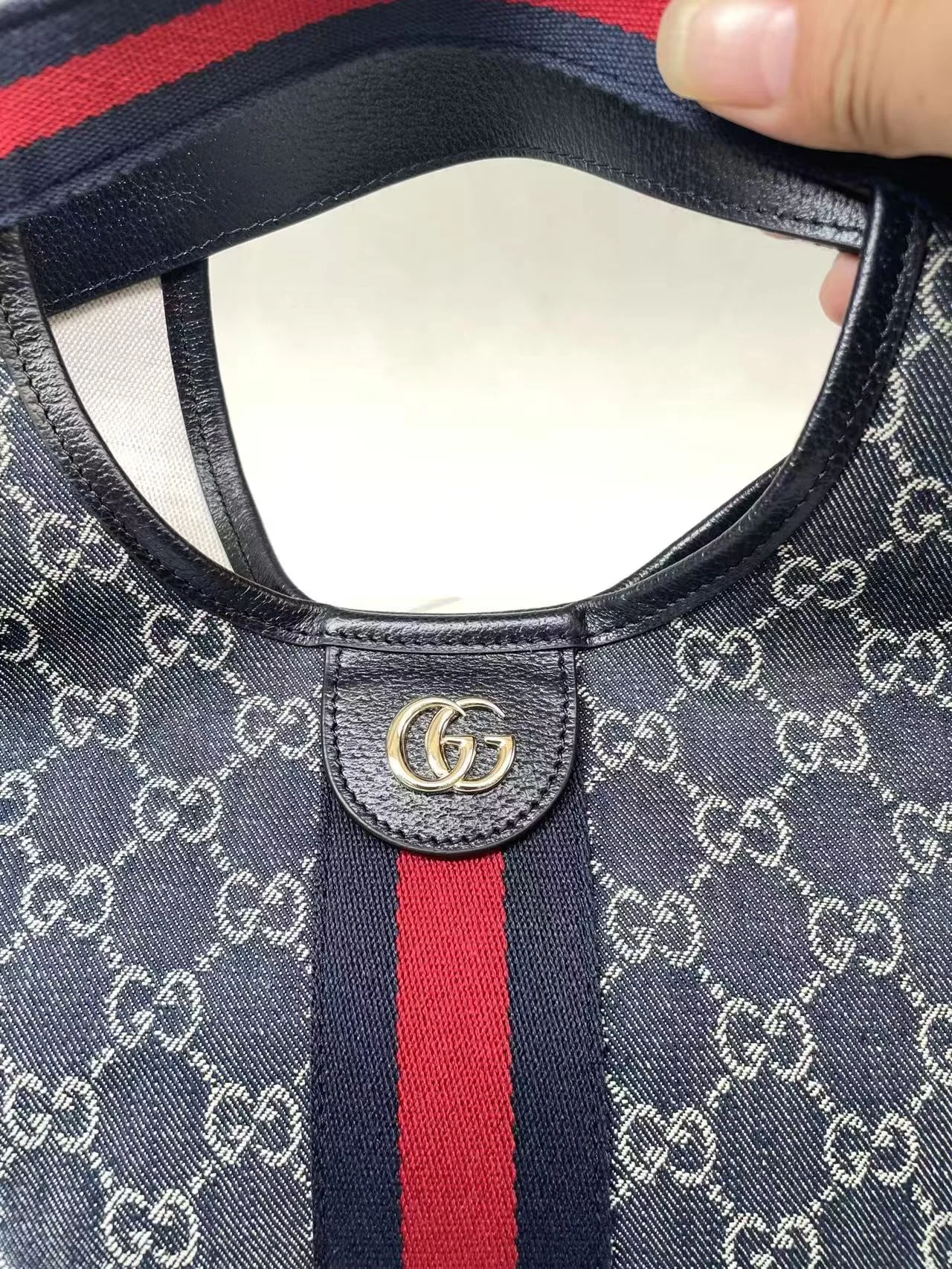
The close-up is the photograph that makes this navy finish interesting to me. The pale motifs sit in a diagonal, woven-looking texture, with brighter threads where the panel catches the light. I prefer that lively surface to a flat-looking pattern. The navy and red also feel easy to pair with denim, a white shirt or a cream knit.
At the hand opening, the dark trim follows the inner curve with a fairly even visible stitch line. The gold-tone Double G sits neatly on its rounded tab above the stripe. I like this combination: enough contrast to frame the opening, a little warmth from the metal, and no oversized plaque taking over the front. The visible finishing here meets my standard.
Both sides explain more than a front logo photograph
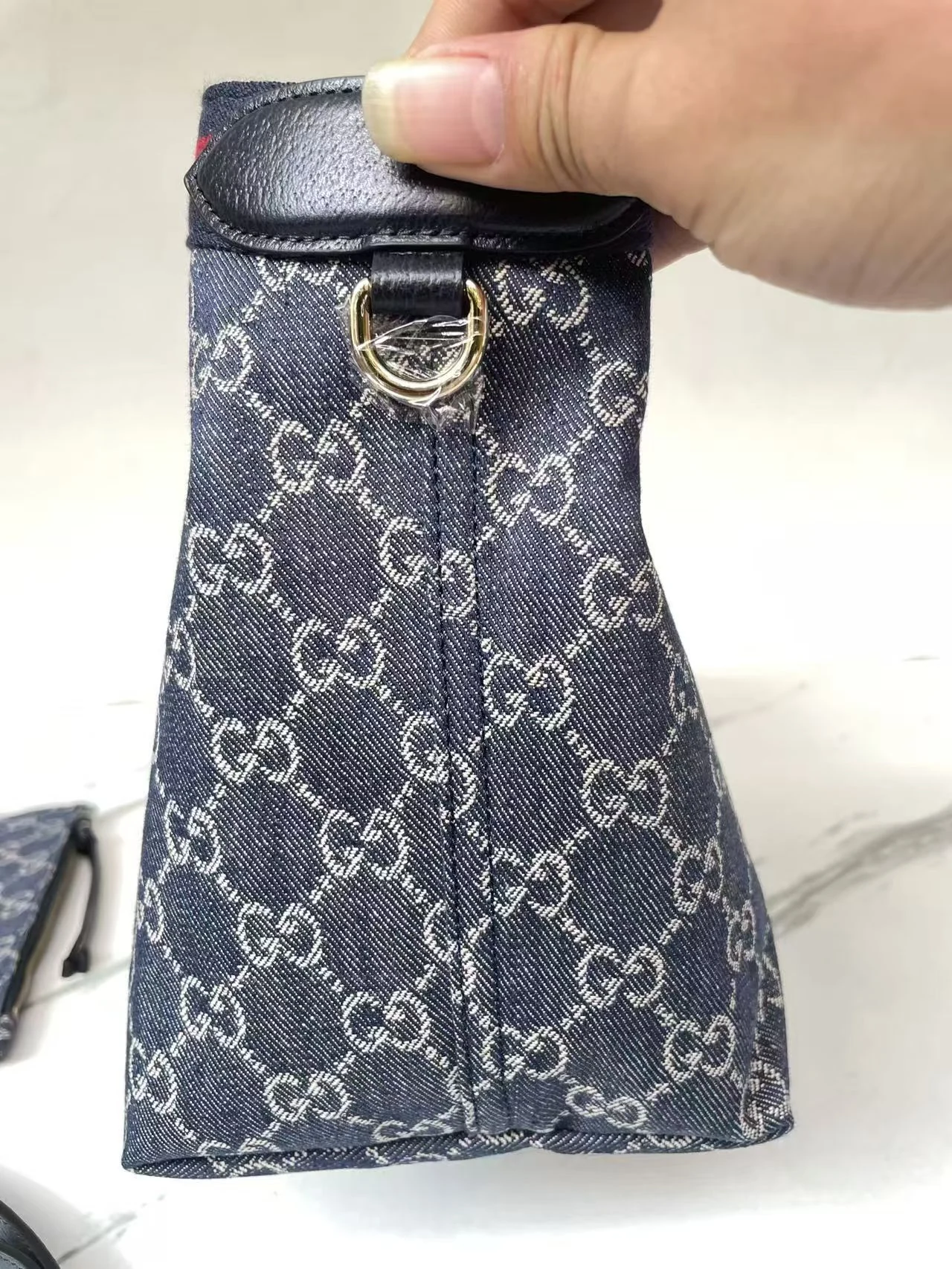
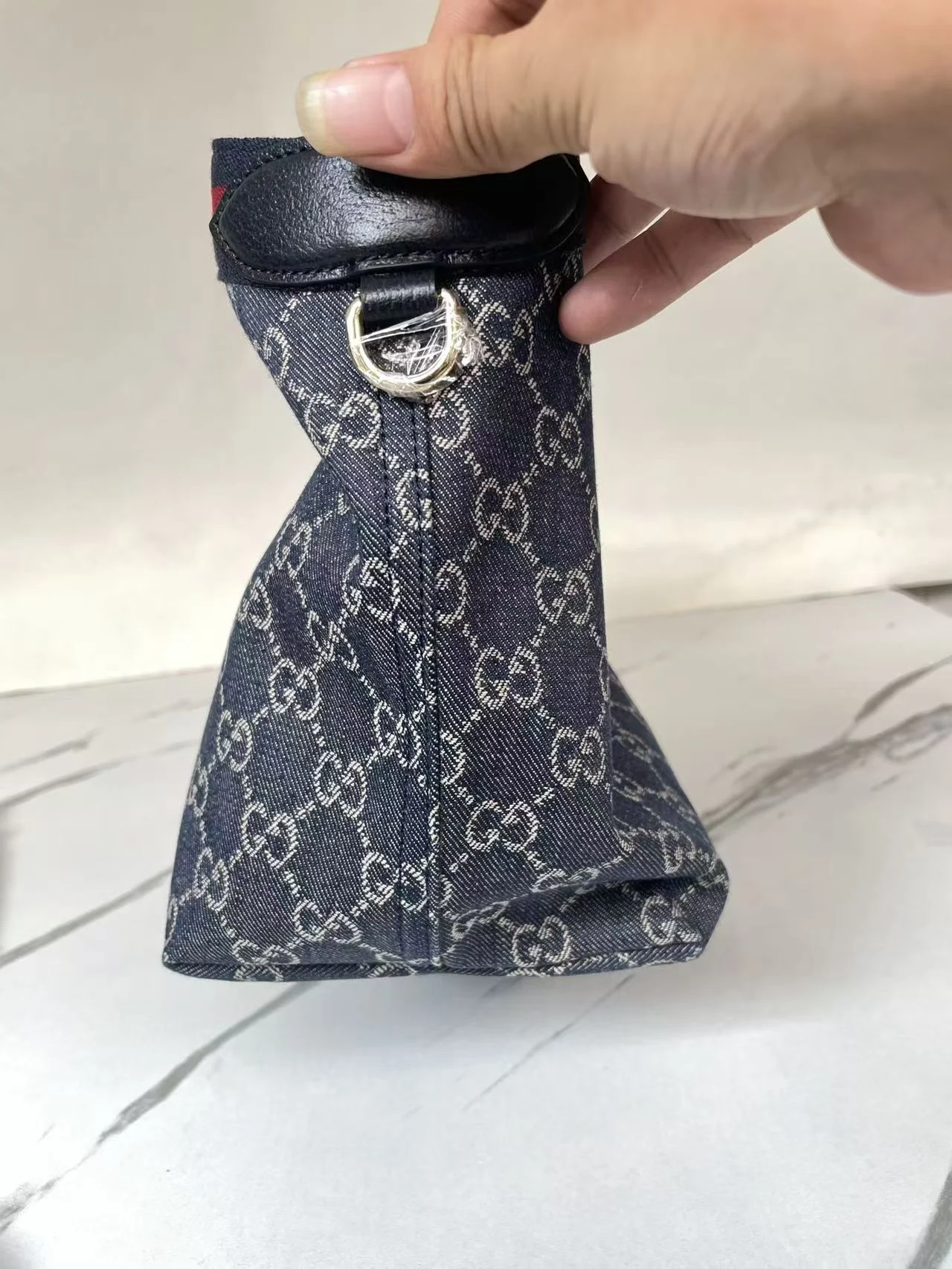
The side views show the construction behind that generous front: narrow upper gussets, a center seam running toward the base, and a gold-tone ring under each dark patch. Hand support makes one side look fuller than the other. I see a shape that can relax at the top while keeping useful depth below.
The GG motifs break at the side seams. I would accept that on this casual design because the broad front is the visual focus, but someone who wants uninterrupted motifs at the sides may find it distracting. The rings still have protective film. Removing the film on arrival will expose the finish for inspection. The wrapping itself gives me no reason to fail the whole bag.
The base has its own stripe and contact surface
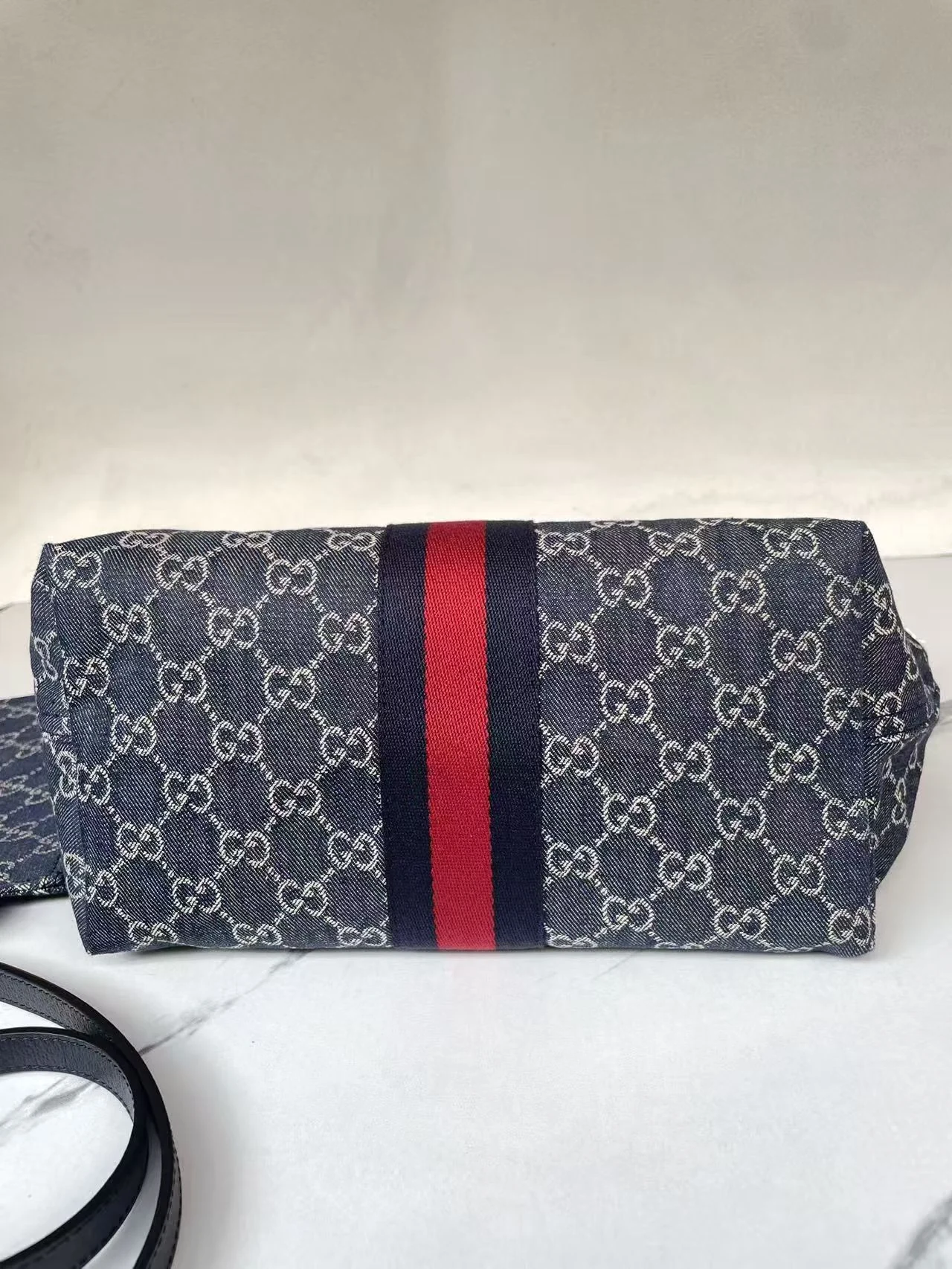
The underside carries the red/navy stripe across a broad patterned base. The corner folds look reasonably controlled in this view, and the central stripe keeps the bottom visually connected to the front. There are no metal feet, so the fabric and folded corners will meet the table. A clean shelf or seat makes more sense than a rough floor when setting it down.
The interior changes my recommendation
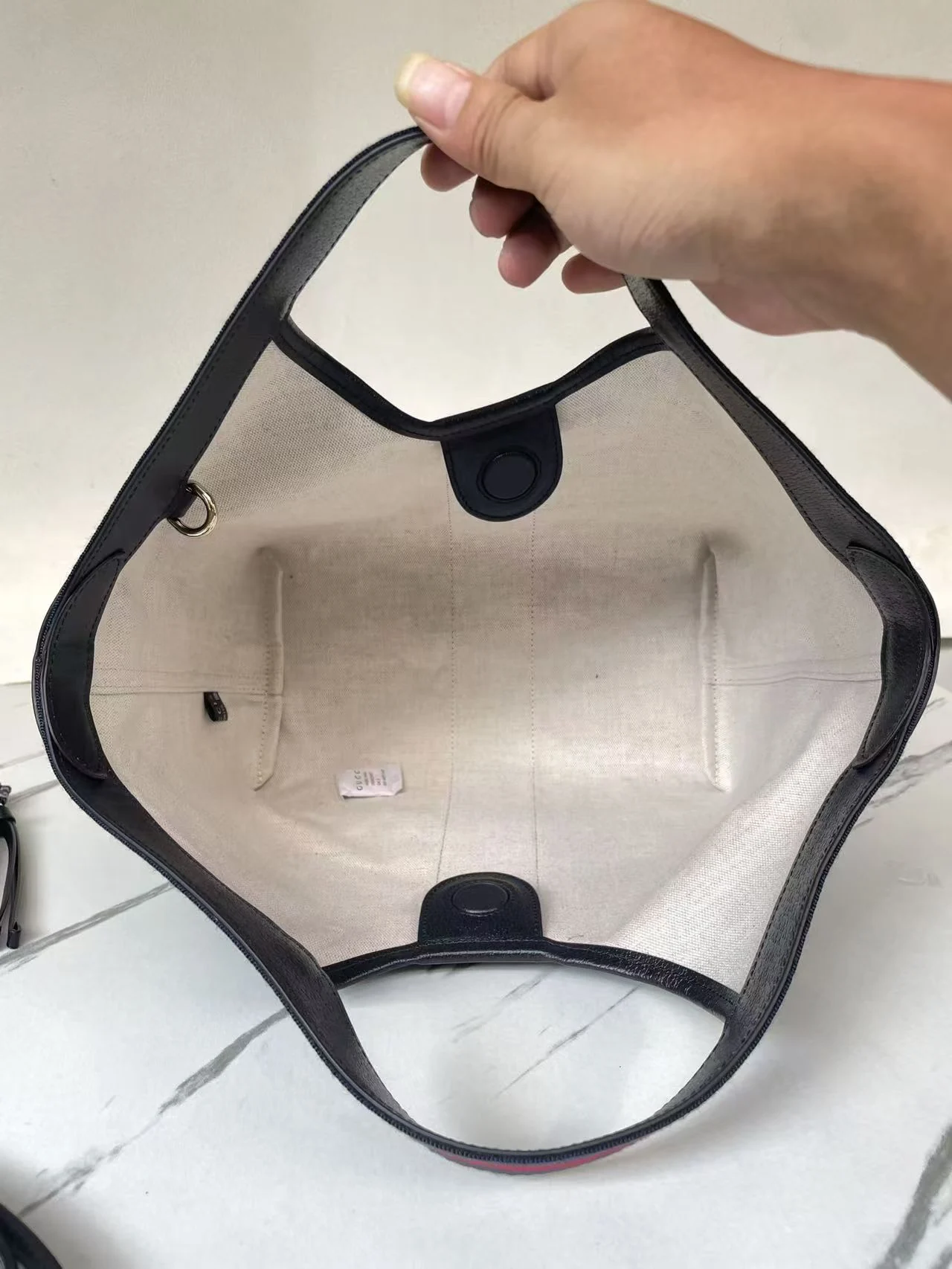
The open view changes where I would use this bag. Pale lining makes a pleasant contrast with the navy exterior, and the broad compartment looks easy to reach into. Opposing center tabs bring the top together, but there is no full-length main zip visible. I like it for relaxed daytime outings; I would choose the zipped Large Web below for a crowded commute.
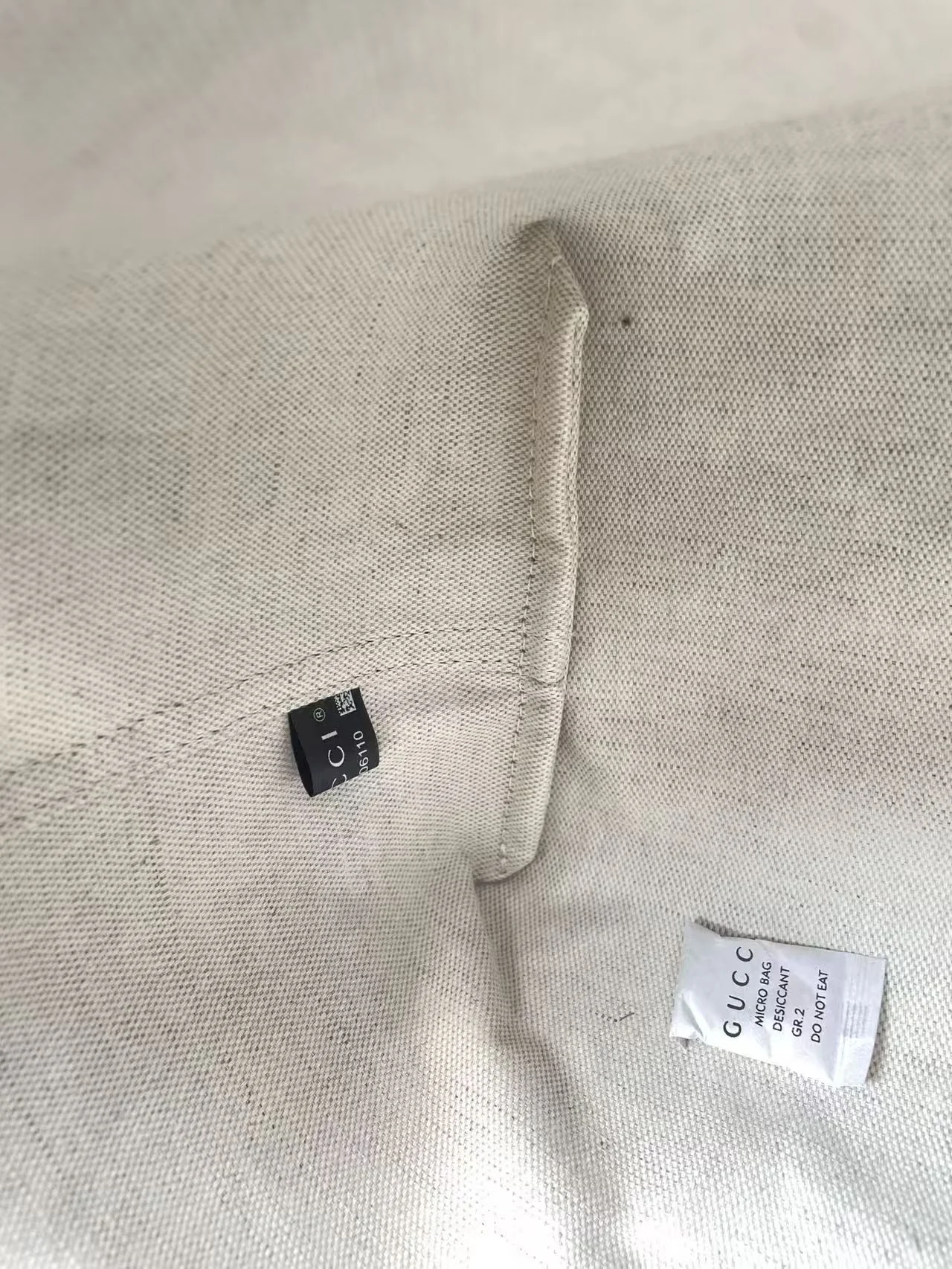
The closer lining photograph shows the seam work, a folded black label and a loose desiccant sachet. Small dark specks are visible on the pale fabric. They deserve cleaning and a check after unpacking. In this image, they are minor enough that they do not outweigh the coherent exterior. A persistent stain would change that judgment.
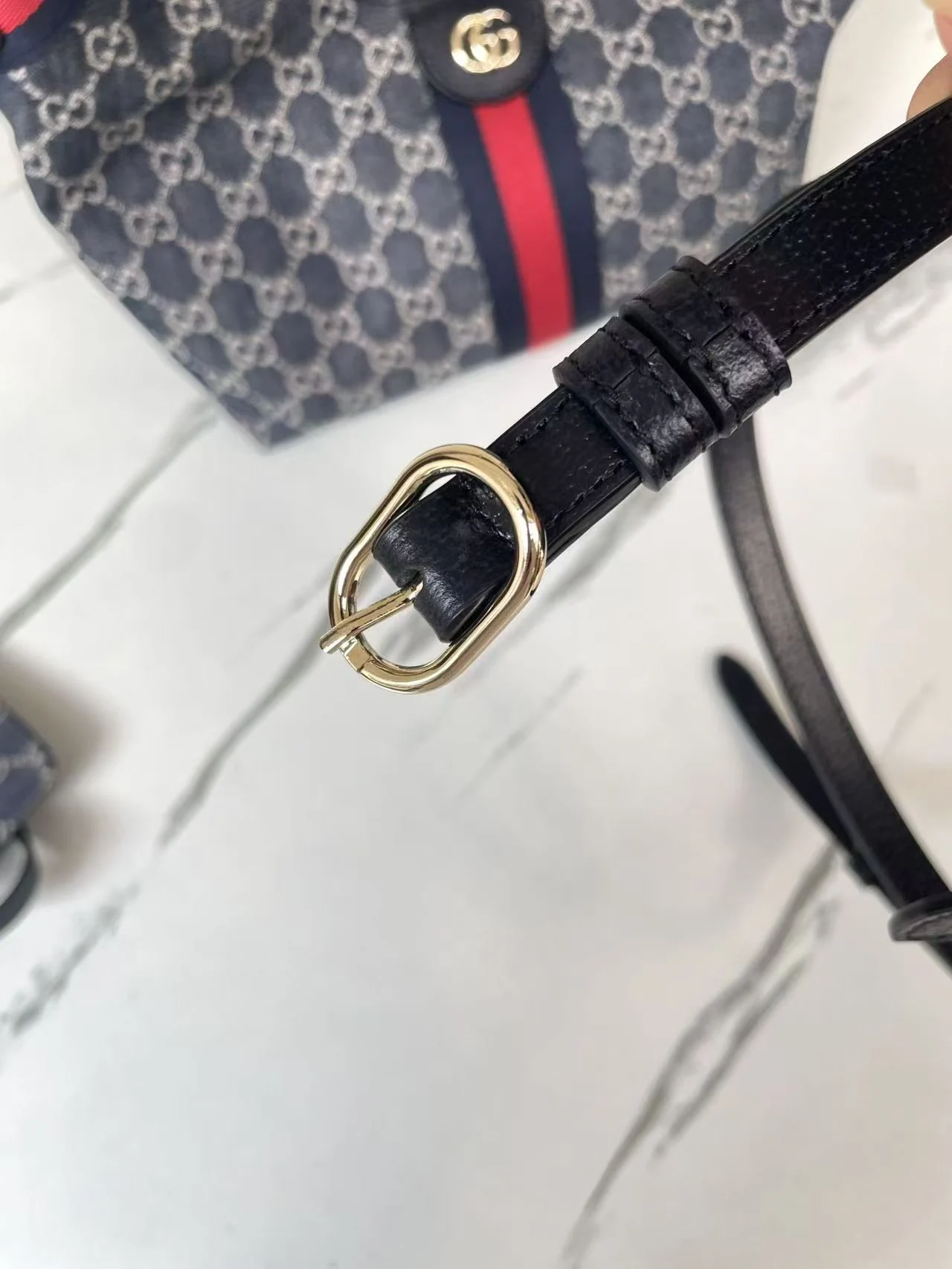
Separate the buckle, adjustment and carry-length questions
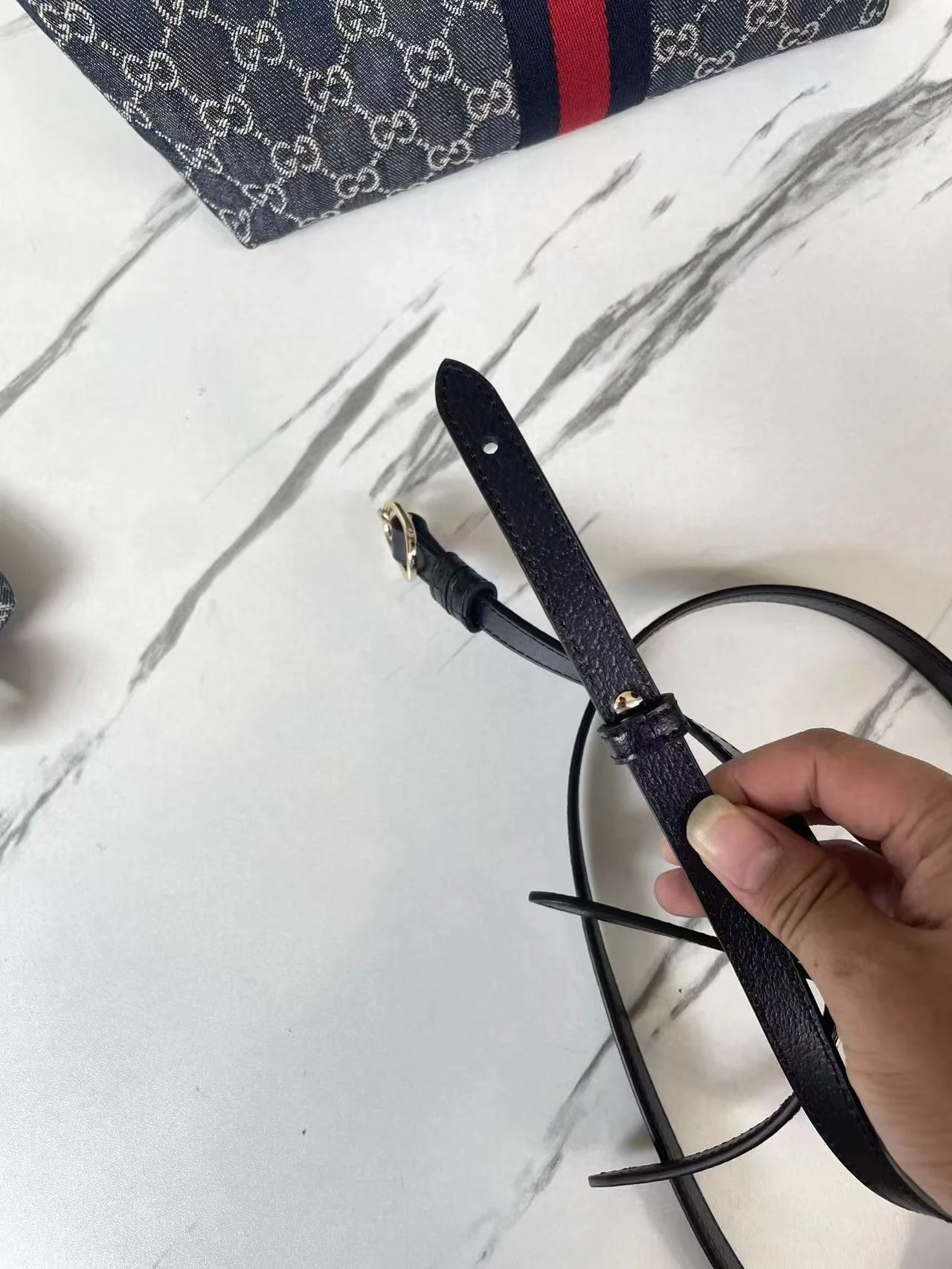
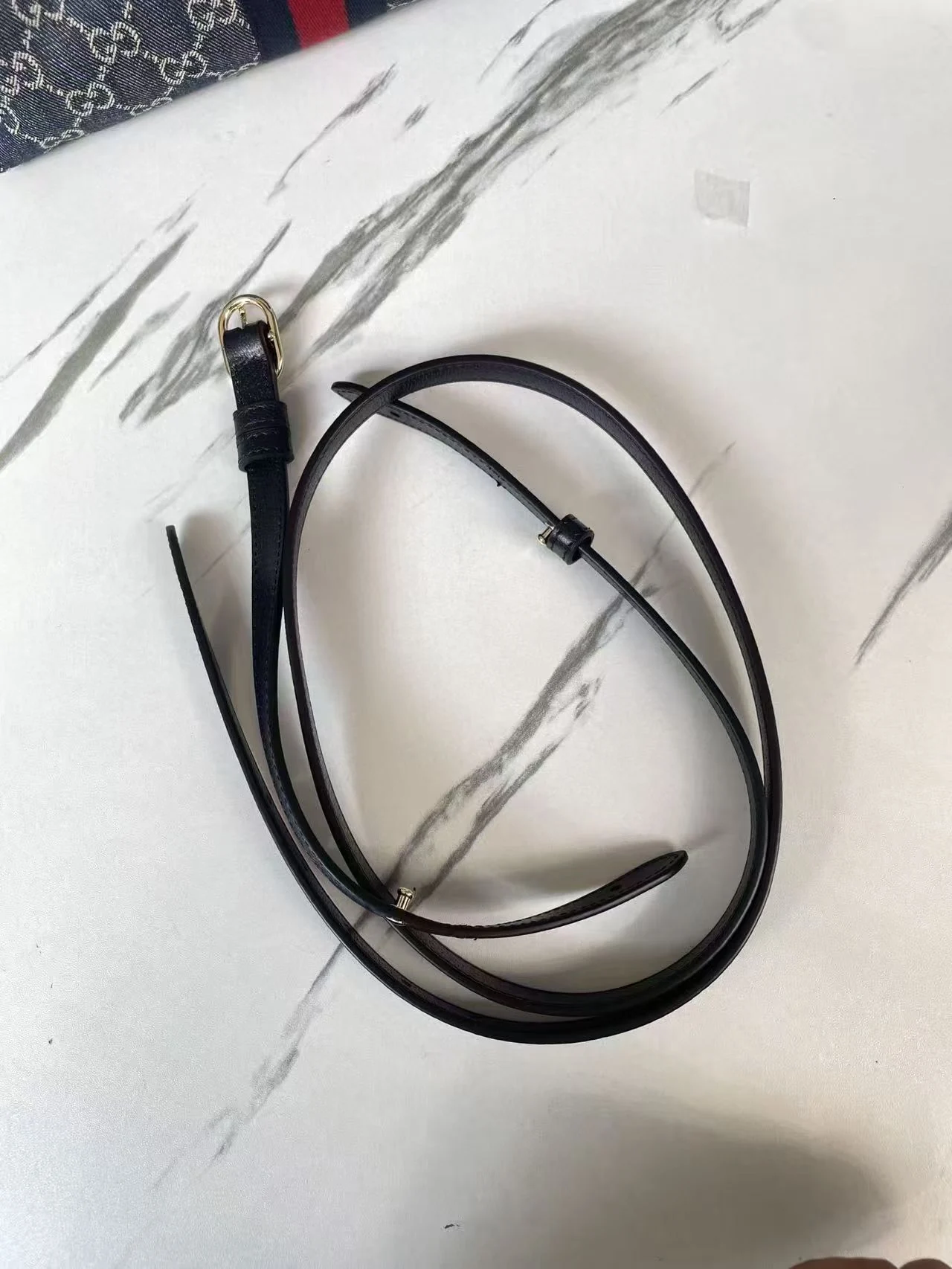
The buckle macro shows a rounded gold-tone frame, a tongue and dark keepers. The oval buckle suits the bag’s softer curves, and the visible strap edges look tidy. Together with the adjustment holes and stud fittings in the next views, this is a presentable set of components.
The separate strap gives the set a useful styling option, although I would not order it specifically for crossbody wear without asking for its drop first. The integrated hand opening is the carry feature I can already judge visually, and it is the one I like most. The extra strap is a welcome alternative to that distinctive hand opening.
The pouch deserves a separate inspection
The pouch repeats the navy pattern without the vertical stripe. I like that quieter treatment beside the busier main bag. Its little tab and ring add an attachment point. My preference is to keep the pouch inside with loose valuables. A zipped compartment is especially useful in a bag with this open layout.
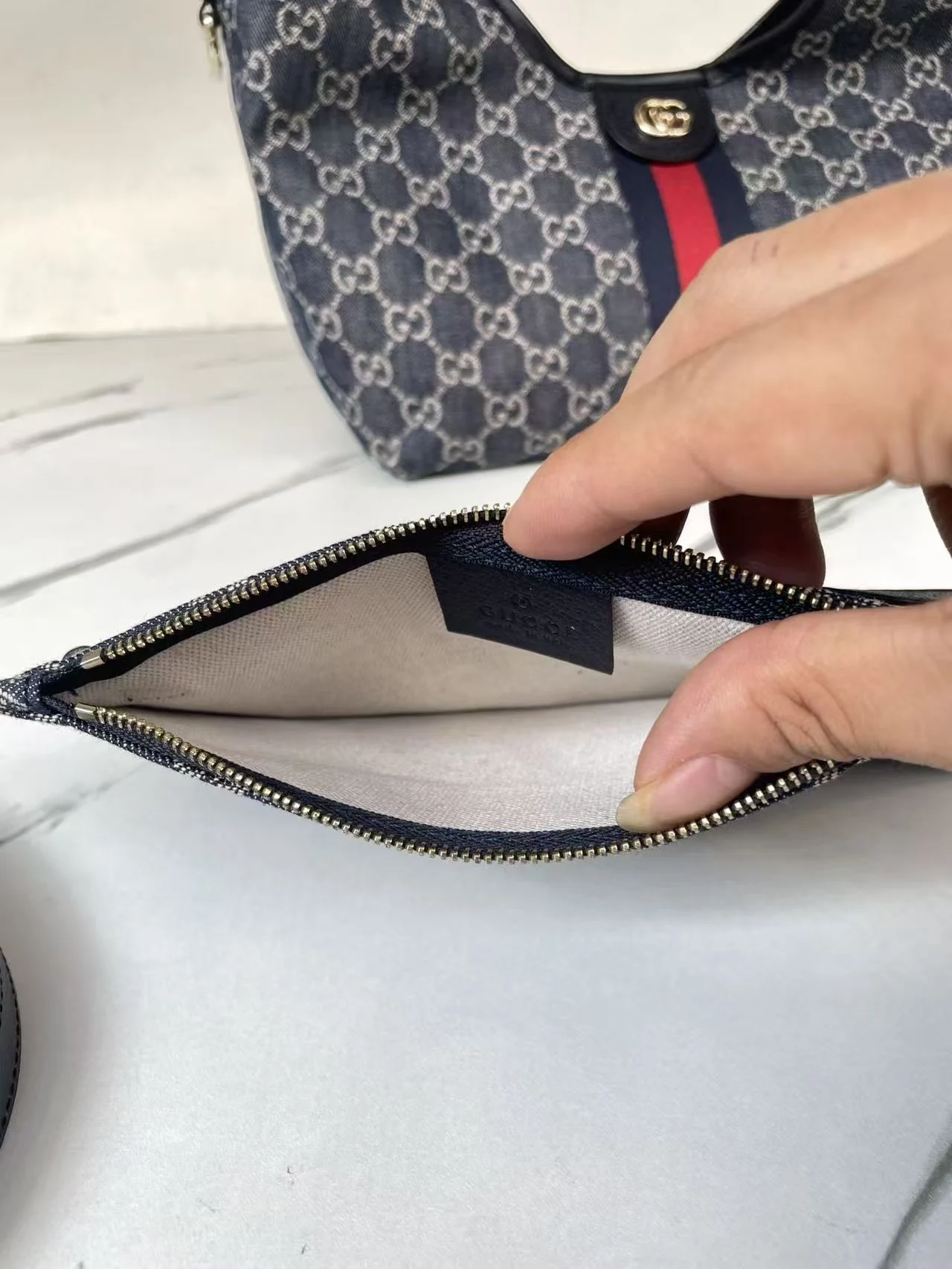
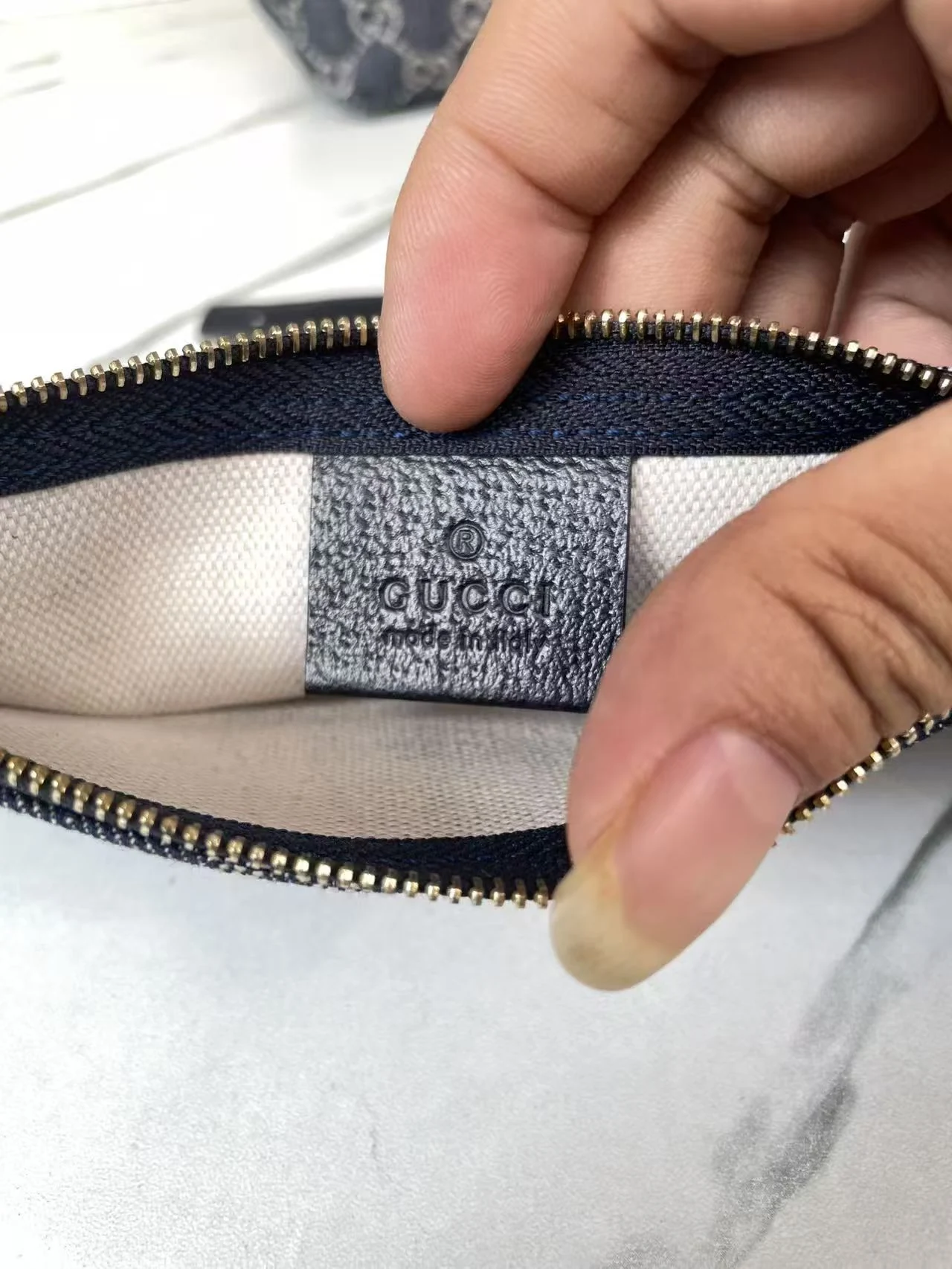
The close stamp is readable, and the dark patch sits simply against the pale lining. The visible zipper teeth look orderly along the open track. This is pleasingly restrained finishing for a small accessory.
Four Gucci models from my existing reviews
These articles provide different kinds of evidence. The purchase and handling accounts belong to their own bags. They do not establish experience with the navy example above.
GG Marmont: a compact body with a demanding opening
In my black-and-gold Marmont review, I brought together my handheld close-up photographs with workshop material references. Its useful choice is between a compact, textured accessory and a bag expected to carry several bulky items. The chevrons, plain rounded base and warm metal give the reviewed example its character. The flap opening matters just as much as the quilting when carrying a phone or other bulky essentials.
The review’s reservation is the narrow-looking opening: external width alone cannot establish whether a phone in its usual case clears the mouth and leaves the fastening unstrained. Its material-reference photographs also show a different quilting configuration, so they should not become a construction template for the chevron bag. My black-and-gold GG Marmont review follows those distinctions through the base, piping and fittings.
Ophidia hobo: useful volume, accessible sides
My Ophidia review documents a bag I purchased and photographed after arrival, including wearing it over a taupe blazer. That makes it the stronger starting point here for someone deciding how a roomy hobo sits with clothing. The softer upper curve beside the jacket is the appeal; the broad lower body is a deliberate part of the outfit.
The article also resolves an easily missed naming issue: the bag was supplied as medium, model 781392, while the cited regional Gucci listing calls that size large. Shop by the stated reference and dimensions, then verify the particular item. Its center fastening leaves accessible sides, a compromise the review explicitly discusses. The Ophidia hobo purchase and styling review shows the shape alongside clothing and explains that trade-off.
Padlock 838992: inspect the fastening behind the focal point
My review of the Padlock 838992 evaluates the structured frame and on-body reference photographs. The framed GG body and square lock look more formal than the navy case’s curved opening and broad patterned body. The shoulder demonstration is useful for seeing the bag beside a jacket, while the short handle offers another visual balance.
Its reservations are concrete: stitch finishes at the key holder need a closer view, and the keys need a continuous locking demonstration. The center tab also leaves space uncovered beside it. A working lock alone would not answer the enclosure question. For a compact daily load, those checks matter as much as the structured look. The Padlock 838992 photo review shows the fittings behind that recommendation.
Large Web shoulder bag: a different configuration
The Large Web is my more practical pick for a bigger daily load when zipped access matters. The separately referenced A003l8NS version has green/red Web, brown trim and a removable pouch. In the customer styling references, the upper body relaxes against a simple white outfit while the broad base keeps its presence. The review also records my personal testing of that product.
A 13-inch MacBook Air is plausible by the stated body size; I would check the actual zipped opening with its sleeve if work carry were the reason for ordering. I would choose this design over the navy example for zipped access, while keeping the load light on that slender strap. See the Large Web shoulder bag review for the shape and pouch details.
For a narrower comparison of curved shoulder, hardware-led and bamboo-handle designs, keep the existing Jackie 1961, Horsebit Chain and Bamboo 1947 comparison alongside this guide.
A Gucci QC photo review workflow you can repeat
My QC routine ends with a decision. Start with the whole shape, then work toward the parts that could change your mind. A small flaw, a missing angle and the wrong design for your routine deserve different responses.
View the editorial workflow illustration
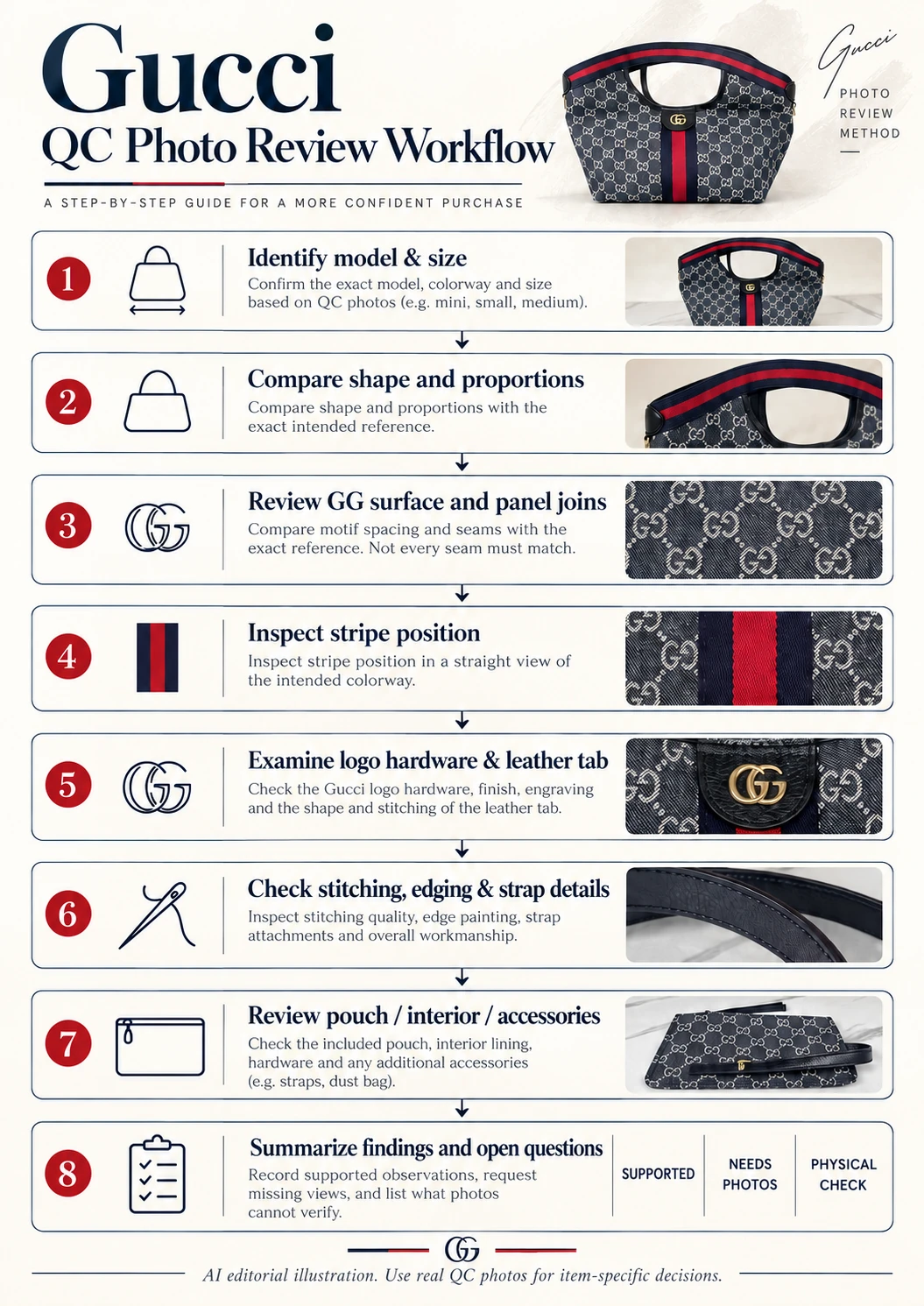
Identify the version
Save the stated model, size, material, color and closure. Match them to an exact reference. If that match fails, keep a descriptive name.
Compare the full shape
Request front, back, both sides, base and top. Include the bag standing without hand support or concealed stuffing.
Follow the GG panels
Compare broad texture and motif spacing, then follow the pattern into seams. Separate perspective changes from panel joins.
Locate the Web and tab
Read stripe edges against the body and central fitting. Use the intended colorway and a straight view.
Inspect fittings and the center tab
Look beneath protective film and around attachment patches. Compare engraving, the center tab and its stitching in diffuse light; leave hidden surfaces unresolved.
Check stitching and strap setup
Follow stitching through corner turns and along strap edges. Measure the actual strap drop, attach both ends and request a loaded carrying demonstration.
Review the interior, pouch and accessories
Lay out the pouch and agreed accessories, inspect the lining and measure the body. Demonstrate the intended contents, closures, zippers and adjustment fittings in one continuous clip.
Write the decision
Decide whether you would approve the visible finish, request one consequential missing view, or decline the item. Then separate arrival checks from features that already make the design unsuitable.
Supported: visible in a relevant, clear view.
Needs clearer photos: obscured, missing or distorted by angle.
Not verifiable from photos: composition, provenance or performance that requires other evidence.
For the navy set, I would approve the visible finishing and check the wrapped rings and moving parts on arrival. I would decline it for a buyer who needs a zipped main compartment. That is a useful difference between a good-looking bag and a good choice for a particular person.
On a phone, swipe sideways to compare the observations and my decisions.
| Question | What I see | My decision |
|---|---|---|
| Everyday access | Broad open compartment with center tabs. | Good for easy daytime access; choose a zipped design for enclosed storage. |
| Visible finishing | Coherent front, orderly tab stitching and framed hand opening. | Passes my visual shipment threshold. |
| Side pattern | Motifs break at the side seams. | Acceptable to me here; skip it if uninterrupted motifs are a priority. |
| Ring finish and small specks | Film covers the rings; small specks appear on pale lining. | Remove film and clean/check on arrival. No current major defect visible. |
| Crossbody requirement | Separate adjustable strap, no measured drop. | Ask for the drop before buying specifically for crossbody wear. |
Authentication and further reading: ask the right question
Replica QC asks whether an openly described replica meets the specification and visible condition you accepted. Authentication asks whether an item represented as genuine is genuine. A coherent photo set can help with either investigation, but an attractive replica QC result does not establish authentic origin.
If the model itself is unclear, the Gucci bag model guide separates families by silhouette, closure and carrying system. For a fuller image request, the authentication photo checklist explains the views a specialist may need. Use those resources before judging one isolated stamp.
The serial number and leather tag guide covers physical markings and their context. A printed fabric label is a separate comparison, explained in the black label guide. Neither a number nor a small square symbol should override a conflicting body or closure configuration.
For fittings, the hardware and zipper guide gives more detail on engraving, finishes and component context. The dust bag and controllato card guide keeps packaging in proportion. The sachet shown inside the navy bag is a desiccant packet; it establishes neither authenticity nor a complete packaging set.
My recommendation: settle access and scale first
Choose the opening and carrying scale before the decorative detail. A narrow flap mouth can frustrate a small daily load; a broad body can still be wrong if its fastening leaves more access than you want. The four review links near the top are the next step once that choice is clear.
My navy pick passes visually because the body, opening and small fittings look considered together. I recommend it for someone who likes that open, casual shape. For a broader workday load with enclosed access, I favor the Large Web; for an outfit that needs a smaller, dressier bag, I would return to the Marmont or Jackie.
Frequently asked questions
Which Gucci replica bag is best for everyday use?
Start with your load and preferred access. A roomy hobo is useful only if its opening and shoulder position suit your routine. If full enclosure is essential, compare a zipped design before an open center-tab bag. Ask for the intended contents inside the specific example.
Is GG canvas better than leather?
I prefer textured GG canvas for a casual outfit that can carry a visible pattern, and quilted leather when I want a softer-looking, dressier surface. Check the trim and base as well as the main panel: those parts affect both the outline and where the bag meets everyday surfaces. The exact composition belongs in the item’s written specification.
Why does navy look gray in some QC pictures?
Exposure, white balance, reflections and screen settings can change the apparent color. In this set, the patterned surface looks lighter in brighter close-ups. Ask for unfiltered diffuse-daylight photographs with a neutral reference in the frame. Do not assign an exact color code from these files.
Can the logo or serial number prove a good replica?
The logo helps when its size, shape and mounting sit convincingly with the rest of the bag. On the navy set, I like the modest Double G and rounded tab because they reinforce the centered stripe. A serial number serves a different purpose; for a genuine purchase, assess identity through the full authentication process.
Should a pouch and spare strap be included?
Confirm the written contents for the exact offer. The navy photographs show a pouch and a separate strap, but their presence in a picture does not establish an official retail bundle or guarantee shipment. Request a final layout showing the actual bag and every agreed accessory together.
What do AAA, top tier and 1:1 mean?
I treat AAA, top tier and 1:1 as seller labels that need a written explanation. My buying priorities are the particular bag’s finish, useful dimensions, included accessories and what happens if it differs from the agreed order. Extra letters are a poor substitute for an opening that suits what you carry.