
A bamboo handle, a metal horsebit, a pair of interlocking Gs, or a green-red-green stripe can make a bag read as Gucci before the wordmark comes into view. These details are often called Gucci brand codes: recurring pieces of the House’s visual language that move between bags, shoes, belts, jewelry, and ready-to-wear.
Recognition is useful, but it is not the same as authentication. A copied motif can identify the design being referenced without proving who made the object. In my technical notes, I therefore use each code as a starting point: first identify the motif, then place its version in the correct model and period, inspect how it is constructed, and finally ask whether the rest of the item agrees.
Table of Contents
How I Use This Guide
I compare a code in four passes: context (model and approximate era), version (the exact form of the motif), construction (material, attachment, proportion, and finish), and corroboration (labels, style information, dimensions, seams, hardware, and documented provenance). This sequence prevents an impressive logo or accessory from carrying more evidentiary weight than it deserves.
Gucci Brand Codes at a Glance
| Code | Historical anchor | What to describe | What it cannot prove alone |
|---|---|---|---|
| Bamboo | Bamboo 1947 handbag | Natural nodes, curvature, color variation, hardware attachment | Authenticity, model, or production date |
| Horsebit | Horsebit loafer in 1953; bag version associated with 1955 | Two rings, connecting bar, orientation, scale, mounting | Whether the surrounding bag is correctly made |
| Double G / GG monogram | Guccio Gucci initials; GG monogram emerged from earlier Diamante canvas | Letter construction, overlap, spacing, repeat, alignment | Material quality or a valid style code |
| Web stripe | Early 1950s equestrian-inspired code | Stripe order, width relationships, weave, placement, edge finishing | Age, origin, or authenticity by color alone |
The dates are anchors rather than shortcuts. Gucci has repeatedly reworked these codes, and historical pieces do not always resemble their newest boutique counterparts. The most productive comparison is model-to-model and period-to-period, not old-to-new in the abstract.
Why Gucci’s Equestrian and Travel Origins Matter
Guccio Gucci opened his first boutique on Via della Vigna Nuova in Florence in 1921 after observing affluent travelers while working as a porter at London’s Savoy hotel. Gucci’s official history describes the early business as an artisanal luggage atelier shaped by Tuscan craft and an English travel aesthetic.
That background explains why several codes are functional objects translated into decoration. The Horsebit refers to riding hardware. The Web stripe recalls a girth strap used to secure a saddle. Bamboo became a structural handle. The GG began as a founder’s monogram and developed into both hardware and a repeating surface pattern. Understanding those different origins helps avoid treating all four as interchangeable logos.
Bamboo: A Crafted Material, Not a Perfectly Repeated Shape
The Bamboo 1947 is the clearest example of a Gucci code born from material problem-solving. Gucci states that bamboo was chosen during the postwar period, when conventional raw materials were difficult to obtain. An artisan selects a suitable cane, softens and bends it over an open flame, applies layers of lacquer, and bakes the handle to build its golden-brown finish. The result crowns the saddle-shaped bag introduced in 1947.
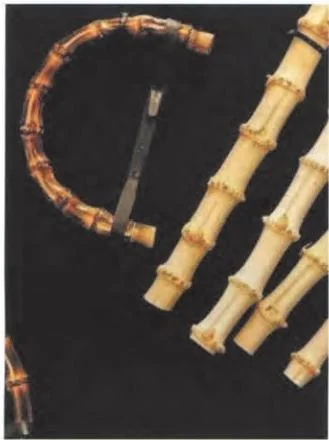
The most important diagnostic lesson is that natural variation is expected. Gucci’s Bamboo 1947 making-of story explicitly notes that no two handles are the same. I would be cautious of a checklist that demands identical node spacing or one fixed brown tone. A better comparison asks whether the curve is controlled, whether paired components feel balanced, whether the lacquer follows rather than buries the cane’s structure, and whether the rings and leather tabs connect cleanly to the bag.
Variation does not mean anything goes. Abrupt kinks, weak junctions, careless lacquer buildup, or hardware that twists the handle out of alignment can still be useful quality concerns. They simply need to be assessed as construction issues, not against a fictional template of perfectly uniform bamboo.
Horsebit: Read the Rings, Bar, Scale, and Attachment
The Horsebit is a double-ring-and-bar motif derived from equestrian hardware. Gucci’s timeline places the defining loafer in 1953 and connects the Horsebit 1955 bag to the year that its particular hardware version appeared in the House’s collections. That corrects a common internet problem: different pages sometimes assign one date to every Horsebit use, even though the loafer, bag, and later jewelry interpretations are not the same object.
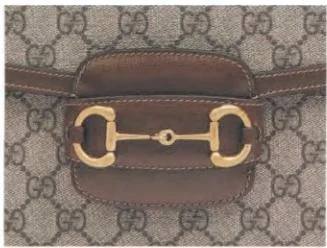
My eye starts with the motif’s grammar: two terminal rings linked by a central bar. I then move outward. Does the hardware sit level? Is it appropriately scaled for the panel? Are the mounts symmetrical? Does the finish remain coherent with nearby buckles, chain links, or zipper pulls? A close-up of the bit without the surrounding bag answers only the first of those questions.
Christie’s Gucci collecting guide shows how widely the motif has been reissued across colors, materials, sizes, and product types. That breadth is precisely why one generic Horsebit template is unreliable.
Double G and GG Monogram: Related Codes, Different Jobs
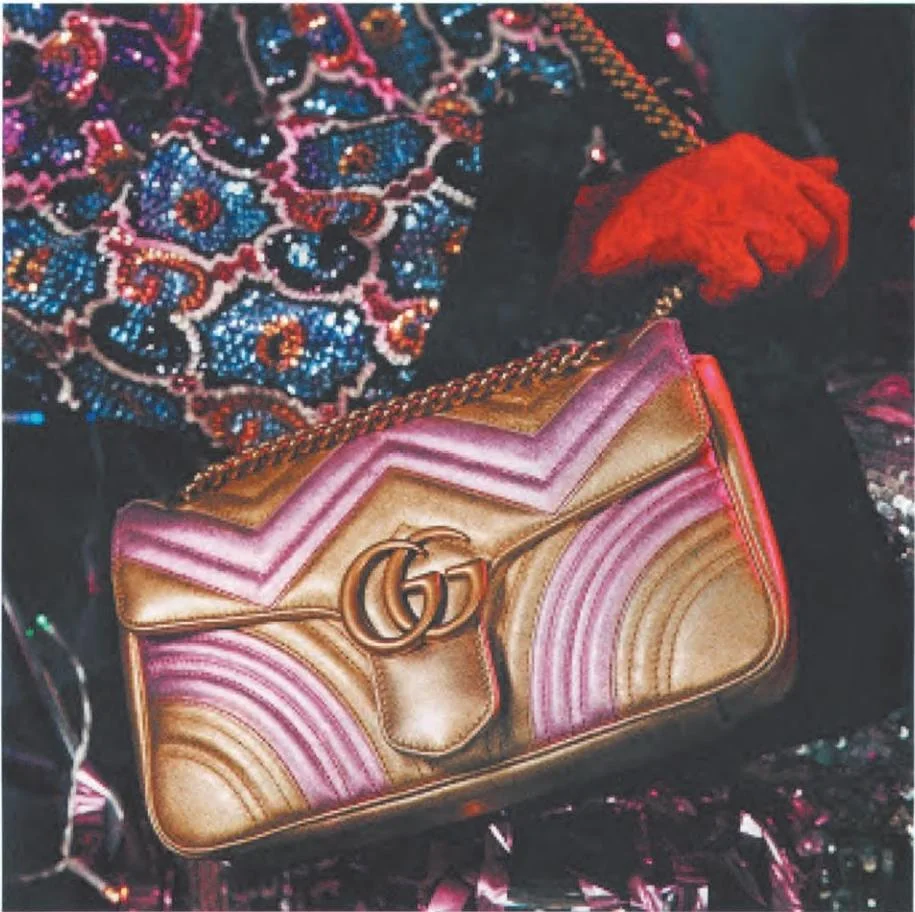
The Double G refers to Guccio Gucci’s initials, but it appears in more than one system. An interlocking metal Double G can act as a closure or ornament. A repeating GG monogram organizes the initials into a textile or canvas pattern. The two are related, yet they should not be evaluated in the same way.

Gucci’s history places Diamante canvas in the late 1930s and describes its diamond motif as a precursor to the GG monogram. The House then lists the GG monogram among the signature prints that emerged in the 1950s and 1960s. Christie’s adds a useful later marker: Gucci filed a patent for the signature monogram motif in 1969. These milestones describe an evolution, not one overnight launch date for every Double G form.
For hardware, compare the G shapes, overlap, negative space, thickness, finish, and position. For a repeating monogram, zoom out as well as in: examine the rhythm of the repeat, its angle, spacing, and how the pattern meets seams, pockets, and panel edges. Perfect continuation is not possible at every cut, but random drift or inconsistent scale deserves closer review.
The Web Stripe: A Placement and Construction Check
The familiar green-red-green Web stripe is another equestrian translation. Christie’s dates the motif to the early 1950s and explains it as a reinterpretation of the girth strap that holds a saddle in place. It often appears beside GG canvas, but it can also function independently on leather goods, shoes, straps, and clothing.
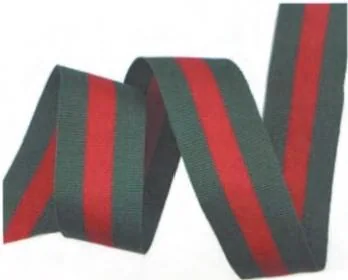
The stripe is simple enough to copy, so color recognition has low evidentiary value by itself. I look instead at relationships: whether the center stripe remains consistent, whether the outer bands balance, whether the weave looks stable, and whether the ribbon is centered on the panel. Lighting and image compression can shift red and green substantially, so color judgments should be made from neutral, well-exposed photographs.
From Recognition to a Reliable Gucci Check
Once a code has been named, use it as one layer in a broader sequence:
- Identify the model family and likely period. A Horsebit 1955 shoulder bag, a 1953 loafer, and a later jewelry piece need different references.
- Choose a version-matched comparison. Match size, material, hardware color, and season where possible. Do not force a vintage piece to conform to a current product page.
- Inspect construction around the code. Check alignment, attachments, stitch routes, edge finish, panel geometry, and wear patterns—not only the motif itself.
- Corroborate elsewhere. Compare the wordmark, interior tag, style or serial information, dimensions, lining, zippers, and documented provenance. For selected newer products, Gucci also offers an NFC-based Authenticity Tag through its app.
- Record uncertainty. If the period, repair history, or reference version is unclear, ask for better photographs or professional review instead of converting one anomaly into a verdict.
One important limit: Gucci says its Authenticity Tag is available only on selected items. Its absence is therefore not a universal failure, especially for vintage products or models outside the supported selection. This is a good example of why a feature must be placed in context before it becomes evidence.
Common Mistakes to Avoid
- Treating a recognizable code as proof. A motif establishes design intent, not authorship.
- Using one modern reference for every era. Proportions, finishes, materials, and placements evolve.
- Demanding machine symmetry from bamboo. Natural node and tone variation can be legitimate; construction quality is the stronger question.
- Judging hardware in isolation. Mounting, scale, alignment, and finish consistency often reveal more than an extreme macro.
- Reading compressed color as material truth. White balance, glare, and low-resolution images can distort lacquer, metal, canvas, and Web tones.
- Ignoring the rest of the bag. Codes should agree with the model, tag, dimensions, panel geometry, stitching, and provenance.
For a model-level buying comparison, continue to the Gucci replica bags guide 2026. If your question is whether a specific pre-owned item is authentic, use the broader designer bag authentication framework rather than relying on the four motifs on this page.
Frequently Asked Questions
What are the main Gucci brand codes?
Four of the most recognizable Gucci brand codes are the bamboo handle, Horsebit hardware, Double G or GG monogram, and Web stripe. Each has its own origin and construction logic. They recur across different product categories and creative periods, so identify the exact version and model context before using any of them as a comparison point.
When was the Gucci Bamboo bag introduced?
Gucci introduced the bag now known as the Bamboo 1947 in 1947. The House describes a process in which selected bamboo is softened and bent over an open flame, lacquered, baked, and attached to a saddle-shaped bag. Because bamboo is natural and shaped by hand, legitimate handles can vary in node spacing, tone, and curvature.
What does Gucci Horsebit hardware look like?
The core Horsebit motif consists of two rings connected by a central bar, reflecting equestrian tack. Gucci introduced the defining Horsebit loafer in 1953, while the Horsebit 1955 bag refers to a bag-hardware version from 1955. Scale, thickness, finish, and mounting vary by model, so compare the complete assembly rather than one generic silhouette.
Does a Double G logo or Web stripe prove a Gucci item is authentic?
No. A Double G or Web stripe can show which Gucci design language an item is imitating, but either motif can be copied. A meaningful check also matches the model and period, examines proportions and construction, and corroborates the result with tags, style information, dimensions, hardware, stitching, provenance, and—where applicable—Gucci’s selected-item Authenticity Tag.
Final Takeaway
The best way to read Gucci brand codes is as a vocabulary, not a verdict. Bamboo tells a story about material and hand shaping. The Horsebit and Web translate equestrian equipment into visual signatures. The Double G connects the founder’s initials to hardware and repeating pattern. Once each code is placed in the correct model, period, and construction context, it becomes useful evidence—still only one part of the complete item.