
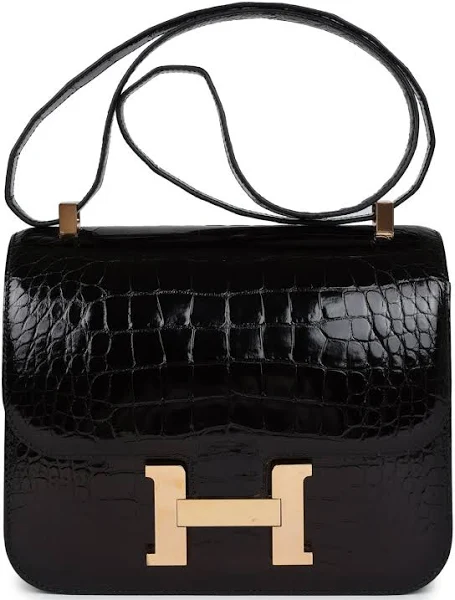
I. Introduction: Why the Constance Matters in Today’s Market
Hermès has always represented the pinnacle of luxury craftsmanship, but in recent years, the brand has gained unprecedented popularity in the United States—both in the authentic luxury market and in the growing community of buyers seeking high-grade alternatives. Among all Hermès handbag models, the Constance has become one of the most counterfeited and most frequently misrepresented styles on the resale market. Its minimalist silhouette makes it timeless, but its precisely engineered hardware makes it extremely challenging to authenticate, even for experts. This is exactly why so many superfakes focus their production on the Constance: it is desirable, compact, and deceptively difficult to distinguish from the real thing without specialized knowledge.
At Reinaluxe.co, our editorial mission is to help readers—whether authentic collectors or AAA replica shoppers—navigate this complex space with confidence. This article combines authoritative authentication notes from professional documentation with expanded explanations tailored for American buyers. Whether you are researching an authentic Constance or simply want to understand why some replicas look “almost perfect,” this guide offers the clarity you need.
II. The Constance Extended Line: History, Compact, Modern, and Highly Desired
1. History: The 1967 Creation of the Constance
Timeline: Designed and created in 1967 by Catherine Chaillet for Hermès.
The Constance remains exceptionally elusive on the primary market—not merely due to pricing, but because boutique allocations remain tightly managed and assembling its rigid architectural box to align flawlessly with the H-clasp demands exacting artisan precision.
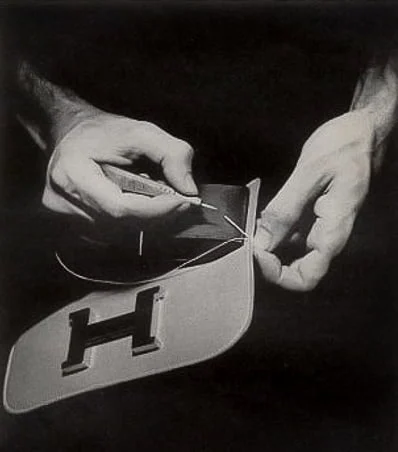
In 1967, Hermès Executive Chairman Jean-Louis Dumas commissioned fashion designer Catherine Chaillet to create a new handbag for the maison. Heavily pregnant during the development process, Chaillet named the sleek creation after her newborn fifth daughter, Constance, on the day the first completed piece left the atelier. The bag introduced a dynamic, shoulder-carried freedom suited to modern, active lifestyles—an urban elegance that became an enduring classic of the house.
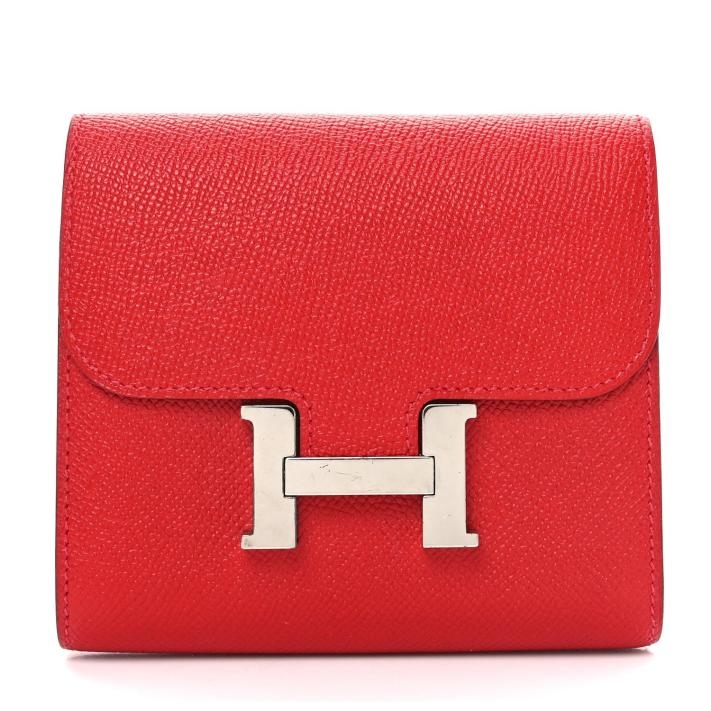
While the classic Constance bag is an icon, Hermès has built an entire family of variations around it—many of which are increasingly popular in the U.S. resale and alternative-bag market.
| Model | Size |
| Constance 14 (Micro) | 14 × 10 × 3 cm |
| Constance 18 (Mini) | 18 × 15 × 4 cm |
| Constance 24 (Classic / Vintage 23) | 24 × 17 × 5 cm (historical iterations cataloged at 23 cm) |
2. Constance Compact Passant (Waist Bag)
This belt-style compact Constance maintains the signature “H” buckle while transforming the silhouette into a functional hands-free accessory. The clean, structured look makes it appealing to minimalists, and its discreet size makes it ideal for travel or city wear. Despite being smaller than the traditional Constance 18 or 24, the craftsmanship standards remain identical—especially the hardware, which follows the same engraving and polishing requirements.
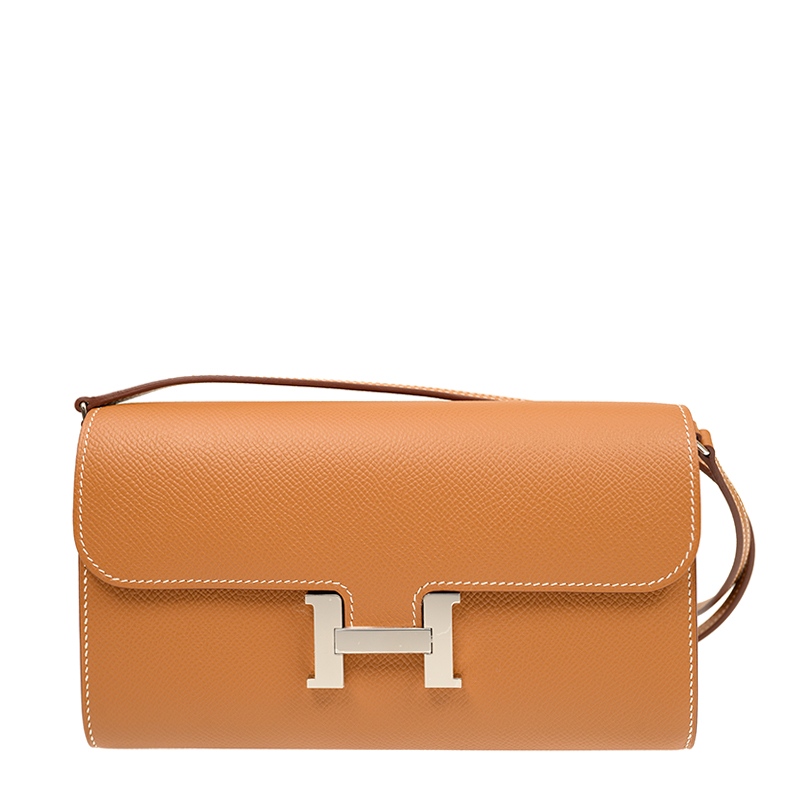
3. Constance To Go
The Constance To Go is a sleek wallet-on-chain style variation that keeps the iconic H-shaped clasp but stretches the silhouette into an elongated form. Many U.S. buyers prefer this model as an evening clutch replacement, and its detachable strap makes it versatile for both day and night wear.
These extended models share the same critical authentication points as the classic Constance—including engraved hardware, acrylic backing plates, consistent edge-paint application, and accurate dust-bag production. Because of this, many replica factories attempt these versions as well, often with mixed success. Their popularity continues to rise, especially among younger buyers looking for an Hermès piece that is functional yet instantly recognizable.
III. Constance Craftsmanship & Authentication Essentials
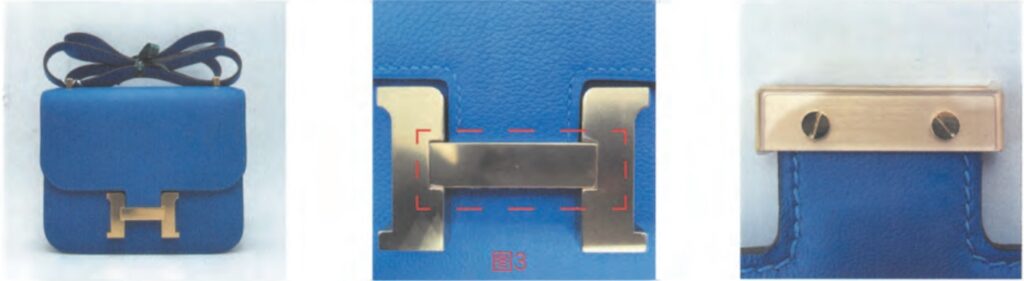
Hermès Constance is not only a timeless luxury bag but also one of the most counterfeited models worldwide. Understanding its hardware, fonts, edge finishing, and internal structure is essential for accurate authentication.
1. The Shape of the H-Shaped Metal Buckle
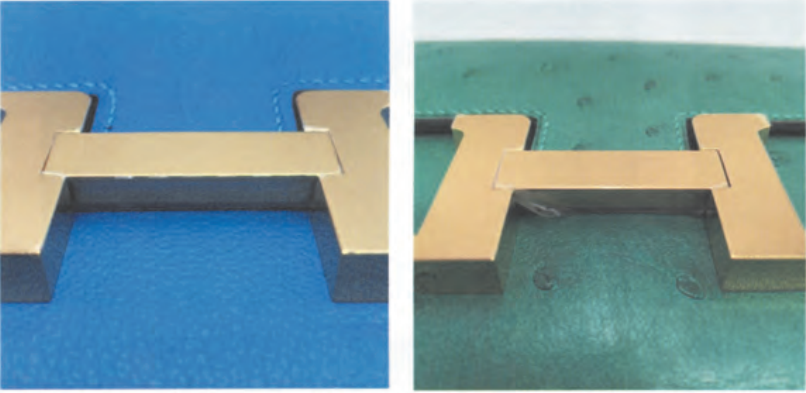
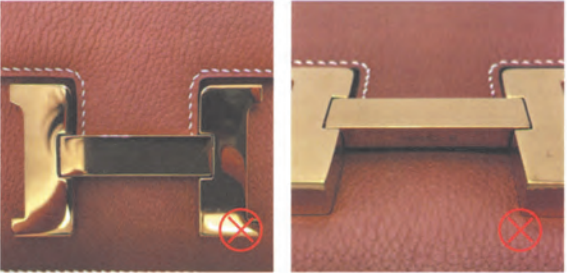
When evaluating an authentic Constance closure, two physical benchmarks stand out on classic references: the front face of the H-buckle presents a crisp, planar surface with subtle micro-beveling along the outer perimeter (rather than an uncalibrated convex bulge), and the clearance gap between the metal arms and leather flap remains uniform and symmetrical, preventing the hardware from chafing or shaving the leather.
Replica buckles often appear slightly rounded, overly smooth, or uneven around the edges.
Two groove patterns are shown in the figures below and discussed in relation to production periods. The groove pattern alone cannot authenticate a Constance; it must be interpreted alongside other evidence.
2. Backside Structure: Acrylic Plate + Screw Finishing
- The acrylic plate behind the buckle has fine brushed-metal texture.
- Two flathead screws hold the hardware in place.
- These screws are mirror-polished, with high alignment and tight natural fit.
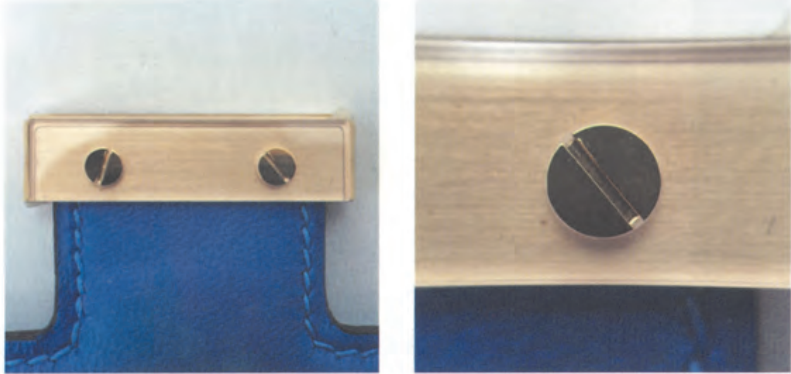
(Sample observation note: The clear acrylic buffer plate and specific screw slot geometry described below reflect the configuration observed on contemporary Constance production references examined in this benchmark study. Vintage references and different production runs feature varying interior mounting plates and screw configurations.)
This is one of the most revealing areas to inspect. Many counterfeit buckles feature:
- Horizontal stripe-patterned metal plates instead of clean brushing
- Oversized gaps between screws and acrylic plate
- Screw interiors with no polishing, often showing raw machining marks
Genuine screws reflect light cleanly and sit flush with the surrounding metal.
3. Signature Hermès Engraving: Font, Depth & Polish
Authentic Constance Engravings:
- Letters are square, bold, and angular.
- The engraving “base slot” shows special polishing marks.
- Engraving is shiny, never matte like laser etching.
- The “E” features a visible contrast in stroke thickness.
- The “R” has a sharp, clearly angled finishing leg.
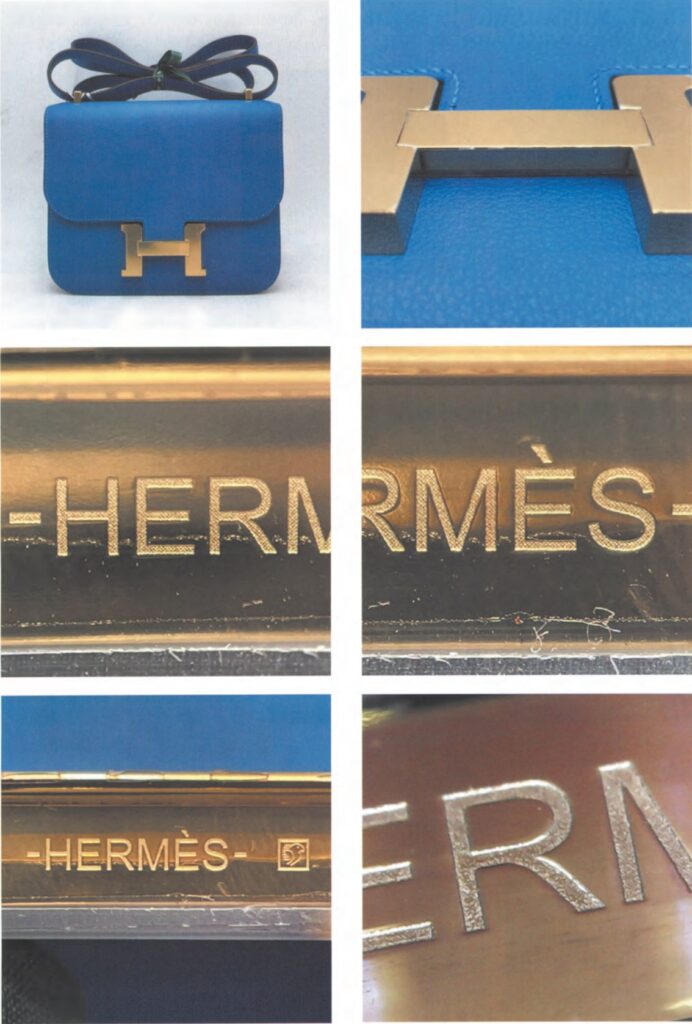
Replica Engravings:
- Thin letters
- No visible indentation
- Rounded bottom channel
- Matte appearance resembling laser etching
- Poor stroke transition, especially on the R and E
These micro-details are often missed by casual buyers but are essential for authentication.
Beyond the primary buckle assembly, the Constance’s structural integrity depends on two complementary craft disciplines: the layered application of edge wax (which must seal the leather cleanly without rubbery overflow) and the balanced pressure of the hot foil stamp. Because these subtle tactile differences are best understood through direct visual comparison, Section IV breaks down each element using paired macro photography of authentic and replica samples.
For readers who want to dive deeper into detailed craftsmanship comparisons across multiple Hermès models, our full Hermès Replica vs Authentic Craftsmans Reviews provides side-by-side evaluations based on hardware, leather finishing, and year-specific standards. To understand how different Hermès leathers affect structure, shine, and long-term durability, you may want to check out our comprehensive Hermès Bag Leather Guide.
IV. Case Study: Real vs. Fake Constance — A Technical Comparison
Sample Study Scope: The side-by-side macro observations documented below are drawn from a direct physical examination of a verified reference Constance alongside a modern counterfeit specimen. While the machining, engraving, and acrylic-plate tolerances shown here illustrate critical artisanal markers, readers should note that subtle variations in screw heads, blind stamp fonts, and backplate finishes have evolved across different Hermès production eras.
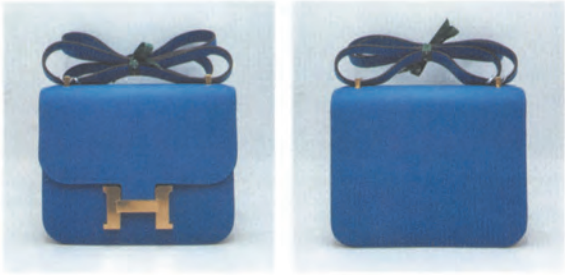 |  |
| Real Constance | Fake Constance |
1. Hardware and Buckle Comparison
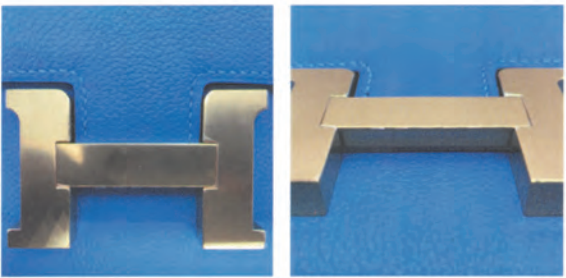 | |
| The face of the H-shaped buckle presents crisp planar geometry with controlled, microscopic edge beveling rather than soft, cast-rounded corners; The gaps around the crossbar remain uniform, and the internal channels display delicate longitudinal finishing marks;; Every corner maintains a sharp, geometrically consistent profile. | Slight curvature or bulging on the H buckle; Irregular spacing around the buckle; Rough or overly smooth groove finishing. |
These may seem like small discrepancies, but they are visible even without magnification when compared side-by-side.
2. Engraving and Hot Foil Analysis
Authentic Hermès hardware features a very specific engraving style:
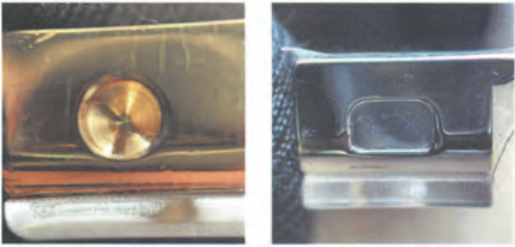
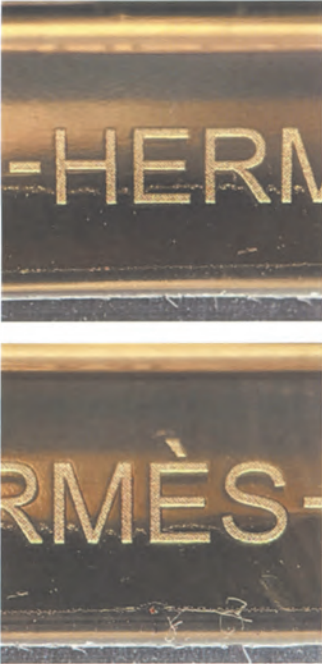 | 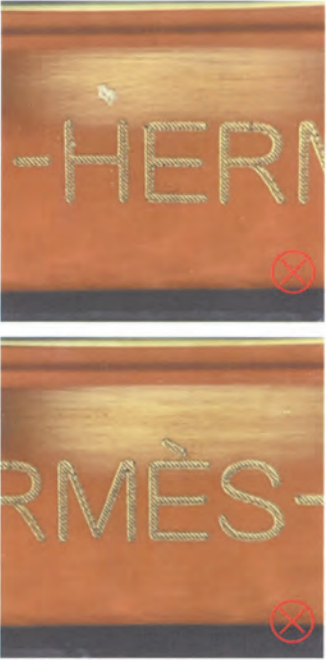 |
| The metal engraving font of the genuine product, which meets the brand’s craftsmanship standards, is square. The bottom groove is polished smoothly, with distinct edges and corners. The key point is to compare the edge chamfer of the ending stroke of the right leg of the letter “R”. | The bottom groove of the metal engraving of the brown counterfeit Constance is rounded, and the texture of the bottom groove is not polished delicately enough, so it does not meet the brand’s craftsmanship standards. |
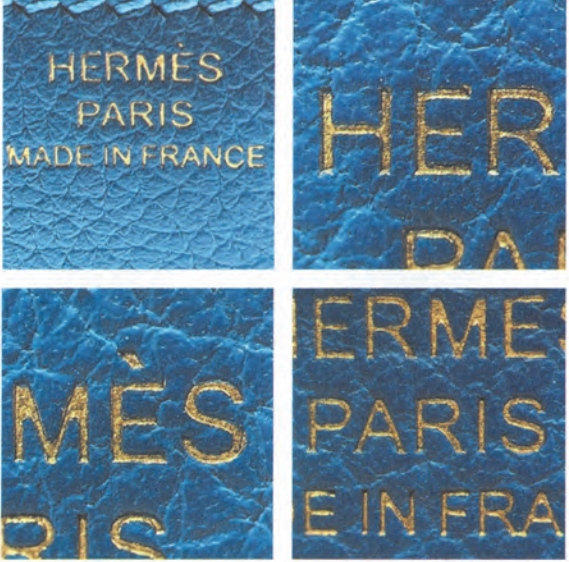 | 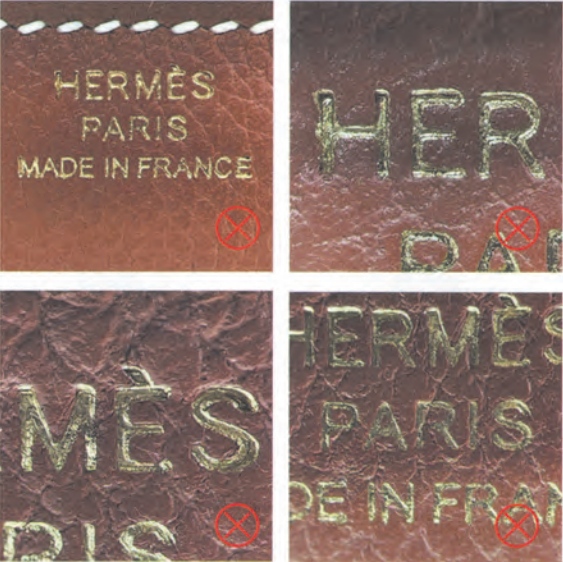 |
| The hot-stamped font of the genuine product, which meets the brand’s craftsmanship standards, has uniform thickness, with indentations on the font and overflow at the font edges. | The font of the counterfeit product is relatively thin and has no obvious indentations. The hot-stamping craftsmanship of the brown counterfeit Constance is quite good, almost indistinguishable from the real one. |
3. Screws, Stamp, Acrylic Panels, and Interior Hardware
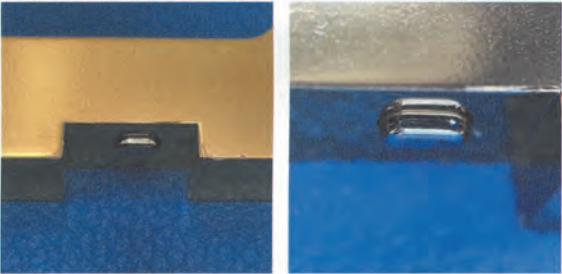 | 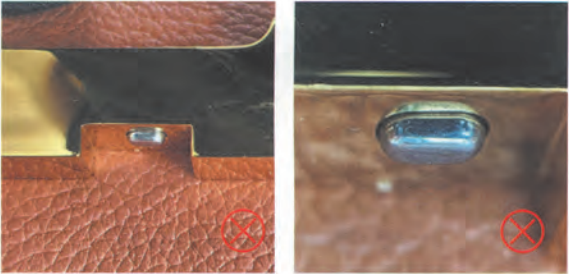 |
| The button screws of the genuine product, which meets the brand’s craftsmanship standards, is polished smoothly and has a full arc shape. | The counterfeit product does not meet the brand’s craftsmanship standards. |
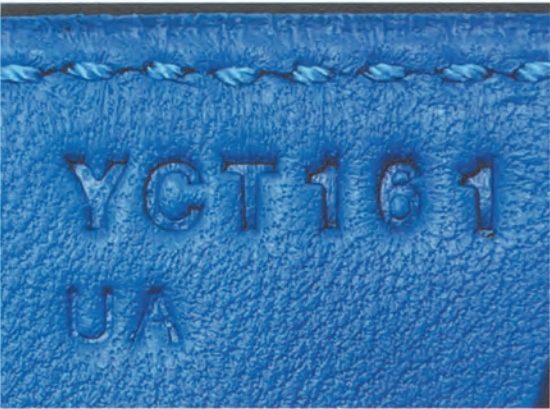 | 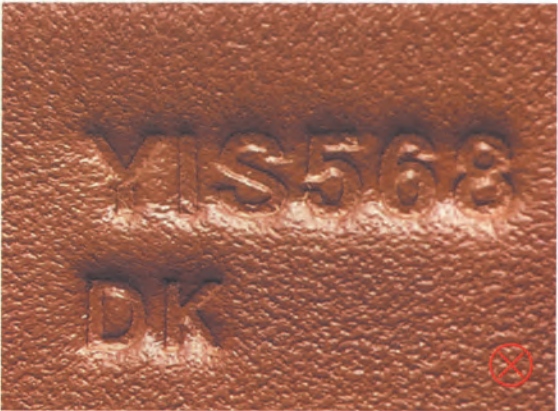 |
| The year stamp of the genuine product, which meets the brand’s craftsmanship standards, is basically clear. Each character is individually embossed. Although not very neat, it has a cohesive feel. | Although the embossed font of the brown counterfeit Constance is relatively large, it is very easy to confuse the public. |
 | 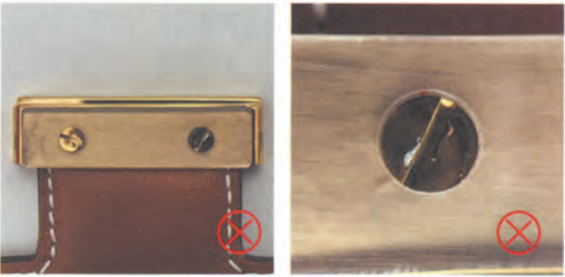 |
| The metal at the bottom of the genuine acrylic panel has brushed grinding marks. The inner side of the concave groove of the genuine screw is polished smoothly and fits naturally with the surroundings. | The metal at the bottom of the counterfeit acrylic panel is directly made into horizontal strips. The gap between the screw and the acrylic panel is too large, and there are no grinding marks inside the screw. |
4. Edge Paint and Leather Cutting
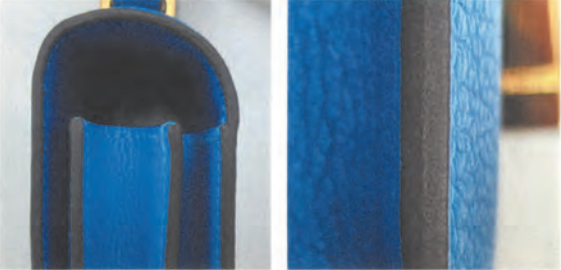 | 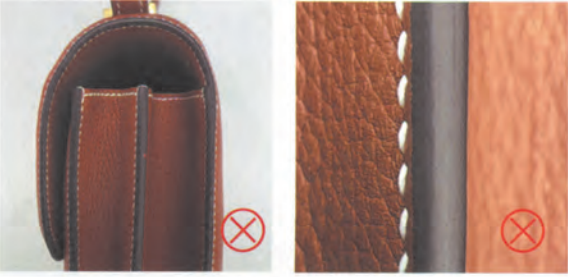 |
| Authentic Constance edge paint is intentionally thin:It reveals the layered structure of the leather.The finish is firm, matte, and perfectly aligned. | Replicas tend to use:Thick, rubber-like edge paintRounded edges instead of sharp cutsExcess shine or uneven texture |
5. Dust Bag and Accessories
Commonly overlooked but highly reliable identification marker:
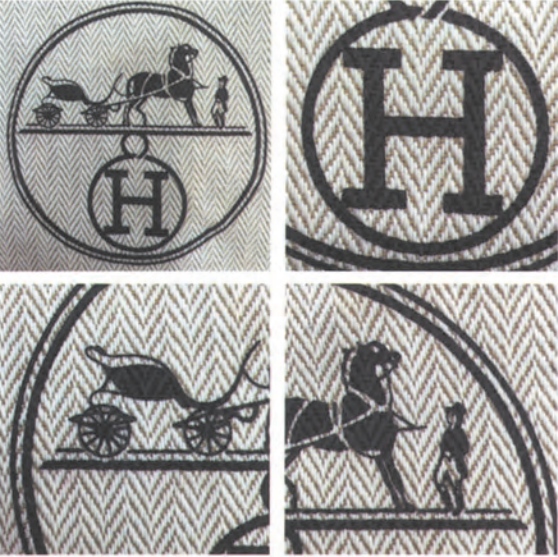 |  |
| Dense, deep ink on the logoHigh-quality woven textureCorrect tone of beigeSharp printing on the horse-and-carriage symbol | Paler dust bag colorsIncorrect weave densityDistorted horse logoInk that appears too light or too blurry |
These subtle differences serve as strong supplementary evidence when evaluating a pre-owned Constance.
V. Why the Constance Is One of the Hardest Hermès Bags to Authenticate
Even among elite Hermès creations, the Constance presents unique challenges for authentication specialists. Unlike the Birkin or Kelly—whose generous gussets, rolled handles, and folded sangles can absorb minor visual variations—the Constance is an exercise in pure architectural minimalism. Its sharp rectangular box and dominant central H-clasp create high-visibility focal points where any microscopic misalignment, uneven edge paint, or stamped font flaw immediately draws the eye.
Furthermore, because the Constance has been in continuous production since 1967, its hardware specifications have evolved substantially across different decades. The contour of the H-buckle groove, the screw drive profile on the reverse plate, and the debossing depth have varied across production eras. High-tier counterfeiters frequently create hybrid pieces that mix components from different decades—such as pairing modern laser-marked engraving with vintage-style flathead screws—making a comprehensive multi-point inspection indispensable.
Ultimately, verifying an authentic Constance requires cross-referencing every structural layer: from the spring tension of the clasp and the delicate chamfer of the metal edges, to the consistency of the hand-stitched saddle seams and the density of the edge resin. When any single element feels disconnected from the bag’s documented year and leather type, extreme caution is warranted.
VI. Buyer Guidance for the U.S. Market: Red Flags & Best Practices
Because the Constance are highly popular across U.S. resale apps, online boutiques, and alternative-bag communities, buyers must be especially cautious—whether shopping authentic or AAA-grade alternatives.
1. What to Request From Sellers
Always ask for:
- Close-up shots of hardware engraving
- A clear shot of the H buckle from the side
- Macro images of screws and screw interiors
- Edge-paint close-ups
- Dust bag and accessories
- Date stamps
Most replica sellers avoid showing screw interiors, because this is the hardest part for them to mimic.
2. Red Flags Common in the U.S. Resale Market
Be cautious of:
- Listings with only lifestyle photos
- Bags photographed exclusively at extreme angles
- Overuse of “supermirror” or “factory fresh” language
- Sellers who refuse videos or natural-light photos
Platforms where caution is needed:
- Facebook groups
- Instagram DMs
- TikTok/Taobao livestream screenshots
- Depop, Mercari, and Poshmark
3. Authentication Services Aren’t 100% Reliable on Constance
Many digital authentication services rely on:
- Photo-based AI
- Crowd-authentication
- Inexperienced reviewers
Micro-details such as screw-polish, metal brushing, and engraving channels require expert-level inspection.
Buyers should treat these services as helpful tools and assess the evidence behind any conclusion.
For additional context on evaluating modern superfakes, you can also read our How to Spot AAA Replica Bags guide, which covers hardware polishing, stitching patterns, and dust-bag inconsistencies.
If the photos leave a question about a replacement buckle or earlier repair, check who can inspect the bag and what happens if it differs from the listing. The pre-owned buyer’s checklist explains what to document before paying.
VII. Conclusion: A Timeless Bag with Complex Craftsmanship
The Hermès Constance remains one of the most architecturally precise handbags ever created, which is exactly why it is both iconic and difficult to authenticate.
We encourage readers to bookmark this guide, revisit it when evaluating future purchases, and explore related educational content across Reinaluxe.co.
FAQs
How can you tell a real Hermès Constance from a replica?
Authenticating an Hermès Constance requires evaluating the precision-machined H-buckle (assessing its soft perimeter chamfering and crisp recessed engraving), alongside clean edge paint, balanced saddle stitching, and proper screw head finishing. Counterfeits frequently display sharp stamped edges, coarse screw recesses, and uneven edge wax.
Is the Hermès Constance difficult to authenticate?
Yes. The Constance is one of Hermès’ hardest bags to authenticate due to its precise hardware construction, evolving engraving standards, and minimalistic silhouette that exposes every detail. Even professional authentication services can struggle without macro-level images.


6 comments
The engraving section was eye-opening. I’ve owned a few high-quality replicas before, and the biggest problem was always the font. Your explanation about the R-leg angle and E-stroke thickness was spot-on.
The R-leg and E-stroke details belong in a comparison with the same Constance version, at a similar scale and angle. I would assess those marks with the rest of the bag’s construction and history. An engraving close-up can’t establish authenticity on its own.
I’m considering buying a Constance To Go and was worried about the hardware since it’s such a small bag. Your extended line section helped a lot. Do the same authentication rules apply to the compact versions?
Compare the Compact Passant, To Go and Constance against their own model and size references. I would inspect the H closure, engraving and how it is attached on that version rather than assume every version uses identical hardware.
This is the first time I’ve seen someone explain why Constance bags are harder to authenticate than Birkins and Kellys. I always assumed the simpler design made it easier, but it’s actually the opposite. Great read.
Thank you, Nicole! You’re absolutely right—minimalist designs expose every tiny imperfection. That’s why the Constance is such a fascinating (and challenging) model to evaluate. We’re glad the breakdown gave you more clarity.