
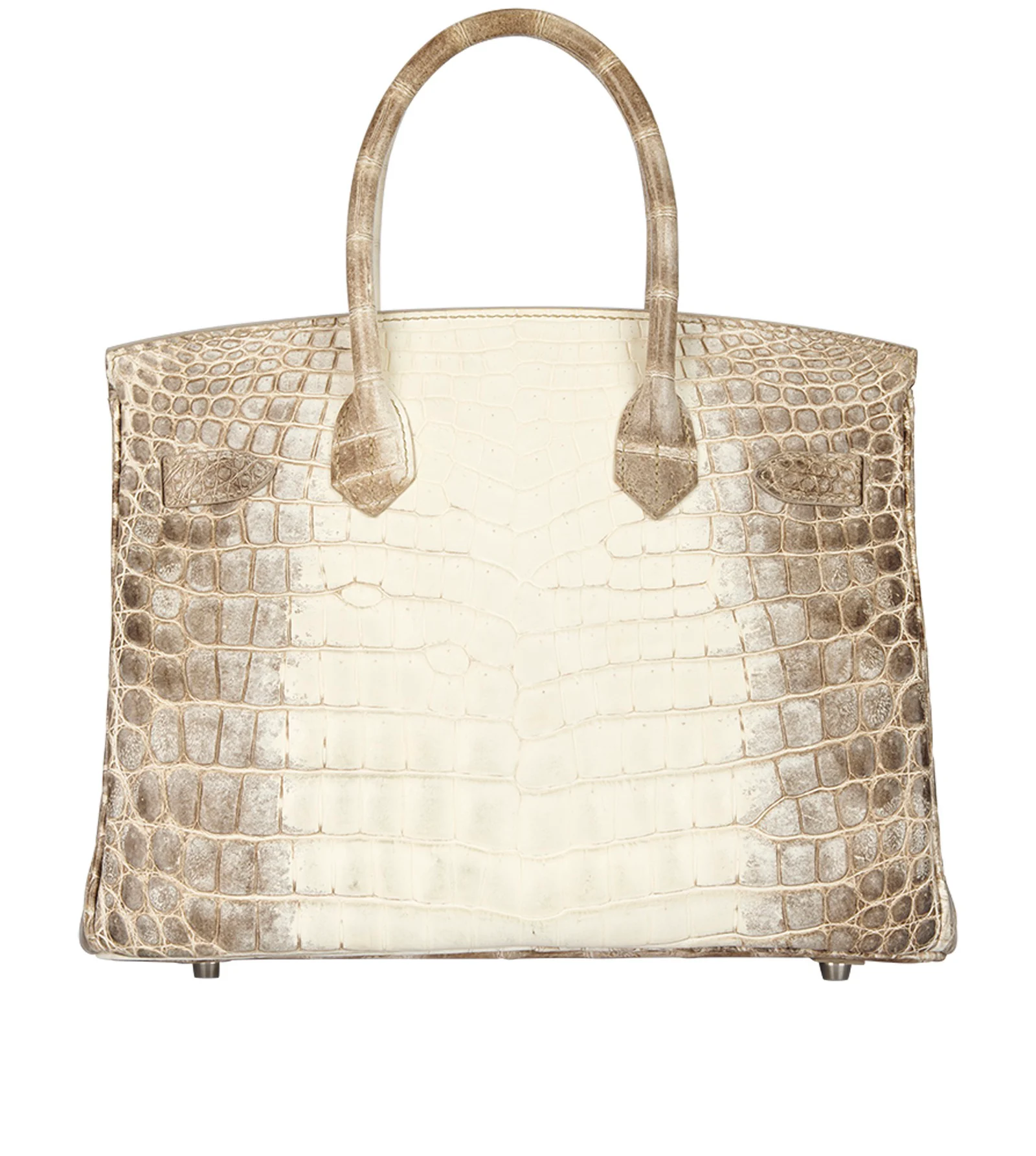
Updated August 2026. This guide is written for one specific question: how does a Hermes Birkin bag replica differ from an authentic Birkin? It is not a ranking of replica tiers, and it does not assume that one slanted stitch, one stamp, or one dust bag can decide authenticity by itself.
The most convincing replicas copy the obvious details first. They may show a familiar heat stamp, a plausible lock engraving, a date code, and even saddle-stitch-like slant. The differences are often easier to see in the relationship between those details: the proportions of the body, the way the handles rise, how the sangles sit, whether the leather behaves correctly for the stated model, and whether the hardware works as cleanly as it looks.
My rule: start with the whole bag, then move inward. A copied stamp cannot rescue the wrong silhouette, and one imperfect stitch cannot condemn an otherwise credible vintage or repaired Birkin.
Table of Contents
Why Birkin Authentication Is Harder Than a Checklist

Hermès describes the Birkin as a supple, spacious rectangular holdall with a flap and saddle stitching. That basic description covers many sizes, leathers, colors, hardware finishes and special editions. It also covers two visibly different construction families: the softer Retourné Birkin and the sharper Sellier Birkin.
This variation is why a universal internet rule is dangerous. An authentic Togo Birkin 35 may look softer and more relaxed than an authentic Epsom Birkin 25. A Sellier bag should show external seams and a crisp architectural edge, while a Retourné bag is stitched and turned in a way that produces a rounder profile. Christie’s describes this construction difference directly, and Sotheby’s likewise distinguishes the structured Sellier from the softer classic form.
Authentication specialists therefore do not rely on one feature. Sotheby’s describes examining stitching, hardware, blind stamps, craftsmanship and condition together. That is the correct way to read the comparisons in this guide: as a connected evidence set, not a collection of magic tricks.
1. Identify the Exact Birkin Reference First
Before comparing an alleged authentic Birkin with a replica, I establish what each bag is supposed to be. A correct comparison needs at least five reference points:
- Size: Birkin 20, 25, 30, 35, 40, or another edition.
- Construction: Retourné or Sellier.
- Leather or material family: Togo, Clemence, Epsom, Swift, exotic skin, canvas, or a special combination.
- Hardware finish: palladium-tone, gold-tone, brushed, dark, permabrass, or edition-specific hardware.
- Approximate production period or edition: because stamps, craftsman marks, leather behavior and special details vary over time.
A comparison becomes weak when these references do not match. A Birkin 25 should not be rejected because its handles and flap look different from a Birkin 35. A Sellier should not be judged by the rounded edge profile of a Retourné. An exotic bag should not be compared with a Togo example as though surface texture and stitching tension must look identical.
For special editions, the model-specific elements come first. A Birkin 20 Faubourg replica, for example, must be compared through the storefront appliqué, window proportions and architectural layout before ordinary Birkin details carry much weight.
2. Shape and Proportion: The Highest-Value Comparison
Most replica guides begin with the logo. I begin with a straight front view. At normal carrying distance, the silhouette, handles, flap and side structure are more visible than the stamp—and they are harder to copy consistently.
Front-view balance
I compare the width-to-height ratio, the amount of body visible below the flap, handle height, handle spacing and the position of the central turn-lock. On an authentic reference, those elements should read as one balanced composition. On a weaker replica, each individual part may look plausible while the complete front appears too tall, too narrow, overfilled at the corners or compressed around the closure.
Side symmetry
I request matched left and right profiles. Soft leather can move, but the gussets should still belong to the same construction. Persistent differences in top rise, side fold depth or base angle are more concerning than ordinary slouch.
Base geometry
The base should sit without a permanent twist. Reinforcement strips, feet and lower corners should follow one geometry. Wear can soften the base of an authentic bag, but a new bag that already leans or corkscrews deserves more scrutiny.
| View | Authentic-reference expectation | Replica red flags |
|---|---|---|
| Straight front | Balanced handles, centered closure, coherent flap-to-body ratio | Unequal handles, drifting closure, compressed or overly tall body |
| Matched sides | Comparable gusset folds and base angle | One side permanently higher, wider or more collapsed |
| Top view | Controlled handle spacing and opening shape | Twisted opening, uneven handle bases, distorted flap wings |
| Base | Stable geometry with evenly related feet and strips | Corkscrew shape, visibly irregular foot placement, warped reinforcement |
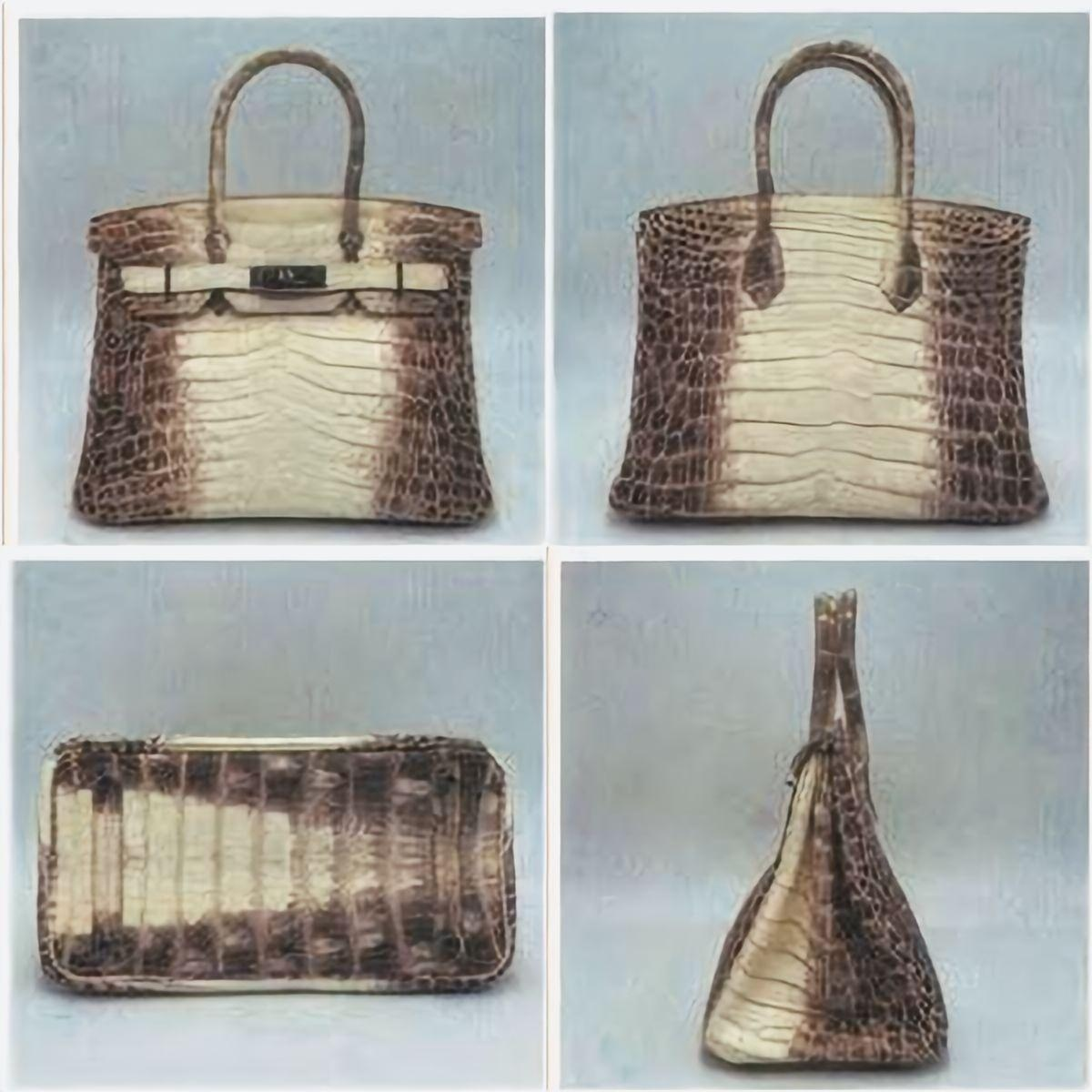 |  |
| Hermes Birkin bag | Replica Hermes Birkin bag |
Equally iconic is Hermès’s use of high-grade hardware. From the polished turn-lock closure to the engraved “Hermès Paris Made in France” stamp, every metal component undergoes extensive hand-polishing to remove sharp edges and achieve a soft gleam. Authentic rivets are slightly recessed into the leather, with tiny hammering marks still visible — signs of human craftsmanship that no laser engraving can truly replicate.
According to the Hermès craftsmanship story, this hands-on approach reflects the brand’s commitment to longevity over production speed. Each imperfection is, paradoxically, proof of authenticity.
For replica enthusiasts, understanding these artisanal principles is invaluable. It not only deepens appreciation for the original but also helps in recognizing AAA replica Hermes bags that faithfully honor the same design integrity. Our Hermès bag size chart further breaks down how proportions and measurements affect the overall silhouette — another crucial cue when identifying a well-crafted Hermes Birkin replica.
3. Handles, Flap, Sangles and Pontets
The Birkin’s front is a system of repeated alignments. The rolled handles, handle bases, flap wings, sangles, pontets and turn-lock should agree with one another. Replicas often reproduce each piece separately but lose the relationship between them.
Handles
I look for comparable height, curvature and thickness across both handles. The rolled profile should remain controlled through the bend, and the bases should not look flattened, bulky or placed at visibly different angles. A used authentic handle can darken, soften or lean; wear should not be confused with an original construction error.
Flap and sangles
When the bag is closed, the flap should settle naturally rather than being forced into place. Both sangles should have similar width, edge finish and tension. On weaker replicas, one sangle may sit higher, the ends may differ in shape, or the straps may pull the front out of balance.
Pontets and closure placement
The U-shaped pontets should be placed and finished as a pair. I compare their height, spacing, seating and relationship with the turn-lock. A convincing engraving on misaligned hardware is still a red flag.
4. Stitching: Rhythm Matters More Than One Direction
Hermès states that its saddle stitch crosses the two ends of the same thread at each stitch. This creates a strong hand-sewn construction. It does not create a universal rule that every visible stitch on every panel must lean in one direction when photographed from any angle.
Stitch appearance changes with the side being viewed, seam orientation, leather thickness, tension, repairs and the shape of the component. Replicas can also imitate a familiar slant. I therefore compare the full stitching system:
- spacing and rhythm over a long run;
- depth and consistency of the holes;
- thread tension without puckering;
- how the stitch turns around corners;
- backstitching and thread termination;
- consistency between handles, sangles, flap and interior seams.
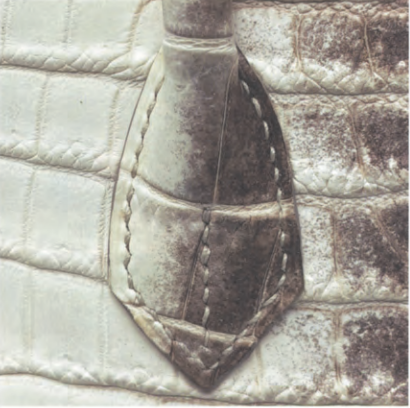 | 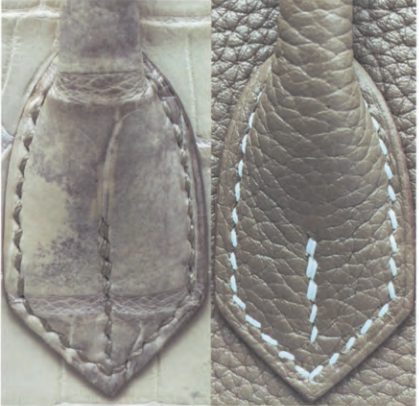 |
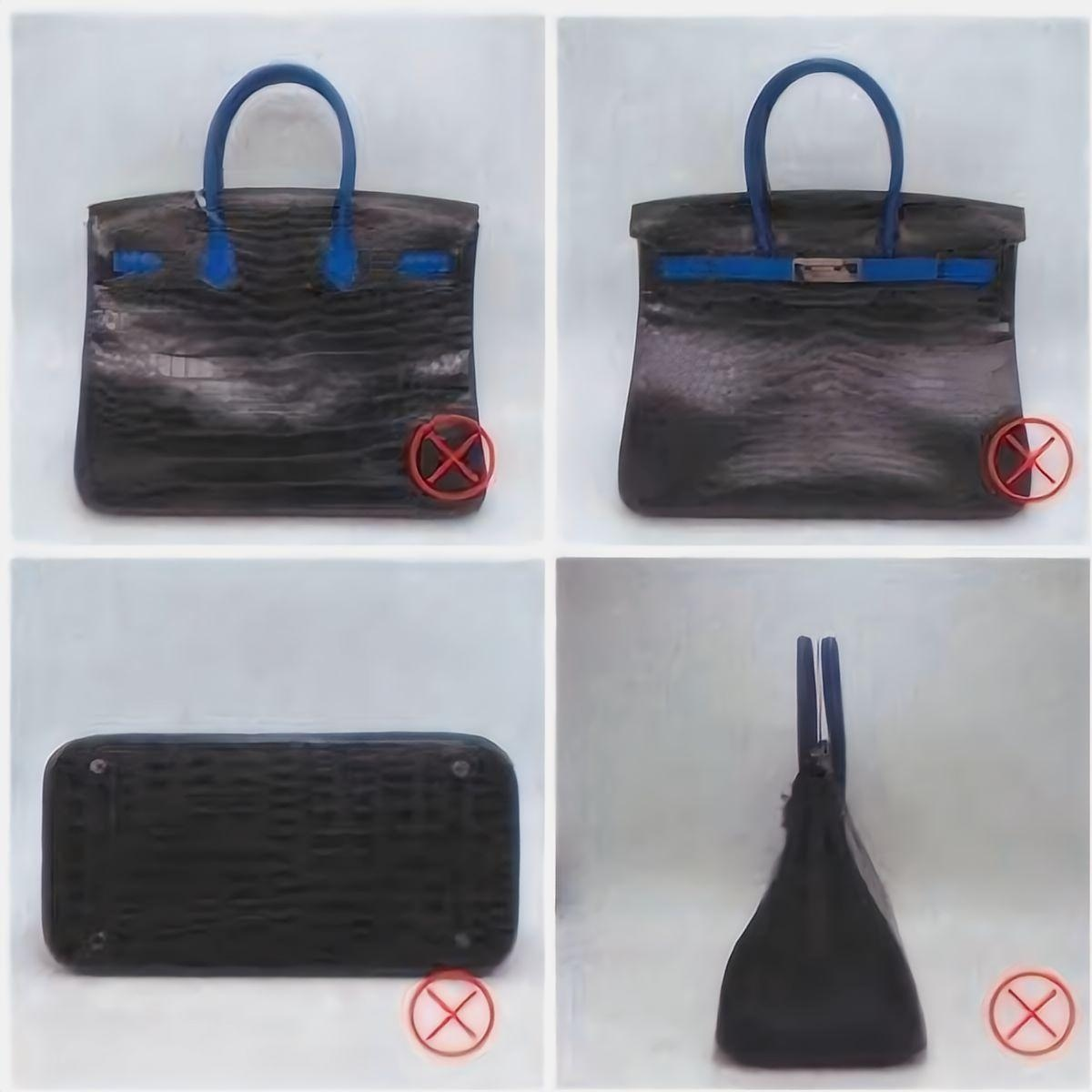
| Hermès’ unique stitching craftsmanship can be analyzed from two aspects: thread material and stitching method.In terms of thread material: The authentic product uses waxed cotton-linen thread, which has low luster and presents a matte and tight texture.In terms of stitching method: The stitching of the authentic product is in a “/” shape. Counterfeits often have downward-slanting (shaped) stitching. | The stitching craftsmanship of the counterfeit Himalaya is actually quite well imitated. To better explain this authentication element, we have prepared a counterfeit case of regular leather for analysis.The stitching of the counterfeit is not made of waxed cotton-linen thread, and there is obvious downward-slanting ( shaped) stitching, which is quite different from the authentic product—thus it is identified as a counterfeit. |
What would concern me: stitches that become mechanical and perfectly uniform in one area but visibly unstable in another; thread that sits on top of the leather rather than appearing integrated; stretched holes; abrupt changes in pitch; and messy terminations around high-stress components.
What would not decide the case alone: one stitch leaning the “wrong” way, a small handmade variation, or a repaired area that does not match untouched factory stitching.
5. Leather, Grain and Structure
Leather is one of the strongest in-hand signals and one of the easiest details to overclaim from photographs. A photo can show visible grain, sheen, creasing and panel behavior. It cannot prove tannery, exact species, treatment chemistry or that a seller’s “same leather as Hermès” statement is true.
Match the leather before judging the grain
Togo, Clemence, Epsom, Swift and exotic skins should not be evaluated by one texture rule. Even within one leather family, grain scale and firmness vary by hide and production period. I compare the alleged bag with multiple references of the same leather, color and approximate age.
Read behavior, not just texture
A printed grain can look convincing in a macro image. The harder question is how the material behaves at the flap, corners, gussets, handle bases and sangles. Replicas often reveal themselves through a mismatch: soft-looking grain on a board-like panel, overly spongy handles, plastic-looking folds, or creases that break sharply instead of moving with the material.
Smell is not an authentication test
Strong chemical odor can indicate coatings, adhesives or poor storage, but “real leather smell” is subjective and can be imitated or altered. I treat odor as a condition or material-quality observation, not proof that Hermès produced the bag.
For a broader model-and-leather framework, see my Best Hermès Replica Bags guide.
6. Edge Finish and Seam Control
Edge finish is useful because it appears repeatedly across the bag. I compare the flap, sangles, handle bases, clochette, interior pocket and gusset edges rather than selecting one unusually clean close-up.
On an authentic reference, the edge should normally look controlled for the material and construction: neither excessively thick nor casually painted over the surface. On a replica, common red flags include swollen edge paint, uneven width, visible waves, peeling, cracking on a new bag, paint covering stitch holes, and different edge profiles on paired components.
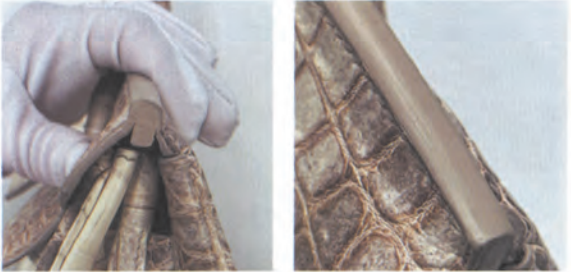 | 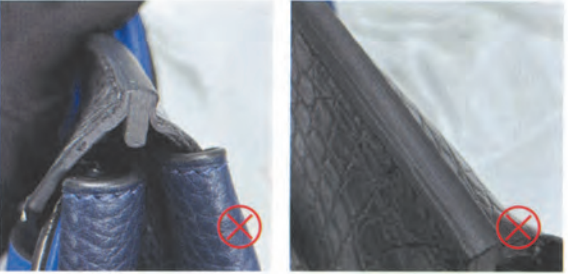 |
| The edge paint of the authentic Berkin is thin, rarely peels off, and allows the leather cutting traces to be clearly visible. | The edge paint of the counterfeit color-blocked crocodile leather has peeling issues and is excessively thick. |
7. Hardware, Engraving and Function
Hardware close-ups are useful only after the body passes. Modern replicas can copy fonts and plating colors well enough to look persuasive in a single macro image. The stronger test is whether engraving, placement, finish and function agree.
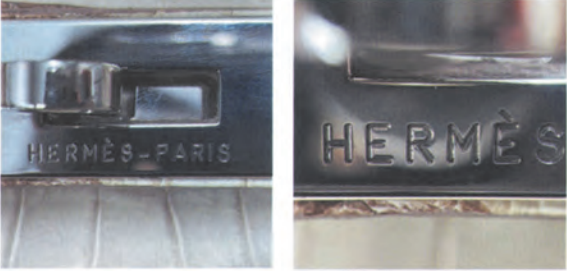 | 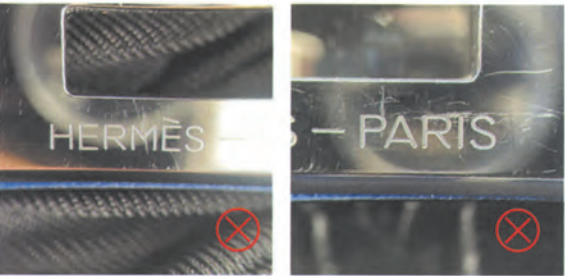 |
| The hardware engraving font of the authentic Berkin meets the brand’s craftsmanship standards. | The hardware engraving font of the counterfeit color-blocked crocodile leather is too shallow, with a white bottom groove, and it is laser-engraved, which does not conform to the brand’s craftsmanship standards. |
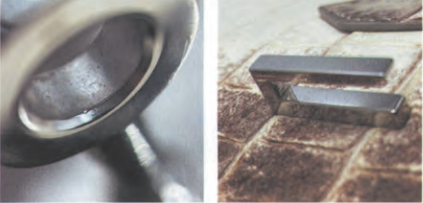 | 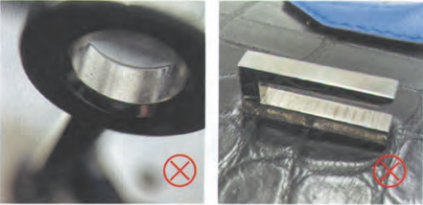 |
| The inner sides of the round twist lock and U-shaped buckle of the authentic Berkin have polishing traces, with an overall excellent finish. | The interior of the counterfeit U-shaped buckle features strip-shaped polishing that does not conform to the brand’s craftsmanship standards—thus the right-side item is deemed non-compliant with the brand’s craftsmanship requirements. |
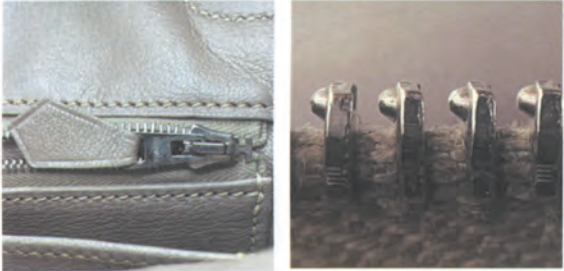 | 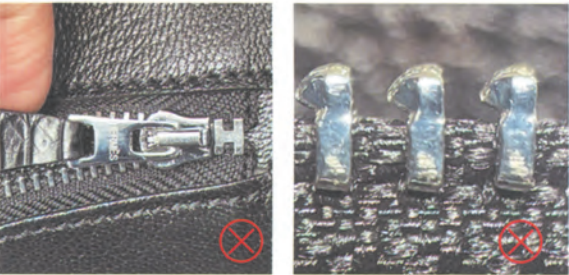 |
| The teeth of the authentic Hermès zipper (Riri zipper) should have a matte finish. | The biggest issues with the counterfeit zipper are that its teeth lack details, have poor metal texture, are deformed or misshapen, and have excessively high luster—all of which do not meet the craftsmanship standards of the authentic product. |
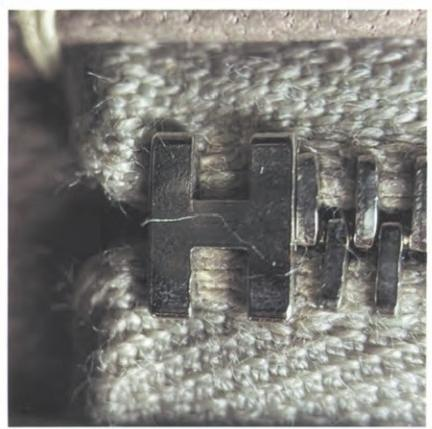 | 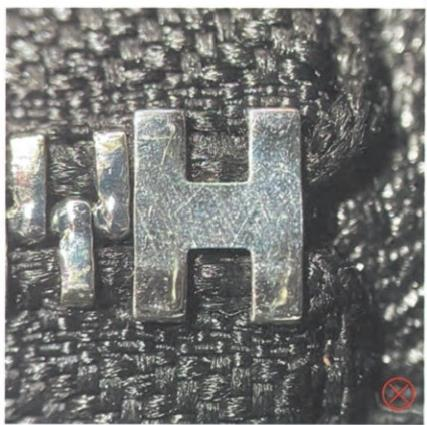 |
| The edges of the H-shaped zipper socket of the authentic product have secondary polishing traces. | The counterfeit has an obvious sharp edge, which does not meet the brand’s craftsmanship standards. |
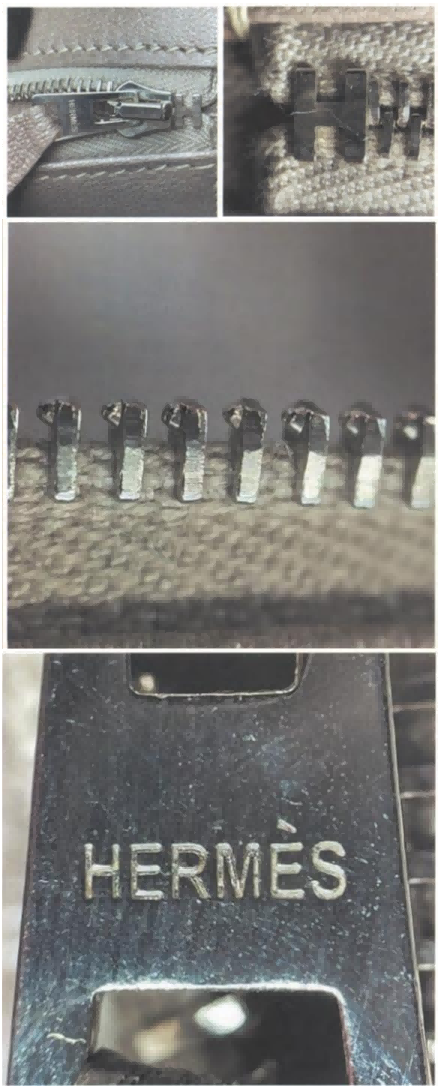 | 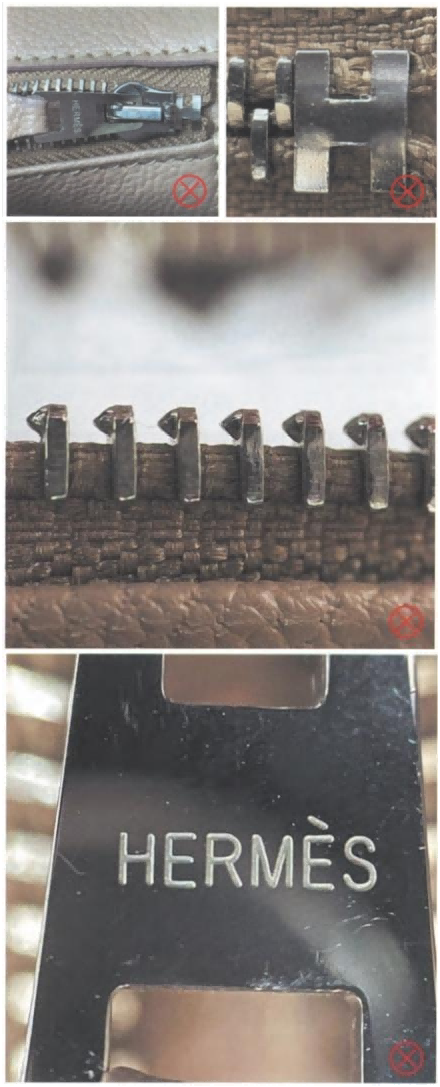 |
| The socket of authentic Hermès products is replaced with an H-shaped metal piece, and the edges of the H have polishing traces.Authentic Hermès zippers use those from the brand Riri—each tooth is polished and chamfered, with neat and uniform arrangement.The hardware engravings on the authentic zipper pull have obvious manual engraving traces. | The edges of the counterfeit H-shaped metal piece are relatively rough with a burr feel, lacking the polishing step of the authentic product.The teeth of the counterfeit zipper do not match the characteristics of Riri brand zippers, and the edges of the teeth have no polishing traces.The bottom groove of the counterfeit hardware engravings is white without manual engraving traces, which is completely inconsistent with the authentic craftsmanship. |
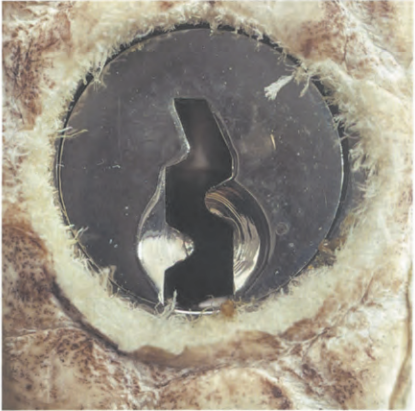 | 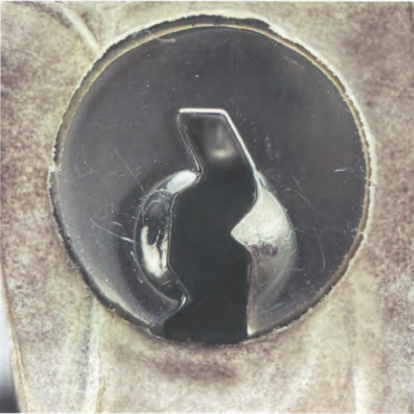 |
| Due to the special design of the Himalaya style, the lock surface is wrapped in leather, making it impossible to observe the polishing traces of the grooves on the lock surface—thus we can only analyze it through the keyhole. The keyhole of the authentic lock is very rigid with polishing traces. | The counterfeit keyhole is less rigid, has poor metal texture, and exhibits severe water ripples. |
Rivets and feet
Rivets and feet should be examined as installed components, not just as shiny objects. I compare their seating, height, spacing and how cleanly the surrounding leather is finished. Overly raised feet, mismatched heights, rough rivet edges or compression marks around new hardware can be meaningful when they repeat across the bag.
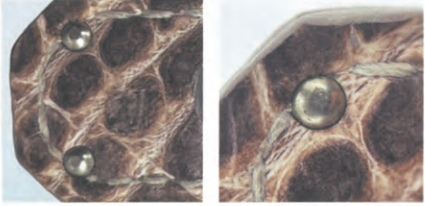 | 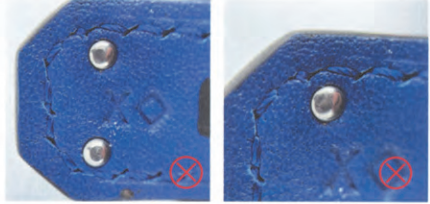 |
| The authentic rivets are pressed along the stitches, tightly against the leather surface, and manually hammered into the leather—with visible hammering indentations on the rivet surface. | The counterfeit rivets have no such hammering indentations, so the blue leather version is identified as a counterfeit. |
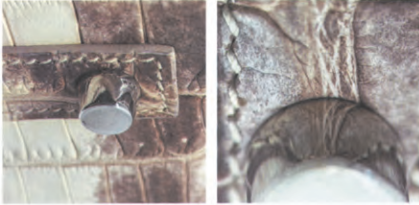 | 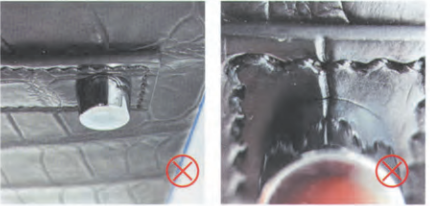 |
| The authentic bottom studs have a superior metal texture and give a feeling of being embedded in the leather. | The counterfeit bottom studs have poor metal texture, lack the sense of being embedded in the leather, and do not meet the brand’s craftsmanship standards. |
8. Heat Stamp, Blind Stamp and Special Marks
Stamps are useful supporting evidence and poor standalone proof. They are also among the most photographed and copied features in the replica market.
The front heat stamp
I compare placement, line spacing, letter proportions, embossing depth and how the mark interacts with the leather grain. A stamp can look sharper on one leather and softer on another. Excessively deep, glossy, crooked or surface-printed-looking marks can be concerning, but authentic wear, grain and previous treatment can also affect clarity.
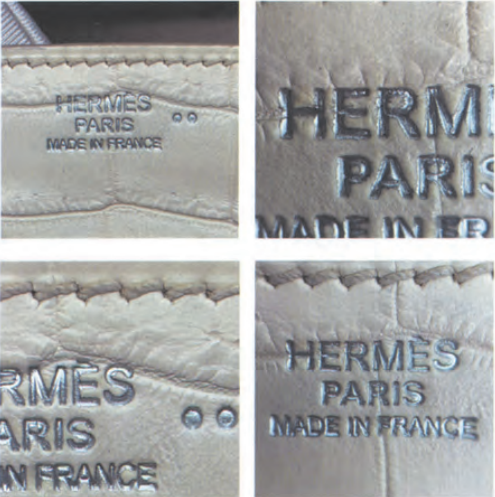 | 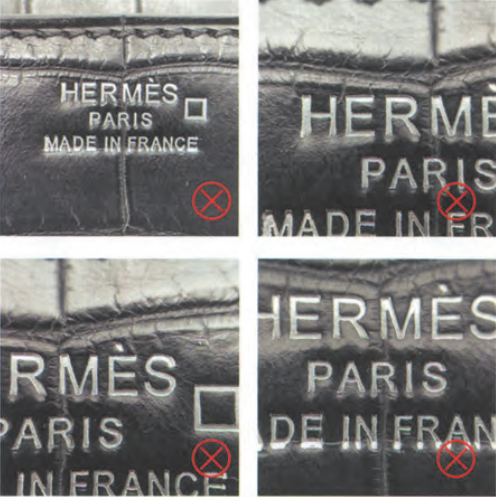 |
| For the authentic product, the font of the Paris mark in the hot stamping is larger than that of the origin mark. | On the counterfeit black crocodile leather, the Paris mark and the origin mark are of the same font size, which does not meet the brand’s craftsmanship standards. The production process of the hot stamping on the counterfeit black crocodile leather is also different from that of the authentic product—the hot-stamped characters are overall sunken, showing a stamped effect, which does not conform to the brand’s craftsmanship standards. |
Blind stamp and craftsman marks
Hermès bags use date and workshop-related marks commonly discussed as blind stamps. Their format and placement have changed, and special-order or exotic items may carry additional marks. A plausible code only shows that the maker knew a code format. It does not connect the physical bag to Hermès production records.
This is why I avoid calling the mark a conventional consumer “serial number.” The useful question is not merely whether a code exists, but whether its format, placement, production period, material and other bag details agree.
Special stamps
Horseshoe stamps, exotic-material symbols and other special marks must be supported by the corresponding construction. Christie’s notes that the horseshoe stamp signifies a Special Order bag. A horseshoe on an otherwise ordinary or internally inconsistent bag should increase scrutiny, not provide reassurance.
9. Interior Construction and Lining
The interior is often more informative than the branded front. I examine the lining fit, pocket placement, zipper installation, seam control and how the bag opens under light tension.
Common replica red flags include lining that bubbles away from the body, corners with excess material, pocket edges that are visibly uneven, a zipper panel that pulls the leather, and interior leather whose color or finish feels unrelated to the exterior reference. However, vintage use, storage, restoration and dryness can change an authentic interior, so condition must remain part of the interpretation.
I also check whether the construction matches Retourné or Sellier expectations. Exterior crispness, internal seams and lining behavior should tell the same story.
10. Dust Bags and Accessories
Packaging is the last category I review. Boxes, raincoats, booklets, receipts, locks, keys, clochettes and dust bags can all be separated from their original bag or copied. Their presence increases the amount of evidence but does not automatically increase its quality.
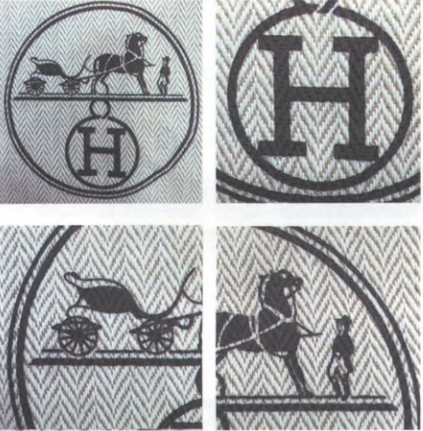 | 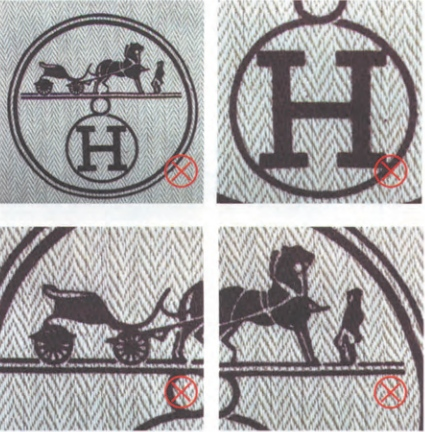 |
| The spokes of the rear wheel on the authentic carriage logo are clear and not stuck together. | The spokes of the rear wheel on the counterfeit carriage logo are adhered to each other. The color of the dust bag is significantly different from that of the authentic product, which does not meet the brand’s craftsmanship standards. |
My Birkin Replica-vs-Authentic Decision Framework
I do not count “good” and “bad” details as though every feature has equal weight. I use three evidence levels.
| Evidence level | Examples | How I use it |
|---|---|---|
| High weight | Wrong model proportions, incompatible Retourné/Sellier construction, repeated side asymmetry, materially wrong panel behavior, major hardware placement errors | Can strongly support a replica conclusion when the reference is correct |
| Medium weight | Stitching rhythm, edge finish, engraving, rivet seating, interior construction, heat-stamp execution | Most useful when several independent areas point in the same direction |
| Low weight alone | Dust bag, box, receipt image, smell, one stitch direction, one date code, protective film, seller factory claim | Never used as standalone proof |
Outcome 1: Consistent with the reference, but not authenticated
The model, construction, leather behavior, hardware, stamps and interior are mutually consistent, and no major red flag appears. That supports further specialist review; it does not prove authenticity from photographs.
Outcome 2: Inconclusive—request better evidence
The photographs are angled, overexposed, filtered or incomplete; the comparison reference is wrong; or condition and restoration could explain the differences. I request straight front/back/side/base images, interior details, hardware macros and a short function video.
Outcome 3: Multiple independent replica indicators
The bag shows model-level proportion errors plus repeated inconsistencies in stitching, edges, hardware or interior construction. A copied stamp or accessory set does not outweigh those higher-value conflicts.
This is also why seller labels such as AAA, 1:1, Mirror and Ultimate are not authentication categories. They are unregulated market terms. My broader AAA replica bags guide explains how I translate those labels into observable evidence.
Common Birkin Authentication Myths
| Myth | More reliable interpretation |
|---|---|
| Every authentic Birkin stitch leans in one direction | Evaluate long-run rhythm, holes, tension, corners and multiple components; viewing side and seam orientation matter. |
| A date code proves authenticity | Codes can be copied. Format and placement must agree with the bag’s period, leather and construction. |
| Authentic hardware is always extremely heavy | Weight varies by component and finish. Placement, machining, plating, operation and consistency are more useful together. |
| A real Birkin must smell a particular way | Odor changes with leather, storage, treatment and age. It is not a dependable authentication test. |
| Perfect stitching means authentic | Replicas can imitate neat stitching, while authentic handwork can show small variation. Construction context matters. |
| A receipt, box and dust bag prove the bag is real | Accessories can be copied, purchased separately or paired with another bag. |
| One poor detail proves a vintage bag is fake | Wear, restoration and repair must be separated from original manufacture. |
What Photos Can and Cannot Establish
Photographs are strongest for visible geometry, alignment, surface condition, stitching, edge finish and hardware placement. They are weak for leather provenance, metal composition, internal reinforcement, actual weight, smell, tactile response and historical ownership.
For remote review, I request:
- straight front and back views at bag height;
- matched left and right profiles;
- top and base views;
- handles and handle bases;
- flap underside, sangles, pontets and turn-lock;
- long stitching runs plus corners and terminations;
- front heat stamp and blind stamp in natural light;
- interior pocket, zipper and lining corners;
- a short video showing the turn-lock, zipper and bag opening.
A serious authentication decision should also consider provenance, purchase history, restoration, condition and an in-hand specialist examination. Christie’s and Sotheby’s both describe craftsmanship, materials, stamps, hardware and provenance as connected parts of authentication—not isolated shortcuts.
FAQs
What makes the Hermes Birkin bag so iconic?
The Birkin represents timeless French craftsmanship, created by Hermès artisans who hand-stitch each bag using traditional saddle techniques — a process that can take over 20 hours.
How can I tell if a Hermes Birkin bag is real or a replica?
Look at the stitching angle, heat-stamped logo, and hardware texture. Authentic Hermès bags use matte waxed thread, recessed rivets, and finely hand-polished metalwork.
Are AAA Hermes Birkin replicas worth buying?
High-quality AAA replicas can be an ethical, affordable way to appreciate Hermès craftsmanship. They’re ideal for collectors who value artistry but prefer responsible luxury alternatives.

20 comments
This was such an eye-opening read! I never realized how much craftsmanship goes into a real Birkin. The comparison between authentic and AAA replicas helped me understand why good replicas can still feel luxurious.
Thanks so much, Emily! That’s exactly why we focus on education — to help buyers appreciate what makes both authentic and AAA Hermes bags so special. We’re glad you found it insightful. 💛
This was such an eye-opening read! I never realized how much craftsmanship goes into a real Birkin. The comparison between authentic and AAA replicas helped me understand why good replicas can still feel luxurious.
Thanks, Emily. I’m trying to keep the guides evidence-led: observations from a sample are separated from background/reference information, and no single detail is treated as universal. That makes the conclusions narrower, but more useful when someone is comparing a specific bag.
I own a Birkin 30 replica from a trusted seller, and after reading this, I checked the stitching — it actually follows the “/” pattern you described! Great validation that I got a high-quality piece.
We love that, Sophie! Paying attention to the stitching and edge finishing is such a smart way to assess quality. Thanks for sharing your experience — it helps other readers too! ✨
I own a Birkin 30 replica from a trusted seller, and after reading this, I checked the stitching — it actually follows the “/” pattern you described! Great validation that I got a high-quality piece.
I appreciate the note, Sophie. Stitch direction can be useful, but it isn’t a standalone authentication rule. I look at spacing, tension, starts and finishes, seam transitions and consistency across the whole bag, ideally against the same model and period.
I appreciate how balanced this article feels. It doesn’t shame people for choosing replicas, but instead teaches what quality really means. That’s rare in the fashion world!
Thank you, Hannah — that’s exactly our goal. We believe everyone deserves to understand true craftsmanship, whether they’re collectors or simply curious about Hermes design. 💬
I appreciate how balanced this article feels. It doesn’t shame people for choosing replicas, but instead teaches what quality really means. That’s rare in the fashion world!
Glad this was useful, Hannah. I’m trying to keep the guides evidence-led: observations from a sample are separated from background/reference information, and no single detail is treated as universal. That makes the conclusions narrower, but more useful when someone is comparing a specific bag.
This guide is better than most YouTube videos I’ve seen on the topic. I especially liked the section about hardware — the engraving details are spot on.
We’re so happy to hear that, Olivia! The hardware really tells the story of Hermes’s heritage. Keep an eye out for our upcoming visual guide to metal engraving differences — you’ll love it. 🔍
This guide is better than most YouTube videos I’ve seen on the topic. I especially liked the section about hardware — the engraving details are spot on.
Thanks, Olivia. I’m trying to keep the guides evidence-led: observations from a sample are separated from background/reference information, and no single detail is treated as universal. That makes the conclusions narrower, but more useful when someone is comparing a specific bag.
I’ve been debating whether to buy an AAA Hermes replica or save up for a pre-loved authentic one. This helped me see both sides clearly — thank you for the honest perspective.
That’s such a thoughtful question, Jessi! Both choices can be meaningful, depending on what you value — craftsmanship, ethics, or affordability. We’re happy our guide could help you weigh the options with confidence. 🌸
I’ve been debating whether to buy an AAA Hermes replica or save up for a pre-loved authentic one. This helped me see both sides clearly — thank you for the honest perspective.
I appreciate the note, jess.l. I treat “AAA,” “mirror,” “superfake” and similar labels as unstandardized market language, not objective grades. The more reliable comparison is the actual sample: materials, geometry, construction, hardware, measurements and clear QC evidence.