Table of Contents
Updated July 2026. The first version of this page tried to cover Hermès history, craftsmanship, pricing, social status and the entire replica market at once. It also leaned too heavily on the phrase “smart luxury.” That made the article broad, repetitive and more promotional than analytical.
I have rebuilt it around one narrower question: why does interest in Hermès replica bags remain resilient even when the wider luxury market slows down? This is a market-and-demand review, not a model ranking, leather encyclopedia or factory recommendation. Those jobs now belong to the dedicated ReinaLuxe guides linked later in the article.
Table of Contents
How to Use This Market Review
Three different subjects are often collapsed into one conversation:
- Authentic-market demand: Hermès revenue, production capacity, store distribution and resale performance.
- Replica-market demand: the reasons some buyers seek an alternative, including access, price, use case and model symbolism.
- Item-level quality: whether one exact bag, in one exact size, leather and batch, is well made.
The first can be supported with company and resale data. The second can be discussed through buyer behavior and recurring questions, but there is no transparent global sales database for Hermès replicas. The third can only be assessed from the actual item and its evidence package. Keeping those layers separate is the main difference between this article and the older version.
My working rule: use interest in authentic Hermès to understand the design’s appeal, then evaluate a replica’s model, material specification and current-unit QC separately.
What Changed Since the Original Version
The original article treated replicas as a straightforward democratization of luxury. I no longer think that framing is sufficient. It sounded confident, but it avoided the difficult parts of the market: unstable sourcing labels, inconsistent batches, customs exposure, weak remedies and the gap between promotional photos and the item actually shipped.
I have therefore removed or rewritten four types of claim:
- The idea that buying a replica is automatically more ethical or sustainable than buying authentic or secondhand.
- The claim that replicas are broadly “accepted” or legally uncomplicated in most countries.
- The suggestion that modern replicas are routinely indistinguishable to experienced collectors.
- The assumption that genuine leather, hand-looking stitches or heavy hardware are enough to establish high quality.
The replacement is not anti-replica. It is simply more useful: explain why demand exists, identify what the market narrative leaves out, and route the reader to model-specific evidence rather than emotional slogans.
Why Hermès Demand Remains Resilient
1. Authentic Demand Is Still Visible
Hermès is not behaving like a brand whose leather-goods demand has disappeared. In its first-quarter 2026 report, the group recorded €4.1 billion in revenue, while Leather Goods and Saddlery grew 9% at constant exchange rates. Hermès linked that performance to collection desirability and increased production capacity, and it inaugurated its twenty-fifth leather-goods workshop in April 2026. The company report is useful evidence of continued demand and capacity expansion.
That does not mean every shopper faces a formal multi-year waiting list, nor does it prove that every Birkin or Kelly is unavailable. Store allocation, customer history, geography, size, leather and color all affect access. The defensible conclusion is narrower: Hermès is expanding production while maintaining a highly controlled distribution model, and demand for leather goods remains strong.
2. Heritage Still Functions as Demand Infrastructure
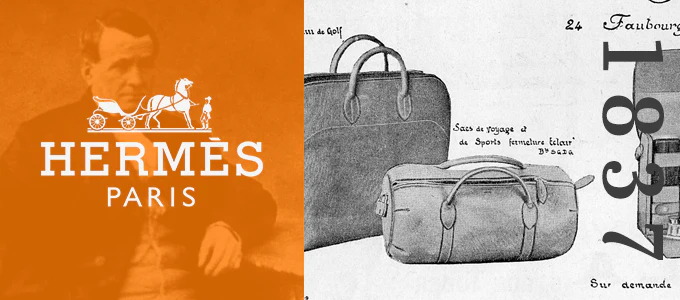
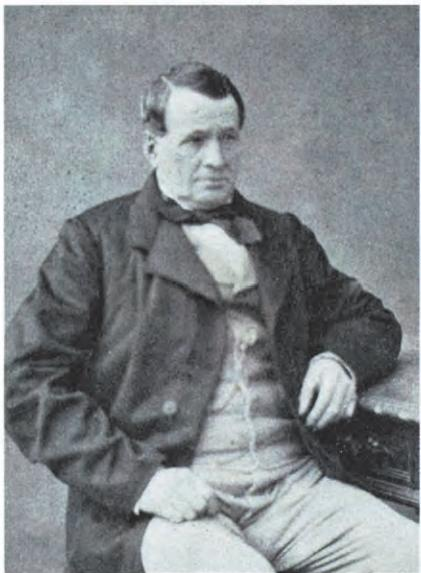
The Birkin and Kelly are not only expensive bags. They are unusually stable visual codes. The house traces its origins to Thierry Hermès’s 1837 harness workshop; the Kelly developed from a Robert Dumas design of the 1930s and became globally associated with Grace Kelly in 1956, while the Birkin was created after Jean-Louis Dumas met Jane Birkin in 1984. Hermès presents this history as part of a six-generation craft narrative.
For the replica market, the important point is not nostalgia by itself. It is design recognition. A Birkin 25, Kelly 28, Mini Kelly, Constance or Lindy communicates a distinct silhouette before the viewer examines stitching or hardware. That recognition keeps demand broader than one seasonal trend.
3. Resale Performance Amplifies Attention—But Must Be Read Carefully
Rebag’s 2025 Clair Report placed Hermès at 138% average value retention on its platform. That is a strong signal of authentic resale demand, but it is not a universal valuation for every Hermès bag and it says nothing directly about replica resale value. The report should be used as resale context, not as proof of replica-market performance.
What resale premiums do change is the buyer’s reference point. When the authentic alternative is not simply retail price but retail access plus secondary-market premium, the gap between admiration and acquisition widens. Replica interest grows inside that gap, even though the replica itself has no comparable investment case.
4. A Wider Luxury Slowdown Encourages More Rational Comparison
Bain estimated that the personal luxury goods market fell 2% at current exchange rates in 2025, while projecting a gradual recovery in 2026. It also described a structural shift toward experiences and a “less but better” mindset. That broader context helps explain why buyers are scrutinizing price, use and meaning more carefully.
Hermès is unusual because it can remain resilient while the category around it becomes more price-sensitive. This polarization supports several different behaviors at once: buying authentic, buying pre-owned, choosing an unbranded inspired design, or entering the replica market.
Four Mechanisms Behind Replica Interest
Access Friction
The demand is not created by price alone. Some buyers could save for an authentic bag but do not want to navigate boutique allocation, purchase history or uncertain availability. Others want a specific combination—such as size, leather, color and hardware—that is difficult to obtain on demand.
Price-to-Use Mismatch
A buyer may admire a Birkin or Kelly but dislike the idea of carrying a five-figure object through airports, offices, restaurants or daily commutes. In my conversations and review work, this is a more persuasive demand driver than the old phrase “affordable luxury.” The issue is not simply affordability; it is whether the authentic price matches the intended routine.
Model Symbolism
Hermès offers several kinds of recognition. The Birkin is the clearest status silhouette. The Kelly appears more formal and architectural. The Mini Lindy is easier to integrate into a casual, hands-free routine. The Kelly Danse emphasizes carry flexibility. Buyers are often shopping for one of these identities rather than for “Hermès” in the abstract.
Online Evidence Communities
Reddit, forums, private groups and long-form reviews have made the market easier to discuss, but not automatically easier to verify. Community posts can reveal recurring defects, sizing problems and seller-service patterns. They can also recycle factory myths and confidently misidentify batches. I treat community discussion as a source of questions, not as final proof.
There Is Not One Hermès Replica Market
The term “Hermès replica bag” covers products with radically different intentions and evidence standards. A useful market map separates at least four routes:
| Market route | What usually drives the sale | Main risk | Evidence worth requesting |
|---|---|---|---|
| Logo-led low-cost | Immediate visual recognition and low price | Weak proportions, construction and after-sales remedy | Actual-item photos, dimensions and a basic closure video |
| Model-focused mid-tier | A recognizable Birkin, Kelly, Lindy or Constance configuration | Seller tier labels replacing item-level proof | Current-batch PSPs, whole-bag geometry and hardware function |
| High-tier workshop route | Leather behavior, cleaner construction and more configuration choices | Unverifiable factory or tannery claims | Natural-light leather video, edge and stitch macros, exact measurements |
| Custom or handmade-claim route | Specification control and visible handwork | Paying for a process without supporting documentation | Written specification, work-in-progress evidence where available, remedy terms |
Labels such as AAA, top tier, Ultimate Tier, handmade and 1:1 are not regulated grades. They may be useful search language, but they must be translated into observable requirements. This is why the market article stops here and the technical guides take over.
What Buyers Ask Now
The older market conversation centered on whether a replica was “good enough.” The more useful 2026 questions are narrower:
- Which exact model and size fit my routine?
- How should that leather behave on that model?
- Are the photos from the item I will receive or from a reusable catalog?
- Can the seller show the closure, strap, clips, zipper and base under continuous video?
- Which defect would justify replacement, repair, discount or rejection?
- What happens if customs, transit damage or a configuration error prevents delivery?
In other words, the buyer has moved from category language to specification language. That is a healthy development because Hermès replicas are unusually sensitive to model, leather, structure and handling. A strong Birkin batch does not automatically imply a strong Mini Lindy or Kelly Danse.
Market Signals and Model Choices
| Signal | What it can support | What it cannot support |
|---|---|---|
| Hermès revenue and workshop expansion | Authentic demand and controlled capacity growth | Replica sales volume or the quality of any seller |
| Authentic resale retention | Secondary-market attention and scarcity premiums | Replica investment value or resaleability |
| Community review volume | Recurring buyer interest and possible defect patterns | A representative market share estimate |
| Factory or workshop name | A routing clue for comparison | Identity, current batch or consistent quality |
| PSP photos | Visible condition, geometry and photographed workmanship | Unseen construction, tannery origin or full handmade status |
| Seller price | A transaction fact for that offer | A standardized tier or guaranteed quality level |
My 2026 Market Interpretation
I do not expect interest in Hermès replicas to disappear simply because authentic production expands. Capacity growth is gradual, while the brand’s controlled distribution, recognizable models and resale premiums continue to preserve a large aspiration gap.
What is changing is the buyer’s tolerance for vague claims. “Same leather,” “fully handmade,” “best factory” and “mirror quality” are less persuasive once buyers understand that the same route can produce different outcomes across models and batches. The market is likely to remain commercially strong, but the better-informed segment will demand more item-level evidence and clearer remedies.
That is also the correct role for ReinaLuxe. This page explains the demand structure. It should not repeat the model map, leather behavior, sample review or authentication content already covered elsewhere.
Where to Go Next
- For the broad decision framework, compare Birkin, Kelly, Constance, Lindy, Mini Kelly and Picotin in the Best Hermès Replica Bags: Model, Leather & Craft Guide.
- For a sample-led comparison, read the Birkin 25, Mini Lindy and Kelly Danse 2026 QC review.
- For authentication-oriented questions, route the item to the relevant real-versus-fake reference guide; a replica buying review is not an authentication certificate.
Does strong Hermès resale performance prove strong replica demand?
No. It supports the conclusion that authentic Hermès has strong secondary-market attention. Replica demand is a plausible downstream effect of scarcity and price gaps, but there is no transparent global replica sales dataset that quantifies it.
Is a factory or workshop name enough to choose a Hermès replica?
No. Treat the name as a routing clue. Confirm the exact model, size, leather, hardware, current batch, actual-item PSPs, functional video and remedy terms.
Are Hermès replicas automatically a form of “smart luxury”?
“Smart luxury” is an editorial description, not a legal, ethical or quality standard. A purchase can only be evaluated against the buyer’s priorities, the evidence for the item, the transaction risk and the laws that apply.
Is it legal to buy or import a Hermès replica for personal use?
The answer depends on jurisdiction, import method and quantity. Do not rely on a blanket statement. For example, U.S. Customs describes a narrow traveler-accompanied personal-use exemption, while counterfeit shipments may still be seized. Check current local rules before ordering.
Which Hermès guide should I read after this market review?
Use the model, leather and craftsmanship guide for broad selection, then the Birkin 25, Mini Lindy and Kelly Danse review for sample-specific QC and function checks.
Conclusion
Hermès replica demand is best understood as the interaction of authentic desirability, controlled access, resale premiums, recognizable model codes and increasingly rational buyer behavior. None of those forces removes the legal or transaction risk, and none can establish the quality of a particular bag.
The practical conclusion is therefore more restrained than the old “freedom of choice” narrative: understand why the market exists, then leave the actual purchase decision to model-specific evidence.

1 comment
Greate post. Keep writing such kind of information on your site.
Im really impressed by your blog.
Hi there, You have performed a great job.
I’ll certainly digg it and individually suggest to my friends.
I am confident they will be benefited from this web site.