
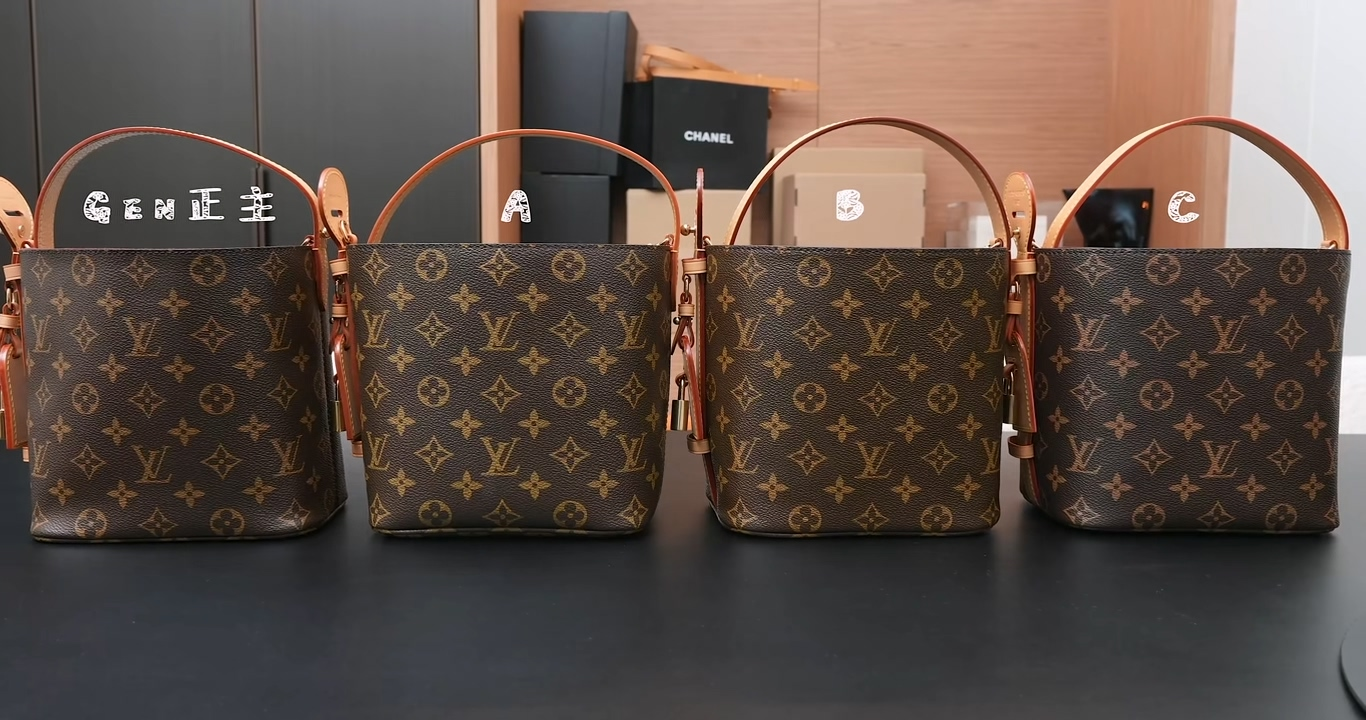
I put the canvas surface and hardware finish first, then compare the recorded weights and chip readings. The close-ups below show how these details differ across the authentic reference and replica samples A, B and C. Those specific comparisons interest me more than the number of A’s in a listing.
The useful questions are concrete: how does the print meet the panel edge, how are the letters engraved, and which parts and weighing conditions belong to each recorded result? I follow those details through the sample set, keeping the observations tied to the bag or component shown.
This comparison examines authentic Louis Vuitton craftsmanship alongside replica samples labelled Piece A, Piece B and Ultimate Piece C, focusing on canvas texture, hardware engraving, chip readings and physical weight. The observations belong to these samples; Top Tier and Ultimate Tier are market descriptions, not fixed technical grades. I use the differences to compare construction, not to set a universal authentication rule.
1. Redefining the Market Tiers: Top Tier vs. Benchmark Tiers
Before examining microscopic details, it is essential to establish the exact scope of this study. Rather than presenting generic, industry-wide tier definitions, this analysis compares four physical specimens evaluated side by side under consistent laboratory macro lenses and digital scales:
- Authentic Reference: A verified boutique specimen used as the structural and macro-optical benchmark for all measurements, engravings, and canvas dot matrices.
- Replica Piece A: An entry-level market replica representing standard commercial reproduction, frequently exhibiting visible compromises in canvas coating, weight distribution, and generic hardware components. For context on broader market terminology, see our guide on understanding AAA replica bags.
- Replica Piece B: An intermediate-level replica that attempts higher surface texture resolution but retains telltale shortcuts in print geometry, screw base tooling, and hardware plating. See our analysis of LV replica market trends for historical perspective.
- Replica Piece C: A specialized high-tier specimen engineered to mirror authentic weight tolerances, screen-printed dot geometry, and multi-piece hardware assemblies. The observations below detail where Piece C closely approximates the authentic reference—and the subtle execution discrepancies that still distinguish it.
2. Material Science: The Canvas and The “Thief Light” Phenomenon
The tactile behavior of Louis Vuitton’s classic coated canvas is technically demanding to replicate. The exact texturing, grain depth, and surface curing balance durability with a distinct matte luster. If you want to understand the base materials used across all collections, our Louis Vuitton materials guide provides an excellent prerequisite.
The Micro-Texture Analysis
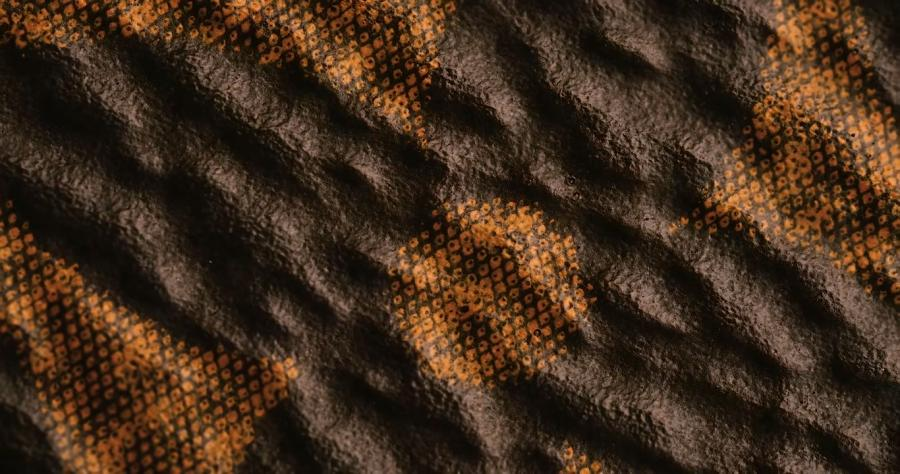
- Authentic Canvas: When examined under a macro lens, the reference sample’s coated canvas features deep, irregular pores and wrinkles that heavily resemble the surface of volcanic rock. This specific texture creates a diffuse reflection, ensuring the surface absorbs light rather than reflecting it harshly, resulting in a soft, restrained gloss.
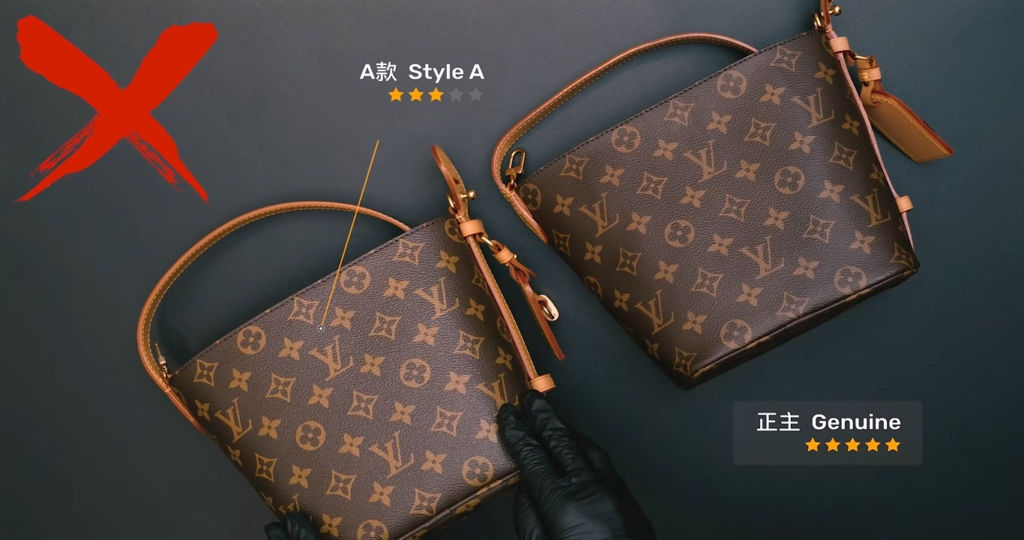
- Mass-Produced Top tier ( Piece A & B): * Piece A: The surface is far too smooth, and the texture is stiff and lifeless. Under lighting, it produces a harsh, cheap glare—known in the industry as “thief light”—and exhibits a significant color discrepancy.
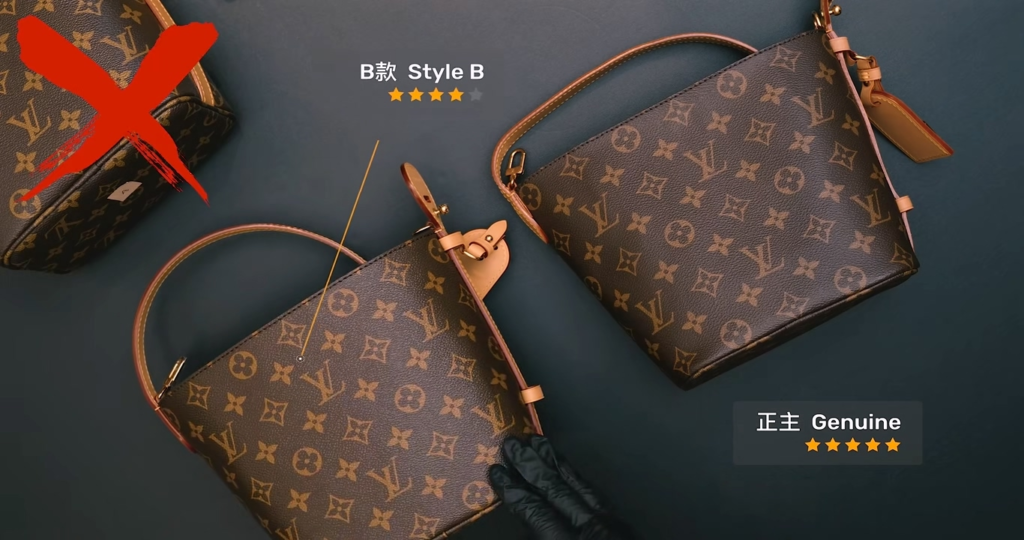
- Piece B: While it incorporates more wrinkles than Piece A and reduces the glare slightly, it remains noticeably brighter than the authentic finish.
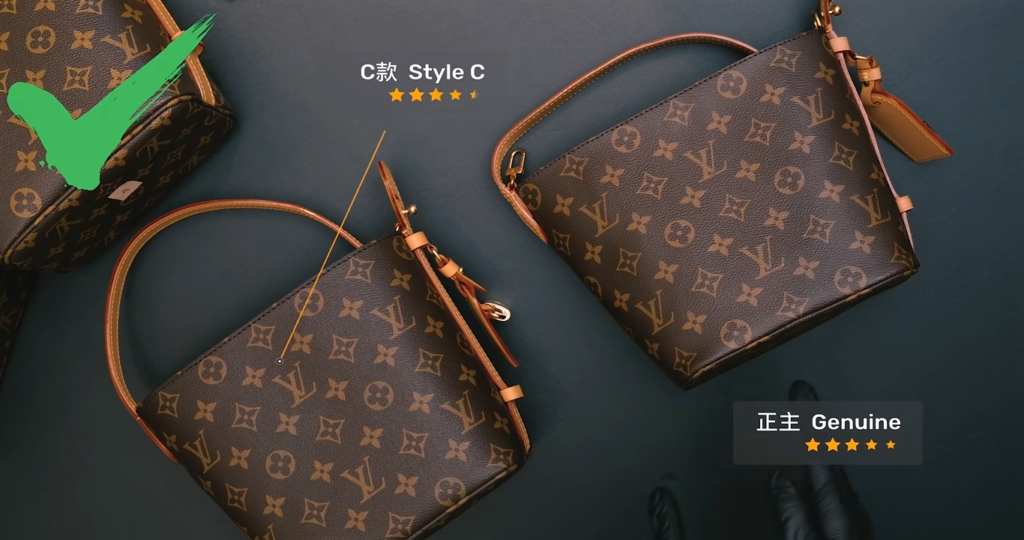
- Ultimate Piece C: This tier successfully mimics the natural, rougher texture of the genuine article. The visual details are incredibly rich, allowing Piece C to achieve a color tone and matte gloss that is practically identical to the authentic bag.
3. The Micro-Geometry of the Monogram Print
When you magnify the iconic Monogram print, the differences between authentic production and even the best replicas become mathematically evident. This is particularly vital to inspect on classic LV bags, where the Monogram is the undisputed focal point.
The Yellow Dot Matrix
- Authentic Reference: Under magnification, the yellow motifs reveal a structured micro-diamond dot matrix. Groups of small diamond-shaped dots cluster together to form the larger geometric elements, with subtle open centers visible on select dots. Along diagonal motif contours, the dots follow a graduated staircase transition from smaller edge dots to denser core clusters. The authentic print exhibits natural screen-printing characteristics: edges are crisp yet organically ink-saturated, rather than appearing artificially pixelated.
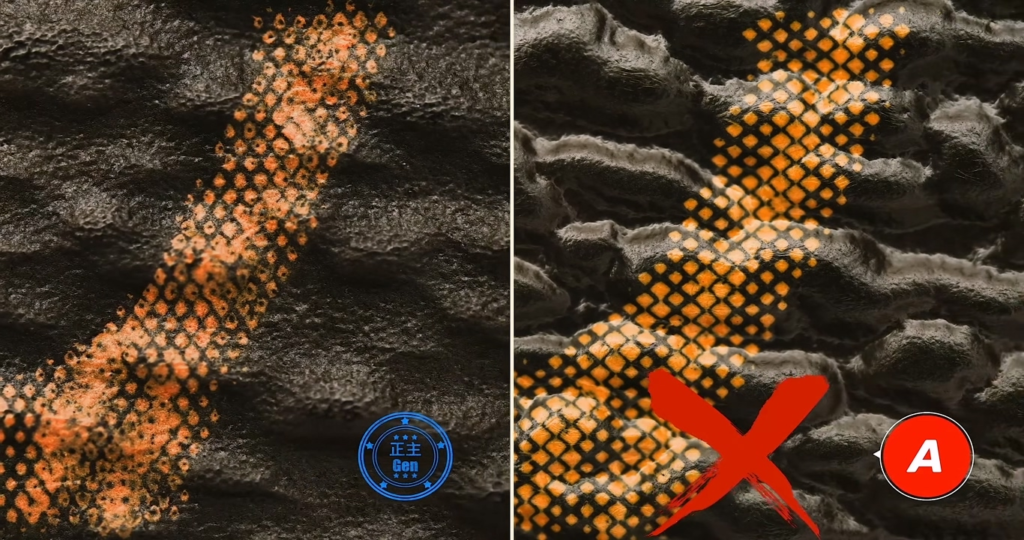
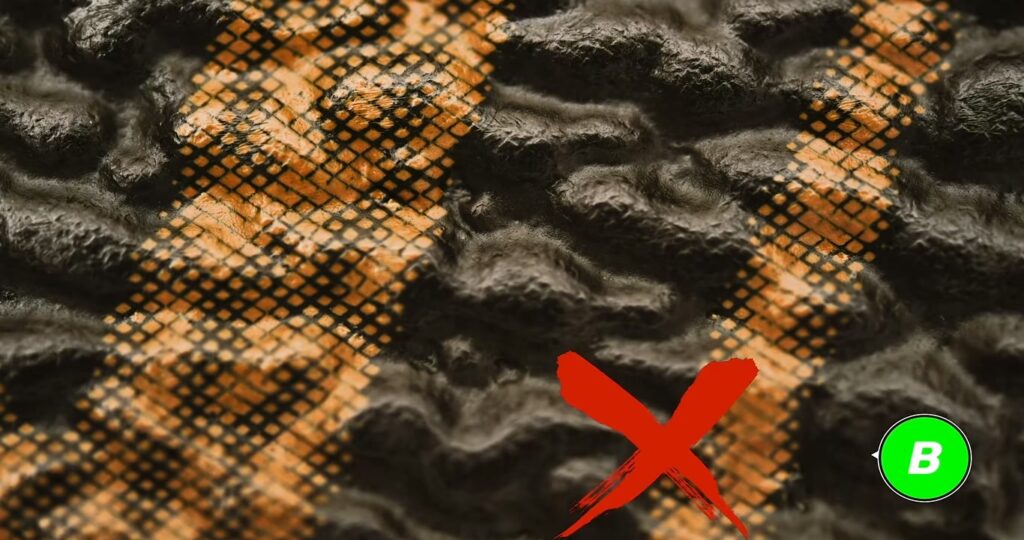
- Piece A & Piece B: Under magnification, both specimens exhibit marked discrepancies compared to the reference. Their yellow dots are printed horizontally rather than vertically, lack the subtle open centers, and form diagonal contours without the characteristic graduated staircase transition between dot sizes.
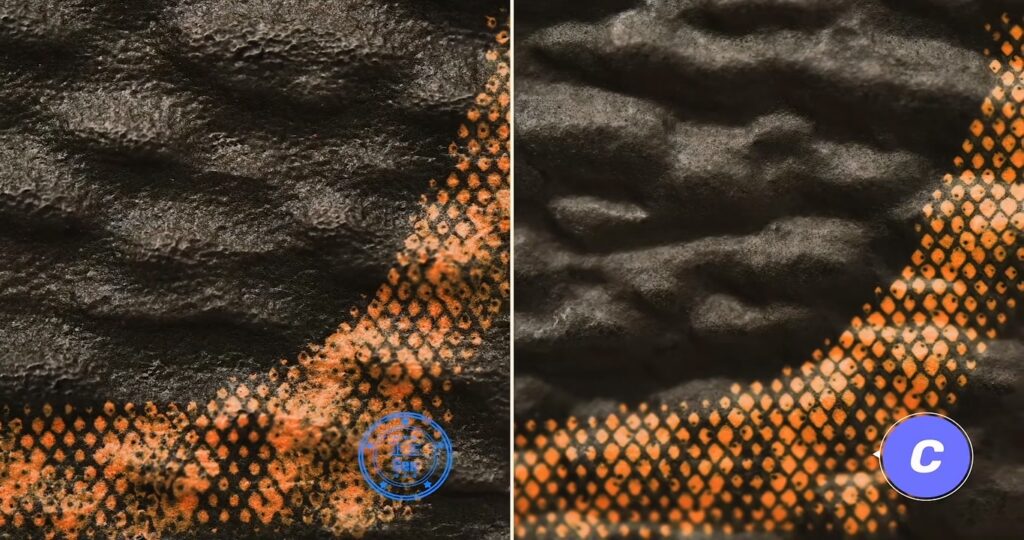
- Piece C: Replicates the vertical diamonds, the hollow black centers, and the specific staircase size gradient. However, its printing is too perfect; the dots are distributed far too evenly, missing the organic, slight blurring found in authentic pieces.
The Anatomy of the Letter “L”
Under high magnification, comparing the reference bag against the replica pieces reveals noticeable differences in screen printing resolution, dot alignment, and corner termination:
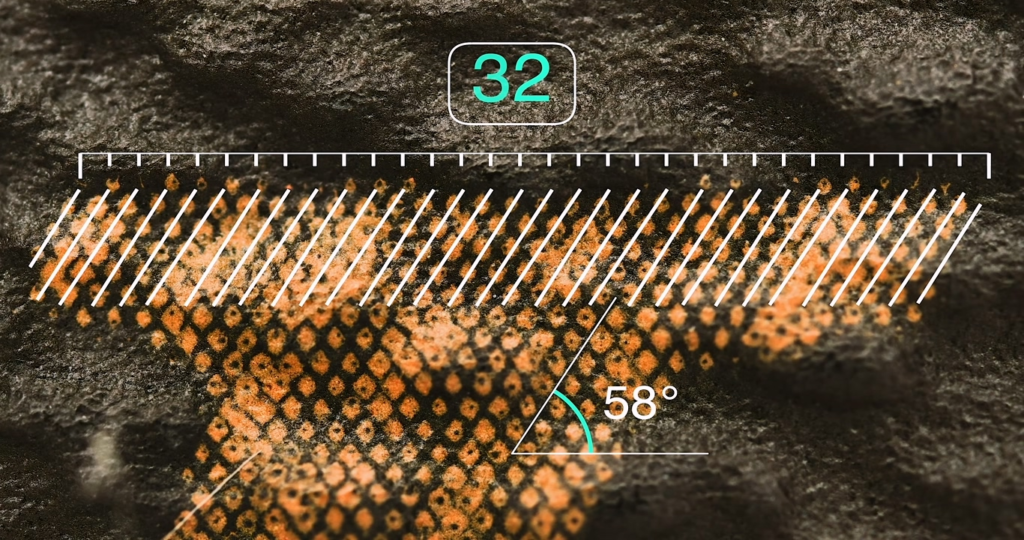
- Authentic Reference: On this reference piece, the yellow dot matrix forming the upper arm of the letter “L” follows a clean 58-degree diagonal inclination across roughly 32 micro-rows. At the base, the bottom-left hook does not terminate in a blunt cut; instead, the ink edge exhibits a subtle, organic curve where the screen lifted cleanly from the coated canvas.
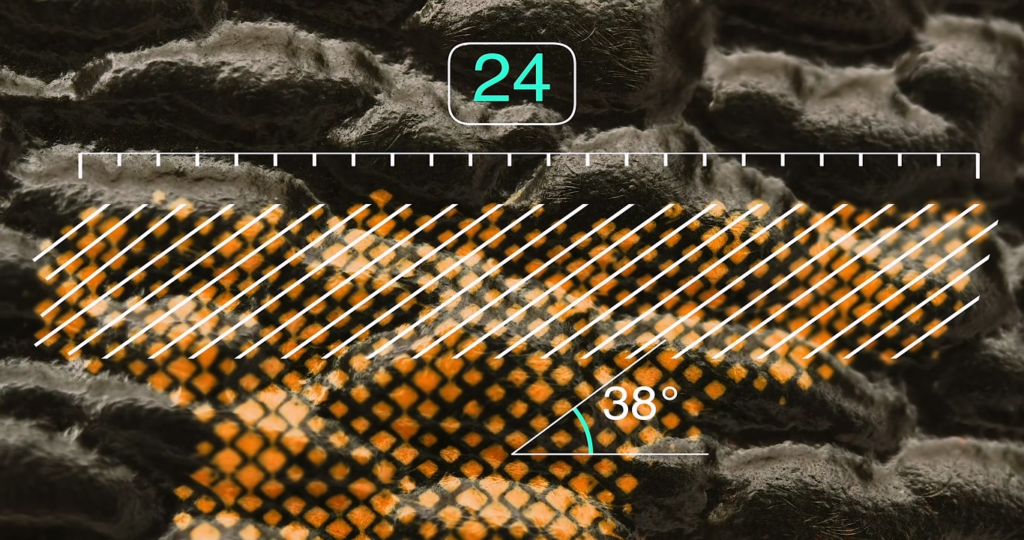
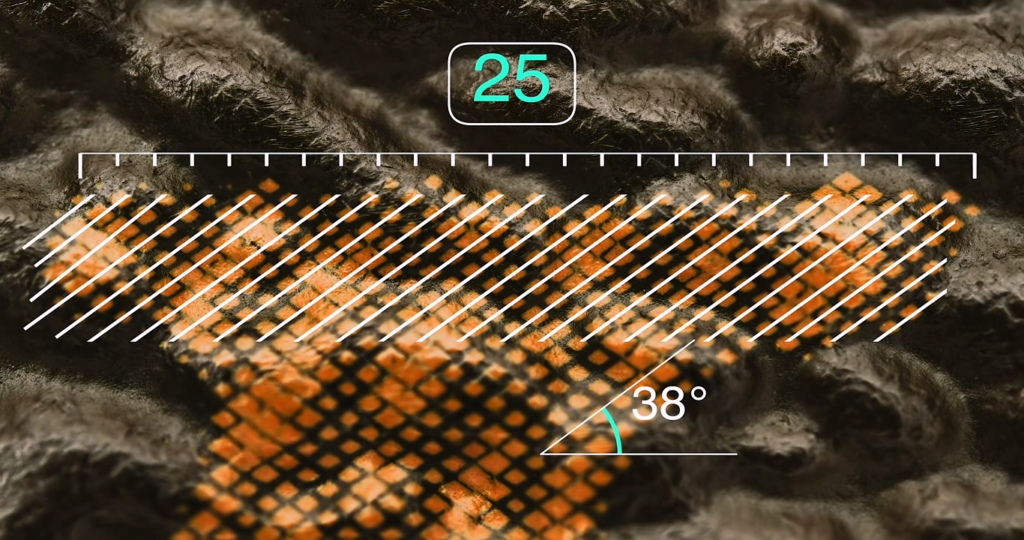
- Piece A & Piece B: On these specimens, the dot matrix within the upper stem is irregularly spaced and fails to match the diagonal orientation of the authentic sample. Additionally, the bottom termination of the “L” is bluntly squared off rather than following the subtle natural curvature observed on the reference piece.
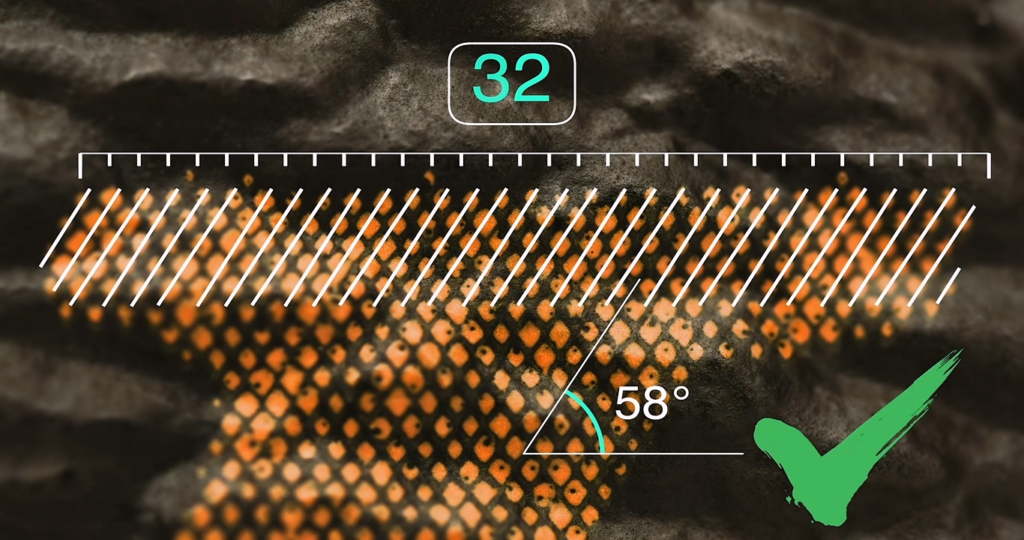
- Piece C: On this specific sample, the screen printing closely follows the authentic reference: the dot matrix inside the upper arm mirrors the recorded 32-row density and aligns with the approximate 58-degree diagonal inclination. However, under extreme magnification, Piece C displays slightly sharper, digitally defined dot perimeters that lack the subtle, organic ink bleed characteristic of authentic screen printing.
The Interior Leather Tag Details
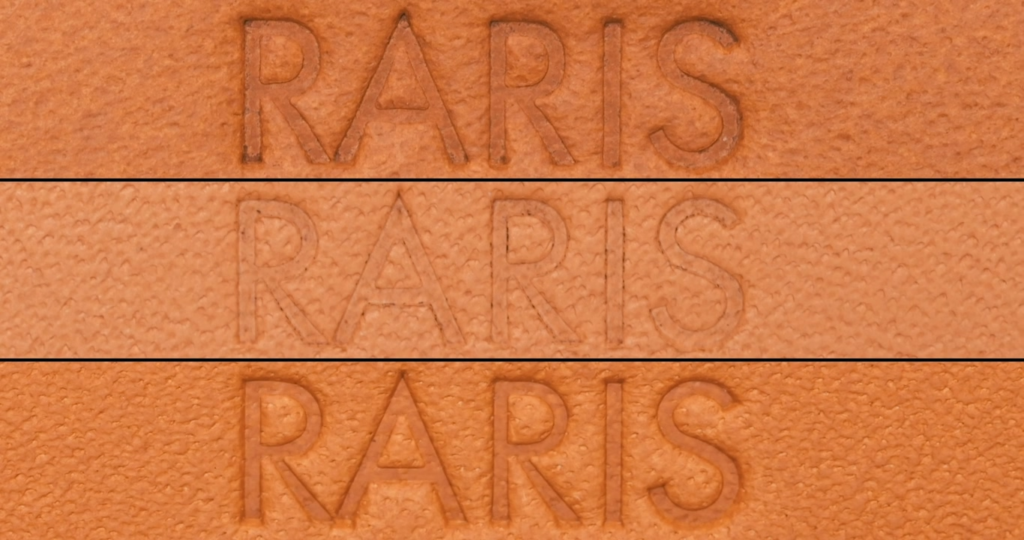
When checking the interior stamped logo, several geometric rules apply:
- The letter “S” has a smaller top circle and a larger bottom circle.
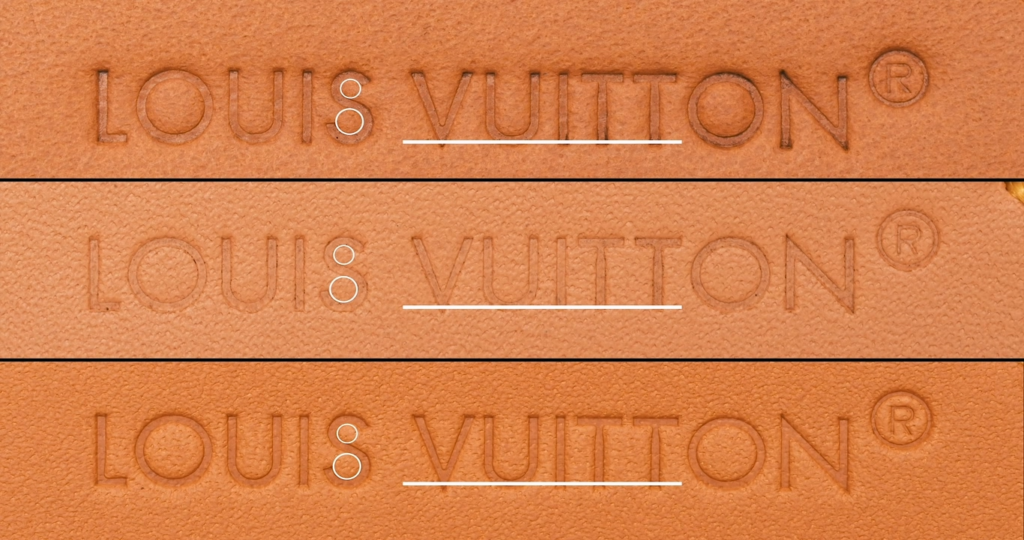
- The pointed angles of “V” and “A” protrude slightly higher than surrounding letters, and a line connecting the right side of “V” and the left side of “A” forms a straight line.
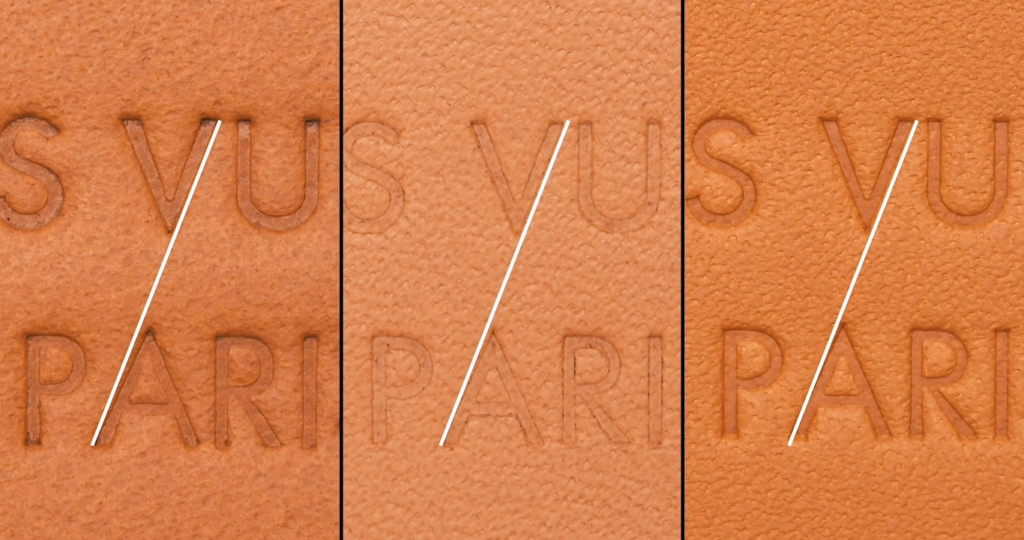
- The letter “N” has razor-sharp angles and an almost square overall shape.
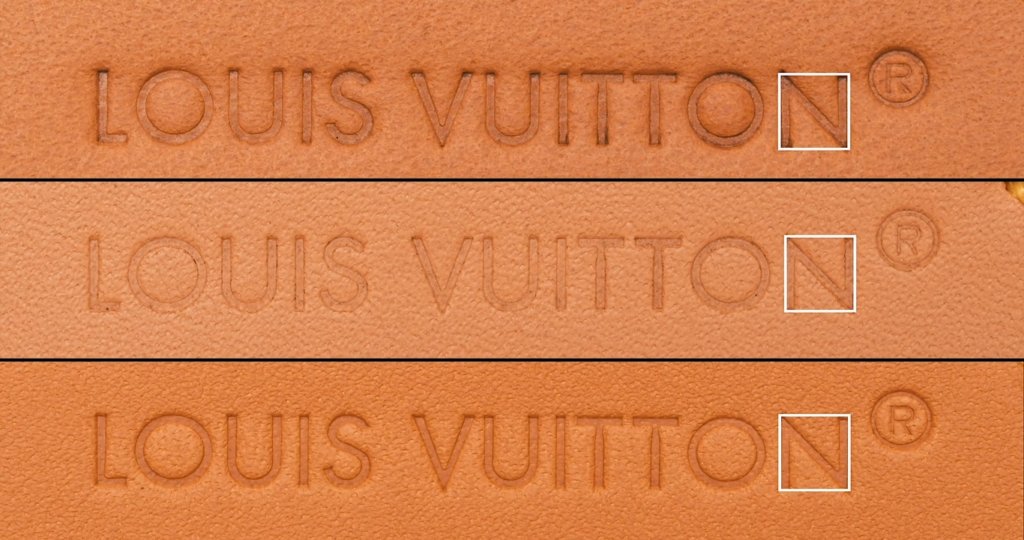
- The outer diameter of the “R” circle is smaller than the “O”.
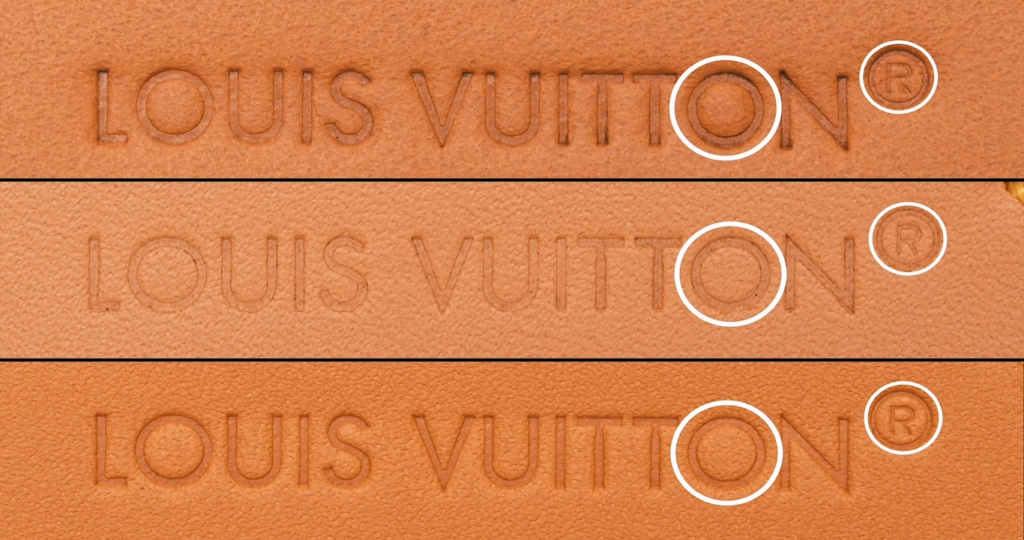
- If you add a leg to the letter “P”, it identically matches the “R”. While Piece B features a blurry stamp, Tiers A and C actually get these micro-details largely correct. For a broader understanding of how these details apply across different brands, bookmark our comprehensive LV bag authentication guide.
4. Hardware Engineering: Critical Finishing Standards
For the authentic and replica samples compared below, the hardware discussion focuses on visible engraving, edge finish, screw geometry and polishing marks. These observations do not, by themselves, establish alloy composition, manufacturing method or a bag’s authenticity.
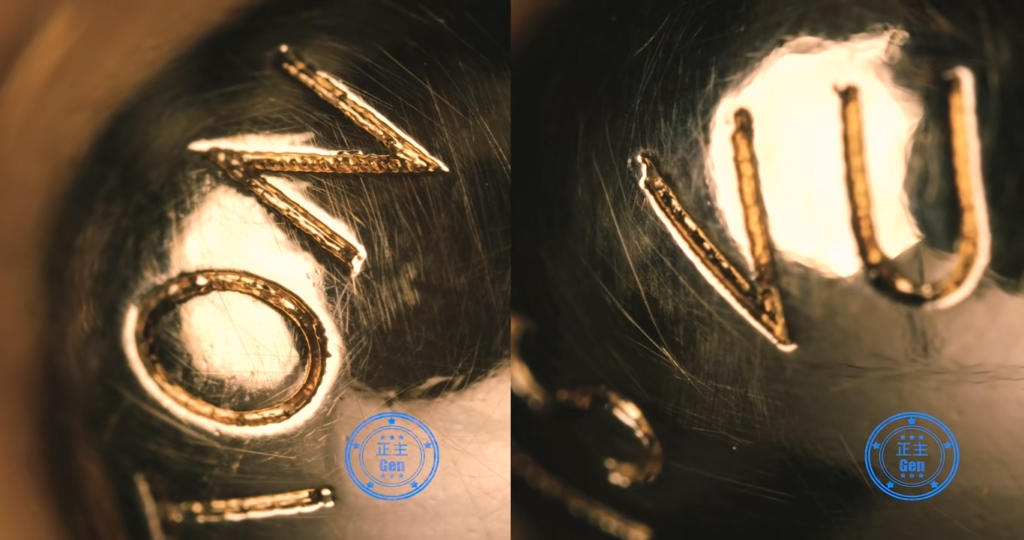
Engraving Techniques: Corrosion vs. Laser
- Authentic: The inner angles of the letters, particularly N and V, look sharply defined. The engraving has a slightly pitted lower surface. On the padlock, the LV logo edges show stamping depressions, with a subtle, wavy tree-like texture below.
- Pieces A & B: Piece A has wider, blunt letters; Piece B has thinner letters, but their inner corners still look rounded beside the reference.
- Piece C: The N and V come closer to the reference, though their inner angles look a little softer. The lock logo has the tree-like texture but lacks the same visible stamping-edge depressions.
Structural Screws and Gear Bases
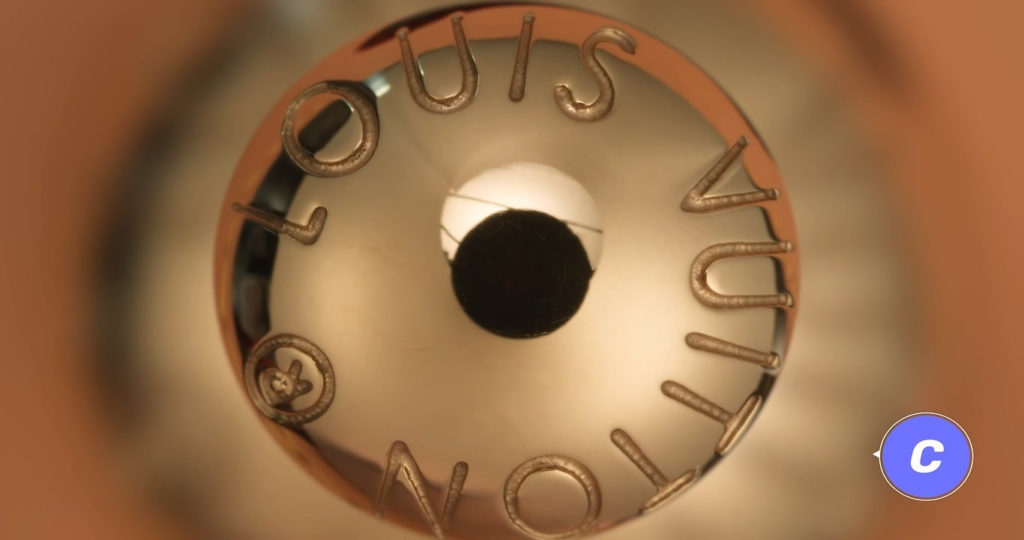
- Authentic Reference: On the inspected authentic sample, the pivot fitting secures with a 6-petal Torx-style screw seated into a gear-shaped recessed base displaying directional factory polishing. Additionally, the reverse side of the strap buckle assembly incorporates a 12-toothed circular gear base engineered for positive rotational locking.
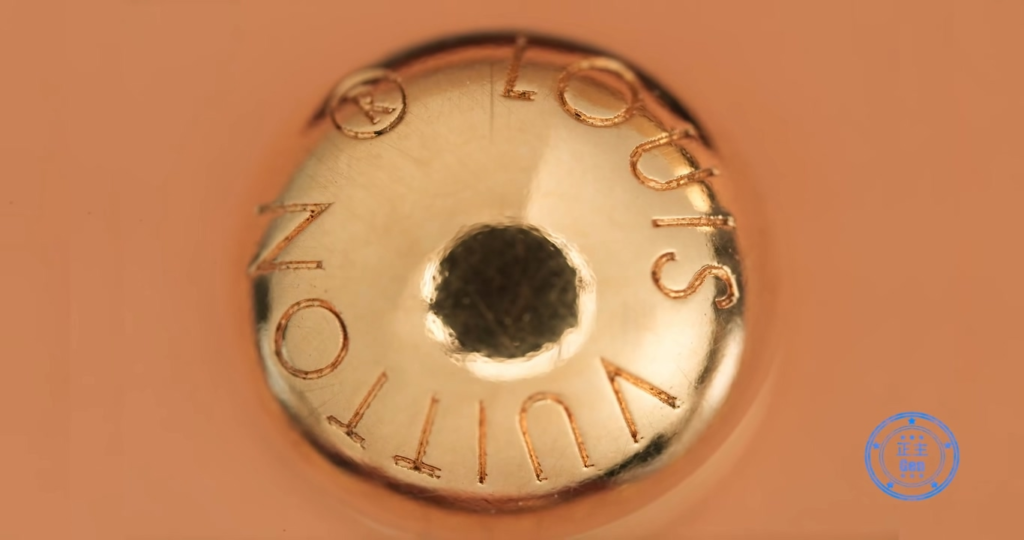
- Piece A & Piece B: Neither specimen replicates this assembly accurately. Piece A utilizes generic internal hex screws with concentric machining rings and misplaced gear indentations on the rivet head rather than the recessed base. Piece B features an imprecise Torx-like impression with a dark casting recess and omits the 12-tooth base entirely.
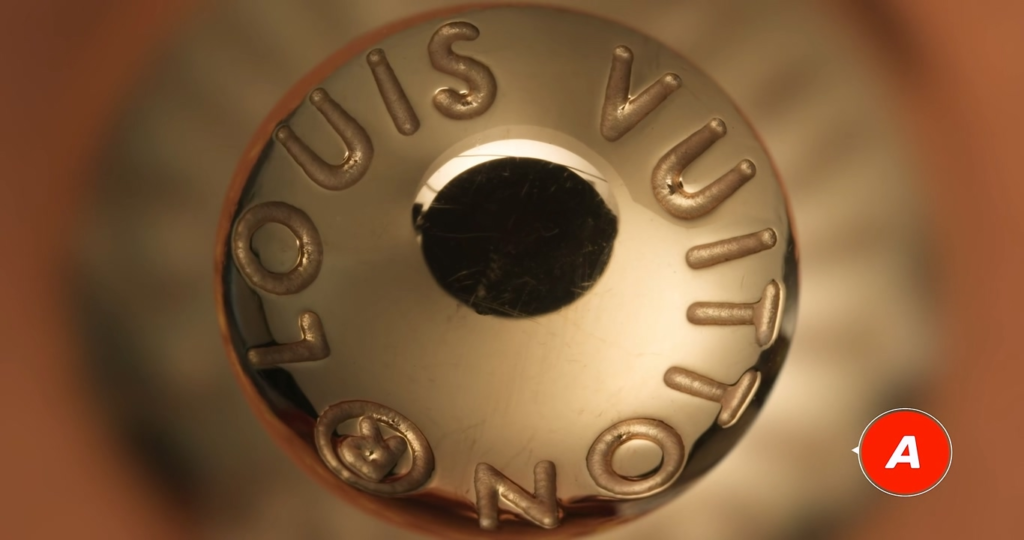
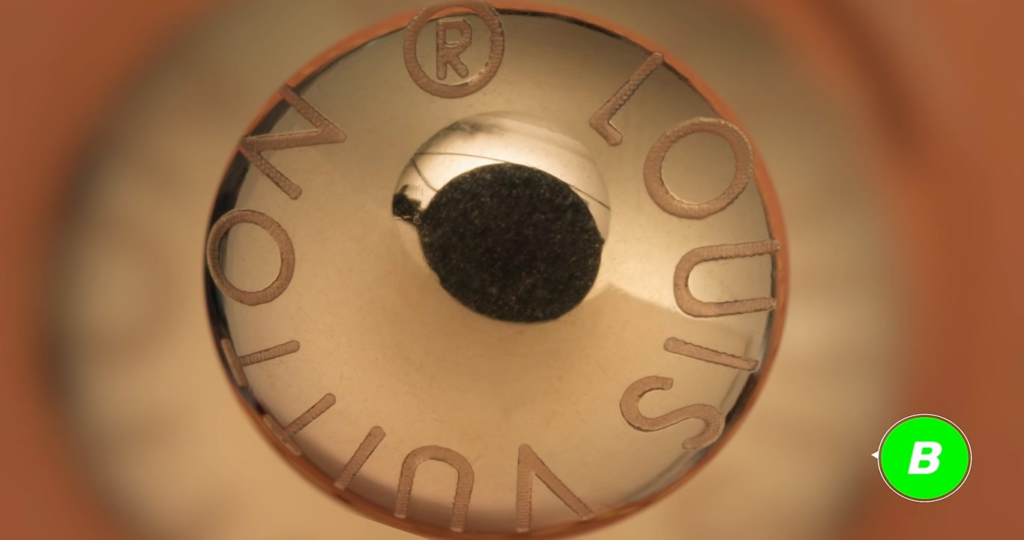
- Piece C: Piece C mirrors the authentic assembly closely, incorporating a flat, polished screw seat and accurately machining the 12 gear teeth into the strap buckle base. The primary discernible variance lies in the micro-chamfering along the outer tooth flanks, which shows slight tooling striations under directional lighting.
The Magnetic Physics Test
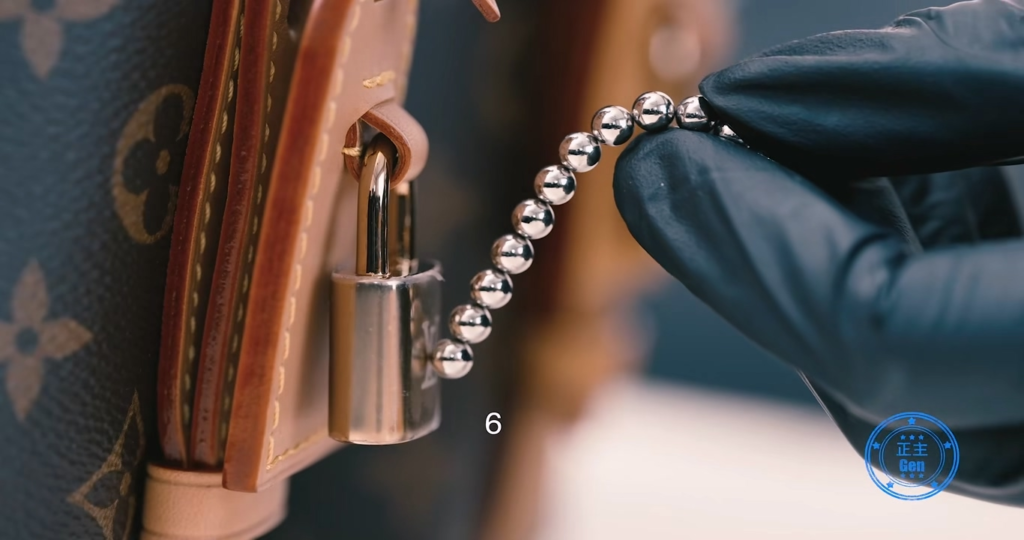
A common authentication method is testing magnetic attraction.
- Authentic & Piece C: The recorded comparison found a similarly weak magnetic pull at the padlock, no attraction at the strap rivets and buckles, and strong attraction at the internal rotational component.
Zippers and Clasps
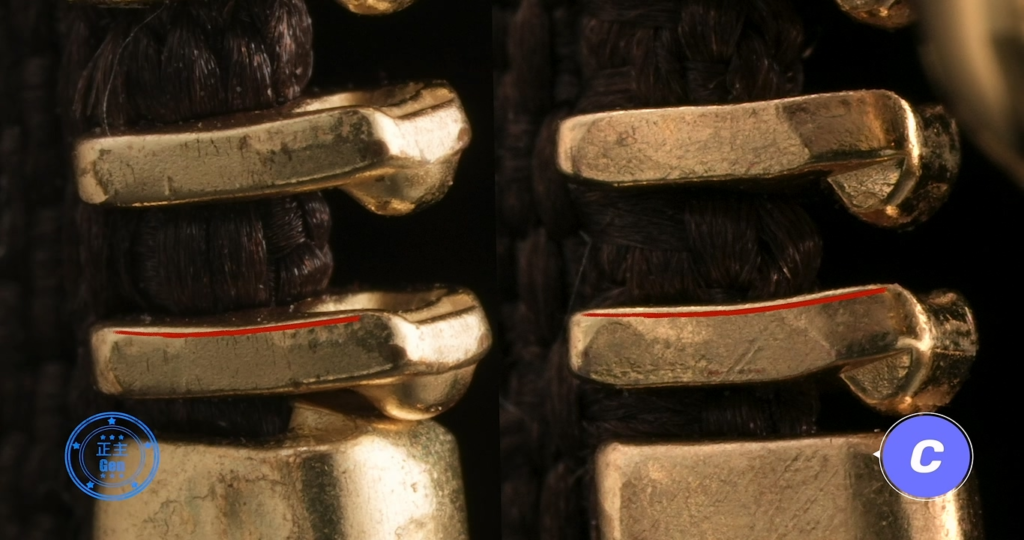
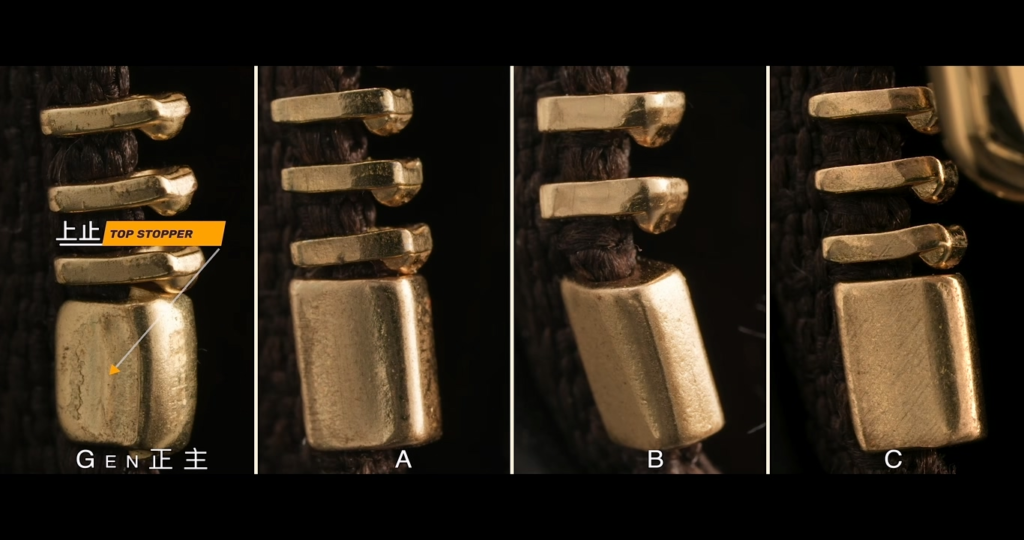
- Authentic: The zipper teeth have a distinct curved, rounded edge. The top zipper stop is the smallest and features a beautifully rounded, polished finish.
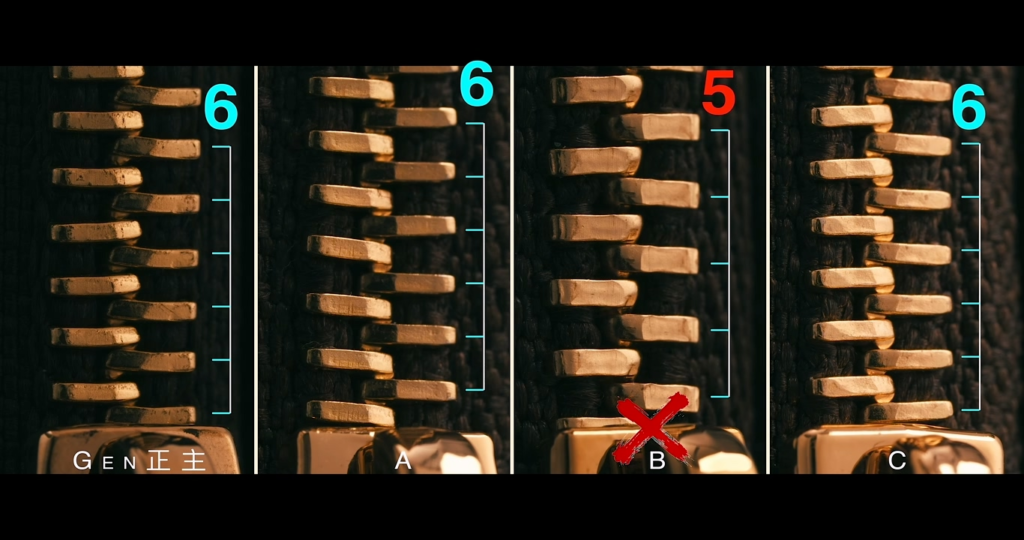
- Tiers A & B: Piece A has completely straight, flat zipper teeth. Piece B is structurally missing a tooth.
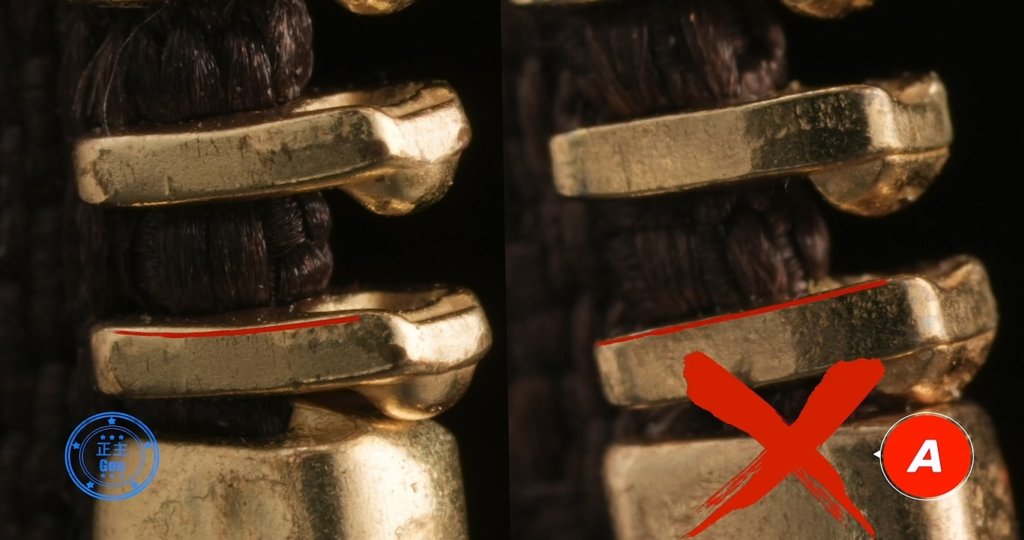
- Piece C: Achieves the curved, polyhedral structure of the authentic teeth, though the tips are not quite as perfectly rounded. Furthermore, Piece C successfully eliminates the cheap casting seams on the lobster clasp’s bite area, a massive improvement in hardware finishing.
5. The Tech Arms Race: Debunking the NFC Myth
Perhaps the most dangerous misconception in the modern luxury market is that scanning an NFC (Near Field Communication) chip guarantees authenticity. To see how tech integration varies across modern releases, view our modern LV icons review.
- The reference reading: The earlier description combined an “18-digit” output, a “first 10” segment and the seven-character prefix 0163C01. Those descriptions do not agree. Keep the original scan outputs and reader details with the sample record; this page does not establish a universal Louis Vuitton code format.
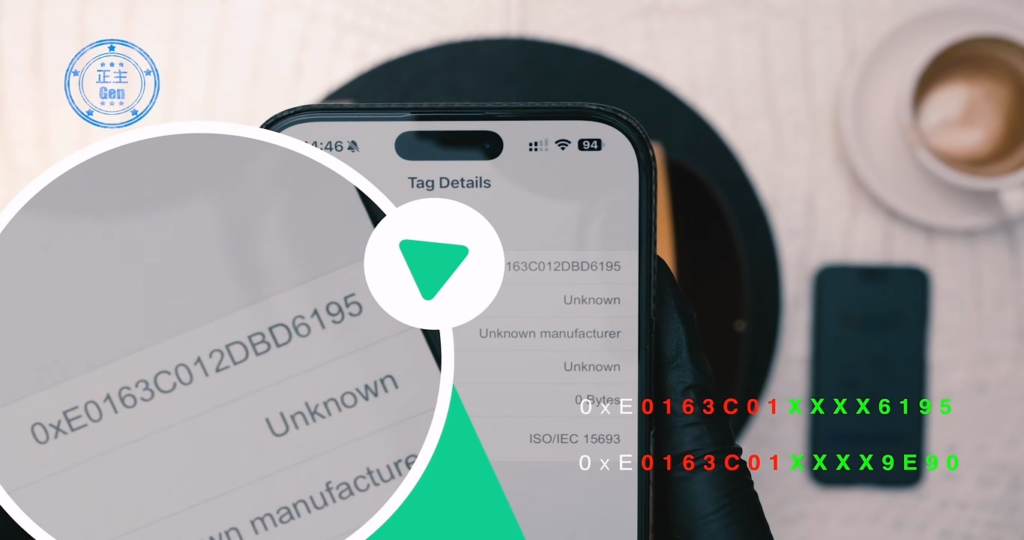
- Samples A & B: The comparison notes describe their readings as static across scans. That observation belongs to these two samples, not to every bag sold under their tier labels.
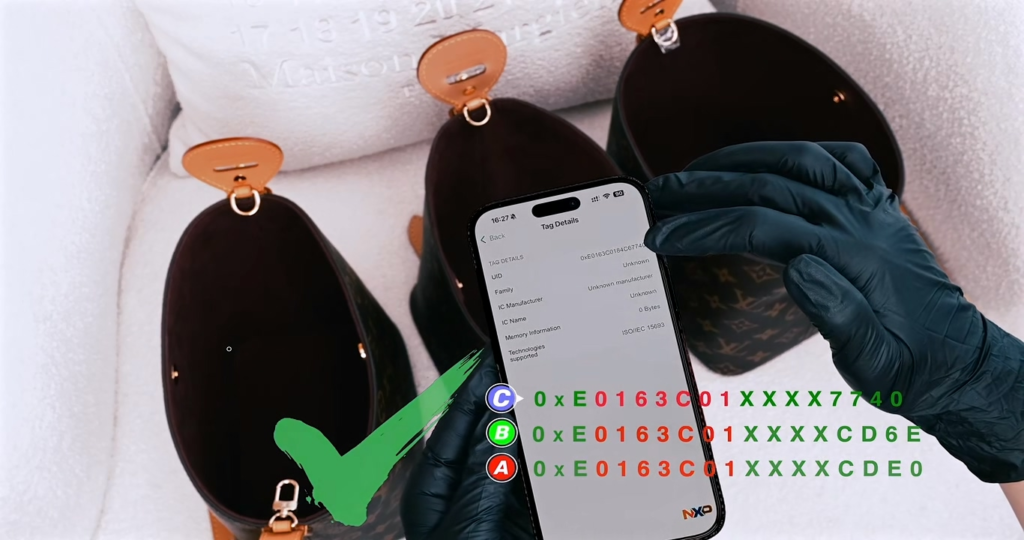
- Piece C: The comparison notes describe a changing suffix across repeated scans. A changing output by itself does not identify the chip, establish its implementation or prove that it reproduces the authentic system.
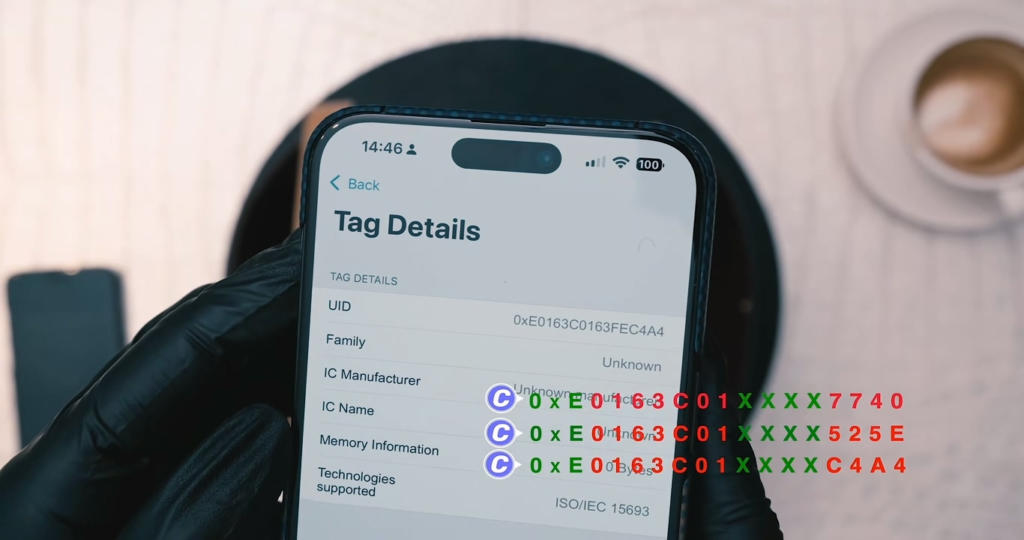
Conclusion: The NFC chip is no longer a standalone authentication tool. It must be combined with physical craftsmanship analysis.
6. Structural Integrity: The Digital Scale Test
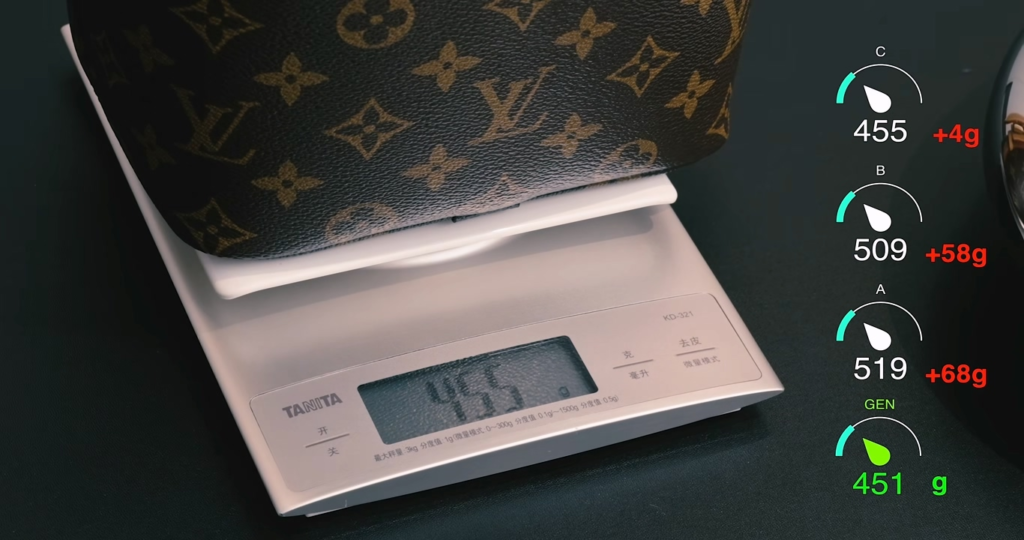
Read the recorded weights as a comparison of these samples. Match dimensions, included components and weighing conditions before using a gram difference as a QC clue; composition and manufacturing process require separate sourcing evidence.
| Quality Tier | Weight | Analysis & Structural Variance |
| Authentic | 451g | Reference sample weight for this comparison. |
| Top tier(Piece A) | 519g | 68g above the reference sample. |
| Top tier(Piece B) | 509g | 58g above the reference sample; compare construction and included components before interpreting the difference. |
| Ultimate Tier (Piece C) | 455g | The closest replica by recorded weight, 4g above the reference. |
7. The Intangibles: Construction and Hidden Flaws
Finally, we must look at the hidden construction techniques where even the best factories stumble.
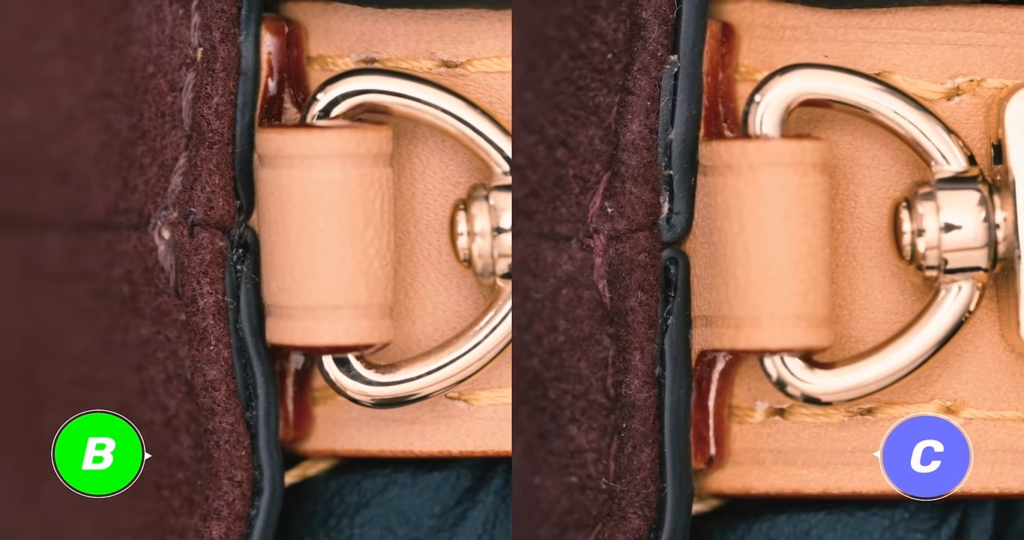
When observing how the leather connects to the strap buckles:
- Authentic: The artisan folds the leather first, ensuring the edges are pristine, and then stitches it firmly into place.
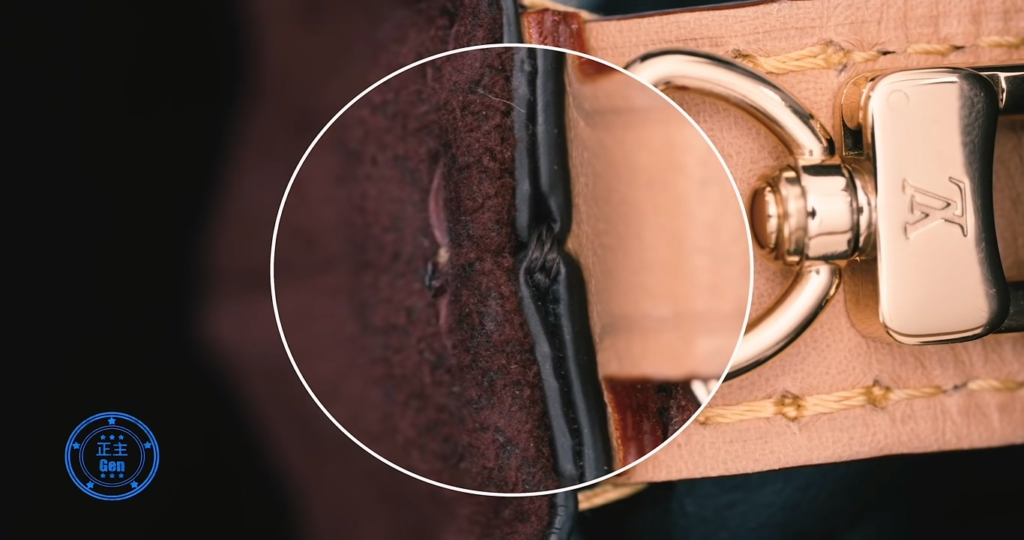
- Tiers A & B: Piece A completely skips the folding process and simply stitches flat leather together, reducing durability. Piece B attempts the fold but executes it roughly.
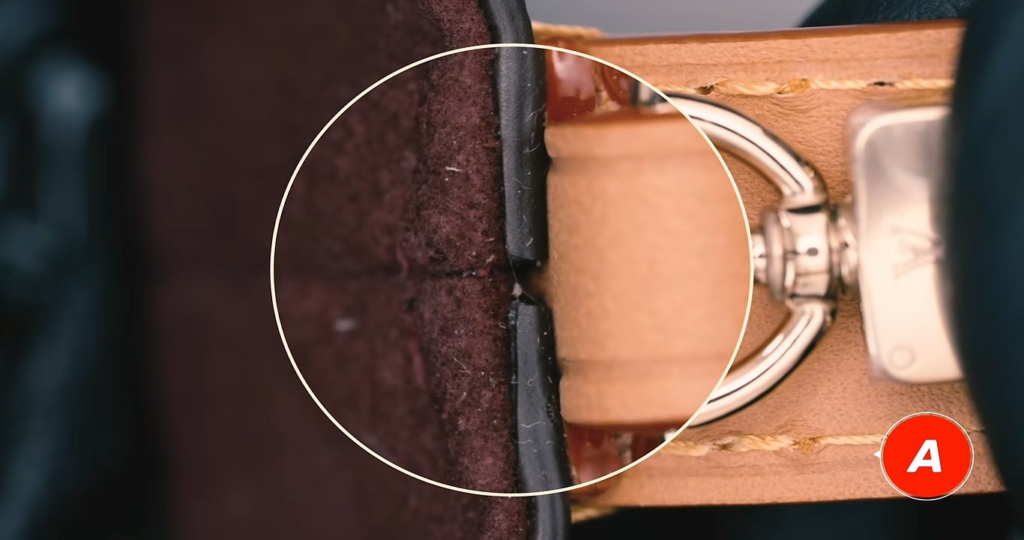
- Piece C: In a bizarre oversight, Piece C successfully mimics the complex leather fold but actually forgets to apply the stitching line entirely.
8. FAQ: Navigating the 2026 Luxury Authentication Landscape
Can I rely on an NFC chip scanner app to verify if my Louis Vuitton bag is authentic?
No. A smartphone NFC scanner reading alone cannot establish authenticity. Standard mobile apps simply read raw, unencrypted public data strings or pre-programmed NDEF records from high-frequency RFID tags. In contrast, authentic Louis Vuitton microchips interface exclusively with proprietary, encrypted boutique scanners connected to Louis Vuitton’s private internal database. Variations in phone scan outputs—such as static versus dynamic suffix strings—do not prove that a replica reproduces the genuine system. Always rely on comprehensive physical craftsmanship, materials, and hardware analysis rather than mobile app scans.
How do the recorded weights compare across these LV samples?
Piece C is recorded at 455g against a 451g reference, while AAA samples A and B weigh 519g and 509g. Piece C is therefore 4g above the reference in this comparison. Check dimensions and included components alongside those numbers.
What is the most reliable physical telltale sign on modern LV hardware?
Compare letter shape, depth and surface finish. In these images, the inner corners of N and V distinguish the examples more clearly than a broad claim about the engraving process.
How does the “staircase effect” on Monogram prints help identify a replica?
In the comparison images, the yellow-dot layout on the floral motifs is one visible difference between the reference and samples A, B and C. Compare the same motif, scale and image clarity. This sample set does not establish that every AAA replica uses one print layout or that every authentic print has an identical pattern.
Is it true that authentic Louis Vuitton bags are completely non-magnetic?
The recorded comparison found attraction at an internal rotational component. Keep that observation attached to the component and samples tested; I would compare it alongside the other construction details.
The ReinaLuxe Conclusion: Is the Gap Closing?
This comparative benchmark across four physical specimens demonstrates how craftsmanship variance manifests between different reproduction tiers:
- Where Piece C Closely Approximates the Reference: In gross weight (455g vs. 451g, a mere 4g variance), overall silhouette proportions, multi-piece strap buckle engineering (reproducing the 12-tooth gear base), and screen-printed dot alignment (matching the 32-row density and 58-degree angle on the Monogram “L”).
- Where Subtle Differences Remain: Under macro inspection, Piece C’s canvas ink dots exhibit ultra-sharp digital perimeters that lack the organic bleed of authentic screen printing. Additionally, the zipper end-tab geometry and interior stitch tension reveal subtle deviations from boutique tolerances.
- What Each Diagnostic Test Reveals: Digital scale testing immediately exposes crude fillers and heavy synthetic boards in Piece A (+68g) and Piece B (+47g); macro hardware inspection highlights the gap between custom multi-component tooling and off-the-shelf fasteners; and NFC analysis demonstrates that chip scanning cannot verify boutique database records.
- Actionable Insight for Collectors: Evaluating luxury craftsmanship requires cross-referencing physical mechanics—weight distribution, screw assembly architecture, and tactile canvas drape—rather than relying on a single visual hallmark or a superficial digital scan.
Note: This technical analysis documents observable craftsmanship characteristics across the specific physical specimens tested for this study. Authentication should always synthesize multiple independent checkpoints alongside verified provenance.




13 comments
Incredible catch on the missing stitching line on the Tier C strap fold! How on earth do they spend thousands of dollars reverse-engineering a 32-row, 58-degree dot matrix print and then just… forget to stitch the leather fold down? 😂
The missed seam is the issue to inspect on that strap fold. Compare it with the same construction in the reference, including how the fold is secured. The photographs don’t establish who handled the print and assembly or how that workshop is organized.
As someone who flips a lot of contemporary canvas pieces on secondary platforms, the “thief light” texture tip is worth its weight in gold. I’ve rejected so many bags purely because the canvas felt “plasticky” under our studio softboxes. Do you see the same reflection issues on the Damier Ebene canvas?
I’m glad you found that useful! Yes, the “thief light” phenomenon is arguably even more pronounced on Damier Ebene. Because DE relies on a checkerboard alternation of dark chocolate and muted brown squares, any excess gloss or cheap PVC topcoating turns the bag into a shiny mirror under studio lighting. Authentic DE has a distinct satin-matte waxiness that diffuses harsh studio lights seamlessly. Keep trusting your gut on that tactile, low-reflection finish!
A 4-gram difference on a full bag is insane engineering. I’m a total data nerd and I’ve been weighing my collection for years. Quick question: Does that 455g on the Ultimate tier C include the long leather shoulder strap, or is that just the raw chassis weight?
That 455 g figure needs a recorded weighing setup before I can tell you what was included. Compare both bags empty on the same scale, with the strap and pouch either attached to both or removed from both. The weight difference alone doesn’t identify cardboard, backing textiles or an alloy.
The part about Tier C cracking the dynamic randomized NFC code is absolutely terrifying. I literally bought a pre-owned Nano Speedy last month and used a generic scanner app—it randomized, so I slept easy. Now I’m staring at my bag under a desk lamp questioning my entire life. Is there ANY software that can tell the difference yet?
A generic scanner’s response doesn’t authenticate your Nano Speedy. Keep the receipt and listing photos, and seek an assessment that covers the complete bag, its model and period references, and its provenance. I’d use the scan and engraving photos as supporting material for that assessment, without treating either as a verdict on its own.
I’m obsessed with the newer Loop and Boulogne bags. Do these micro-rules (like the 12-tooth gear base on the rivets) apply to the newer hardware silhouettes, or are they specific to the older classics?
Welcome, Monogram_Mami! The specific 12-tooth gear base rivet structure evaluated in this report is heavily utilized across modern structured icons like the OnTheGo and Loop series. However, for newer minimalist hardware silhouettes, the Maison has begun integrating ultra-flat, sunken rivet profiles that are entirely flush with the leather. The Ultimate tier factories are quick to adapt, but checking the absolute depth of the hardware stamp remains your best defense for newer releases.
Great breakdown on the lipid oxidation process of the untreated Vachetta. Most blogs just say “it turns brown.” But I’ve noticed some high-end reps turn an ugly greyish-muddy color after a rainy day. Is that what you mean by the 5-year lipid gap?
The rainy-day color change you describe doesn’t establish the hide’s origin, diet or internal fat distribution. Compare dated photos of the same trim and its treatment history, including any conditioner or coating. I wouldn’t assign a five-year ageing gap or a leather source from the color alone.
Editor’s question: which Louis Vuitton detail do you find least reliable from seller photos alone—canvas print, edge paint, hardware, stitching, or interior construction? If one issue comes up repeatedly, I’ll add a matched close-up comparison rather than another generic checklist.