
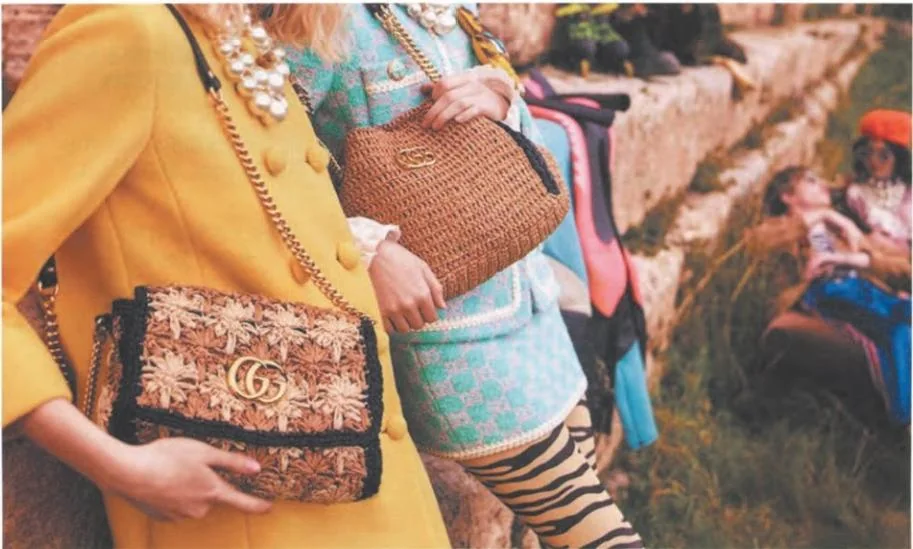
A visual model atlas for separating seven Gucci bag families by silhouette, closure, hardware, material and the photographs needed to verify the exact version.
Written and reviewed by Chloe, ReinaLuxe editor and site owner · Updated August 25, 2026
Gucci model names are easy to recognize and surprisingly easy to misuse. A seller may call any GG canvas flap bag an Ophidia, any quilted Double G bag a Marmont, or any equestrian-looking closure a Horsebit 1955. Those shortcuts blur the most useful evidence: the relationship between a bag’s outline, its opening system, its signature hardware and the way its strap is attached.
When I need to identify a Gucci bag family, I do not begin with the logo. I begin with the silhouette and closure, because those two features usually survive changes in color and material. I then confirm the line-specific hardware, compare the carrying system and finally look for a style number that agrees with the visible configuration. That sequence is more reliable than matching one dramatic emblem.
Table of Contents
Quick Answer: The Seven Fastest Separators
Horsebit 1955 centers the double-ring-and-bar Horsebit. Dionysus uses a sculptural tiger-head closure. Jackie 1961 is a curved hobo organized around a piston closure. Ophidia combines heritage codes—usually GG monogram, Web and Double G—across many shapes. GG Marmont is the quilted Double G family. Padlock makes a working lock and key holder the closure. Sylvie is a structured top-handle design identified by a metal chain-and-buckle closure and striped Web detail.
Gucci Bag Model Comparison Table
| Family | Primary silhouette | Signature closure or hardware | Common material language | Minimum model-ID photos |
|---|---|---|---|---|
| Horsebit 1955 | Rounded flap shoulder bag, plus later mini and alternate shapes | Double rings joined by a central bar | Leather or GG canvas with leather trim | Full front, side, base, Horsebit closure, strap architecture and style number |
| Dionysus | Structured flap with a defined gusset | Tiger-head fitting that functions as the focal closure | GG canvas, leather and versions with suede panels | Full front, side, base, tiger-head closure, chain architecture and style number |
| Jackie 1961 | Curved half-moon hobo | Piston closure at the top front | Leather, GG canvas and seasonal fabrics | Full front, side, base, piston closure, strap architecture and style number |
| Ophidia | A collection across shoulder, bucket, tote, Boston and mini shapes | Usually Double G plus Web rather than one universal closure | GG monogram fabric or canvas with leather trim | Full front, side, base, closure, strap architecture and style number |
| GG Marmont | Flap, camera, bucket, top-handle and mini formats | Double G with a chain or leather-and-chain carrying system | Matelassé leather, often chevron or vertical quilting | Full front, side, base, closure, chain architecture and style number |
| Padlock | Structured shoulder or top-handle forms | Lock closure with a separate key in a leather holder | GG monogram material or leather, often with contrasting trim | Full front, side, base, lock closure, strap architecture and style number |
| Sylvie | Structured top-handle body | Metal chain-and-buckle closure across the front | Smooth leather with Web or grosgrain detail | Full front, side, base, chain-and-buckle closure, strap architecture and style number |
This table identifies families, not every valid variation. Gucci reworks line names into different sizes, closures and seasonal materials. A Horsebit mini can be boxier than the classic rounded shoulder bag; an Ophidia may be a bucket, Boston or crescent shape; a Marmont may be a camera bag rather than a flap. Once the family is clear, use dimensions as a secondary cross-check and the style number only to verify the exact version.
Horsebit 1955: Start With the Double Ring and Bar
The Horsebit 1955 is the easiest family here to identify from its hardware, but only if the hardware is read in context. Gucci describes the line as a bridge between an archival design and a contemporary bag. Its defining front element is the equestrian-inspired double ring and bar. On the established medium shoulder format, that fitting sits across a rounded leather mount on a compact flap body with multiple gussets. Current mini versions show why silhouette alone is insufficient: Gucci also sells boxier shapes that keep the Horsebit while changing proportion and closure details.
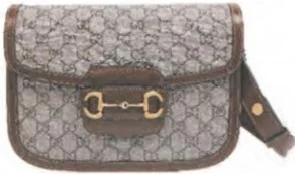
I compare four things around the bit: whether the two rings and center bar have a coherent scale, how the fitting meets the leather mount, whether the flap and body remain centered, and whether the strap hardware agrees with the photographed version. A generic Horsebit shape is not enough. The official Horsebit 1955 making story and a current product page are better visual anchors than a mixed image search.
Dionysus: Tiger-Head Hardware on a Structured Flap
The Dionysus family is defined by its tiger-head fitting. Gucci’s own story describes the emblem as archival tiger-head hardware, while current product pages show that the line can evolve in construction and finish. The useful constant is not one canvas color or one chain: it is the relationship between the tiger-head focal point, the flap and the structured body.
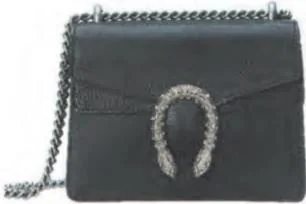
Older familiar Dionysus shoulder bags often appear more architectural than a Marmont: a firmer flap, pronounced side gussets and a sculptural closure. Current variants can soften the gusset or use two-tone hardware, so “it feels less rigid” is not a universal rejection. I would request a straight front image, a side view, the base, a close profile of the clasp and the chain attachments. The official Dionysus story confirms the tiger-head identity; the exact product page should control material, dimensions and strap details.
Jackie 1961: Read the Crescent Before the Monogram
The Jackie 1961 is primarily a silhouette-and-closure identification. Gucci describes it as a crescent-shaped bag with clean lines and a piston closure, echoing a design created in the 1960s. That makes the curved hobo profile more important than whether the surface is leather or GG canvas. The opening is gathered toward the top, the bag sits close to the body, and the piston fitting interrupts the front edge without turning the bag into a conventional flap.
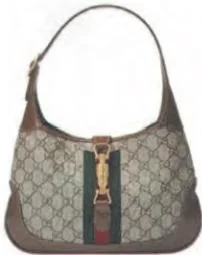
For a Jackie, I want one photograph far enough back to preserve the whole curve. Tight crops can make the bag look like an ordinary shoulder shape. Then I check the piston from the front and side, the handle attachments, the base curve and any additional strap. Gucci’s making-of page is a useful structural reference, but vintage and revival examples should not be forced into a single strap or interior template.
Ophidia: A Code Combination, Not One Bag Shape
Ophidia creates the most naming mistakes because it is a broad collection rather than a single silhouette. Gucci currently applies the name to shoulder bags, camera bags, Boston bags, totes, top handles and minis. The recurring language is usually a GG monogram ground, leather trim, the Web stripe and a Double G emblem. The closure may be a zip, magnetic flap, drawstring or another format appropriate to the shape.
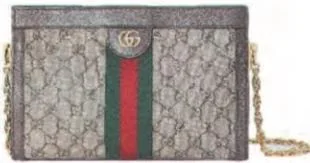
That means “Ophidia shape” is usually the wrong test. I first confirm the code combination, then name the object type: Ophidia shoulder bag, mini bucket, Boston, pouch or top handle. A current official Ophidia product description explicitly combines GG monogram material, leather trim, Double G and Web, but its dimensions and zip closure apply only to that product. A readable style number is especially useful because closely related GG canvas shapes can belong to other Gucci lines.
If those recurring symbols still blur together, my separate Gucci brand codes guide explains Horsebit, bamboo, Double G and Web as a vocabulary. This atlas has a different job: deciding which bag family that vocabulary has been organized into.
GG Marmont: Double G Plus Matelassé Construction
The GG Marmont family uses the Double G as its emblem, but the broader construction makes it different from an Ophidia with the same logo. The familiar Marmont language is soft matelassé leather, often chevron quilting, with a chain or leather-and-chain strap. Gucci describes the Double G as a contemporary use of an archival 1970s symbol and continues to vary the quilting direction, hardware finish and bag format.
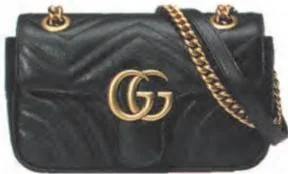
I do not use a heart-shaped rear stitch motif as a universal pass-or-fail rule: it is visible on many familiar examples, but the line spans bags and small leather goods with different backs. Instead I map the complete quilting route, compare how the Double G sits against the flap and check whether the chain enters the body in the expected way. A current official Marmont listing even uses vertical matelassé and Web, a reminder that “Marmont always means chevron” is too rigid.
Padlock: The Lock Must Work With the Entire Body
Padlock is named for a functional visual system: a structured bag secured by a lock, with the key kept in a separate leather holder. Earlier shoulder formats and current top-handle versions do not share one outline. Gucci’s current US product page describes a top-handle Padlock introduced for Pre-Fall 2025, showing that the name is not merely a discontinued archive term.
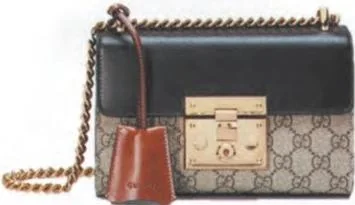
A loose lock can be replaced, so it cannot carry the entire identification. I compare the lock mounting and release, the key holder, the body proportions, the trim pattern and the strap or handle configuration. The current official Padlock listing is also a useful correction to stale guides: today’s top-handle shape and Web lining should not be confused with every earlier GG Supreme chain bag.
Sylvie: A Legacy Top Handle With Chain-and-Buckle Hardware
The Sylvie is a legacy family with a structured top-handle body, a metal chain across the flap and a buckle-like closure. Web or grosgrain ribbon details help complete the identity, but seasonal colors and strap treatments vary. Gucci’s historical story about the line’s stripes records the blue-red-white grosgrain treatment associated with the Sylvie, while examples also appear with other Web references.
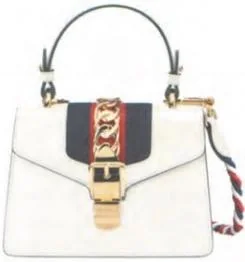
As of this review, Sylvie does not appear as a standalone line in Gucci’s current US handbag navigation. That makes a current catalog comparison less useful than a dated official story, an archived product record and the specific item’s style information. Absence from today’s navigation does not make a pre-owned Sylvie suspect; it simply means the comparison should be period-matched. The official 2017 New Stripes story provides one dated reference point.
Which of These Gucci Lines Are Current?
Current status is a freshness check, not an authenticity test. On August 25, 2026, Gucci’s US navigation listed Horsebit 1955, Jackie, Dionysus, GG Marmont and Ophidia among its handbag lines. Live US pages also showed current Padlock products. Sylvie appeared in historical editorial material but not as a current standalone navigation line. The practical consequence is simple: use live product pages for current variants and dated official or reputable archive records for legacy ones.
I have deliberately omitted the old yuan price tables attached to the model notes. Prices change by country, tax treatment, material, size and season, while product codes can disappear or return. If price matters, record the market, currency, exact style code and retrieval date from the live Gucci page. An old list is historical context, not a current price guide.
A Repeatable Gucci Model-Identification Sequence
- Capture the entire silhouette. Do not let a logo close-up replace a straight front and side view.
- Name the opening system. Distinguish flap, zip, drawstring, piston, tiger-head fitting, lock or chain-and-buckle closure.
- Identify the line-specific hardware. Horsebit, tiger head, piston, Double G, lock or Sylvie chain should agree with the body around it.
- Map the material codes. Record GG monogram, Web, matelassé, smooth leather, suede panels and trim without assuming one material is mandatory.
- Check the carrying architecture. Photograph handle bases, chain entries, strap holes, detachable clips and any second strap.
- Resolve the exact version. Compare the style number with a model-matched reference only after the family is stable; do not let a number override a conflicting silhouette or closure.
What Model Identification Cannot Prove
A correct family name does not prove that a bag is genuine. Counterfeit bags can reproduce the broad silhouette and headline hardware, while genuine bags can differ because of size, season, material, region, repair or an archive revival. Model identification narrows the comparison set; it does not replace construction review, style-information checks, provenance or professional authentication where the decision carries financial risk.
Photos I Need to Identify the Exact Gucci Model
This is a minimum model-identification set, not a complete remote-authentication photo brief. Its job is limited to two questions: which Gucci family is this, and which version is the closest match?
- Full front: preserve the complete outline, opening and hardware placement.
- Side profile: show the gusset, depth and how the opening meets the body.
- Base: capture the footprint and the way the side panels terminate.
- Closure: show the Horsebit, tiger head, piston, lock or chain-and-buckle system in context.
- Strap architecture: include the handle or chain attachment points and the complete carrying configuration.
- Style number: use it only after the visual family is stable, to verify the most likely version.
Start with the full front and side rather than a gallery of isolated close-ups. These six views are enough to establish the model question; a remote authenticity review needs its own, more detailed photography standard.
Once the family and exact version are stable, use the broader designer bag authentication guide for the next evidence layer. For a time-specific view of models and replica-market themes, read my 2026 Gucci replica bags roundup. That page is an annual summary; it does not replace this evergreen model-identification atlas.
Frequently Asked Questions
What is the difference between a Gucci Jackie 1961 and Horsebit 1955?
The Jackie 1961 is a curved half-moon hobo defined by a piston closure. The classic Horsebit 1955 shoulder bag is more compact and flap-based, with double-ring-and-bar Horsebit hardware across the front. Materials can overlap, so compare silhouette and closure before monogram.
How can I tell a Dionysus from a GG Marmont?
No. Ophidia is a collection applied to many shapes, including shoulder, camera, bucket, Boston, tote and mini bags. It is usually recognized through a combination of GG monogram material, leather trim, Web and Double G, then narrowed to the exact format and style code.
Is the Gucci Padlock still a current line?
Yes. Gucci’s US site showed current Padlock top-handle products during this August 2026 review. Earlier Padlock shoulder and chain-bag configurations can differ from the current shapes, so use a period- and style-matched product reference.
Is the Gucci Sylvie discontinued?
Sylvie did not appear as a standalone line in the current US handbag navigation checked for this guide, although Gucci retains historical editorial references to it. Treat it as a legacy family and verify a specific bag against dated records rather than assuming its absence from today’s menu is evidence against it.
Does identifying the correct Gucci model prove authenticity?
No. Correct model identification gives you the right comparison set. A meaningful authenticity decision still needs model-matched construction, hardware, labels, style information, dimensions, condition, provenance and, when appropriate, qualified professional review.
Final Model-Atlas Rule
Use the feature that controls the bag, not the feature that shouts the loudest. For Horsebit 1955 that is the bit and the body built around it; for Dionysus, the tiger-head closure and structured flap; for Jackie, the crescent and piston; for Ophidia, the heritage-code combination; for Marmont, Double G and matelassé construction; for Padlock, the integrated lock system; and for Sylvie, the structured top handle with chain-and-buckle closure. Once that controlling pattern is stable, the style number can answer the narrower question of which version you are looking at.