

In 2025, the counterfeit luxury bag market has reached unprecedented levels of sophistication. Gone are the days when fake bags were easy to identify through crude craftsmanship or misspelled logos. Today’s top-tier replicas—often called “1:1,” “super mirror,” or “AAA”—are incredibly convincing, sometimes fooling even seasoned collectors. For young shoppers seeking the thrill of luxury style without the steep price tag, the temptation of buying replicas online or from social media vendors is stronger than ever.
But here’s the problem: many of these replicas are not just knock-offs; they are deceptive imitations that exploit minor but crucial details to appear authentic. From logos to zippers, every element is engineered to trick your eyes. That’s why learning how to spot a fake designer bag is no longer a skill for resellers or fashion insiders only—it’s a must for any modern fashion lover.
In this comprehensive guide, we break down the core techniques of luxury bag authentication in a way that’s clear, visual, and actionable. Whether you’re inspecting a secondhand Chanel, a 1:1 replica Gucci, or a TikTok-trending Louis Vuitton Neverfull, this article will give you the power to see what the fakes can’t hide.
We’ll focus on three critical areas:
- Brand Logos: The fonts, spacing, embossing, and alignment secrets.
- Hardware: From screw type to metal finish, the devil is in the details.
- Zippers: Authentic zipper brands and how counterfeiters try to fake them.
If you’re a young buyer trying to avoid being scammed—or simply want to understand the difference between real and fake—this guide is for you. Save it, study it, and use it every time you consider a luxury handbag purchase.
Table of Contents
Brand Logos: The First Line of Defense Against Fakes
When it comes to identifying a fake designer bag, the brand logo is often the very first—and often the most revealing—clue. While counterfeiters have become increasingly adept at copying overall shapes and patterns, they still frequently fall short when it comes to typography precision, logo spacing, engraving quality, and embossing depth. Let’s break it down by key areas of logo design and placement.
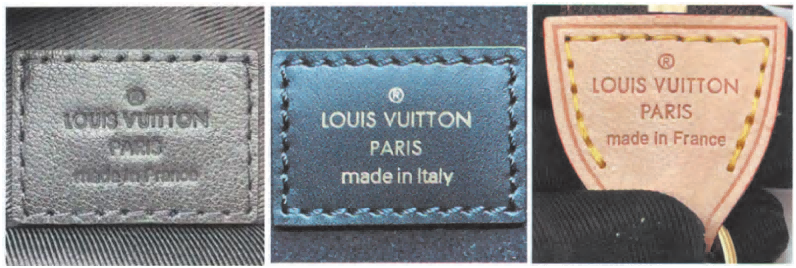
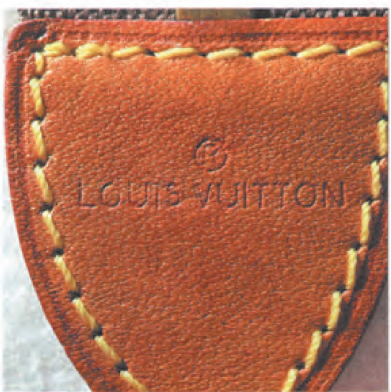 | 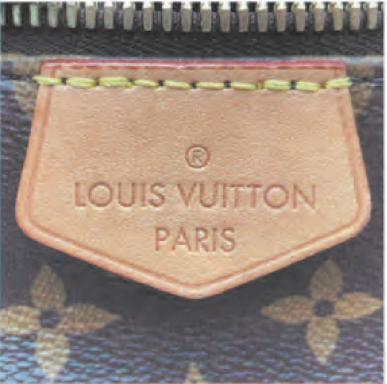 | 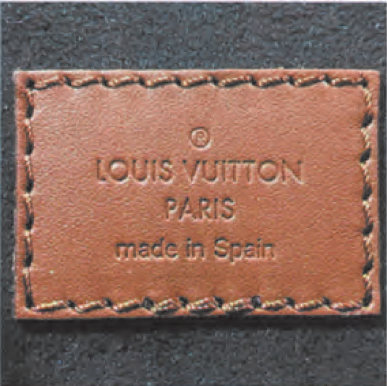 |
| Single main label Identification focus: Font features | Combination of main label and national label Identification focuses are observing the characteristics of letters: font features, letter spacing and font | Combination of main label, national label and origin label Identification focuses are observing the characteristics of letters: font features, letter spacing, word spacing, font proportion |
1. Typography and Font Weight
Each luxury brand uses custom-designed fonts for their logos—these are not downloadable from the internet. For example:
- Chanel: The double “C” logo should feature two interlocking Cs with perfectly even width and clean, balanced spacing. The font used in their internal labeling is sans-serif with tight kerning (letter spacing), and the strokes should be bold but not heavy.
- Louis Vuitton: The “L” slightly overlaps the “V” in the classic monogram, and both letters should be symmetrical and finely serifed. In replicas, you’ll often see either awkward spacing or unbalanced fonts—sometimes one letter is noticeably thicker than the other.
- Gucci: Often printed or embossed in all caps, the “G”s are most telling. Authentic Gucci uses a particular curvature and serif extension on the “G” that counterfeit versions usually oversimplify.
✅ Tip: Zoom into the logo using your phone camera. If the letters appear uneven or the depth of embossing varies, it’s likely a fake.
2. Letter Spacing and Alignment
Kerning, or the space between letters, is incredibly consistent in genuine luxury bags. Replicas often misalign the logo horizontally or compress/expand the spacing.
- On Chanel leather tags, for instance, the “CHANEL” and “MADE IN FRANCE” lines are centered and evenly spaced with surgical precision. Some high-end replicas will center the text but get the kerning slightly wrong—sometimes the spacing between “C” and “H” is wider than the rest.
- For LV Speedy bags, the LV monogram pattern is never cut off at the seams in real bags. If a logo is placed awkwardly near a seam or handle without symmetry, it’s likely fake.
⚠️ A common replica flaw: the spacing between letters is often either too tight (touching) or too loose (gaps between letters) compared to the authentic bag.
3. Embossing and Engraving Depth
True luxury bags have clean, deep embossing or engraving that’s either heat-stamped or laser-pressed, depending on the material. Fakes often use cheaper heat stamping that results in either shallow or overly deep impressions.
- Hermès heat stamps are deeply pressed into the leather with even pressure. The letters appear crisp and consistent, not overly bold or blurred at the edges.
- Saint Laurent Paris logos are usually embossed in metallic foil. If the letters fade quickly or the foil flakes off, it’s a clear sign of a knockoff.
4. Monogram and Logo Placement
Patterned bags, like those from Louis Vuitton, are built with careful attention to logo positioning:
- On an authentic LV Neverfull, the monogram should be symmetrical on both front and back, and logos should not be cut off at stitch points or corners.
- Goyard bags have repeating “Y” chevrons that are hand-painted on genuine bags. Replicas often show printing errors, smudging, or overlapping strokes.
✅ Real luxury manufacturers align logos perfectly with seams, folds, and hardware placement. Crooked or uneven placement is almost always a red flag.
5. Inside Logos and Label Tags
- Chanel internal leather tags will say “CHANEL®” and “MADE IN ITALY” or “MADE IN FRANCE” with consistent typeface, centering, and foil stamping.
- Gucci uses serial number tags on the interior, typically on the back of the logo tag. The font is laser-etched with very even strokes.
⚠️ Many replica bags skip the inner label serial stamping altogether or use a generic font without depth.
6. Brand-Specific Examples
Appreciation of Authentic Luxury Brand Logos:
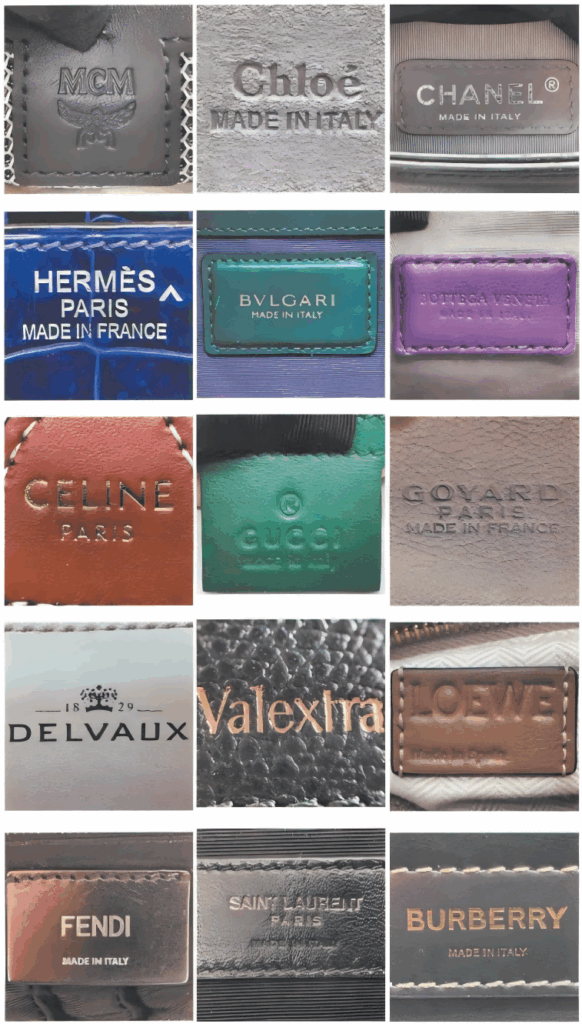
7. Trends in Counterfeit Logos
Counterfeiters have adopted AI and laser-cut molds to mimic authentic logo placement better than ever before. Still, even with high-tech tools, they can’t fully replicate the micro-details such as pressure depth, ink retention, and stitching accuracy.
Pro Tip: Use black-and-white photo filters or sharpen contrast to reveal logo engraving inconsistencies invisible
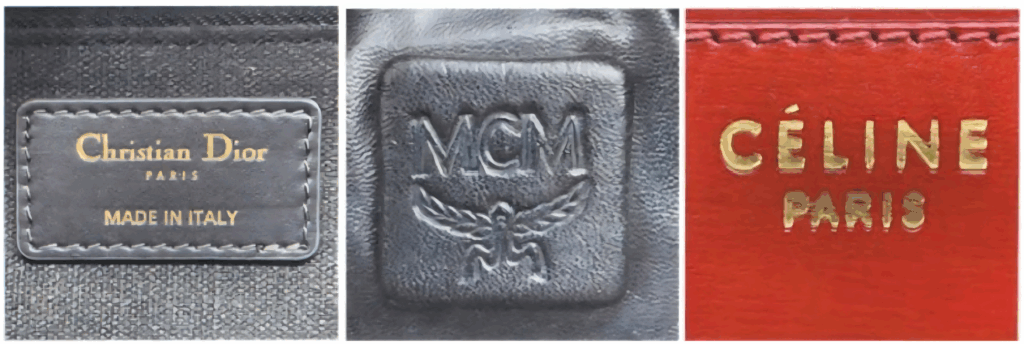
① The overall indentation of the embossing presents seal characters; ② The gold stamping characters have no indentation and present screen printing; ③ The font features do not conform to the genuine product craftsmanship; ④ The size ratio is out of balance; ⑤ The manufacturing process is different.to the naked eye.
Summary: Use Your Eyes Like a Scanner
Understanding a luxury bag’s brand logo—in terms of typography, positioning, embossing, and consistency—is your first step in replica authentication. No matter how good the leather or stitching is, a counterfeit logo will always give itself away if you know what to look for.
Hardware Finishes: Little Details, Big Differences
While many shoppers focus on a bag’s leather or logo, seasoned authenticators know that hardware is where replicas often fall short. The zipper pullers, clasps, chains, screws, and studs used by luxury brands are not just functional—they’re precision-engineered accessories made to last decades. Even the tiniest engraving or surface polish holds clues to a bag’s authenticity.
Let’s break down how to inspect handbag hardware like a pro.
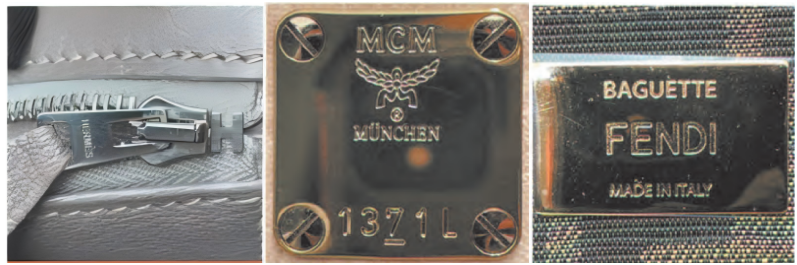
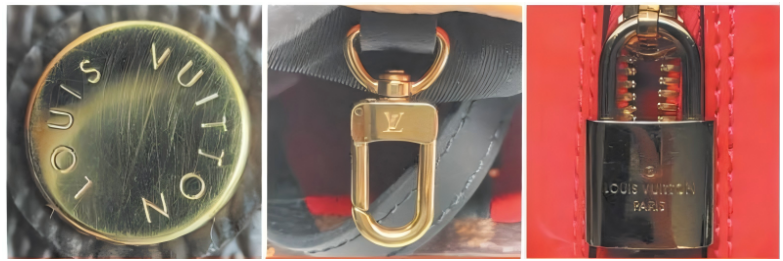
1. Material and Finish
Authentic luxury brands use high-quality metals such as brass, palladium, or gold/silver-plated alloys. These are chosen for their durability, shine, and resistance to tarnish. On the other hand, replicas often opt for cheaper materials like zinc alloys or lightweight aluminum.
- Authentic hardware is heavier, smoother, and cooler to the touch.
- Replica hardware may feel light, hollow, or even plasticky under finger pressure.
✅ Run your finger across the hardware. Genuine pieces are polished evenly and have no rough edges or bubbles in the coating.
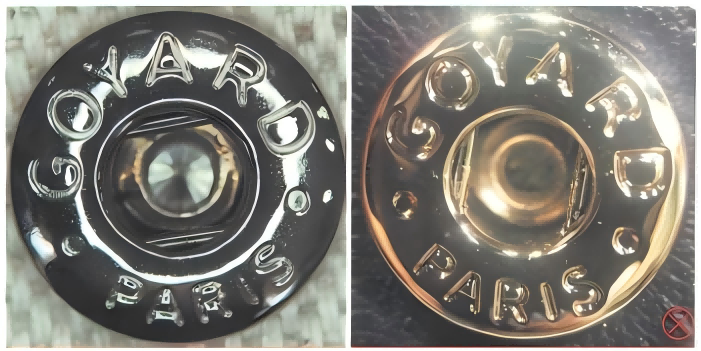
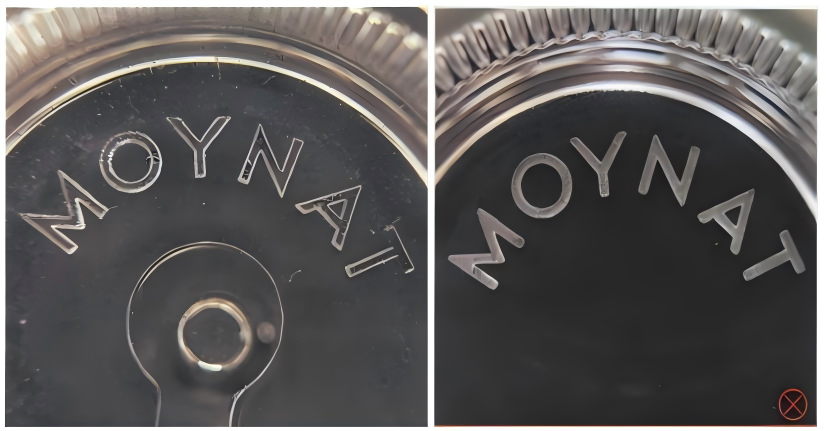
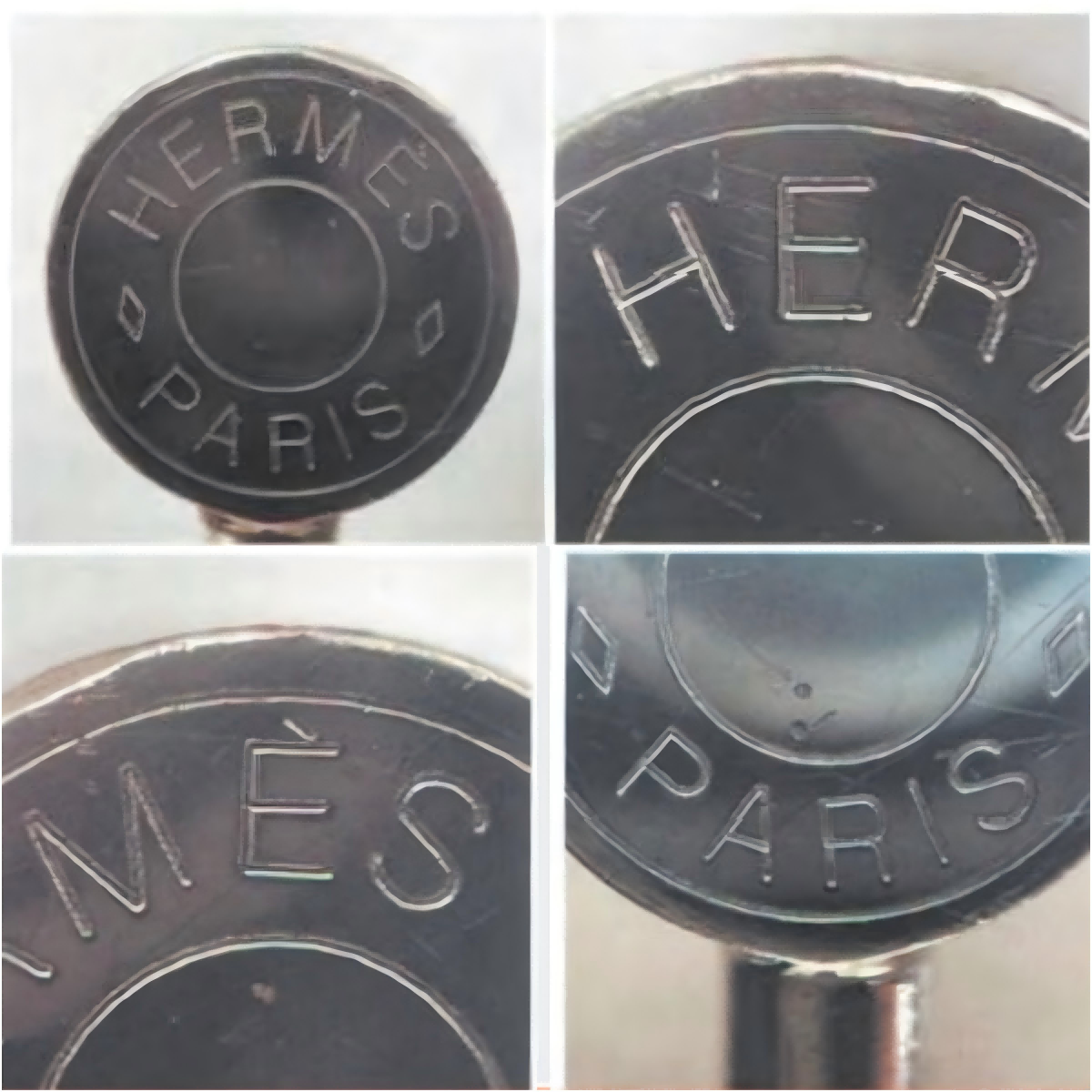 | 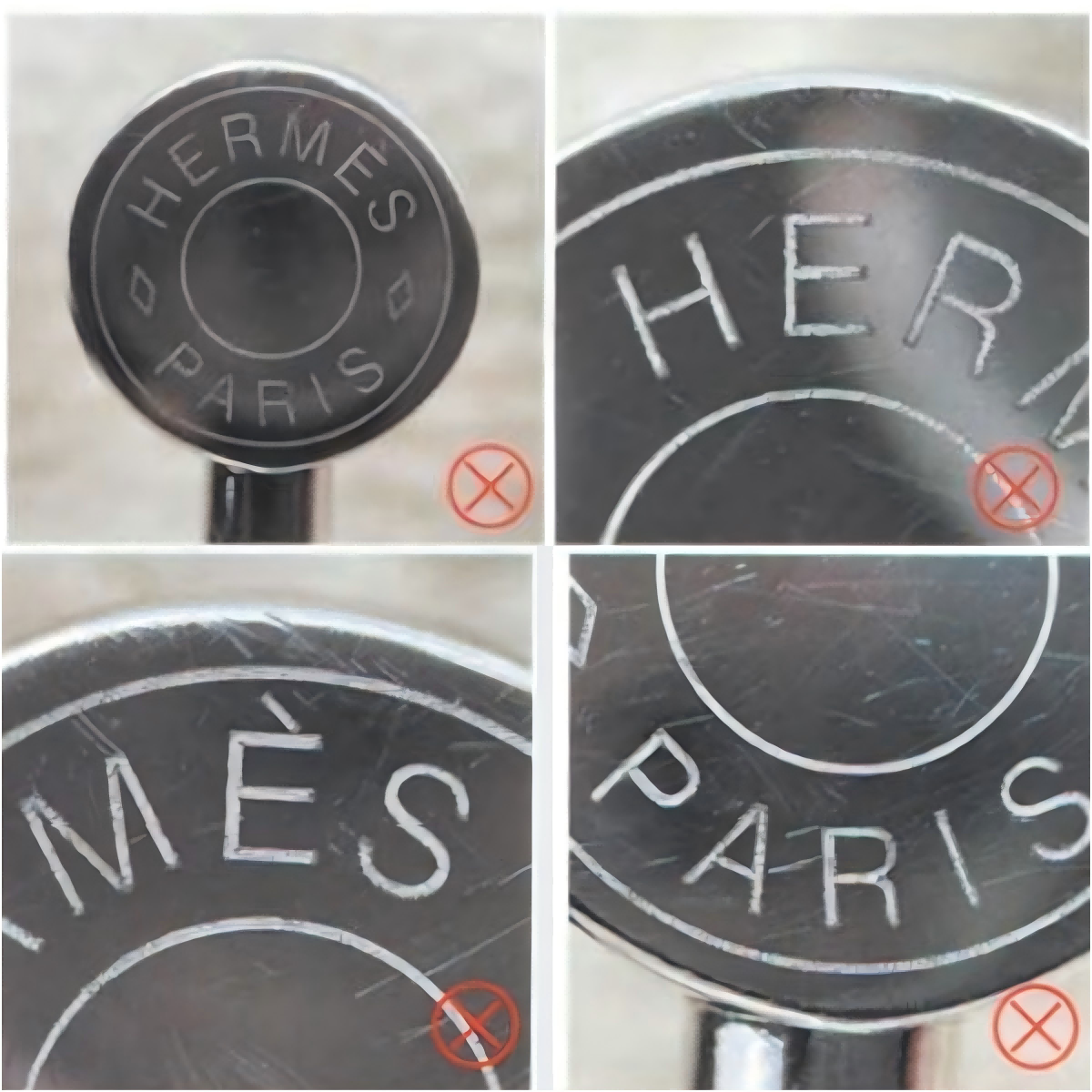 |
| The color of the genuine font bottom groove is consistent with the color of the hardware itself | The color of the bottom groove of the fake font is obviously white and different from the color of the hardware itself |
2. Engraving and Lettering
Real designer bags feature precise, laser-etched or deep-stamped engravings on hardware components like zippers, locks, buckles, and D-rings.
- Chanel: The zipper pull or turn lock may be engraved with “CHANEL” in sharp, thin strokes.
- Gucci: Hardware often features the interlocking “GG” with clean edges and deep embossing, not printed or surface-sprayed.
- Hermès: The “Hermès-Paris” stamp on hardware is always straight, centered, and slightly sunken—not raised.
Generally speaking, common markings on counterfeit hardware include laser engraving or water ripples. So how can you tell if it’s laser engraved? Because laser engraving uses a relatively low-cost laser printer, the markings often have shallow, whitish, and dull bottom grooves. Especially when engraving smaller hardware items, laser engraving is often used as a low-cost alternative to genuine craftsmanship.
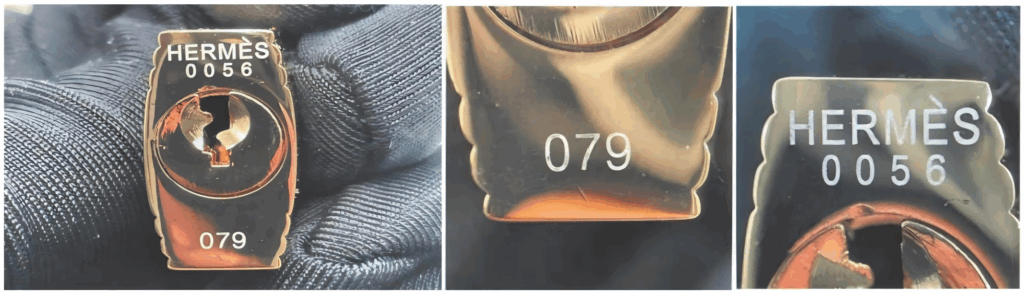
⚠️ Common replica flaws:
- Faded or uneven engravings
- Overly bold fonts
- Letter misalignment
- Engraved text that rubs off with light pressure
Tip: Use a flashlight or magnifier to inspect edges and engraving depth.
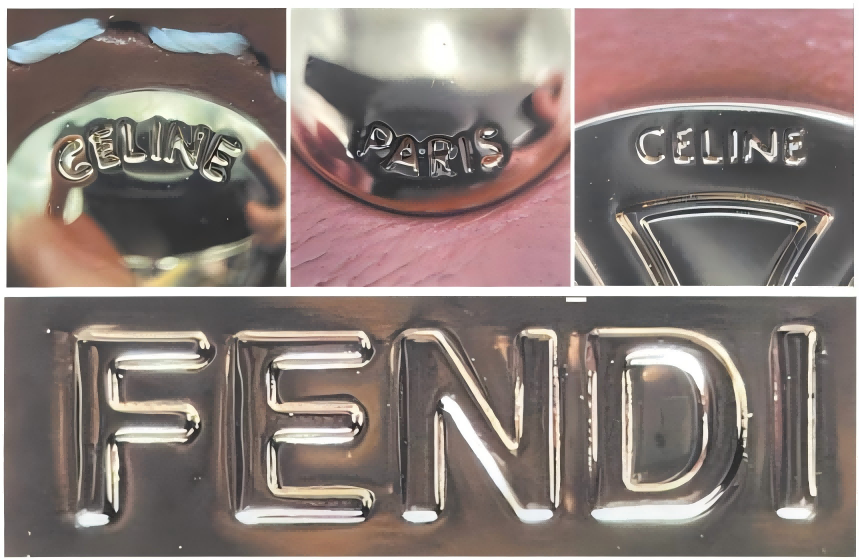
How to identify water ripples? The causes of water ripples can be roughly divided into the following two categories: imitations use metal with poor texture and the lettering polishing process is not in place. This will result in unclear edges of the metal lettering, resulting in a shimmering effect.
3. Color and Coating
Real designer bags often use electroplating or ion-plated metals that resist wear and maintain color for years.
- Gold hardware should have a subtle warmth, not a bright yellow brassy tint.
- Silver-toned pieces should have a smooth, chrome-like reflection—not a grayish matte finish.
- Many authentic bags come with hardware sealed in protective plastic (especially for Hermès or Chanel); if your brand-new “Chanel” has scratched or peeling hardware, it’s a red flag.
Replicas frequently use sprayed-on coatings that chip, flake, or oxidize within months of use.
⚠️ If you notice greenish corrosion (verdigris) around rivets or screws, it’s likely a fake.
4. Screws and Assembly Parts
Luxury brands invest heavily in custom screws, which are neatly aligned, uniformly shaped, and deeply embedded in the leather or metal.
- Louis Vuitton uses unique screws with flower-shaped slots, star points, or symmetrical cuts.
- Chanel typically conceals screws or uses flat, round-headed varieties with subtle impressions.
- On Hermès Birkin or Kelly bags, the backplate screws are perfectly flush and in parallel alignment.
Replica issues:
- Irregular screw heads
- Shallow or misaligned threading
- Visible glue or over-polishing around screw holes
5. Chains and Strap Links
Chains on bags like the Chanel Classic Flap are iconic—and very telling.
- Real Chanel chains are weighty, tightly interlocked, and often woven perfectly with lambskin or calfskin leather.
- In fakes, the chain links may feel light, clinky, and loosely looped; the leather may be plastic-like and not securely sewn inside the chain.
Goyard’s signature canvas totes often use simple hardware, but the metal snaps and D-rings are smooth, sturdy, and matte-finished. Replicas frequently substitute these with shiny, overly reflective metals.
6. Hardware Logo Placement
Even the placement of logos on hardware components is crucial:
| Component | Authentic Logo Behavior | Common Replica Mistakes |
| Zipper pullers | Centered, clean etching | Slanted, bold, or poorly spaced letters |
| Locks & clasps | Deeply engraved with crisp serif fonts | Flat, printed logos or inconsistent font thickness |
| Buckles | Symmetrical, smooth edges | Off-center logos or fuzzy edges |
For resale or inspection purposes, always photograph the hardware close-up under good lighting. Subtle flaws often become apparent.
7. Packaging and Protective Films
Brands like Hermès, Louis Vuitton, and Chanel often wrap their hardware in custom-fit, translucent films to prevent scratches before sale. These protective sheets:
- Fit snugly (no air bubbles)
- Cover only exposed areas (not the leather)
- Peel off smoothly without glue residue
Replicas may try to imitate this with low-quality films or oversized plastic tapes that wrinkle or leave sticky patches.
8. Summary of the four common conditions of imitation hardware engraving
Pro Tip: The counterfeit metal has a soft texture and the lettering is distorted.
The counterfeit is laser engraved, resulting in a whitish and dull bottom groove.
The counterfeit electroplating process is substandard, resulting in unclear lettering boundaries and noticeable ripples in the metal.
□ The counterfeit metal has an unevenly polished bottom groove, resulting in significant discrepancies in the metal texture and color.
Summary: Hardware Doesn’t Lie
From the color of the plating to the weight of a clasp, hardware is one of the most reliable ways to determine whether a luxury bag is real or fake. Even if the logo and leather look convincing, poorly finished hardware almost always reveals the replica’s true identity.
Zippers: A Hidden Yet Telling Clue
Zippers might seem like a minor detail in a luxury bag—but in fact, they are one of the most accurate indicators of authenticity. High-end fashion houses work exclusively with reputable zipper manufacturers and even commission custom molds for unique zipper designs. In contrast, replica manufacturers often rely on mass-produced generic zippers that are cheap, lightweight, and easily distinguishable upon close inspection.
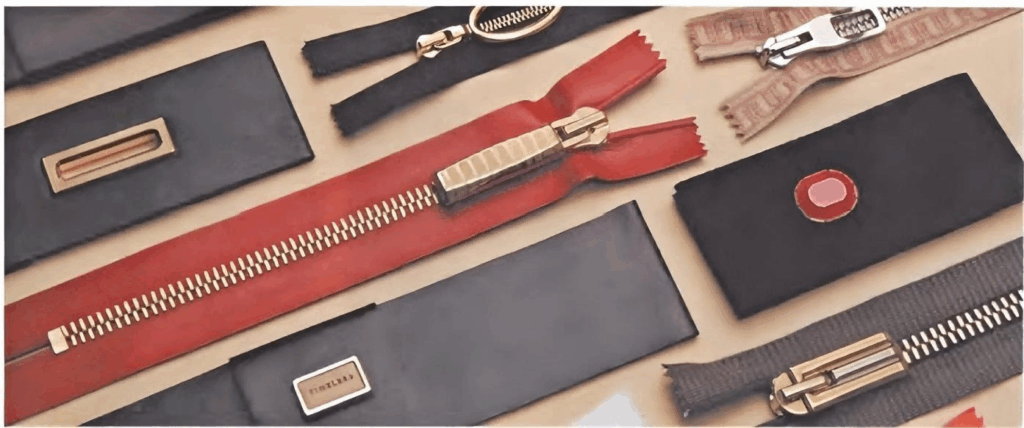
Here’s what to look for when analyzing a zipper on a luxury handbag:
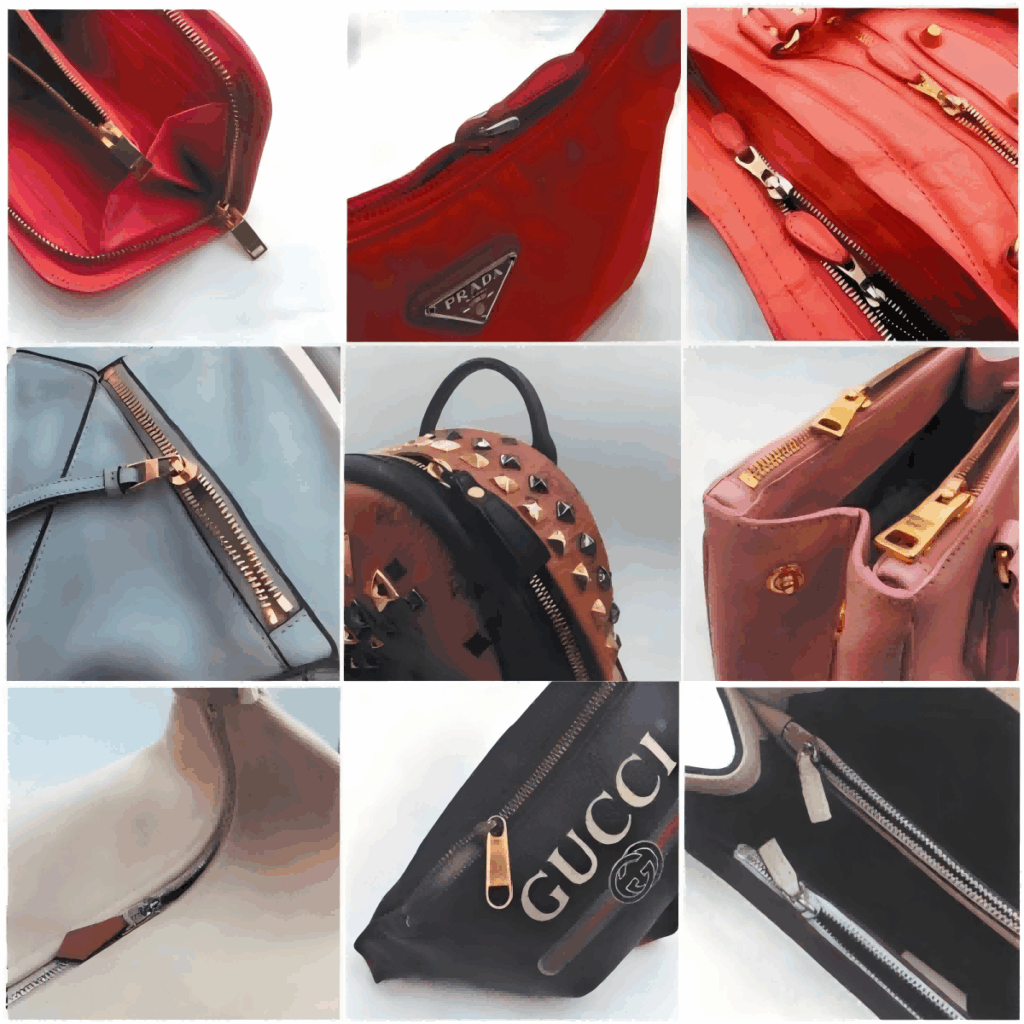
1. Zipper Brands Matter
Most authentic designer bags feature zippers from high-end manufacturers such as:
- YKK (Japan) – World’s most trusted zipper manufacturer
- RiRi (Switzerland) – Used by Prada, Dior, and some Gucci collections
- Lampo (Italy) – Found on Dolce & Gabbana, Fendi, and Balenciaga
- EP (Eclair Prym, Germany) – Rare but high-quality, seen in vintage bags
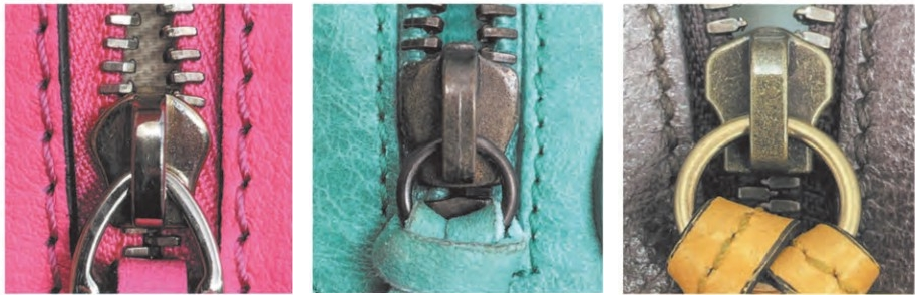
Authentic luxury bags will almost always mark the zipper brand on the back of the slider. If your bag claims to be Louis Vuitton or Prada but the zipper has no branding, it’s an instant red flag.
Inspect the back of the zipper slider with a flashlight or macro camera. If it’s unmarked, unbranded, or says “YCC” or “YKZ”, it’s almost certainly fake.
2. Zipper Head Shape and Engraving
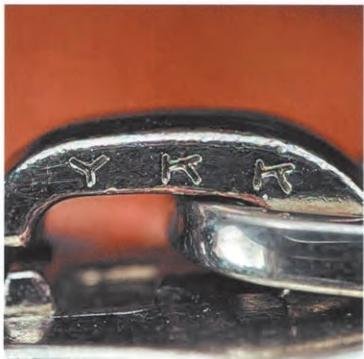
- YKK zippers on authentic designer bags have a clean, rectangular puller, often engraved deeply with “YKK” in crisp, sans-serif font.
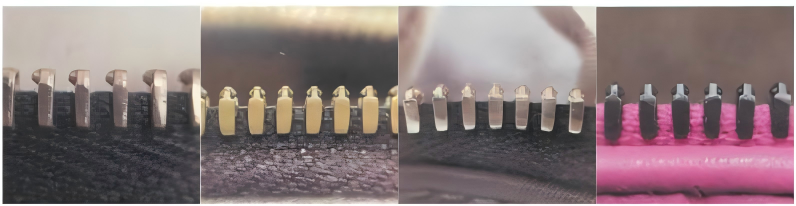
YKK zippers primarily look for chamfered and polished teeth, and whether they are tilted forward.
YKK sliders sometimes have the YKK branding clearly engraved on the side, and there should be no sticking.
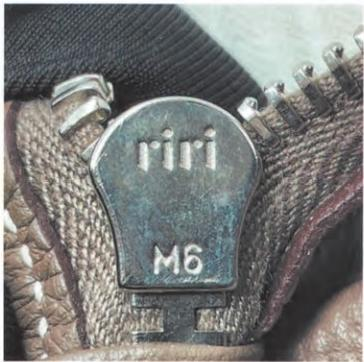
- RiRi zippers typically have a rounded puller with bold but sharp branding.
A common slider shape is fan-shaped, often used by brands like Hermès, BV, and FENDI.
Analysis Key: Brand logo on the back of the slider, four circles, four sharp corners, and two ears.
The four circles are uniform in size, and the bottom grooves of all the circles are flat or have special polishing marks.
All four sharp corners are on the same straight line (marked A), and all corners are on the same straight line (marked B), with the sharp corners being particularly prominent.
The two ears on the inside of the M are rounded.
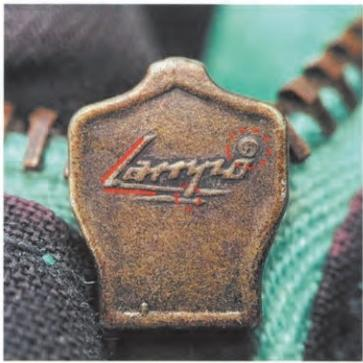
- Lampo zippers are engraved with a unique italic-style script that curves upward.
The back of the slider features the zipper’s own brand logo. An analysis of the craftsmanship is as follows:
The letter L has clear angles and sharp corners. The horizontal line of the L is interrupted by the letter P, but the bottom horizontal line connects the two sections.
The authentic brand logo is raised in relief, and the circled R is directly above the letter O and is not clearly visible.
The teeth of an authentic Lampo zipper are polished to a smooth finish, ensuring excellent traction.
Fun fact about Lampo zippers: Lampo zippers are manufactured exclusively in Italy.
Fake bags frequently have:
- Fuzzy or shallow engraving
- Misspelled brands (e.g., “YYK”, “RiRR”)
- Incorrect font styles
Beware of “silent fakes”: Some replicas use genuine YKK zippers—but they still fail in the shape, engraving depth, and stitching quality around the zipper.
3. Stitching Around the Zipper
On a genuine bag:
- Stitches are tight, evenly spaced, and follow the zipper contour precisely
- There are no loose threads, backstitching knots, or fabric bunching
- The zipper is stitched in a straight line, even on curved seams
On a fake bag:
- Stitching may wobble, overlap, or appear uneven
- Thread colors may not match the leather or canvas
- You might even see glue residue instead of clean stitching
Pro Tip: The way the zipper is stitched is often a more reliable indicator than the zipper brand itself.
Zipper Smoothness and Feel
An authentic zipper:
- Slides smoothly but with slight resistance, especially on curved bags
- Doesn’t make noise or feel “loose” when opened quickly
- Locks at the top without needing pressure
Fake zippers:
- Often feel gritty, loose, or too stiff
- Tend to get stuck at the curve or open too easily
- May come with misaligned teeth or a bent track
Sensory test: Try opening and closing the bag multiple times. A fake zipper won’t feel nearly as smooth and secure as a real one.
Bag-Specific Zipper Indicators
| Brand | Authentic Zipper Traits | Common Fake Mistakes |
| Louis Vuitton | Typically branded “LV” or uses custom YKK sliders; smooth movement | Generic or unbranded slider, zipper wobble |
| Chanel | Engraved with “Lampo” or “EP” on certain vintage pieces | Flat, unlabeled sliders or misaligned heads |
| Gucci | Often uses YKK with unique pulls and heavy gauge | Lightweight zipper heads, awkward pull tab |
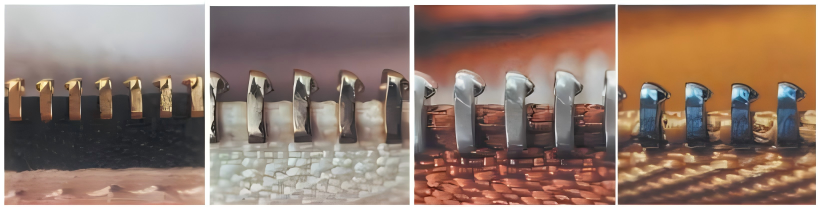
Common forms of Lampo brand zippers in modern times
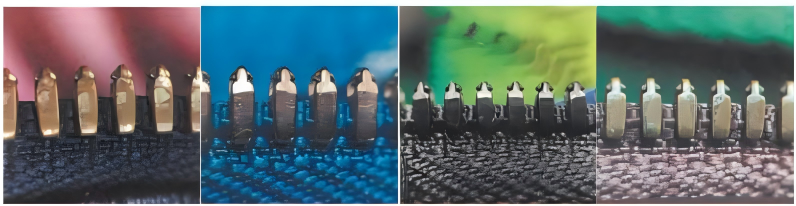
Common forms of YKK brand zippers in modern times
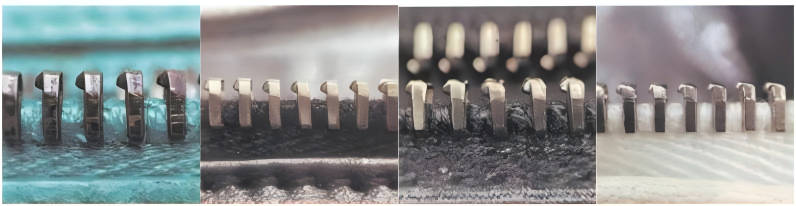
Common forms of riri brand zippers in modern times
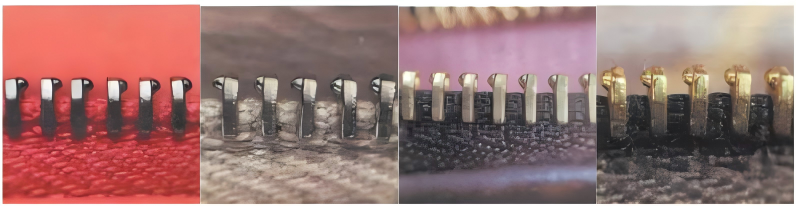
Summary: Zippers Tell More Than You Think
Even if a replica bag uses a branded zipper, it often falters in stitching precision, engraving quality, and puller shape. Zippers may be small in size, but they’re huge in diagnostic value when authenticating a luxury handbag.
Before buying a secondhand or online-sourced designer bag, always inspect the zipper like a jeweler examines a gem—it could reveal everything you need to know.
Conclusion: Spotting a Fake Is a Skill—Now You Have It
In today’s luxury fashion world, where replica bags can mirror the look of the real thing almost perfectly, the power lies in the details. Whether it’s a slightly uneven “C” in the Chanel logo, a loose screw on a Louis Vuitton clasp, or a zipper that just doesn’t feel right—these clues tell a story only trained eyes can read.
But now, you’re no longer a beginner.
You’ve learned to analyze:
- Brand Logos: Fonts, spacing, positioning, and embossing techniques.
- Hardware Finishes: Metal quality, engraving sharpness, plating consistency, and screw alignment.
- Zippers: From zipper brands like YKK and Lampo to stitching precision and puller shape.
As replicas in 2025 continue to evolve, so must your eye for detail. Use this guide whenever you’re considering a new luxury purchase—whether from secondhand markets, online boutiques, or social media sellers. Make your inspection methodical, compare across models, and never ignore the micro-signs that expose fakes.
Luxury is not just about the look—it’s about the craftsmanship you can feel, the quality you can trust, and the consistency only true artisans can deliver. By paying attention to these hidden but powerful markers, you’re now equipped to protect your wallet, your wardrobe, and your style identity.
Final Tip: Don’t keep this knowledge to yourself. Share it with friends, post your findings, and empower others to become smarter fashion consumers.
How can I spot a fake designer bag in 2025?
Focus on logo typography, hardware quality, and zipper branding. Check for precise engraving, centered alignment, and consistent stitching.
Do replica bags use real YKK zippers?
Some high-end replicas now use genuine YKK zippers, but usually fail in zipper stitching and integration quality. Authentic bags have smoother zipper action and sharper engraving.
What’s the difference between real and fake hardware?
Real hardware is heavier, finely polished, and deeply engraved. Fakes often feel light, have uneven coatings, or use printed text instead of real etching.
Can the logo alone help me spot a fake bag?
Yes, especially with brands like Chanel, LV, and Gucci. Look at letter spacing (kerning), font weight, and embossing depth. Even subtle errors expose replicas.
What are common zipper flaws in replica bags?
Misspelled brand names, unbranded sliders, uneven stitching, and a rough pull-feel. Use a magnifier to inspect engraving and a ruler to check seam straightness.
Is it worth buying 1:1 or super mirror replicas?
While some look very close to the original, they often lack longevity and ethical sourcing. If you choose to buy, make sure you’re not overpaying for inferior build quality.

2 comments
I am not sure where you are getting youur info, but great topic.
I needs to spend some time learning more or uunderstanding more.
Thanks for reat info I was looking for this ijfo for my mission.
I want to to thank you for this fantastic read!!
I absolutely loved every bit of it. I have got
you book-marked to look at new things you post…