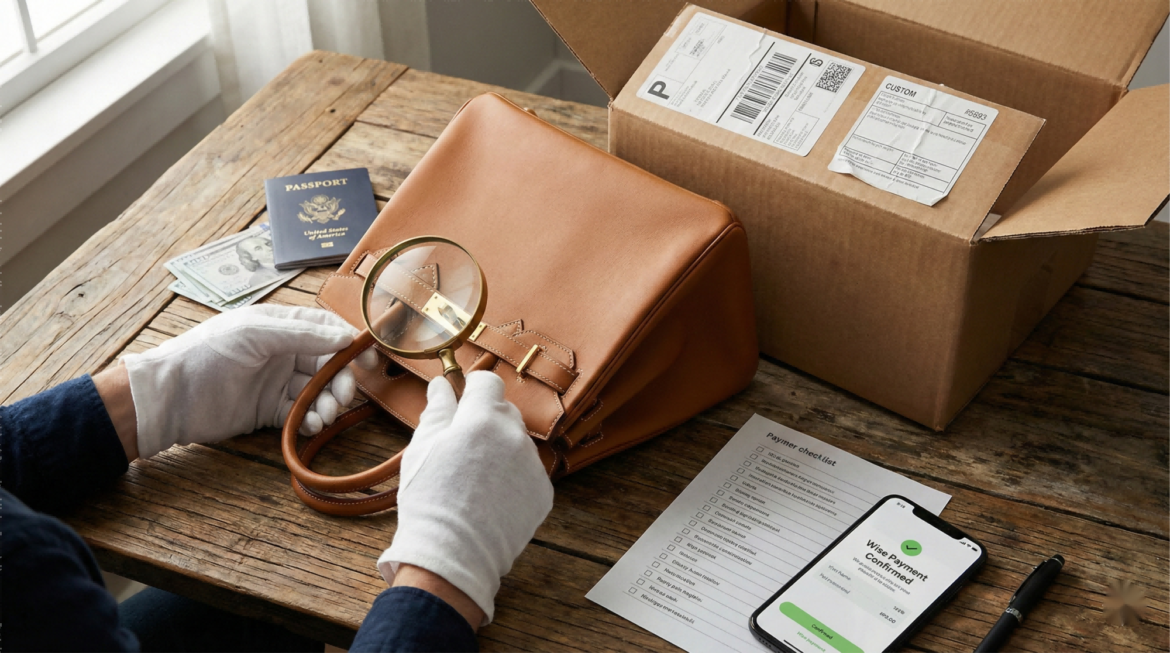
Welcome to the most practical AAA Replica Bags Guide for US buyers. Entering the world of high-tier replicas is not like shopping on Amazon Amazon or Nordstrom. It is an unregulated, “gray market” industry that operates on its own set of unwritten rules, terminologies, and logistical challenges. For buyers in the United States, the distance, currency differences, and import regulations add extra layers of complexity.
Before you send a single dollar overseas, you must educate yourself. This guide is designed to be your strategic handbook. We are moving beyond simple definitions to discuss the tactical reality of sourcing, paying for, and receiving high-quality goods in the US.
Here are the 10 essential pillars every US buyer must understand.
Table of Contents
1. The Seller Hierarchy: Where You Buy Matters More Than What You Buy
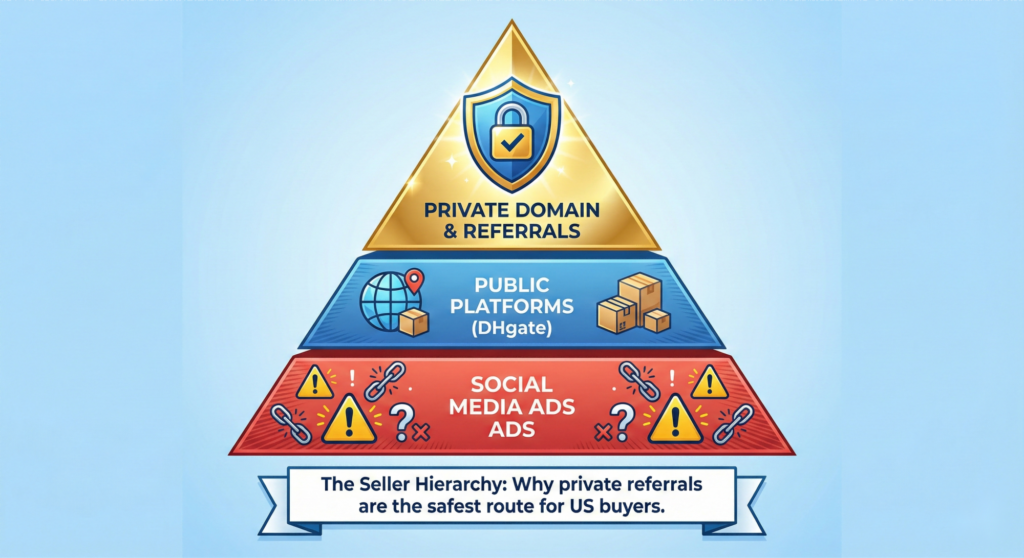
The most common mistake beginners make is assuming all sellers are created equal. In reality, the market is stratified into distinct tiers. Your experience—and whether you get a high-quality “AAA” bag or a low-grade plastic dud—depends entirely on where you source the item.
The “Wild West”: Social Media Ads (Facebook, Instagram, TikTok)
You have likely seen them: glossy sponsored posts on your Instagram feed showing a Birkin or a Chanel Classic Flap for $89 with a “Shop Now” button.
- The Reality: These are almost exclusively “Bait and Switch” operations. They use stolen photos of authentic bags or high-tier replicas for the advertisement, but they ship low-tier, mass-market polyurethane (PU) bags.
- The Verdict: Avoid at all costs. These sellers rarely survive long enough to build a reputation and often vanish after a ban wave.
The “Budget Bazaar”: E-Commerce Platforms (DHgate, AliExpress)
These platforms are accessible and familiar to US buyers, but they are plagued by legal restrictions. Because they cannot openly sell counterfeits, sellers use “Hidden Links” (listings for generic items like “hair clips” that are actually for bags).
- The Reality: While legitimate for budget items, this is rarely where you find true “AAA” or top-tier quality. The platform fees force sellers to cut costs on materials.
- The Verdict: Acceptable for “beater” bags or trends you only plan to wear once, but not for investment-grade replicas.
The “Private Domain”: Social Networks & Referrals (The Gold Standard)
This is where the serious market operates. These sellers do not advertise publicly. They rely on Private Domain Traffic—repeat customers, word-of-mouth referrals from trusted friends, and exclusive community vetting.
- The Reality: These sellers value their reputation above all else. They operate via encrypted messaging apps (WhatsApp/WeChat) and personal websites (independent stations). Because they rely on returning clients (Lifetime Value), they are incentivized to be honest about quality.
- The Verdict: Highly Recommended. Finding a seller through a trusted “private domain” referral or an established review community is the safest route to securing high-quality goods.
For more customs knowledge, please visit U.S. Customs and Border Protection – Internet Purchases.
2. Communication: Why WhatsApp is the Industry Standard
Forget email. Forget website chatbots. The lifeblood of the high-tier replica industry is WhatsApp.
For US buyers, this can feel intrusive, but it is necessary. WhatsApp offers end-to-end encryption, which protects both the buyer and the seller. It also allows for the rapid exchange of high-resolution photos and videos, which is critical for quality control.
How to Communicate Effectively
- Be Direct and Visual: Language barriers exist. Instead of writing long paragraphs describing a bag, send a photo of the authentic bag you want (from the official brand website) and ask, “Do you have this in [Specific Factory Name] or Top Tier quality?”
- Time Zones Matter: Most sellers are based in China (China Standard Time). If you message them at 2:00 PM EST, it is 2:00 AM for them. Expect replies during your evening or early morning.
- Patience is Key: These are not 24/7 call centers. They are often small teams or individuals. Spying “Online” status doesn’t always mean they are available to chat instantly.
3. The Financial Ecosystem: Wise vs. PayPal vs. The Rest
This is the biggest friction point for American buyers. You cannot simply enter your Visa card on a checkout page due to banking restrictions on counterfeit goods. You must use alternative payment methods. Understanding the pros and cons of each is vital for your financial safety.
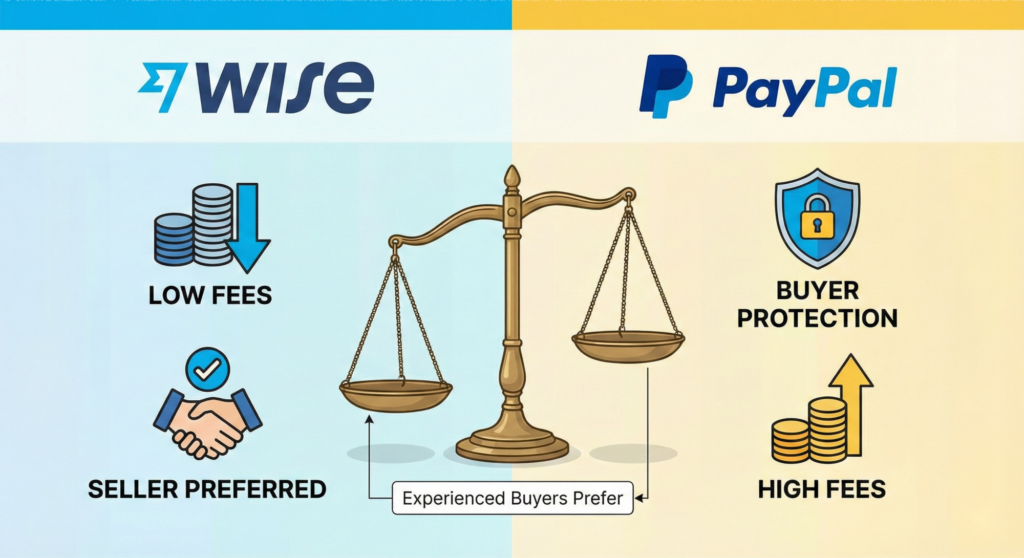
Wise (Formerly TransferWise): The Seller’s Favorite
Wise is a service that allows you to send money directly to the seller’s foreign bank account or Alipay/WeChat Pay wallet.
- Pros (Why Sellers Like It): Low transaction fees and fast transfers. Because it saves the seller money compared to PayPal fees, many “Private Domain” sellers will offer a significant discount (often 5%–10%) if you pay via Wise.
- Cons (The Risk): Once the money is sent, it is treated like a wire transfer. It is extremely difficult, often impossible, to reverse the transaction. There is no “dispute” button if things go wrong.
- Best For: Bulk orders (where the discount adds up) or transactions with highly trusted, vetted sellers you have a relationship with.
PayPal: The Buyer’s Safety Net
PayPal is the most requested method by US buyers, but many sellers are reluctant to accept it.
- Friends & Family (F&F): Sellers will almost always insist on this option to avoid fees and chargebacks. It offers less protection than “Goods & Services,” but still more recourse than a wire transfer in cases of blatant fraud.
- Goods & Services (G&S): The safest for buyers (you can file a dispute), but sellers hate it. PayPal often freezes seller funds for 180 days if they suspect counterfeit sales. If a seller accepts G&S, expect to pay an extra 4%–6% to cover the fees.
- The Golden Rule: NEVER leave a note. When paying via PayPal, never write “Chanel Bag” or “Replica” in the comment section. This will get both your account and the seller’s account permanently banned. Leave the note blank.
Other US-Feasible Methods
- Western Union / Remitly: Similar to Wise, often used for cash pickups. High risk, zero protection.
- Cryptocurrency (USDT/Bitcoin): The ultimate “final sale.” Only use this if you are a crypto-native user and trust the seller implicitly. Discounts are usually highest here.
For more payment safety information, please visit Federal Trade Commission – Online Payment Safety
4. The “Pre-Game” Setup: What to Ask Before You Pay
Never blindly send money. A professional transaction requires a “discovery phase.” Before you finalize an order via WhatsApp, you must confirm specific details.
- Stock Availability: Just because it is on their album/website doesn’t mean it is in stock. Factories rotate production. Ask: “Is this specific color/size in stock right now, or is it pre-order?”
- Factory Source: For top-tier goods, the factory matters (e.g., God Factory for LV, 187 Factory for Chanel). Ask the seller to confirm which factory the bag is coming from.
- The Promise of PSPs: Explicitly ask: “Will you provide detailed Pre-Shipment Photos (PSPs) before you ship? Can I reject the bag if the quality is bad?” If they say no to PSPs, walk away.
- Customs Insurance: Ask if they offer seizure insurance (reshipment policy). Some sellers will reship for free if US Customs seizes the package; others charge a fee. Know this policy before you pay.
5. AAA Replica Bags Guide For US: Marketing vs. Reality
In the US market, you will hear terms like “AAA,” “1:1,” “Mirror Quality,” “Lushentic,” and “Original Quality.”
Here is the hard truth: There is no international standard organization regulating these terms. They are marketing buzzwords. A seller on a street corner in New York’s Chinatown calls his $40 vinyl bag “AAA.” A high-end seller calls his $500 handmade bag “AAA.”
- Ignore the Labels: Do not buy based on the word “Mirror.”
- Buy Based on Tier: Understand that quality is determined by materials and craftsmanship, not adjectives.
- Low Tier: Wrong shape, plastic smell, stiff materials (Cost: $50-$100).
- Mid Tier: Real leather but lower grade, mass-produced hardware (Cost: $150-$250).
- High Tier: AAA grade, Imported leather (Haas, Tanneries du Puy), solid hardware, correct stitching counts (Cost: $350-$800+).
- For a deep dive into the technical differences in grading, refer to our authority resource: AAA Replica Bags Guide.
- For more my AAA replica bags experience, please visit AAA Replica Bags Review
6. The “QC” Ritual: Your Only Opportunity to Inspect
Once you have paid, the seller will order the bag from the factory. A few days later, you will receive PSPs (Pre-Shipment Photos). This is the most critical moment in the transaction.
Do not just glance at them and say “looks good.” You are acting as the Quality Control officer.
- Check the Alignment: Does the Monogram pattern cut off at the right place? Is the diamond quilting symmetrical?
- Check the Hardware: Zoom in. are the screws flat or sticking out? Is the engraving crisp?
- Check the Date Codes: Does the interior tag match the correct format for that brand?
If you see a flaw, circle it in the photo and ask the seller. If it is a major defect, you have the right to ask for a replacement. Once you give the “Green Light” (GL) to ship, you cannot return it because of a stitch you missed.
- Need help spotting flaws? Use our side-by-side comparison tool in the Fake Designer Bag Authentication Guide
7. Logistics: The “Tracking Black Hole” & US Delivery
Shipping to the US tests your patience.
- The Route: Most sellers use “Triangle Shipping” or direct EMS lines to avoid customs flags.
- The Wait: It is normal for a tracking number to show “Label Created” for 3-5 days before movement.
- The Black Hole: Once the package leaves China, it may go silent for 7–10 days while it is in transit over the Pacific or waiting for a scan at a US hub (LAX/JFK). This is normal. Do not panic and message the seller every day.
- The Handoff: Once it clears customs, it is usually handed off to USPS, FedEx, or UPS for the final delivery.
8. US Customs: The Elephant in the Room
Every international package enters the jurisdiction of U.S. Customs and Border Protection (CBP).
- The Risk: Importing counterfeit goods is illegal. While CBP focuses mostly on massive commercial containers, individual packages can be seized.
- The Consequence: If your bag is seized, you will likely receive a letter in the mail from CBP weeks later.
- What to Do: Do not respond to the letter. Responding admits you were the importer. Simply ignore it; the government will destroy the item. This is why asking your seller about their “Reshipment Policy” in step #4 is so important.
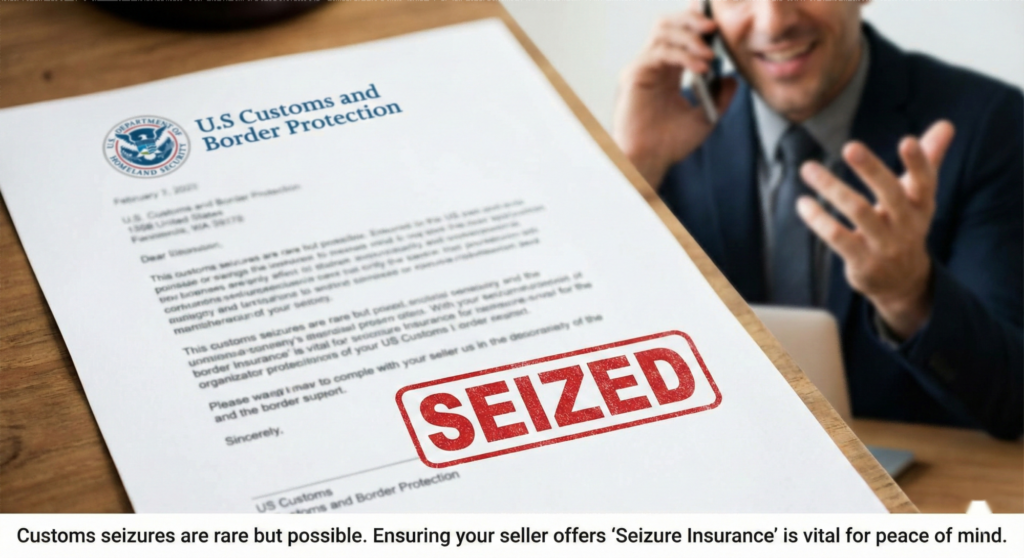
Caption: Customs seizures are rare but possible. Ensuring your seller offers “Seizure Insurance” is vital for peace of mind.
9. Material Reality: Leather, Hardware & “Fufu”
When the box finally arrives at your US address, you need to manage your physical expectations.
- The “Fufu” Smell: Replicas are often packed immediately after production. The glues and conditioners haven’t had time to off-gas. It is common for a bag to smell strongly of chemicals upon opening. This does not mean it is low quality.
- Fix: Air it out in a cool, dry room (not direct sunlight) for 24-48 hours.
- Leather Conditioning: The leather may arrive dry due to transport. A high-quality leather conditioner (like Bick 4 or Cadillac, popular in the US) can work wonders to soften the material and bring out the sheen.
- Hardware Function: Test the zippers and clasps immediately. High-tier hardware should feel heavy and cool to the touch.
10. The Reviewer’s Mindset: Wear with Confidence
The final thing you must know is psychological. Even the best “Super Fake” is not an authentic bag. There will always be microscopic differences—a stitch that is 1mm off, a gold tone that is 2% too yellow under neon light.
- The 10-Foot Rule: 99% of the population cannot tell a fake from 10 feet away.
- The Lifestyle Match: The biggest “tell” is not the stitching; it is your lifestyle. If you are driving a 2005 Honda Civic but carrying a $40,000 Hermes Birkin, the bag will be assumed fake, regardless of how perfect the stitching is.
- Wear it for You: The best replica buyers appreciate the craftsmanship and the look without the exorbitant retail markup.
Frequently Asked Questions (FAQ) for US Buyers
Is it illegal to buy replica bags in the United States for personal use?
This is a complex legal area. While selling counterfeit goods is a federal crime in the US (trafficking), simple possession or purchasing a single item for personal use is generally not targeted by law enforcement in the same way. The primary risk for a buyer is not jail time, but the confiscation (seizure) of the item by US Customs and Border Protection (CBP) at the port of entry. Disclaimer: We are not lawyers; this is not legal advice.
What happens if US Customs seizes my package?
If your package is flagged and inspected, CBP will seize the counterfeit items. You will typically see a tracking update like “Held by Customs” or “Seized.” Weeks later, you may receive a formal letter from the government. Do not reply to this letter. Responding confirms you were the importer. Most veteran buyers simply consider the item lost. This is why asking your seller about their “Seizure Insurance” or reshipment policy before buying is critical.
Why has my tracking status been stuck on “Processed Through Facility” for two weeks?
This is the most common source of panic for US buyers. Packages coming from Asia via EMS often sit in a queue waiting for international flights or waiting to be processed by US Customs upon arrival (often at ISC New York or ISC Los Angeles). A gap of 7–14 days without updates is standard. It does not mean the package is lost; it just means it hasn’t been scanned by the USPS yet.
Do high-tier replica bags come with the original orange/black boxes?
Generally, no—and you shouldn’t want them to. Large, branded boxes are “customs magnets.” They make the package larger, heavier, and more obvious to inspectors. Experienced sellers usually ship bags in dust bags, wrapped in bubble wrap and placed in a plain brown cardboard box to ensure safer, more discreet entry into the US.
Can I sell my replica bag on Poshmark, eBay, or Mercari if I don’t like it?
Absolutely not. Selling counterfeit goods is illegal in the United States, regardless of whether you disclose it is a fake. Platforms like Poshmark and eBay have strict authentication teams and zero-tolerance policies. You risk being permanently banned, having your funds frozen, and facing legal action from trademark holders.
How can I tell if a seller is a scammer?
Look for these red flags:
They refuse to send Pre-Shipment Photos (PSPs).
They pressure you to pay immediately via “Friends & Family” without any prior conversation.
Their prices are too good to be true (e.g., a “Mirror Tier” Birkin for $150—real high-tier leather costs more than that just for the raw materials).
They rely solely on social media ads rather than trusted community referrals.
Summary Checklist for the US Buyer
- Source: Find a Private Domain seller via referrals.
- Contact: Install WhatsApp.
- Confirm: Stock, Factory, and Insurance policies.
- Pay: Use Wise for discounts (if trusted) or PayPal F&F.
- QC: Inspect PSPs rigorously.
- Wait: Ignore the tracking gaps.
- Receive: Air out the “Fufu” and condition the leather.
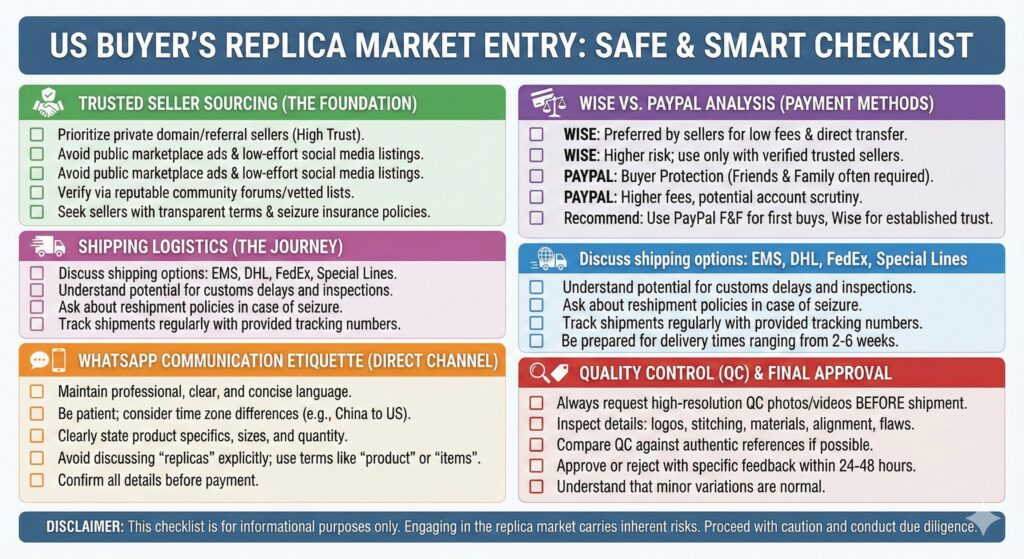
By following these ten commandments, you move from being a vulnerable novice to a savvy, informed participant in the global replica marketplace.
6 comments
Great guide. But I’m still stuck on the payment part. My seller is pushing hard for Wise or Bitcoin and refuses PayPal Goods & Services. I get why they do it, but is there any way to protect myself if I use Wise?
Valid concern, Mike. The short answer is: unfortunately, no. Wise is effectively a wire transfer; once the money is sent, it’s gone. This is why Step #1 (Finding a Trusted Seller) is more important than the payment method itself. If you are new, I highly recommend starting with a seller who accepts PayPal Friends & Family. It’s still risky, but slightly less daunting than crypto. Never use Wise with a seller you haven’t thoroughly vetted through community reviews first.
I keep seeing sellers on Instagram advertising ‘Lushentic Grade’ or ‘Original Factory’ bags for $150. Your guide mentions avoiding ads, but the photos look so good. Are these safe to buy?
Hi Jessica. Please run away from those ads! 🚩 ‘Lushentic’ is a made-up marketing term often used by bait-and-switch scammers. A true high-tier bag (using imported leather and solid hardware) simply cannot be produced for $150—the raw material cost alone is higher than that. Those photos are likely stolen from authentic sites. Stick to the vetting process we outlined above to avoid disappointment.
Okay, I’m panicking a little. I bought my first bag from a seller I found on Reddit, and the tracking has been stuck on ‘Label Created’ for 6 days now. Is this normal? Or did I just get scammed?
Hi Sarah! Take a deep breath—this is completely normal for US-bound shipments. Most sellers use a logistics method where the package travels from the factory to a sorting center (often in Hong Kong or Dubai) before it actually gets scanned by the courier. That ‘Label Created’ status just means the electronic data was submitted. You usually won’t see movement for 7–10 days until it hits the international hub. Hang in there!